Last updated on October 22nd, 2026 at 08:45 am
What Is Kundalini Yoga?
Kundalini yoga is a technology-driven practice that combines specific sequences of movement (kriyas), pranayama, mantra, and meditation to activate and circulate the body’s pranic energy. Unlike most modern yoga styles, it is not primarily a physical practice. The asana serves the energetic and meditative work, not the other way around.
The Origins of Kundalini Yoga
The concept of kundalini energy, often depicted as a coiled serpent (from the Sanskrit kundala, meaning “coil”), appears in texts dating back over 3,000 years. The idea describes a potent reservoir of pranic energy that lies dormant at the base of the spine, at Muladhara, the root chakra.
In practice, the goal is to awaken this energy and draw it upward through the seven chakras, ultimately reaching Sahasrara at the crown of the head. This process is described in the tradition as spiritual awakening and an expansion of consciousness.
Kundalini yoga as most Westerners know it today was introduced by Yogi Bhajan in 1969. His system, sometimes called Kundalini Yoga as Taught by Yogi Bhajan, is highly structured and emphasises white clothing, specific breath techniques, and set kriyas (action sequences).
What Actually Happens in a Kundalini Class?
If you walk into a Kundalini class expecting a flow sequence, you will be surprised. A typical class includes tuning in with the Adi Mantra (Ong Namo Guru Dev Namo), a specific kriya of repeated movements and breath patterns, a long deep relaxation, and a closing meditation.
The breathwork is central. Techniques like Breath of Fire (rapid diaphragmatic breathing) and alternate nostril breathing create measurable physiological shifts. Rapid pranayama techniques increase sympathetic nervous system activation in the short term, followed by a pronounced parasympathetic rebound once the breath slows. This is the mechanism behind the altered states practitioners often report.
Mantra is also structurally significant. Sat Nam, meaning “truth is my identity,” is the most common seed mantra. Repetition of mantra activates specific regions of the prefrontal cortex and has been shown in neuroimaging studies to reduce the activity of the default mode network, the part of the brain associated with rumination and self-referential thought.
The Seven Chakras in Kundalini Practice
The chakra system provides the map for kundalini energy’s movement. The seven main chakras are:
- Muladhara (root): safety, grounding, survival instinct
- Svadhisthana (sacral): creativity, sensuality, emotional flow
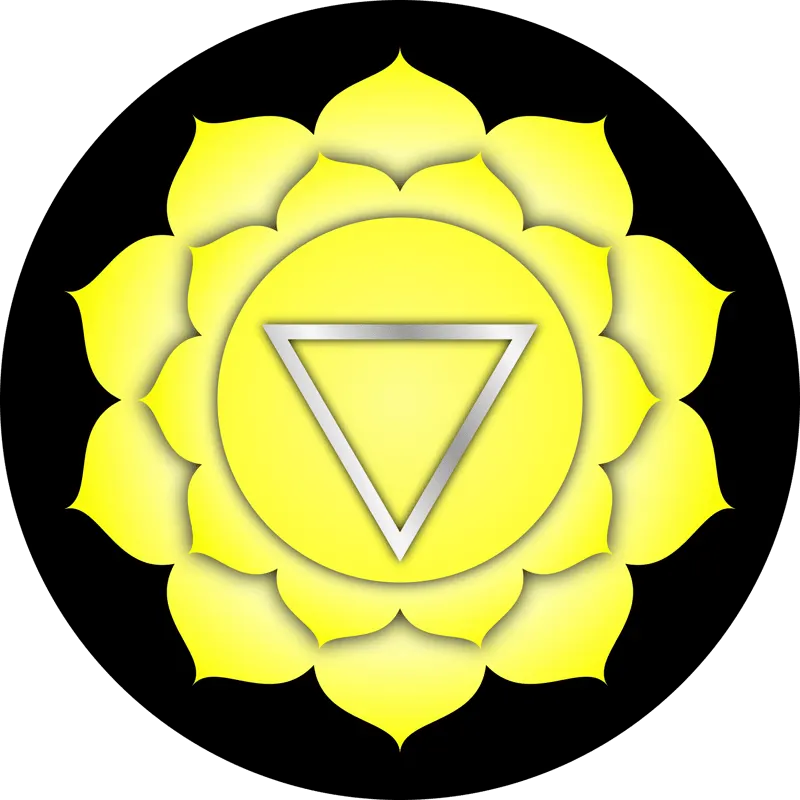
- Manipura (solar plexus): personal power, will, self-esteem
- Anahata (heart): love, compassion, connection
- Vishuddha (throat): authentic expression, communication
- Ajna (third eye): intuition, inner knowing, clarity
- Sahasrara (crown): universal connection, pure awareness
A blocked chakra is understood to manifest as specific emotional or physical patterns. For the full map, see our guide to the 7 chakras. Kundalini practice uses targeted kriyas to release these blockages and allow energy to move freely.

Documented Benefits of a Regular Kundalini Practice
Stress reduction. Studies examining yoga and pranayama consistently show reductions in salivary cortisol and self-reported anxiety. Kundalini’s emphasis on breathwork makes these effects particularly pronounced.
Improved cognitive function. A 2017 study published in the Journal of Alzheimer’s Disease found that Kundalini yoga produced significant improvements in memory and executive function in older adults after just twelve weeks.
Reduced symptoms of anxiety and depression. The combination of physical movement, breath regulation, and mantra creates a multi-modal intervention that addresses mental health through several simultaneous pathways.
Enhanced self-awareness. Regular practitioners consistently report a shift in the quality of self-perception. The practice develops the capacity to observe your own mental states rather than being consumed by them.
Is Kundalini Yoga Right for You?
Kundalini yoga suits people who are drawn to the energetic and spiritual dimensions of practice and who want results beyond physical fitness. It is particularly powerful for those dealing with anxiety, mental restlessness, or a sense of disconnection from purpose.
It requires no prior flexibility. The postures are accessible, and the seated and lying-down meditations mean that physical limitations rarely prevent participation.
One genuine precaution: intense pranayama practices can cause dizziness or hyperventilation if approached carelessly. Learn with a qualified teacher first. People with certain psychiatric conditions, particularly those involving dissociation, should approach intense breathwork with additional care and ideally with professional guidance.
If the science and philosophy of pranayama interests you, our Online Breathwork Training provides a rigorous foundation in both the technical and experiential dimensions of breath as a transformative tool.
The Difference Between Kundalini and Other Yoga Styles
Most modern yoga styles are primarily asana-based. Kundalini is primarily energy-based. Where a Vinyasa class is built around a physical sequence, a Kundalini class is built around a kriya, which may involve repeated movements, sustained holds, breathwork, and mantra, all working toward a specific energetic or psychological outcome.
Kundalini is also far more chant-heavy than most Western yoga classes. This can be confronting at first. The reason for the chant is not merely devotional. Vocalising specific sounds creates vibration in the physical structures of the throat and cranium that has measurable effects on the vagus nerve and the autonomic nervous system.
Inside a Kundalini Class, Minute by Minute
Most kundalini classes run 60 to 90 minutes and follow the same five-part shape, whatever the theme of the day. Knowing that shape takes most of the strangeness out of a first class.
Class opens with tuning in: hands together at the sternum, the Adi Mantra, Ong Namo Guru Dev Namo, chanted three times. It takes two minutes and marks the line between your day and your practice.
Then five to 10 minutes of warm-up: seated spinal flexes, cat and cow, side bends, shoulder shrugs and neck rolls, paced by the breath rather than by a count.
The kriya is the centre of class and takes 20 to 45 minutes. A kriya is a fixed sequence of exercises performed in a set order for set times, commonly one to three minutes each, occasionally 11. You are not moving from shape to shape as you would in a vinyasa class: you hold one position, or repeat one small movement, while breathing in a prescribed pattern, and the teacher calls the time. It is repetitive by design and it gets uncomfortable. A good teacher says both that you can stay with the discomfort of effort and that you should stop if something hurts, and means both.
Deep relaxation follows: five to 11 minutes on your back, often with a gong. Then a seated closing meditation using a mantra, a mudra or a breath pattern, held for three to 31 minutes, before class ends with the song Long Time Sun and three repetitions of Sat Nam.
Mantra, Breath of Fire, and the Bandhas
Three tools carry most of the work in kundalini, and none of them are postures.
Mantra is the first. Sat Nam is the one you meet immediately, usually translated as truth is my identity. Chanting out loud slows and lengthens the exhale, which is a plausible part of why people report feeling settled afterwards, and the repetition gives a busy mind one thing to do instead of 20. You can mouth the words silently at first, and you do not need to believe anything about them for the mechanics to work.
Breath of fire is the second. It is a rapid, even, nose-only breath at roughly two to three cycles per second, powered by the navel snapping in on the exhale while the inhale happens passively. Sustained for a few minutes it commonly produces tingling in the hands and face, a light head, and sometimes emotion. That is ordinary respiratory physiology rather than evidence that anything has been awakened, and it settles within a minute or two of normal breathing. Substitute long, slow breathing if you are pregnant, managing high blood pressure or a heart condition, have a seizure disorder or glaucoma, or have had recent abdominal surgery. Our guide to what pranayama is and how it works sets out how breath techniques are staged.
The bandhas are the third. Mula bandha lifts at the pelvic floor, uddiyana bandha draws the abdomen back and up under the ribs on an empty breath, and jalandhara bandha is a soft chin lock at the throat. Classically they are described as sealing prana so it rises through the central channel rather than dissipating. Practically they change intra-abdominal pressure and how your pelvis and spine are organised, and they take months to find. Learn them from a teacher in a room, not from a video.
What Kundalini Awakening Actually Means
The classical sources are more restrained than the marketing. In texts such as the Hatha Yoga Pradipika, the Shiva Samhita and the Gheranda Samhita, kundalini is shakti coiled and dormant at the base of the spine, roused through sustained practice so it can rise through the sushumna channel and the seven chakras to the crown. Those texts treat it as rare, as the work of years under a living teacher, and several attach explicit warnings to it. None present it as a weekend outcome.
What gets sold now is often the opposite: awakening as a product, with a date and a price. Be sceptical of any teacher, retreat or programme that guarantees an awakening, or that treats intensity as evidence of progress.
There is also an honest conversation to be had about difficult experiences. Some practitioners, usually after prolonged or unsupervised intensive breath and meditation work, report agitation, insomnia, involuntary shaking, flooding emotion, or a sense of unreality that persists for weeks. In yoga circles this gets called kundalini syndrome or spiritual emergency. Neither is a clinical diagnosis, though clinicians do recognise a category for religious or spiritual problems, which lets distress of this kind be taken seriously without being labelled a disorder. The reports are real, they are uncommon, and they are not a sign you did the practice correctly.
If it happens to you, the first steps are unglamorous and they help: stop the intensive practice rather than pushing through, eat, sleep, move gently outdoors, cut your meditation back to something small, and talk to both an experienced teacher and a health professional. A teacher who tells you to sit with it and do more kriya is not the right teacher for that moment. This connects closely with the embodied feminine arts, which draw on many of the same principles.
Who Kundalini Suits, and Who Should Take More Care
Kundalini tends to land well with people who want more than a workout, who like clear structure, and who have found posture-led classes physically frustrating. Flexibility is irrelevant here. Willingness to sit still and repeat something for three minutes matters far more, and that is a skill you build rather than arrive with.
Approach with more care, and talk to your doctor first, if you are pregnant, have uncontrolled high blood pressure or a cardiac condition, have epilepsy or another seizure disorder, or have glaucoma or recent abdominal or eye surgery. The intensive breathwork is the reason, not the postures.
The same applies if you live with panic attacks, PTSD, dissociation, or a history of psychosis. Rapid breathing and long closed-eye meditation can be destabilising for some people, and a class of 30 with a gong is not the place to find out. That is not a reason never to practise. It is a reason to start slowly, tell your teacher, keep your eyes open if you want to, and skip the fast breathing without explaining yourself. Kundalini yoga is not a treatment for any medical or psychiatric condition, and it belongs alongside your care rather than in place of it.
How to Start Safely and Choose a Teacher Well
Start in person if you can, in a class labelled for beginners. Arrive early, mention anything relevant about your health, and give yourself a slow half hour afterwards rather than driving straight into a meeting. At home, keep sessions short and consistent instead of long and occasional.
There is a lineage question worth understanding before you choose a teacher. Kundalini yoga as most Western studios teach it comes from Yogi Bhajan, who began teaching in the United States in 1969 through the organisation 3HO, and that system is distinct from the kundalini material in classical hatha and tantric texts even though it borrows the vocabulary. From 2020, former students made public allegations of abuse against him, and an independent investigation commissioned by organisations connected to his legacy concluded the allegations were more likely than not to be true. Many teachers and studios have since left the organisation, dropped the branding, or renamed what they offer. You can value the practice and still want to know this, and asking a teacher where they trained is a fair question.
Beyond that, look for a teacher who names their training openly, offers modifications without making a performance of it, says out loud that you can stop, and promises no awakening, healing or cure. Watch how they handle touch: consent should be asked for, not assumed. Notice whether questions are welcomed, and whether I do not know is something they can say.
If the practice holds your interest, a 200-hour yoga teacher training in Bali gives you the anatomy, philosophy and breath foundations that make any style easier to practise with judgement rather than on faith.
Explore Energy and Awareness With Loka
Kundalini works with the chakra system. For the map behind it, read what are the 7 chakras.
Our Online Meditation Training teaches the breath and concentration skills that make energy practices safe and grounded.
Frequently Asked Questions
Do you need to be spiritual to practise Kundalini yoga?
No. While Kundalini yoga has strong spiritual roots, many of its benefits are physiological and psychological. The breathwork alone produces measurable nervous system effects regardless of your belief system. Approach it with an open mind and see what you experience.
Is Kundalini yoga safe?
For most people, yes, when practised with a qualified teacher. The intense pranayama techniques require proper instruction. People with cardiovascular conditions, pregnancy, or mental health conditions involving dissociation should consult a professional before beginning.
How is Kundalini yoga different from Hatha yoga?
Hatha is primarily a physical practice focused on postures and basic breathwork. Kundalini is an energetic and meditative practice where the postures serve the breath and the internal experience, not the other way around.
How often should I practise Kundalini yoga?
Even a daily fifteen-minute practice yields meaningful results over time. Consistency matters more than duration. Many Kundalini practitioners find a morning sadhana, a dedicated daily practice, to be the most transformative approach.
What is a kriya in Kundalini yoga?
A kriya is a specific, complete set of exercises, breath patterns, and sometimes mantra, designed to produce a particular effect. Each kriya has an intended outcome: clearing the nervous system, stimulating the digestive fire, building concentration, opening the heart centre, and so on.

The Loka Newsletter
Enliven your routine with exclusive spiritual content. There’s so much to learn.

Find us on Instagram
@lokayogaschool