Last updated on July 31st, 2026 at 06:58 pm
Svadhisthana Chakra: The Complete Guide to the Sacral Chakra
When the Sacral Chakra is blocked, life can feel oddly flat. You might still be going through the motions but joy, creativity, and genuine connection feel out of reach. Svadhisthana, the second chakra, sits just below the navel and governs your emotions, sensuality, creative life, and your capacity to experience pleasure without guilt. When it is flowing well, life feels rich.
This guide covers the Sanskrit roots, anatomy, balance and imbalance signs, yoga, breathwork, mantra, crystals, oils, foods, affirmations, and FAQs. This is also the energetic ground the embodied feminine arts work with.
At a Glance
| Sanskrit Name | Svadhisthana (sva = self; adhisthana = dwelling/seat) |
| Number | 2nd Chakra |
| Location | 3-5 cm below the navel / lower abdomen |
| Element | Water (Jala) |
| Color | Orange |
| Seed Mantra (Bija) | VAM (pronounced "vum") |
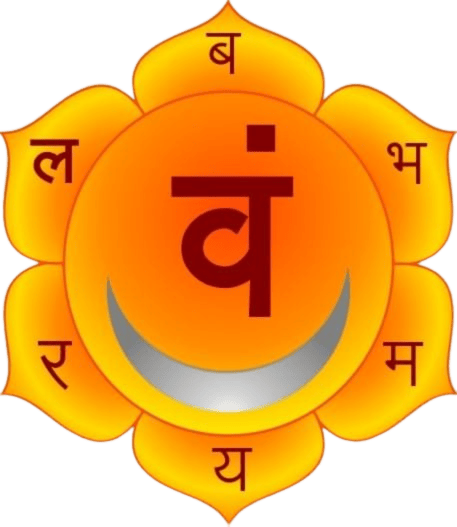
| Symbol | 6-petalled orange lotus; white crescent moon |
| Ruling Planet | Moon & Venus |
| Associated Gland | Gonads (ovaries / testes) |
| Nerve Plexus | Sacral plexus |
| Sense | Taste (Rasa) |
| Animal Symbol | Makara (crocodile) |
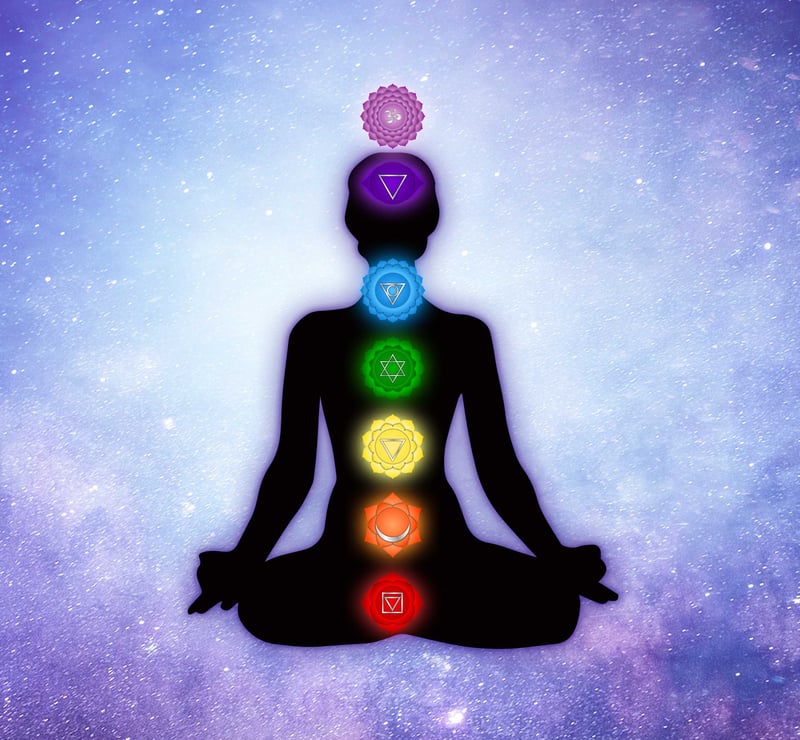
Sanskrit Etymology and Symbolism
Svadhisthana translates as “one’s own abode” or “the dwelling place of the self.” Sva means self and adhisthana means dwelling or seat. The name suggests that your emotional identity and creative nature find their home here.
The six-petalled orange lotus sits in water. The petals are traditionally said to represent six qualities to be overcome for balance: anger, jealousy, cruelty, hatred, pride, and desire. At the lotus centre is a white crescent moon, representing the emotional tides connected to the moon’s cycles.
The makara, a half-fish half-reptile creature, presides here as a symbol of the desires and impulses that move beneath the surface of awareness. The fish appears alongside it in some traditions, representing fertility, abundance, and the freedom to move effortlessly through the flow of life. This chakra is also associated with Vyana vayu, the prana current that governs circulation and expansive movement through the whole body.
Location and Anatomy
Svadhisthana is located roughly three to five centimetres below the navel and connects to the lumbar vertebrae L1 to L3. It governs the reproductive organs, bladder, kidneys, large intestine, and hips.
The corresponding glands are the gonads, the ovaries and testes, which produce oestrogen, progesterone, and testosterone. These hormones regulate not only reproduction but also mood, energy, libido, and creativity. The sacral plexus, originating from L4 to S3, innervates the pelvis, thighs, and genitalia.

Signs of a Balanced Sacral Chakra
- You feel emotions fully without being overwhelmed by them
- Creative ideas arrive easily and you have energy to act on them
- A healthy relationship with pleasure and sensuality, free from shame
- You adapt to change without rigidity or panic
- Genuine warmth and playfulness in your relationships
- Clear boundaries around what you need emotionally and physically
Signs of an Imbalanced Sacral Chakra
Physical
- Reproductive health issues: irregular cycles, low fertility, prostate problems
- Lower back pain or chronically tight hips
- Bladder or urinary tract infections
- Low libido or sexual difficulties
- Water retention or kidney irregularities
Psychological and Emotional
- Creative blocks and a general flatness or boredom with life
- Emotional numbness or feeling cut off from joy
- Codependency or unhealthy patterns in close relationships
- Sexual shame, guilt, or compulsive behaviour (over-active)
- Fear of change, or a need to control everything
Blocked or Over-Active?
A blocked or under-active sacral chakra makes life feel dull and colourless: a persistent lack of inspiration, difficulty feeling your emotions at all, low libido, and guilt or shame around pleasure and desire. An over-active one is the water element in flood. Emotions overwhelm rather than inform, boundaries blur into co-dependency and obsessive attachment, and desire or drama starts running the show. Both states respond to the practices below; a blocked centre needs stimulating approaches like dance and creative work, an over-active one needs calming, cooling practices.
Common Causes of Imbalance
Sexual shame instilled by cultural, religious, or family messaging is one of the most common sources of wounding here. Emotional neglect in childhood, sexual trauma, and having your creative expression dismissed or mocked all leave marks in this centre. So does chronic overwork with no room left for play or pleasure.
Yoga poses for the Sacral Chakra
Hip-opening poses and fluid, wave-like movement nourish Svadhisthana. Let each transition be slow and intentional, honouring the water element’s quality of flow. If long, slow holds appeal to you, our Online Yin Yoga Teacher Training is built around exactly this way of practising.
1. Baddha Konasana -- Bound Angle Pose
Sit with the soles of your feet together and your knees falling open. Hold the feet and gently fold forward. Stay for ten long breaths, inviting the inner thighs and groin to soften. This pose opens the pelvic bowl directly.
2. Pigeon Pose
From Downward Dog, bring the right knee behind the right wrist and the right foot toward the left hand. Lower the hips toward the mat and fold over the shin. Hips store a significant amount of held emotion. Breathe into whatever comes up without forcing anything.
3. Goddess Pose
Stand with feet wide and toes turned out 45 degrees. Bend the knees deeply with thighs moving toward parallel with the floor. Place hands on the thighs or raise to cactus arms. Visualise warm orange light in the lower belly.
4. Lizard Pose
Step the right foot outside the right hand in a low lunge. Lower the back knee down and walk the front foot to the right edge of the mat. Option to lower onto the forearms. This opens the hip flexors and inner groin deeply.
5. Supta Baddha Konasana -- Reclining Bound Angle
Lie on your back, soles of the feet together and knees open. Place one hand on the lower belly and one on the heart. Breathe into the pelvic space and let the hips fully release. This is a deeply restorative position for the sacral chakra.
6. Hip Circles in Cat-Cow
Come to all fours. Begin with Cat-Cow then add wide circles of the hips, fluid and uninhibited. This free movement wakes up creative energy and helps shift stuck emotion held in the pelvis.
Drawn to teach Yin yoga? Our Online Yin Yoga Teacher Training covers long-hold postures, meridian theory, anatomy, and the philosophy behind this deeply restorative practice, fully online and self-paced
Pranayama: Nadi Shodhana
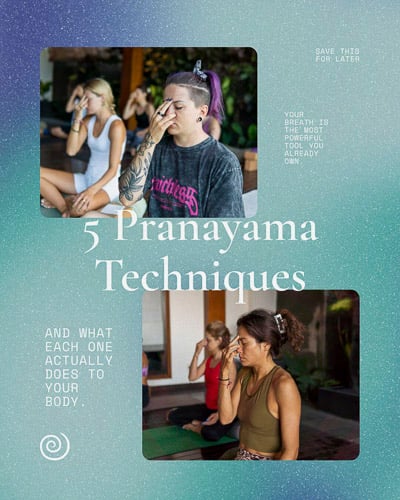
Alternate Nostril Breathing balances the Ida and Pingala nadis, the lunar and solar energy channels connected to the moon and water element. Using the right hand, close the right nostril with the thumb and inhale through the left. Close the left with the ring finger and exhale through the right. Inhale right, then close and exhale left. That is one cycle. Practise ten rounds. This also supports hormonal balance, which is the physiological dimension of this chakra.
If Nadi Shodhana feels fiddly at first, try Dirga Pranayama, the Three-Part Breath. Breathe smoothly into the belly, then the ribs, then the chest, and release in the same order. Its wave-like rhythm matches the fluid nature of Svadhisthana and is one of the gentlest ways to reconnect with the body.
To go deeper with pranayama, Loka’s Online Breathwork Training takes you through the full spectrum of techniques, from grounding and calming practices to energising breaths that build heat and focus. Self-paced and accessible from anywhere.

Mantra and Meditation
The bija mantra is VAM, pronounced “vum” with a soft nasal close. It resonates with the water element’s frequency and supports emotional flow.
Sit comfortably and place both hands on the lower abdomen. On each inhale, visualise warm orange light pooling in the pelvic bowl. On each exhale, chant VAM and feel the sound ripple outward. Continue for ten to fifteen minutes. A 417 Hz sound bath pairs well with this practice.
Build a consistent meditation practice. Our Online Meditation Training gives you the techniques, guided sessions, and progressive structure to establish a daily practice, including chakra-focused meditations like this one. Study at your own pace, from anywhere.
Crystals for the Sacral Chakra
Carnelian
Warm, orange-red, and full of vitality. Carnelian supports creativity, sensual energy, and motivation. Carry it when starting a new creative project or during periods of emotional processing.
Orange Calcite
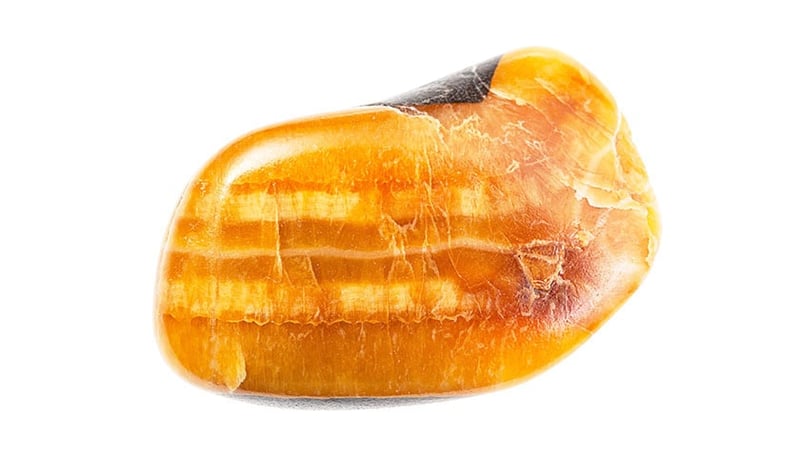
Soft and cleansing. Orange Calcite dissolves stagnant emotional energy in the sacral region and gently restores a sense of joy. Place it on the lower abdomen during Savasana.
Moonstone
Deeply connected to cycles, intuition, and the feminine. Moonstone is particularly useful for hormonal balance and emotional sensitivity. It supports the fluid, cyclical nature of Svadhisthana.
Sunstone
Warm, optimistic, and creative. Sunstone counters emotional flatness and helps reignite the playfulness that a blocked sacral chakra suppresses.
Essential Oils for the Sacral Chakra
- Ylang Ylang: floral and sensual; reduces anxiety and opens the heart to pleasure
- Sweet Orange: bright and uplifting; shifts emotional heaviness quickly
- Clary Sage: balances hormones and stimulates creative inspiration
- Sandalwood: warm and centring; connects physical sensation to inner awareness
Foods for the Sacral Chakra
Honour the water element and the colour orange. Mangoes, oranges, papaya, peaches, sweet potato, pumpkin, carrots, and apricots all work well. Water-rich foods like cucumber and melon support kidney and bladder health. Healthy fats, avocado, coconut, and oily fish, nourish the hormonal system. Cinnamon and vanilla bring warmth and pleasure back to the simple act of eating.
Lifestyle: Water, Play, and Creative Practice
Because Svadhisthana is governed by the water element, contact with water is itself a healing practice. Take a long warm bath, swim, or simply sit beside a river, lake, or the ocean and let the sound do the work. Adding a few drops of sweet orange or sandalwood oil to a bath combines two of this chakra’s remedies in one.
Creative expression matters just as much. Paint, dance, write, cook, or garden, without judging the result. The act of creation, not the outcome, is the language this chakra speaks. If your days have become all output and no play, start with ten minutes of free movement to music you love.
Sacral Chakra Affirmations
- I honour my emotions as teachers, not threats.
- I am a creative being with real capacity for joy.
- Pleasure is a natural and sacred part of my life.
- I flow with change as water flows.
- I deserve relationships that nourish me.
Working With Svadhisthana Without Forcing It
The sacral chakra is the one people most often try to fix directly, and it is the one that responds worst to being fixed. Creativity, pleasure, and emotional fluidity are not states you can instruct yourself into, and treating them as targets tends to produce the opposite.
A more honest starting point is that this chakra is associated with water, and water is not managed by gripping it. It is managed by changing what contains it. If your days have no slack in them at all, no practice aimed at the second chakra is going to do much, because there is nowhere for anything to move.
The most reliable intervention is unglamorous: put one genuinely unstructured hour in your week and do not decide in advance what happens in it. Not a class, not a session, not a project. Most people find this uncomfortable for about a month, which is itself informative.
Hip work has a real place here, though not the one it is usually given. Emotion is not stored in your hips in any literal sense, and you should be suspicious of anyone who tells you it is. What is true is that hip-opening postures are slow, they are hard to rush, and they put you in positions where you cannot do anything else, and that combination gives feeling room to surface.
If something does surface, the practice is to let it be there without turning it into a story about yourself. Notice it, finish the posture, and carry on. The interpreting can wait, and it is usually better done a day later than in the middle of a practice.
Progress here looks like a wider range of ordinary feeling rather than a breakthrough. You laugh a bit more easily, you are less flat on a Tuesday, and something you used to find tedious becomes mildly interesting again.
None of this happens on a schedule. The second chakra is the part of the system least willing to be project-managed, and people who approach it with a plan and a deadline tend to report the least movement. If you have given yourself a month to feel more creative, you have probably already made that harder than it needed to be.
What you can do is protect the conditions and then leave them alone. Enough sleep, unhurried meals, time outdoors, and company that does not require you to perform. These sound too ordinary to be practices, which is exactly why they get skipped, and they do more for this chakra over a season than any sequence does in a week.
Restore the Flow With Loka
Working with the sacral chakra is slow, feeling work, and it goes better with structure. Loka’s Online Meditation Training gives you guided chakra meditations, progressive techniques, and a framework you can practise from anywhere, at your own pace.
It pairs naturally with our complete guide to the 7 chakras in order, which shows you how Svadhisthana fits into the whole system.
Frequently Asked Questions
How do I know if my Sacral Chakra is blocked rather than over-active?
A blocked sacral chakra tends to show as emotional numbness, creative drought, low libido, and rigidity. An over-active one shows as emotional reactivity, compulsive pleasure-seeking, jealousy, and drama. Both benefit from the practices here. For a blocked chakra, lean toward more stimulating approaches like dance and creative expression. For an over-active one, lean toward calming Yin yoga and cooling breathwork.
What emotion is associated with the sacral chakra?
The primary emotions of a balanced Svadhisthana are joy, passion, and creative pleasure. The emotions that most commonly block it are guilt and shame, particularly around desire, sensuality, and emotional expression. Working with this centre usually means meeting guilt and shame with honesty rather than suppression.
Can the Sacral Chakra affect my relationships?
Directly. Svadhisthana governs your capacity for intimacy, emotional vulnerability, and genuine connection. When this centre is wounded you may find yourself emotionally unavailable, or alternatively, unable to maintain healthy boundaries in close relationships. Healing work here often produces a noticeable shift in how relationships feel: more authentic expression, real intimacy, and connection built on mutual respect rather than co-dependency.
What does it feel like when your sacral chakra opens?
Most people describe a warm, fluid sense of energy in the lower abdomen, and emotionally, a return of colour to life: creativity picks up, joy and pleasure feel available again, and emotions start to flow without flooding. Relationships tend to feel easier at the same time.
Can trauma block the sacral chakra?
Yes. Because Svadhisthana governs emotions, relationships, and sexuality, past emotional or physical trauma can create deep blockages here. Healing usually starts with creating a sense of safety in the body so that stored emotion can be processed gently, ideally with a qualified therapist alongside your yoga and breath practice.
Does dancing help the Sacral Chakra?
Yes, and it is one of the most direct tools available. Free, intuitive movement, rather than choreographed steps, releases stored emotion, awakens creativity, and restores the body’s natural fluidity. Even ten minutes of uninhibited dancing to music you love can shift the energy in this centre noticeably.
If the subtle body keeps drawing your curiosity, it is worth studying somewhere you can practise it daily. Our 200-hour yoga teacher training in Bali spends four weeks on the chakras, pranayama and the anatomy underneath them.
Internal Links
Continue your journey: Root Chakra Guide | Solar Plexus Chakra Guide | 7 Chakras Overview
External Sources
The Loka Newsletter
Enliven your routine with exclusive spiritual content. There’s so much to learn.

Find us on Instagram
@lokayogaschool