Last updated on July 30th, 2026 at 09:49 pm
Ajna Chakra: The Complete Guide to the Third Eye Chakra
There is a kind of knowing that has nothing to do with logic. You walk into a room and sense something is off. You get a feeling about a decision before you have reasoned your way through it. That intelligence lives in Ajna, the Third Eye Chakra. Sitting between the eyebrows, this sixth energy centre governs intuition, perception, inner clarity, and the ability to see through surface appearances to what is actually there. When Ajna is clear, you trust yourself.
This guide covers Sanskrit roots, anatomy, signs of balance and imbalance, yoga, breathwork, mantra, crystals, oils, foods, affirmations, and FAQs.
At a Glance
| Sanskrit Name | Ajna (command / perceive / beyond wisdom) |
| Number | 6th Chakra |
| Location | Between the eyebrows / brow centre |
| Element | Light / Mind (Manas / Tejas) |
| Color | Indigo |
| Seed Mantra (Bija) | OM (pronounced "aum") |
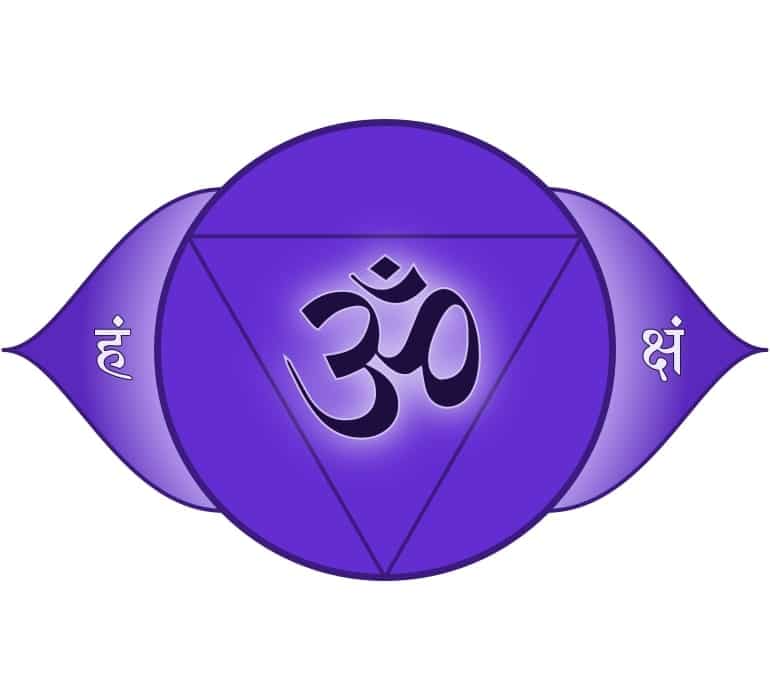
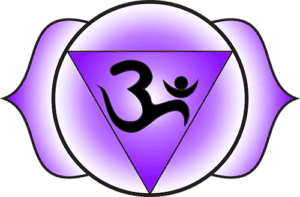
| Symbol | 2-petalled indigo lotus; downward-pointing triangle; circle |
| Ruling Planet | Jupiter & Neptune |
| Associated Gland | Pituitary gland (and pineal gland) |
| Nerve Plexus | Cavernous plexus |
| Sense | Extra-sensory perception / the sixth sense |
| Animal Symbol | None |
Sanskrit Etymology and Symbolism
Ajna derives from the Sanskrit root meaning “to command” or “to perceive.” It is sometimes translated as the command centre, the seat of the inner teacher that guides your life when reason and intuition are working together rather than at odds.
The two-petalled lotus represents the two primary nadis, Ida (lunar, feminine, intuitive) and Pingala (solar, masculine, analytical), which merge here before rising to the crown. Their union at this point is what creates the integrated perception Ajna offers: neither purely rational nor purely intuitive, but both at once. The two petals carry Ha and Ksha, the final letters of the Sanskrit alphabet, pointing to a level of awareness that goes beyond ordinary language.
Location and Anatomy
Ajna is located at the brow centre between and slightly above the eyebrows, connecting to the cavernous plexus. It governs the lower brain, the eyes, and the nose.
The primary associated gland is the pituitary, the master gland of the endocrine system. It sits at the base of the brain and coordinates the hormonal output of every other gland in the body. The pineal gland, an ancient light-sensing structure deep in the brain, is also linked to Ajna. The pineal produces melatonin, which regulates sleep-wake cycles. Both glands respond to light and darkness, reflecting Ajna’s domain of inner and outer perception.
What Is the Ajna Chakra Responsible For?
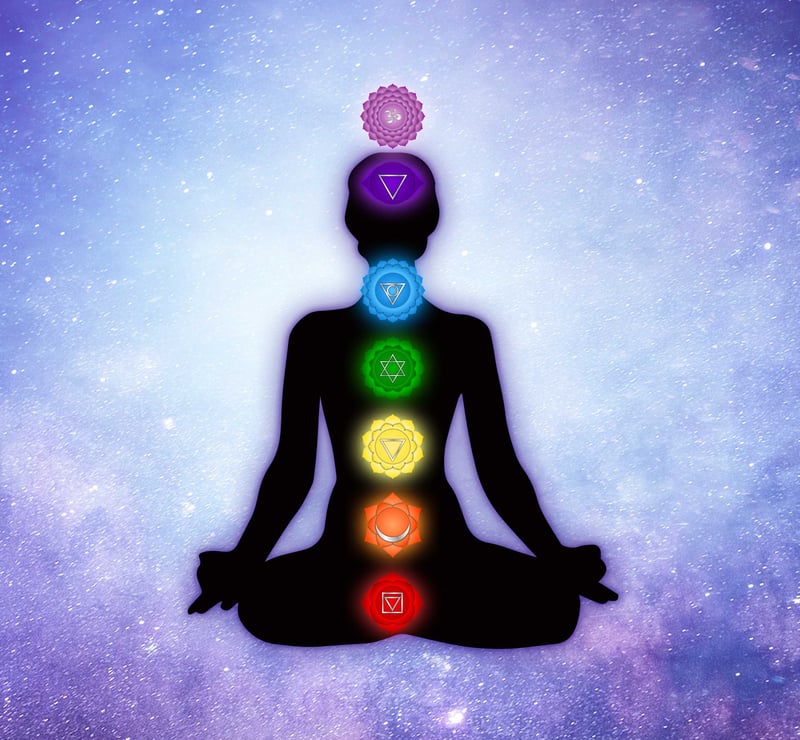
The sixth chakra is responsible for perception in its widest sense: intuition, imagination, memory, dream life, and the discernment that tells you the difference between insight and projection. Sitting between the Throat Chakra below and the Crown above, it integrates everything the lower centres feed upward.
It is often called the command centre because this is where Ida and Pingala, the lunar and solar energy channels, merge. When they are balanced here, reason and intuition stop competing and start working together. Physically, its domain covers the pituitary and pineal glands, the eyes, the lower brain, and the sleep-wake cycle.
Signs of a Balanced Third Eye Chakra
- Strong intuition that you trust and act on regularly
- Clear discernment between what is real and what is projection
- Vivid, meaningful dreams and the ability to draw from them
- Creative imagination and genuine visionary thinking
- Psychological insight into your own patterns and motivations
- A quiet inner guidance that does not depend on external opinion
Signs of an Imbalanced Third Eye Chakra
Physical
- Headaches, migraines, and pressure at the brow centre
- Eye problems: blurred vision, strain, or light sensitivity
- Sinus congestion or recurrent sinus infections
- Sleep disorders and disrupted circadian rhythm
- Hormonal irregularities linked to pituitary function
Psychological and Emotional
- Over-reliance on logic or other people’s opinions, dismissing your own knowing
- Mental fog, difficulty concentrating, or poor memory
- Disturbed sleep or no dream recall
- Closed-mindedness, dogmatic thinking
- Paranoia or excessive over-analysis (over-active)
Common Causes of Imbalance
Growing up in environments that dismissed intuition directly damages this centre. “That is nonsense.” “You are imagining things.” “Trust the authority, not yourself.” Trauma that required mental dissociation as a coping response can over-activate the upper chakras while cutting them off from grounded reality. In the modern world, excessive screen time, constant mental stimulation, and poor sleep all contribute to Ajna imbalance.
Yoga Poses for the Third Eye Chakra
Forward folds that bring circulation to the head, balancing poses that require focused concentration, and restorative practices that access the space between waking and sleep all support Ajna.
1. Balasana -- Child's Pose
Kneel and fold forward so your forehead presses gently into the mat. The third eye point is in direct contact with the earth. Let all mental activity slow. Stay for two to three minutes. This is the most direct physical contact with the Ajna point available in an asana practice.
2. Prasarita Padottanasana -- Wide-Legged Forward Fold
Stand with feet three to four feet apart. Fold forward and bring the crown of the head toward or to the floor with hands between the feet. Blood moves toward the head and third eye region. Hold for ten breaths.
3. Sirsasana -- Supported Headstand
For experienced practitioners only: a full inversion that increases circulation to the pituitary and pineal glands. Beginners can practise Dolphin Pose instead. Hold for twenty to thirty breaths and come down slowly.
4. Vrksasana -- Tree Pose with Drishti
Stand on one foot. Place the sole of the other foot against the calf or inner thigh. Fix your gaze, your drishti, on one unmoving point at eye level. The concentration required for this pose directly trains the focused, steady attention that Ajna develops.
5. Shambhavi Mudra
Sit comfortably. Cross the eyes gently upward and inward toward the space between the brows, without any strain. Breathe slowly. Even if the physical gaze is not crossed, bring your inner attention consistently to the third eye point. This mudra is traditionally held to awaken Ajna directly.
6. Yoga Nidra
Lie in Savasana and follow a guided Yoga Nidra. This practice moves through the threshold between waking and sleeping, the exact zone that Ajna governs. It develops the witness consciousness and opens access to the deeper layers of the mind where intuitive wisdom lives.
Pranayama: Nadi Shodhana and Trataka
Nadi Shodhana alternates breath between the two nostrils, directly balancing the Ida and Pingala nadis that merge at Ajna. Ten minutes before meditation deepens access to the third eye considerably.
Trataka, or candle gazing, involves placing a candle at eye level an arm’s length away. Gaze at the flame without blinking for one to three minutes, then close the eyes and visualise the flame at the third eye. This ancient practice sharpens concentration and trains the capacity for inner vision.
Go deeper with breathwork. Loka’s Online Breathwork Training takes you through the full spectrum of pranayama, from grounding and calming techniques to energising practices that build heat and focus. Self-paced and accessible from anywhere.
Mantra and Meditation
The seed sound for Ajna is OM, the primordial sound from which all other mantras arise. It vibrates the skull, the brain, and the third eye simultaneously.
Sit tall with your eyes gently closed. Bring attention to the space between the eyebrows. Inhale fully. On the exhale, chant OM and feel the resonance in the brow, skull, and brain. Visualise deep indigo light pulsing at the third eye with each repetition. With consistent practice, moments of clarity, insight, and expanded perception arise naturally. You do not chase them. You make space for them. The 852 Hz Solfeggio frequency is associated with Ajna.
Build a consistent meditation practice. Our Online Meditation Training gives you the techniques, guided sessions, and progressive structure to establish a daily practice, including chakra-focused meditations like this one. Study at your own pace, from anywhere.
Crystals for the Third Eye Chakra
Amethyst
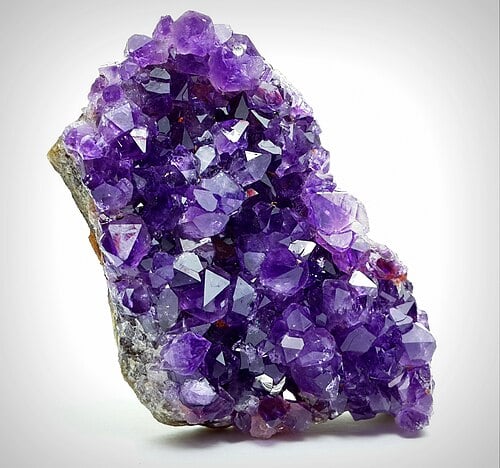
Deep purple, calming, and spiritually clear. Amethyst quiets mental chatter, deepens meditation, and opens the channel to intuitive knowing. Place it on the brow during meditation or Savasana, or keep it on your bedside table to support vivid dreaming.
Labradorite
Known as the stone of magic for its spectacular iridescence. Labradorite strengthens intuition and psychic clarity while protecting the aura from external interference. A useful companion for anyone developing their inner senses.
Lapis Lazuli
Deep indigo blue with gold flecks. While lapis is primarily associated with the Throat Chakra, its colour and frequency make it equally powerful for Ajna. It stimulates the third eye, enhances dream work, and supports access to deeper knowing.
Clear Quartz
The universal amplifier. Clear Quartz magnifies intention and sharpens clarity. It clears mental confusion and supports the crystal-clear perception that a balanced Ajna offers.
Essential Oils for the Third Eye Chakra
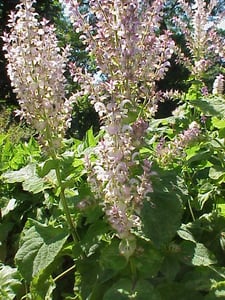
- Clary Sage: traditionally used to stimulate vivid dreaming and inner vision; diffuse at night or apply to the wrists before meditation
- Frankincense: expansive and sacred; supports deep meditation and expanded perception
- Rosemary: sharpens memory, concentration, and mental clarity; useful before study or focused work
- Mugwort: a traditional dreaming herb; diffuse or use as a pillow spray to support dream recall
Holding Ajna Practices Lightly
The third eye attracts more overclaiming than the rest of the system put together, and it is worth being plain about where the evidence sits. Focused attention practices have been studied reasonably well and show modest, real effects on attention and on emotional reactivity. Nothing in that literature supports claims about perception beyond the senses, and this guide is not making any.
None of that makes the sixth chakra less interesting. It makes it more useful, because what is left is something you can actually work with: the quality of your attention, and how much of it is available to you at any given moment.
Most people, most of the time, are running on a fraction of it. You know this from the ordinary experience of arriving somewhere with no memory of the trip. Ajna practices are aimed squarely at that, and their promise is closer to gathering than to opening.
Practise accordingly. A short daily period of steady attention on one thing, held without strain, will do more here than an elaborate visualisation. Ten minutes is plenty, and it is better done at the same time each day than done well occasionally.
One caution worth taking seriously. Intense concentration practice, particularly long sessions attempted without a teacher, can be destabilising for some people, and the yogic tradition has always said so in its own vocabulary. If a practice leaves you consistently anxious, sleepless, or oddly detached from ordinary life, stop and talk to somebody experienced before continuing.
Held lightly, this is one of the most rewarding parts of the system. Held as a claim about what you can see, it becomes a way of not looking at what is in front of you.
There is also a practical question that tends to get lost in the discussion of what the sixth chakra means, which is when you practise. Attention is not evenly available across a day. Most people have a window in the morning where steady focus is genuinely easier, and a stretch in the afternoon where it is not, and no amount of technique overcomes that pattern.
Find your window and protect it. If you can only manage ten minutes, put them where your attention already wants to gather rather than wherever the schedule happens to have a gap. This is the least mystical suggestion in this guide and it is the one most likely to make the practice hold.
Foods for the Third Eye Chakra
Indigo and purple foods nourish this chakra: blueberries, purple grapes, aubergine, purple cabbage, blackberries, and plums. Raw cacao is linked to states of heightened awareness. Omega-3 fatty acids from oily fish and walnuts directly nourish brain function and support the pituitary gland. Staying well hydrated is essential. The brain is approximately 75 per cent water.
Lifestyle: Dream Journalling and the Long View
Keep a notebook by your bed and write down whatever you remember the moment you wake. Dream journalling strengthens the line between the subconscious and the waking mind, and dream recall is one of the first faculties to return as Ajna clears.
Then practise the long view, literally. Gaze at the stars on a clear night, or look out over a wide landscape or the sea. Contemplating vastness shifts the mind from detail to pattern, which is precisely the movement this chakra governs.
Third Eye Affirmations
- I trust my inner knowing to guide me.
- I see clearly beyond surface appearances.
- My intuition is a reliable compass.
- I am open to wisdom from all dimensions of my experience.
- My mind is clear, focused, and illuminated.
Train Your Inner Vision With Loka
Intuition strengthens the way any skill does: through practice. Our Online Meditation Training gives you Trataka, OM meditation, Yoga Nidra, and a progressive structure that turns occasional insight into reliable inner guidance.
Nadi Shodhana and the wider pranayama system are taught step by step in the Online Breathwork Training. For the full map of the energy system, start with our guide to the 7 chakras in order.
Frequently Asked Questions
How do I know if my third eye is opening?
Common signs include more vivid and memorable dreams, a tingling or pressure at the brow centre, increased synchronicities that feel meaningful, intuitive hits that prove accurate, and a greater ability to sense the patterns beneath events. These experiences tend to arrive gradually with consistent practice, not all at once.
Is opening the third eye safe?
For most people, practices like meditation, Nadi Shodhana, and Yoga Nidra are completely safe and genuinely beneficial. If you have a history of psychosis, depersonalisation, or severe anxiety, it is worth working with a qualified teacher and your healthcare provider before going deeply into upper chakra practices. There is no rush.
Curious about the philosophy behind this? Our Online Yoga Philosophy Course explores the classical texts, including the subtle body, the chakras, and the nature of consciousness, in a way that is accessible and directly relevant to modern practice. Self-paced and available worldwide.
What blocks the third eye chakra?
In the modern world, the most common blocks are information overload and constant digital distraction, which pull attention permanently outward. A rigid disbelief in anything beyond logic, chronic poor sleep, and a life with no quiet time for reflection all contribute to an underactive Ajna.
How is the third eye different from the crown chakra?
Ajna is the centre of insight: it is how you perceive inner truth and see patterns clearly. Sahasrara, the Crown Chakra above it, is the centre of connection: how you relate to something larger than yourself. Think of the third eye as the instrument of seeing and the crown as the space that seeing opens into. They develop together, and both sit on the pineal-pituitary axis.
Why do I get headaches when meditating on the third eye?
Pressure or mild headaches at the brow during third eye meditation are common, especially early on. They usually indicate that you are concentrating too forcefully. The eye of wisdom opens with softness, not effort. Ease back, unclench the jaw and temples, return to the breath, and let the focus be gentle. If headaches are severe or persistent, rest and speak with a healthcare professional.
What is the 6th chakra?
The 6th chakra is Ajna, the Third Eye Chakra, located between the eyebrows. It governs intuition, imagination, perception, and inner clarity, and is associated with the pituitary and pineal glands. Its seed mantra is OM, its colour is indigo, and its element is light, or the mind itself. It is the centre yogis work with to see clearly, both inwardly and outwardly.
How do you activate the third eye chakra?
Consistency matters more than intensity. Daily Nadi Shodhana balances the two nadis that meet at the brow. Trataka trains steady inner vision, OM chanting vibrates the skull and brow directly, and Yoga Nidra opens the threshold state this chakra governs. Ten to twenty minutes a day of any combination, sustained over months, does more than any occasional intensive.
Working with the third eye makes more sense inside the whole map rather than on its own. Our 200-hour yoga teacher training in Bali covers the full chakra system alongside meditation, pranayama and the philosophy these ideas come from.
Internal Links
Continue your journey: Throat Chakra Guide | Crown Chakra Guide | 7 Chakras Overview
External Sources

The Loka Newsletter
Enliven your routine with exclusive spiritual content. There’s so much to learn.

Find us on Instagram
@lokayogaschool