Last updated on July 31st, 2026 at 09:17 am
The Embodied Feminine Arts: What They Are and Why They Matter
The Embodied Feminine Arts are a set of practices that reconnect you with the intelligence of your own body. Where much of modern life pulls us up into the head, into thinking, planning, and doing, these practices bring you back down into sensation, breath, and presence. They are not about performance. They are about coming home to yourself.
Much of this work touches on balancing opposing qualities in practice, and on calming the parasympathetic nervous system so the body can actually receive what it’s being offered.
What “Embodiment” Actually Means
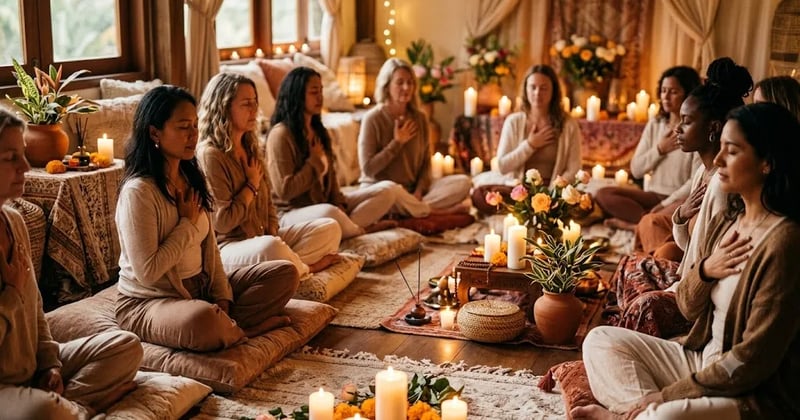
Embodiment is the felt experience of being in your body, rather than just thinking about it. It is the difference between reading about a stretch and feeling it. The Embodied Feminine Arts use movement, breath, sound, and stillness to build this felt sense, so that awareness lives in the body and not only in the mind.
The Practices Involved
Intuitive and free movement, letting the body lead rather than following set shapes.
Breath and sound, using the voice and breath to release tension and express what words cannot.
Cyclical awareness, working with natural rhythms and energy rather than pushing at a constant pace.
Stillness and rest, treating rest as a practice in its own right, not a reward for productivity.
Why This Matters
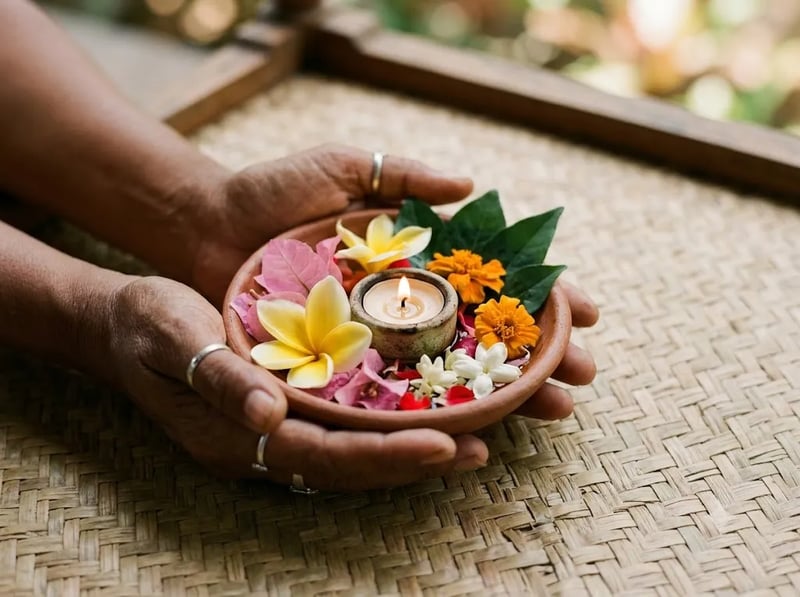
Many people, and women in particular, are taught to override the body’s signals: to push through tiredness, to stay small, to perform. Embodiment practices gently reverse this. They rebuild trust in your own sensations, soften the nervous system, and create space for creativity and rest. The result is not just relaxation, it is a steadier, more resourced way of living.
Who It Is For
You do not need to be flexible, artistic, or experienced. These practices meet you where you are. They suit anyone who feels disconnected from their body, who wants to move beyond purely physical exercise, or who is drawn to a softer, more intuitive way of working with themselves.
What a session actually looks like
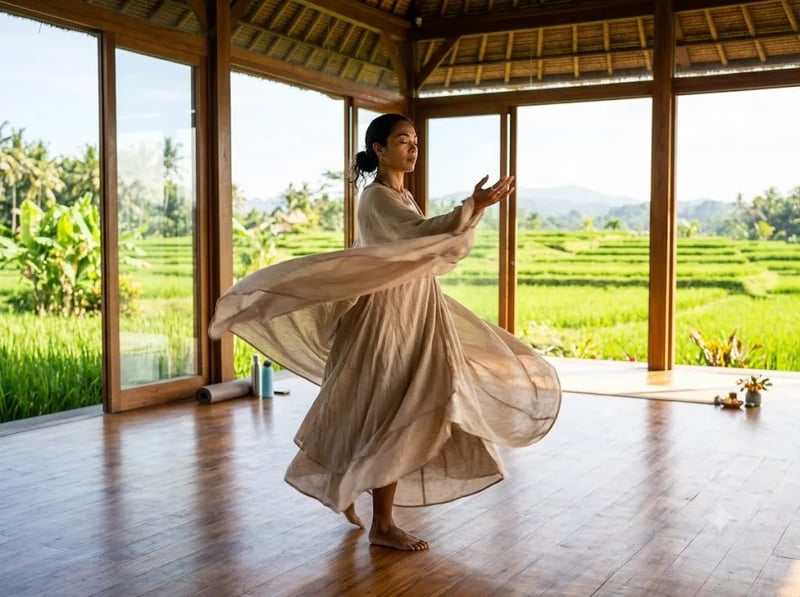
The phrase can sound abstract, so it helps to describe what actually happens in a room. A typical session is slow and unhurried. You might begin seated or lying down, bringing attention to the breath and to simple physical sensations, before moving into gentle, exploratory movement that is guided by how your body wants to move rather than by a fixed shape to achieve.
Movement is often paired with breath, sound, or stillness, and there is usually space for pause and reflection. You may be invited to notice where you hold tension, to move in ways that feel expressive rather than corrective, and to rest whenever you need to. Nothing is performed for an audience and nothing is graded.
Group size tends to be small, and the room itself is set up to feel safe: soft lighting, space to spread out, and no mirrors demanding that you assess yourself. That environment is part of the practice, because it is hard to drop into feeling when you are being watched or measured.
A course, as opposed to a single session, builds on this over time. Early sessions tend to focus on the felt sense of the body from the inside, and on establishing safety and trust. Later ones might explore movement, voice, creativity, or relationship to the body with more depth, always at a pace the group can hold. The through-line is attention rather than achievement.
A trauma-aware, consent-based approach
Because this work involves attention to the body and to feeling, it is held with care. A trauma-aware approach does not assume everyone in the room carries trauma, and it does not go looking for it. It simply recognises that bodies hold experience, and it builds in the conditions that let people stay comfortable and in control throughout.
In practice that means consent runs through everything. Invitations are offered rather than instructions imposed, so you always have the option to adapt, rest, or opt out of anything without explanation. Hands-on adjustment, if it features at all, is asked for first and easily declined. You choose how far to go and when to stop.
It also means pacing is gentle and the facilitator watches the room rather than pushing a plan. If something feels like too much, that is treated as useful information, not a failure. The aim is to widen your sense of choice and steadiness, never to provoke a big emotional release for its own sake.
Facilitators are also careful with their own language, avoiding instructions that imply there is a right way to feel. You are not told that a movement should be freeing or emotional; you are invited to notice whatever is actually there, which might be boredom, ease, or nothing much at all. This framing is deliberately non-clinical: it is a somatic and lifestyle practice concerned with presence and comfort in your own body, borrowing the language of safety and consent from good facilitation, not from diagnosis or treatment.
Who it is and is not for
This work tends to suit people who feel disconnected from their bodies, who spend most of their day in their heads, or who simply want a slower, more expressive counterpoint to goal-driven exercise. It can appeal to anyone curious about movement, breath, and self-expression without the competitiveness that sometimes creeps into fitness spaces.
Age, background, and fitness level matter far less than willingness to slow down and pay attention. People come to this work in their twenties and in their seventies, and no prior movement experience is assumed. What it asks of you is curiosity and honesty, not flexibility or strength.
It is worth being just as clear about what it is not. It is not therapy, and it is not a treatment for mental-health conditions. If you are dealing with a diagnosed condition, acute distress, or the aftermath of trauma, this practice may sit alongside professional support, but it is not a substitute for it. A good facilitator will say so and will encourage you to keep your clinical care in place.
It is also not a quick fix or a performance discipline. If you are looking for a hard workout, a measurable skill, or a fast transformation, this is probably not the right fit, and that is fine. If you are unsure whether it suits you, the honest guidance is to try a single session with a facilitator whose approach you trust, and to keep any existing support in place while you do.
How this connects to training at Loka
The skills at the centre of this work, attention, pacing, consent, and reading a room, are the same skills that make someone a good yoga teacher. A teacher who can sense when a student needs to slow down, who offers invitations rather than commands, and who holds a space where people feel safe to be in their bodies is drawing on exactly this foundation.
That is why this kind of embodiment sits naturally alongside teacher training rather than apart from it. Learning to feel your own experience clearly is what lets you notice someone else’s, and the consent-based language of this practice translates directly into how you cue, adjust, and care for a class.
None of this replaces the technical training a teacher needs, and it is not meant to. Think of it as the human layer underneath the anatomy and sequencing, the part that determines whether students feel met or merely instructed. If you teach or want to teach, it is worth reading our thoughts on the human side of the craft in our guide to becoming a better yoga teacher, which covers many of the same instincts from the teaching chair.
For those who want to go further, our 200-hour yoga teacher training in Bali is built around this kind of grounded, present, student-centred teaching. You leave not only with sequences and anatomy, but with the felt sense and the facilitation skills that let you hold a room with genuine care.
What a first session tends to involve
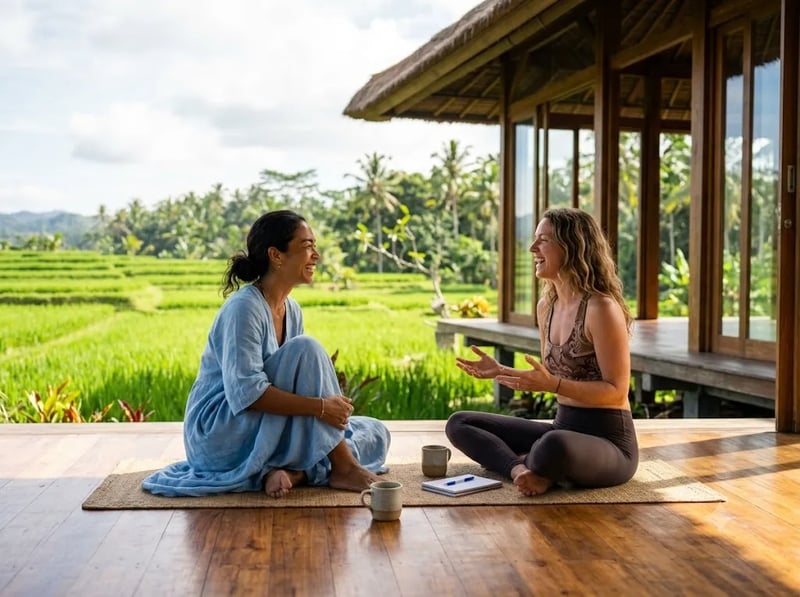
This is an area where the language is often evocative and the practical detail is often missing, which leaves people unsure what they are actually signing up for. A plain description of the mechanics makes it much easier to decide whether it is for you.
Most first sessions are less exposing than the description suggests. You will usually be in comfortable clothes you can move in, in a room with the lights low, and a good deal of the time is spent with your eyes closed. There is normally a short introduction, some gentle movement that does not require any particular skill, and periods of stillness. Nobody is assessed and there is no sequence to learn.
Movement in this work is typically unstructured rather than choreographed, which is the part most people find unfamiliar. Being invited to move however you like, without a shape to copy, can feel more exposing than a difficult posture would. That self-consciousness is close to universal in a first session and it usually eases considerably by the second or third, particularly in a group that meets regularly.
Emotion surfacing is common and worth expecting. Slowing down, closing your eyes and moving without a plan tends to bring things up, and tears in a session are ordinary rather than a sign that something has gone wrong. A well-run space will have made it clear beforehand that you can stop, sit out, or leave the room at any point without explanation.
Ask about the practical arrangements before you book. Group size, whether there is any physical contact between participants and whether it is optional, how the facilitator is trained, and whether there is time at the end to come back to yourself before leaving. Any facilitator worth attending will answer all of that directly, and hesitation on the contact question in particular is worth taking as an answer.
Give yourself a gentle afternoon afterwards. Plan nothing demanding, allow for feeling either unusually settled or unusually raw, and let someone know if you are travelling home alone after an evening session. If you are working with trauma, or if you have found body-based work destabilising before, it is worth speaking to your therapist first and choosing a facilitator with specific training in that area rather than a general one. Slower and better supported is the right approach here.
Between sessions, a small amount of solo practice does more than waiting for the next group. Ten minutes of moving to music in a room by yourself, with nobody watching and no shape to achieve, is the same skill in a lower-stakes setting, and for many people it is where the self-consciousness finally goes. Put on something you like, close the curtains if that helps, and let it be as unremarkable as you need it to be. What you are practising is the willingness to move without a plan, and that is more accessible alone than it ever is in a room of people.
How to tell whether a session landed
There is a question that comes up in almost every first session, usually near the end and usually quietly: how do I know if I am doing it right. It is a fair question and it deserves a straight answer, which is that there is no right in the way there is a right alignment for a posture.
What there is instead is a sense of whether something landed. You will often know this in the hours afterwards rather than during. You might find you are sleeping differently, or that you noticed you were holding your jaw, or that a conversation you had been avoiding felt possible.
None of that is dramatic and none of it arrives on schedule. Some sessions leave you with nothing you can name, and that is ordinary rather than a failure. The practice works cumulatively, in the way that most honest practices do, and the only real measure is whether you are living slightly closer to yourself six months from now than you were when you started.
It also helps to lower the stakes of any single session. People often arrive hoping one afternoon will resolve something that took years to settle in, and that hope quietly sets the session up to disappoint. Come with curiosity rather than a brief, and you give the work room to do what it actually does.
If you are unsure whether to book a second session, the useful question is not whether the first one worked. It is whether you would like to spend more time in that quality of attention, because that is the thing being practised, and it is the thing that carries over into the rest of your week. If this resonates and you want to go deeper, our online embodied feminine arts course is a good place to start.
Train With Loka
If this speaks to you, there is a whole path here to explore. Our Embodied Feminine Arts training guides you through these practices step by step, whether for your own growth or to hold space for others. If you want something gentler to begin with, our guide to restorative yoga is a good place to start.
Frequently Asked Questions
Do I need dance or movement experience?
No. These practices are about sensation and presence, not technique or performance.
Is this a religious or spiritual practice?
It is a body-based practice. It can be deeply meaningful, but it does not require any particular belief.
Is it only for women?
The practices draw on the feminine as a quality of being, receptive, cyclical, intuitive, that everyone holds. The training is designed with women in mind but the principles are universal.
How is it different from yoga?
Yoga is one doorway into embodiment. These arts add free movement, voice, and cyclical awareness to deepen the felt sense of being in the body.
Is embodiment practice the same as therapy?
No. Embodiment work is a somatic and lifestyle practice focused on presence, movement, and comfort in your body. It is not a treatment for mental-health conditions and does not replace professional care. It can sit alongside therapy if you are working with a practitioner, but it is offered as a practice for wellbeing, not as clinical support.
The Loka Newsletter
Enliven your routine with exclusive spiritual content. There’s so much to learn.

Find us on Instagram
@lokayogaschool