Last updated on September 22nd, 2026 at 08:09 am
The 7 Chakras in Order: What Each One Governs and How to Balance Them
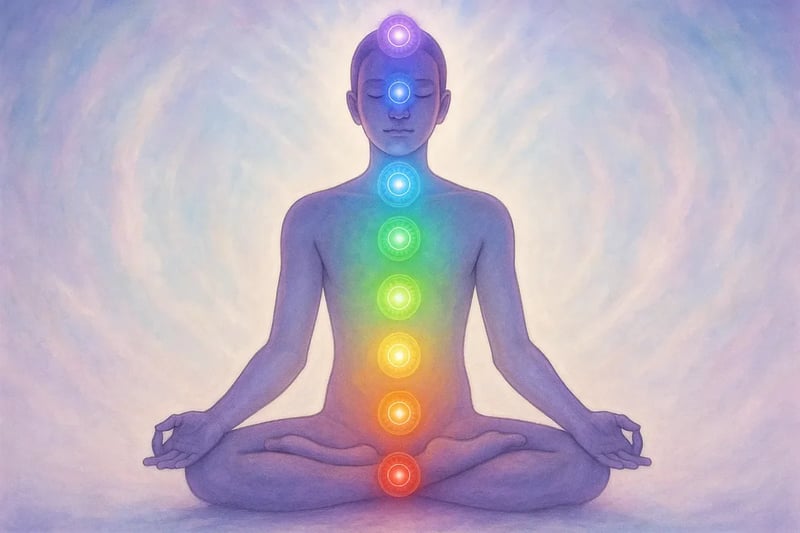
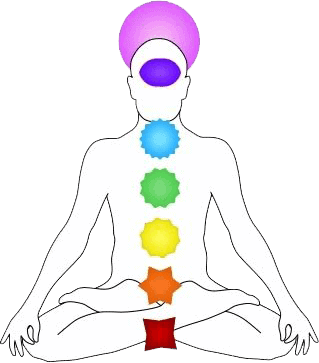
The 7 chakras are the seven main energy centres described in yogic and tantric tradition, mapped along the spine from its base to the crown of the head: muladhara (root), svadhisthana (sacral), manipura (solar plexus), anahata (heart), vishuddha (throat), ajna (third eye), and sahasrara (crown). Each is linked to a location, an element, and a theme of human experience.
The chakra system is a map of your inner world. It originated in India and is described in the tantric texts of the first millennium CE; the seven-chakra scheme taught today is later than the Vedas. The word chakra (cakra in Sanskrit) means wheel. In practice, it refers to seven spinning energy centres that run along your spine, each governing a distinct area of your physical, emotional, and spiritual life.
This guide walks through the chakras in order, from root to crown. For each one you will find what it governs, what happens when it is blocked, and practical ways to bring it back into balance. Each section links to a full deep-dive guide for when you are ready to go further.
What Is a Chakra?
The chakras exist in the subtle body, the energetic layer of your being that sits beneath the physical one. They are not organs you can find on a scan. Modern writers line them up with nerve plexuses and endocrine glands, and that map is a twentieth-century overlay rather than something the source texts claim; treat it as a way of organising attention, not as anatomy.
Think of the seven chakras as a circuit. When energy moves freely through all seven, you feel well: physically grounded, emotionally steady, creatively alive, and spiritually connected. When one centre is congested or overactive, the effects ripple through the whole system. Knowing which centre is affected gives you somewhere concrete to start. All of our chakra guides live in one place if you want to keep reading.
The 7 Chakras in Order: Quick-Reference Table
| # | Sanskrit | Common Name | Location | Element | Colour |
|---|---|---|---|---|---|
| 1 | Muladhara | Root Chakra | Base of spine | Earth | Red |
| 2 | Svadhisthana | Sacral Chakra | Lower abdomen | Water | Orange |
| 3 | Manipura | Solar Plexus Chakra | Upper abdomen | Fire | Yellow |
| 4 | Anahata | Heart Chakra | Centre of chest | Air | Green |
| 5 | Vishuddha | Throat Chakra | Throat | Ether | Blue |
| 6 | Ajna | Third Eye Chakra | Between the eyebrows | Light | Indigo |
| 7 | Sahasrara | Crown Chakra | Top of the head | Consciousness | Violet / White |
1. Muladhara: The Root Chakra
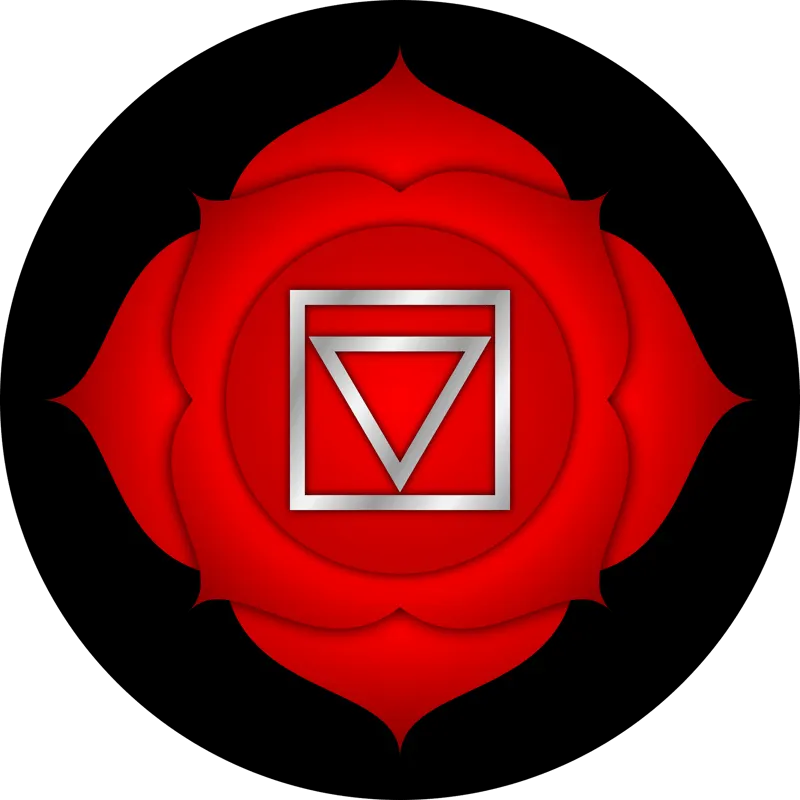
If you have been feeling anxious for no clear reason, struggling to feel settled, or finding it hard to trust that things will work out, start here. Muladhara is the foundation of the entire system. It governs your sense of safety, physical groundedness, and basic survival needs. Everything above it depends on this one being solid.
When it is balanced: You feel stable, secure, and physically well. Life feels manageable even when it is busy. Money, home, and health feel like things you can deal with rather than things that are happening to you.
When it is blocked: Persistent anxiety, difficulty committing to anything, lower back pain, and a sense of nothing ever feeling solid or safe. Adrenal fatigue and digestive sluggishness are common physical signs.
Practices: Grounding yoga poses (Mountain, Warrior, Malasana), walking barefoot on earth, root vegetables, LAM mantra, red jasper crystal.
→ Complete Guide to the Root Chakra (Muladhara) Many people also work with specific chakra stones and crystals to support this process.
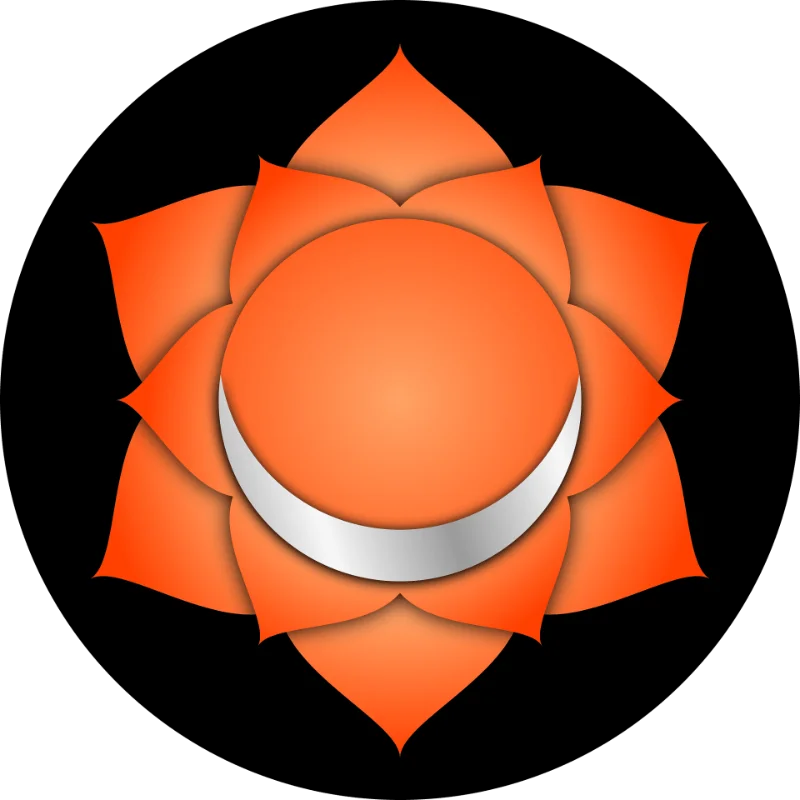
2. Svadhisthana: The Sacral Chakra
When the Sacral Chakra is blocked, life can feel oddly flat. You might still be going through the motions but joy, creativity, and genuine connection stop feeling natural. Svadhisthana governs your emotional life, creative expression, and your capacity for pleasure.
When it is balanced: You feel creatively alive, emotionally fluid, and comfortable with intimacy and change. There is a sense of flow to your days rather than grinding resistance.
When it is blocked: Creative blocks, emotional numbness or overwhelm, guilt around pleasure, and difficulty forming close relationships. Reproductive or bladder issues can be physically linked.
Practices: Hip-opening yoga poses (Pigeon, Baddha Konasana), swimming or bathing, creative expression without judgment, VAM mantra, orange carnelian crystal.
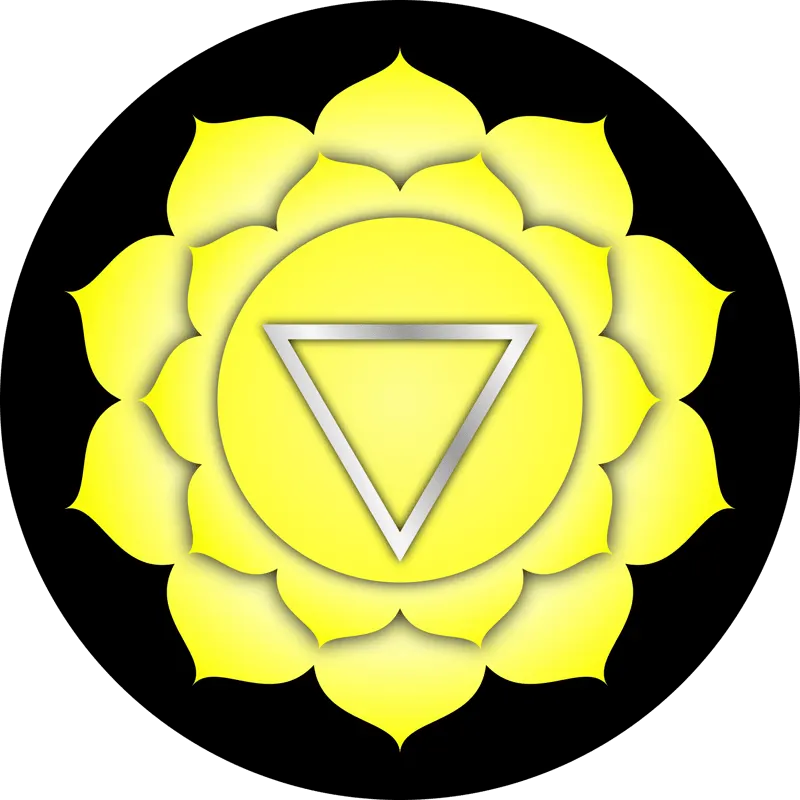
3. Manipura: The Solar Plexus Chakra
Confidence. The ability to make a decision and follow through on it. A gut you actually trust. These qualities live in Manipura. The Solar Plexus Chakra governs personal power, self-worth, and your capacity to act on what you know to be right.
When it is balanced: You set clear boundaries, make decisions without second-guessing yourself constantly, and feel a stable sense of who you are. You take up the space you are entitled to.
When it is blocked: Low self-worth, indecisiveness, chronic digestive issues, and a tendency to hand your power to others. An overactive Manipura can look like control, perfectionism, or aggression.
Practices: Core-strengthening yoga (Boat Pose, twists), Kapalabhati breath (stimulating rather than calming, as Telles 2011 measured; learn it with a teacher, and skip forceful breathing if you have a lung condition or are pregnant, see Johnson 2004), RAM mantra, yellow citrine crystal.
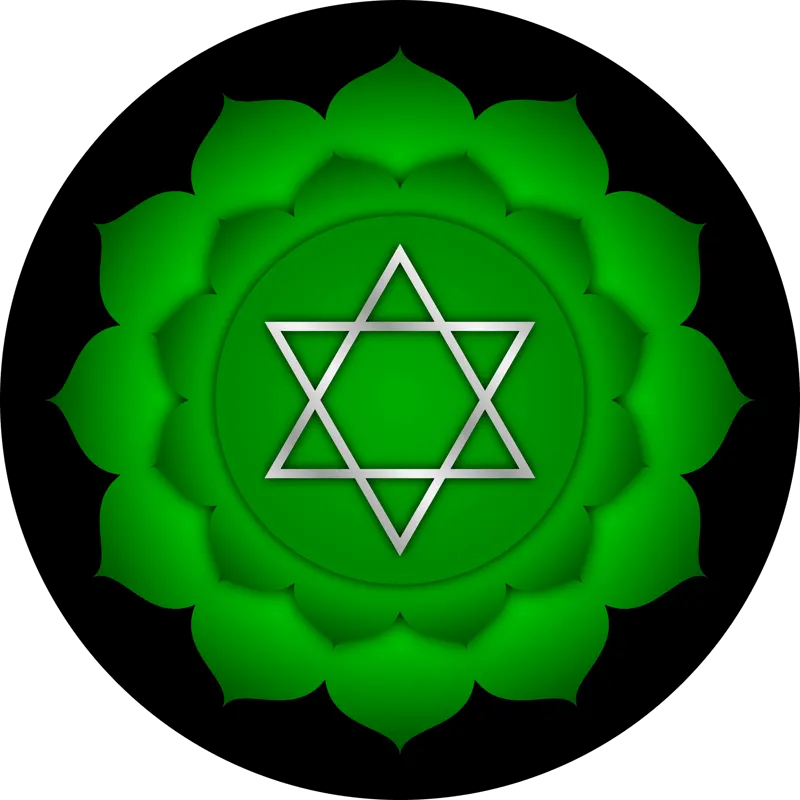
4. Anahata: The Heart Chakra
The Heart Chakra sits at the centre of the system, between the three lower chakras and the three upper ones. It is where the physical meets the spiritual. Anahata governs your capacity for love: not just romantic love, but compassion, forgiveness, and genuine connection with the people around you.
When it is balanced: You give and receive love without fear. You forgive without needing to forget. You feel genuinely connected to others and to yourself.
When it is blocked: Feeling closed off, holding grudges, fear of vulnerability, loneliness, and a need to please everyone. Tightness in the chest and shallow breathing are common physical signs.
Practices: Heart-opening yoga poses (Camel, Cobra, Fish), gratitude journaling, loving-kindness meditation, YAM mantra, rose quartz crystal.
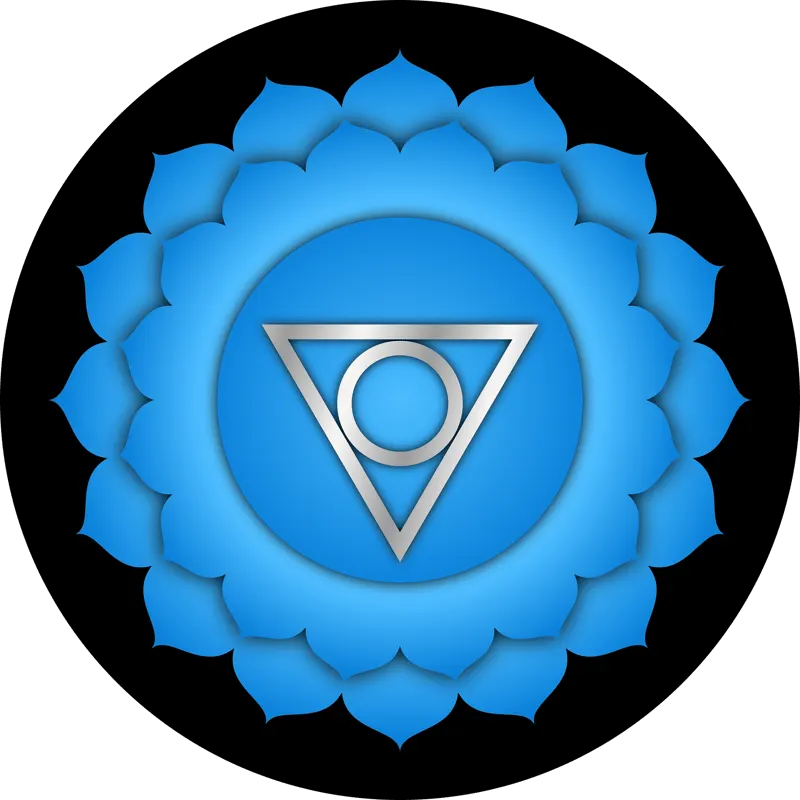
5. Vishuddha: The Throat Chakra
Have you ever swallowed words you genuinely needed to say? Felt a tightness in the throat when the truth felt too uncomfortable to voice? The Throat Chakra governs authentic communication, self-expression, and your ability to listen as well as speak.
When it is balanced: You communicate clearly and honestly. You say what you mean. You listen without preparing your next response before the other person has finished.
When it is blocked: Fear of speaking, chronic throat tightness, people-pleasing, or a pattern of saying what others want to hear. An overactive Vishuddha can show up as constant talking, interrupting, or gossip.
Practices: Chanting and singing, journaling, neck rolls and throat-opening yoga, HAM mantra, blue lapis lazuli crystal.
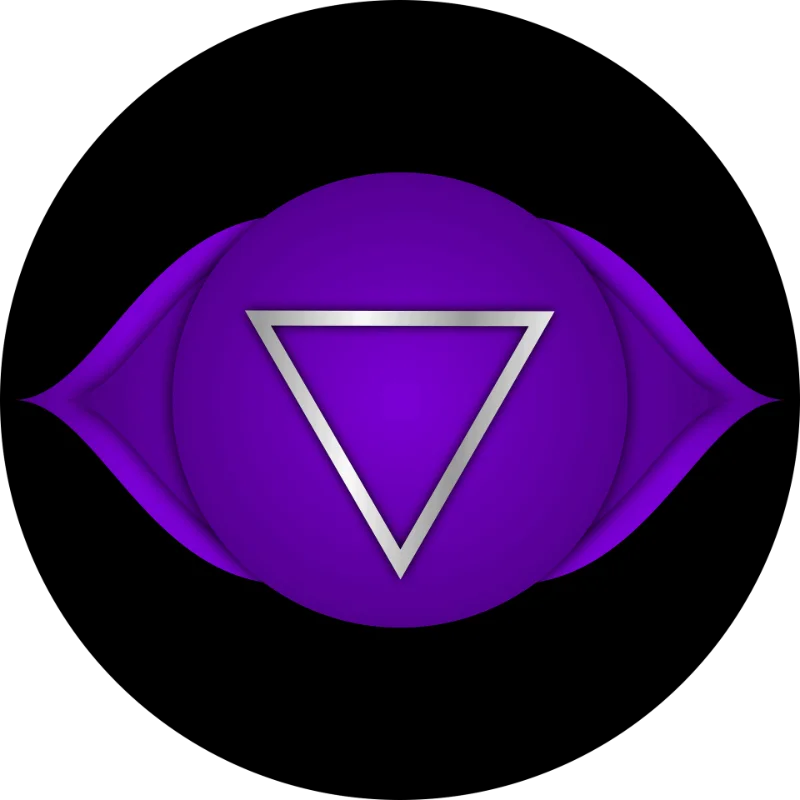
6. Ajna: The Third Eye Chakra
There is a kind of knowing that has nothing to do with logic. You walk into a room and sense something is off. You get a feeling about a decision before you have thought it through. That is Ajna. The Third Eye Chakra governs intuition, inner vision, and your ability to see past the surface of things.
When it is balanced: You trust your gut. You make clear decisions. You can zoom out and see the bigger picture even when you are in the middle of something difficult.
When it is blocked: Confusion, over-reliance on logic at the expense of instinct, inability to visualise a direction, and frequent headaches. An overactive Ajna can manifest as obsessive thinking.
Practices: Meditation focused on the space between the brows, visualisation practices, dream journaling, OM mantra, amethyst crystal.
7. Sahasrara: The Crown Chakra
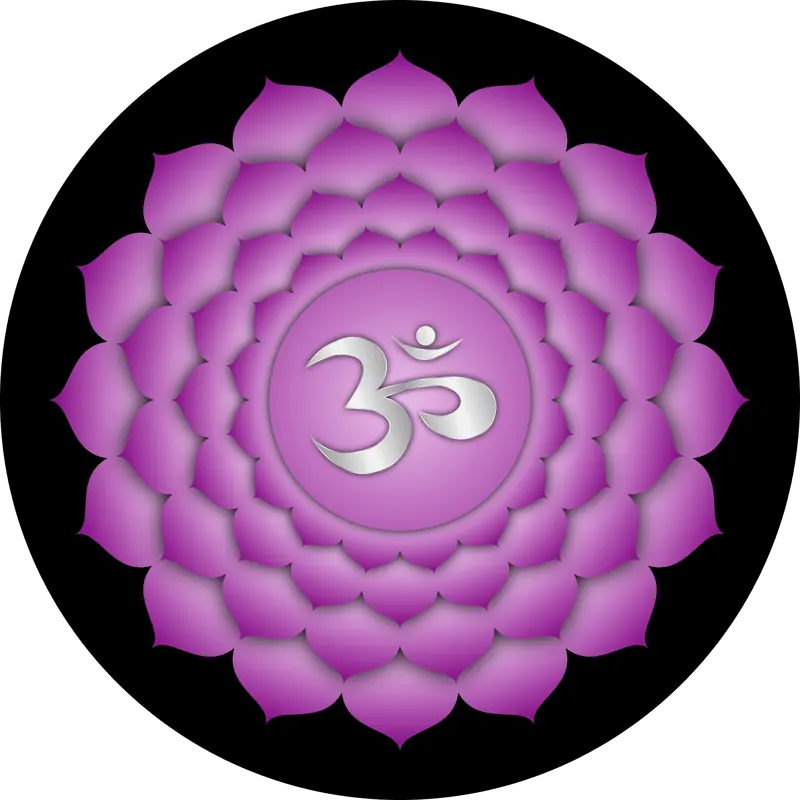
At the very top of the chakra system, beyond thought and beyond the personal self, is Sahasrara. The Crown Chakra governs your connection to something larger than yourself: universal consciousness, spiritual awareness, and the quiet recognition that you are not separate from life.
When it is balanced: You feel a deep, quiet sense of meaning and belonging. Life feels purposeful. You hold your personal identity lightly, without clinging to it.
When it is blocked: Existential emptiness, cynicism, spiritual disconnection, or a purely materialistic focus on life. Chronic headaches and neurological symptoms can sometimes be associated.
Practices: Silent meditation (the practice here with the best evidence: reviews find moderate reductions in anxiety and low mood from regular meditation programmes, Goyal 2014), time in nature, selfless service (seva), OM or silence, clear quartz crystal.
How to Work With the Chakra System
You do not need to overhaul your entire practice to start working with the chakras. The most effective approach is to choose one that feels relevant to where you are right now.
Notice which sections resonated as you read. Perhaps the root chakra descriptions felt familiar. Perhaps the throat chakra section landed closer to home. Start there. Read the full guide for that chakra, choose one practice, and do it consistently for a week before moving on.
The chakras are not independent units, they form one connected system. A grounded root chakra creates the safety that lets creativity flow through Svadhisthana. Personal power in Manipura supports the open-heartedness of Anahata. Clear communication in Vishuddha expresses the inner sight of Ajna and, in time, the unity of Sahasrara. The system is designed to be worked from the bottom up: it is harder to access genuine intuition if you are running on chronic anxiety and no sense of safety, and harder to speak your truth if your heart is closed. The foundation matters.
Deepen Your Understanding With Loka
The chakra system is explored in depth inside both our Online Meditation Teacher Training and our 200-Hour Yoga Teacher Training in Bali. If you want to understand how to work with this system in your own practice, and eventually guide others through it, either course will give you the practical foundation to do that.
Explore the Online Meditation Teacher Training or the 200-Hour Yoga Teacher Training in Bali.
Are the Chakras Real? An Honest Answer
This deserves a direct answer rather than a diplomatic one, because the evasive version helps nobody.
There is no anatomical structure corresponding to a chakra. Dissection does not find them and imaging does not show them, and the National Center for Complementary and Integrative Health states plainly that there is no scientific evidence supporting the existence of the energy field that subtle-body therapies are built around.
That settles one question and leaves a more interesting one open. The chakra system was never a claim about tissue. It is a map of experience: a structured description of where emotional and attentional states tend to be felt in the body, built by people paying unusually close attention over a very long period.
Read that way it holds up well. Anxiety is commonly felt in the chest and throat, shame in the belly, grief behind the sternum. Those associations are consistent enough that clinicians ask about them directly. The map is useful because the link between emotion and bodily sensation is real, even though the conduits it describes are not.
The practices attached to the system have their own evidence, independent of the model. Goyal and colleagues’ meta-analysis in JAMA Internal Medicine found moderate-strength evidence that meditation programmes reduce anxiety, depression, and pain. None of that requires a subtle body to be true.
So use the framework as a language for attention rather than as physiology. Say “notice the tightness in your throat” rather than “your throat chakra is blocked”. The first is observable, the second is a claim you cannot support, and a student who later works that out will discount everything else you taught them.
How the List Settled on Seven
Seven gets presented almost everywhere as the number of chakras, as though someone had once counted organs. It is better understood as one arrangement among several, and the one that happened to travel.
The source texts do not agree. Some describe six centres along the spine with a seventh point above them that is deliberately not counted as a chakra at all. Others work with four, or eight, or as many as 21. Lineages placed them at different heights, gave them different petal counts, and disagreed about which sounds, elements, and deities belonged where. Dates and authorship for much of this material are contested, and translations differ enough that two English versions of a single passage can support two different diagrams.
The seven-centre model most people meet arrived in English through early twentieth-century translation, and was then taken up by Western psychology and, later, by colour theory. The rainbow mapping, red at the base rising to violet at the crown, is a modern addition. It is not in the older material.
None of that empties the model out. It changes what kind of thing it is. A map drawn to help you find your way through your own experience is doing something different from a diagram of anatomy, and it should be judged on whether it helps you notice something you would otherwise have walked past.
So hold the correspondences loosely. If someone tells you a sore throat means your throat chakra is blocked, that is not the tradition speaking, and it is not a claim the texts make. See a doctor about the throat. Use the framework for the harder question sitting underneath it, which is usually about what you have not been saying.
If you would rather work with one centre than with all seven at once, working out which one is asking for your attention is the more useful place to begin.
Work With Your Chakras in Practice
Understanding the chakra system is the map; meditation is the territory. Loka Yoga School’s Online Meditation Training teaches the practices that work with each energy centre directly, from grounding techniques for Muladhara to the subtle awareness practices of the upper chakras.
Each individual chakra guide linked throughout this article goes deeper on the practices, imbalance signs, and correspondences for that centre
FAQ
Are chakras real?
Chakras are real as a framework for self-understanding and as a map of the relationships between physical, emotional, and psychological experience. Whether they exist as literal energy structures is a philosophical question science has not resolved. What is well documented is that the practices associated with chakra balancing, specific asana, pranayama, and meditation, produce genuine physiological and psychological effects.
How do I know if a chakra is blocked?
Look at the quality of your experience in the domain that chakra governs. Persistent anxiety and financial insecurity point to Muladhara. Chronic creative blocks point to Svadhisthana. Difficulty asserting yourself points to Manipura. Fear of vulnerability points to Anahata. Difficulty speaking your truth points to Vishuddha. Disconnection from intuition points to Ajna. Loss of meaning and purpose points to Sahasrara.
Can yoga balance the chakras?
Yes. Specific asana, pranayama, meditation, and mantra practices are traditionally associated with each chakra. A well-designed yoga practice addresses the whole energetic system rather than focusing on a single chakra in isolation.
Do I need to work on all seven chakras at once?
No. Starting with the chakra most relevant to your current experience is more productive than trying to address all seven simultaneously. Foundational work on Muladhara, grounding and safety, tends to support the entire system.
How does the chakra system relate to the nervous system?
Each chakra corresponds roughly to a major nerve plexus and endocrine gland along the spinal column: the root chakra to the sacral plexus and adrenal glands, the sacral chakra to the hypogastric plexus and reproductive glands, the solar plexus chakra to the coeliac plexus and pancreas, the heart chakra to the cardiac plexus and thymus, the throat chakra to the pharyngeal plexus and thyroid, the third eye to the brain and pituitary gland, and the crown chakra to the cerebral cortex and pineal gland. These anatomical correspondences suggest the chakra system may represent an ancient, intuitive mapping of the neuroendocrine axis.

The Loka Newsletter
Enliven your routine with exclusive spiritual content. There’s so much to learn.

Find us on Instagram
@lokayogaschool