Last updated on August 3rd, 2026 at 02:28 pm

Vishuddha Chakra: The Complete Guide to the Throat Chakra
Have you ever swallowed words you genuinely needed to say? Felt a lump in your throat when the truth felt too uncomfortable to voice? The Throat Chakra, Vishuddha, is where your inner world meets the outer one through sound, words, and creative expression. It sits at the throat and governs everything you communicate: what you say, how you listen, and whether the life you are living actually matches who you are inside.
This guide covers everything: Sanskrit roots, anatomy, balance and imbalance signs, yoga sequence, breathwork, mantra, crystals, oils, foods, affirmations, and FAQs.
At a Glance
| Sanskrit Name | Vishuddha (pure / purified) |
| Number | 5th Chakra |
| Location | Throat / cervical plexus |
| Element | Ether / Space (Akasha) |
| Color | Blue (sky blue / turquoise) |
| Seed Mantra (Bija) | HAM (pronounced "hum") |
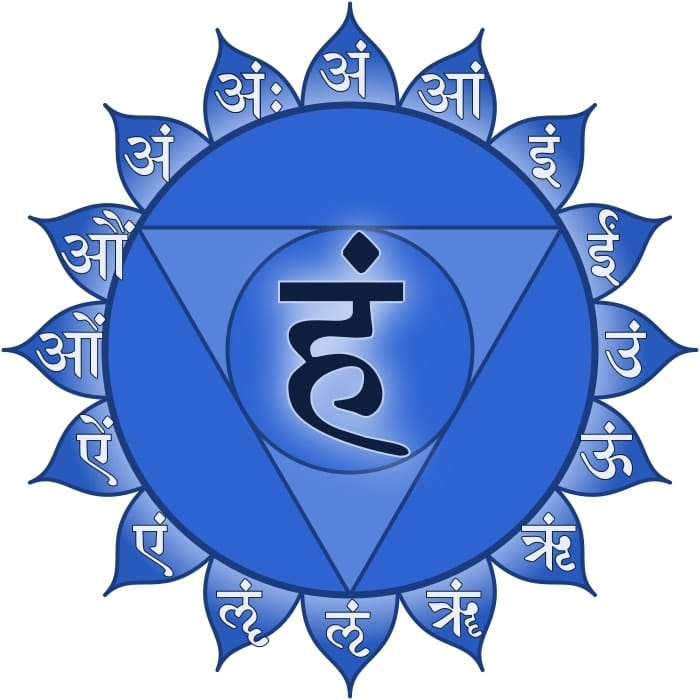
| Symbol | 16-petalled blue lotus; downward-pointing triangle inside a circle |
| Ruling Planet | Mercury |
| Associated Gland | Thyroid and parathyroid glands |
| Nerve Plexus | Cervical plexus |
| Sense | Hearing (Shabda) |
| Animal Symbol | White elephant |

Sanskrit Etymology and Symbolism
Vishuddha translates as “pure” or “especially pure.” Vi is an intensifier and shuddha means pure. The name reflects the chakra’s function: speaking your truth clears the entire energetic body of what has been suppressed or unexpressed.
The sixteen-petalled blue lotus bears the sixteen Sanskrit vowels on its petals, placing sound and speech at the heart of this centre. The white elephant returns here, carrying the nectar of knowledge. The white represents purity of intent and the elephant represents the power of sound to carry wisdom across time.
Location and Anatomy
Vishuddha sits at the throat, centred at cervical vertebrae C3 to C5. It governs the throat, neck, jaw, mouth, tongue, ears, shoulders, and the structures of communication: the vocal cords, trachea, and oesophagus.
The primary associated gland is the thyroid, a butterfly-shaped gland in the lower neck that regulates metabolism, body temperature, and energy through the hormones T3 and T4. Thyroid dysfunction, whether hypothyroid (sluggish) or hyperthyroid (over-active), reflects the two poles of Vishuddha imbalance with striking clarity. The parathyroid glands, four small glands behind the thyroid, regulate calcium levels and bone health.

Signs of a Balanced Throat Chakra
- Clear, confident, and authentic expression in speech and writing
- You listen with genuine attention, not just waiting for your turn
- Creative work flows naturally, whether through words, music, or art
- You can set limits through calm, honest speech rather than silence or aggression
- What you say matches what you actually think and feel
- You are comfortable with silence; you do not need to fill every moment
Signs of an Imbalanced Throat Chakra
Physical
- Recurrent sore throats, laryngitis, or a chronically tight or hoarse voice
- Thyroid dysfunction
- Neck pain and persistent shoulder tightness
- Jaw tension, teeth grinding, or TMJ disorder
- Tinnitus or recurrent ear infections
Psychological and Emotional
- Fear of speaking up, staying silent when you know you need to speak
- Dominating conversations or talking over others (over-active)
- Gossiping or indirect communication patterns
- Creative blocks in writing, music, or verbal expression
- A persistent sense of being misunderstood
- A voice that cracks or breaks when you speak under pressure
- Trouble saying no
- Avoiding conflict or confrontation at any cost
Common Causes of Imbalance
Being silenced, ridiculed, or punished for speaking up as a child is the most direct source of Vishuddha wounding. “Children are seen and not heard.” Being talked over consistently. Having your experience denied or minimised. Growing up in a home where honesty came with consequences. In adulthood, environments where your voice carries less weight continue the pattern.
How to Unblock the Vishuddha Chakra
Unblocking this centre is less about one dramatic release and more about daily, low-stakes use of your voice. Start with sound that carries no performance pressure: humming, chanting HAM, or singing alone. Vibration is the most direct medicine this centre has.
Then add honesty in small doses. Say one true thing a day that you would normally swallow: a preference, a boundary, a correction. Combine this with the neck releases, chest openers, and Bhramari breath below, and the throat begins to open from both directions, physical and expressive.
Your environment matters as much as your practice. Spend time with people who let you finish sentences, and use music freely: sing along, hum, chant. A voice that is used kindly every day forgets how to hide.
There is a mental-health dimension too. When what happens inside you never finds words, it tends to convert into stress and anxiety. Opening the channel, to a friend, a journal, or a teacher, relieves the isolation that feeds both.
Yoga Poses for the Throat Chakra
Neck-releasing poses, chest openers, and inversions that bring circulation to the throat region are most supportive for Vishuddha.
1. Setu Bandha Sarvangasana -- Bridge Pose
Lie on your back with knees bent and feet flat on the floor, hip-width apart. Press the feet down and lift the hips. Interlace the hands under the body and press the tops of the shoulders into the mat. The throat stretches gently as the chin draws slightly toward the chest. Hold for five to eight breaths.
2. Matsyasana -- Fish Pose
Slide your hands under your buttocks with palms down. Press the elbows in and arch the upper back, resting the crown or back of the head on the floor. The throat opens fully toward the sky and the thyroid region is gently stimulated.
3. Halasana -- Plow Pose
From Shoulder Stand, lower the feet to the floor behind the head. The throat is first compressed then released, a direct stimulator of the thyroid. Practise only if you are familiar with inversions. Hold for five to ten breaths.
4. Ustrasana -- Camel Pose
On the knees, open the chest and let the head drop back gently without collapsing the neck. The entire front of the throat lengthens. This opens the heart and throat together, a useful combination for anyone holding unexpressed emotion.
5. Neck Stretches
Seated, drop the right ear to the right shoulder and breathe into the left side of the neck for five breaths. Then slowly roll the chin toward the chest and across to the left. This releases the tension in the neck and jaw where unspoken words tend to accumulate.
6. Lion's Breath -- Simhasana
Sit back on your heels with fingers spread wide on the thighs. Inhale through the nose, then exhale with force through an open mouth: tongue extended, eyes wide, sound fully released. Repeat three to five times. This is one of the most direct tools for releasing throat constriction.
Ready to take your practice further? Our 200-Hour Yoga Teacher Training is an immersive in-person programme in Bali. It covers asana, pranayama, philosophy, anatomy, and teaching methodology in full: everything you need to teach with depth and confidence.
Pranayama: Ujjayi and Bhramari
Ujjayi breath, the oceanic sound created at the back of the throat, directly stimulates the vocal structures and thyroid region. Practise with awareness of the throat through your entire asana session.
Bhramari, or humming bee breath, involves closing the ears with the thumbs, the eyes with the index fingers, and humming on the exhale. The vibration resonates in the throat, skull, and chest, stimulating the vagus nerve and releasing tension. Research shows Bhramari reduces stress hormones and blood pressure. Practise ten to fifteen rounds.
Go deeper with breathwork. Loka’s Online Breathwork Training takes you through the full spectrum of pranayama, from grounding and calming techniques to energising practices that build heat and focus. Self-paced and accessible from anywhere.

Mantra and Meditation
The bija mantra is HAM, pronounced “hum.” Its vibration resonates in the throat and palate and carries the quality of space and openness.
Sit with a straight spine and place one hand at the throat. On each exhale chant HAM and feel the vibration in the throat, palate, and skull. Visualise a clear sky-blue light at the throat, open like a cloudless sky. You might also try writing one thing you have been holding back before you sit to meditate. Putting it on paper first can make releasing it through sound feel more natural. The 741 Hz Solfeggio frequency supports self-expression and this practice.
Build a consistent meditation practice. Our Online Meditation Training gives you the techniques, guided sessions, and progressive structure to establish a daily practice, including chakra-focused meditations like this one. Study at your own pace, from anywhere.
Crystals for the Throat Chakra
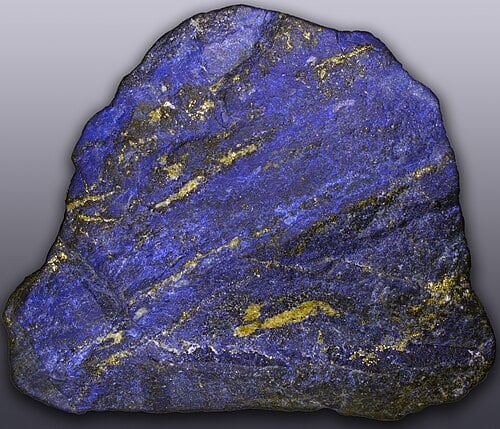
Lapis Lazuli
Used by ancient Egyptian royalty and associated with truth and wisdom. Lapis Lazuli encourages the kind of honest, clear communication that comes from genuine inner knowing rather than performance. Wear it at the throat.
Aquamarine
Connected to the flow of water through open channels. Aquamarine soothes anxiety around speaking and encourages calm, clear communication. Particularly useful for those who tend to clam up under pressure or in conflict.
Blue Lace Agate
Gentle and nurturing. Blue Lace Agate gradually dissolves the fear of being heard and is a good first stone for anyone beginning to find their voice. Hold it during difficult conversations.
Sodalite
Bridges the throat and the third eye. Sodalite is useful when you can sense what you want to say but cannot find the words. It encourages thoughtful, authentic expression grounded in inner truth.
Essential Oils for the Throat Chakra
- Eucalyptus: cooling and clearing; opens the airways and supports expressive freedom
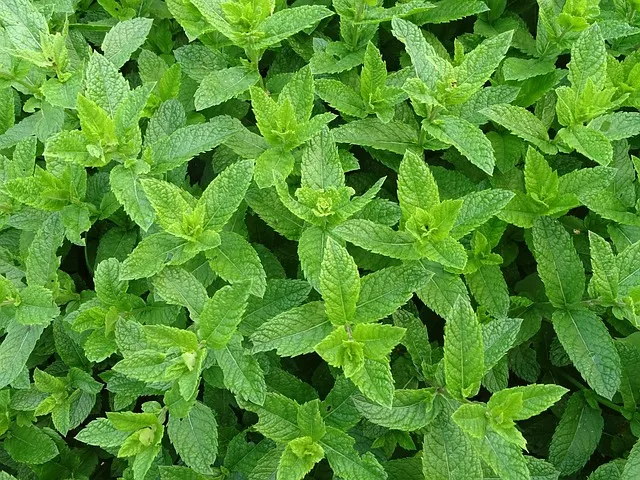
- Peppermint: stimulating and clarifying; useful before speaking or presenting
- Blue or Roman Chamomile: soothing to an inflamed or over-reactive throat; calms reactive speech
- Spearmint: gentle and encouraging; useful for those beginning to find their voice
Foods for the Throat Chakra
Blue and purple foods and cooling liquids support Vishuddha. Blueberries, blackberries, purple grapes, plums, and figs are all good choices. Herbal teas with lemon, ginger, and honey soothe the throat and keep the energy flowing. Seaweed and sea vegetables provide natural iodine, which supports thyroid function directly. Staying well hydrated keeps the vocal cords healthy and the energy of this chakra moving.

What Vishuddha Asks of You in Ordinary Conversation
Throat chakra material tends to concentrate on speaking your truth, which is a large phrase for something that is usually very small in practice. The daily version is whether you said the mildly inconvenient thing at the moment it was relevant, or whether you said it three days later to someone else.
That gap is where most people actually live. It is rarely about courage in any dramatic sense. It is about timing, and about a habit of postponement that feels reasonable each time and compounds badly.
Chanting and mantra work earn their reputation here for an unromantic reason: they get you used to the physical sensation of your own voice carrying. If you have spent years speaking quietly, hearing yourself at volume in a room is genuinely strange, and doing it somewhere safe first makes it less strange elsewhere.
The other half of this chakra is listening, and it is the half that gets skipped. Vishuddha is traditionally associated with discernment and with purification, both of which imply taking something in and sorting it rather than only sending things out. A person who talks freely and hears nothing is not balanced here.
A practical test you can run this week. In your next three disagreements, say back what the other person is claiming before you respond to it, in your own words, and see whether they agree that you have it right. Most of the time they will correct you, which tells you the argument you were about to have was not the one in front of you.
If you want one thing to work on, make it the delay. Say the small awkward thing within a day. Almost everything this chakra is associated with follows from that one habit.
One more thing worth naming: the throat is where tiredness shows up first for people who teach, present, or look after others all day. If your voice is going by Thursday every week, that is not a blockage in any subtle sense, it is load, and it responds to rest and to better vocal habits rather than to more chanting.
Treat your voice as something with a budget. Speak at the volume the room actually needs, drink more water than feels necessary, and take the quiet you are entitled to between sessions. Work on this chakra goes much better when the instrument is not already worn out before you start.
Throat Chakra Affirmations
- I speak my truth with clarity and care.
- My voice matters and deserves to be heard.
- I listen as fully as I speak.
- I express myself honestly in all areas of my life.
- Honesty is the foundation of my relationships.
Find Your Voice With Loka
Speaking your truth is a practice, not a personality trait. Our Online Meditation Training teaches the techniques that quiet the noise, including mantra and chakra-focused meditation, so that what you say starts to match what you know.
Ujjayi and Bhramari are covered in full in the Online Breathwork Training. To understand how Vishuddha sits within the whole system, read our guide to the 7 chakras in order.
Frequently Asked Questions
Can thyroid problems be connected to the Throat Chakra?
In the yogic view, yes. The thyroid is the physical expression of Vishuddha’s energy. Chronic suppression of authentic expression, creative stagnation, and accumulated grief around not being heard are all believed to affect the thyroid over time. This does not replace medical treatment. If you have a thyroid condition, work with your physician and consider adding these practices alongside your conventional care.
I dislike the sound of my voice. What can I do?
Discomfort with your own voice is one of the most common signs of Vishuddha wounding. Singing alone, even badly and especially in the shower, is one of the most effective remedies. Chanting mantras or joining a community choir removes performance pressure entirely and reconnects you to the pure joy of vibration. The discomfort tends to dissolve gradually with consistent practice.
What is the link between the Throat and Heart Chakras?
These two centres are closely related. The heart chakra holds what you feel. The throat chakra expresses it. When the heart is carrying unprocessed hurt, the throat often closes down too. Healing both together, through heart-opening backbends combined with voice work, tends to be more effective than addressing either one in isolation.
How do you know if your throat chakra is blocked?
The clearest sign is a repeating gap between what you think and what you say. Physically, look for recurrent sore throats, a tight or hoarse voice, jaw clenching, teeth grinding, and stubborn neck and shoulder tension. Behaviourally, staying silent when you know you need to speak, or talking constantly without really saying anything, both point to Vishuddha imbalance.
What element is the throat chakra associated with?
Vishuddha is associated with ether, or space (Akasha), the subtlest of the five elements. Space is the medium sound travels through, which is why this chakra governs voice, hearing, and vibration. Practically, the element shows up as the capacity to leave room: for silence in a conversation, for listening, and for the pause before you speak.
Internal Links
Continue your journey: Heart Chakra Guide | Third Eye Chakra Guide | 7 Chakras Overview
External Sources

The Loka Newsletter
Enliven your routine with exclusive spiritual content. There’s so much to learn.

Find us on Instagram
@lokayogaschool