Last updated on October 22nd, 2026 at 08:45 am
Muladhara Chakra: The Complete Guide to the Root Chakra
If you have been feeling anxious for no clear reason, struggling to feel settled, or finding it hard to trust that things will work out, this is the chakra to start with. Muladhara, the Root Chakra, is the foundation of the entire system. It sits at the base of the spine and governs your sense of safety, belonging, and physical groundedness. When it is in balance, you feel solid. Life feels manageable.
This guide walks you through everything: the Sanskrit roots, the anatomy, what balance and imbalance actually look like, a full yoga sequence, breathwork, mantra, crystals, essential oils, foods, and affirmations.
| Sanskrit Name | Muladhara (mula = root; adhara = support/base) |
| Number | 1st Chakra |
| Location | Base of the spine / perineum |
| Element | Earth (Prithvi) |
| Color | Red |
| Seed Mantra (Bija) | LAM (pronounced "lum") |
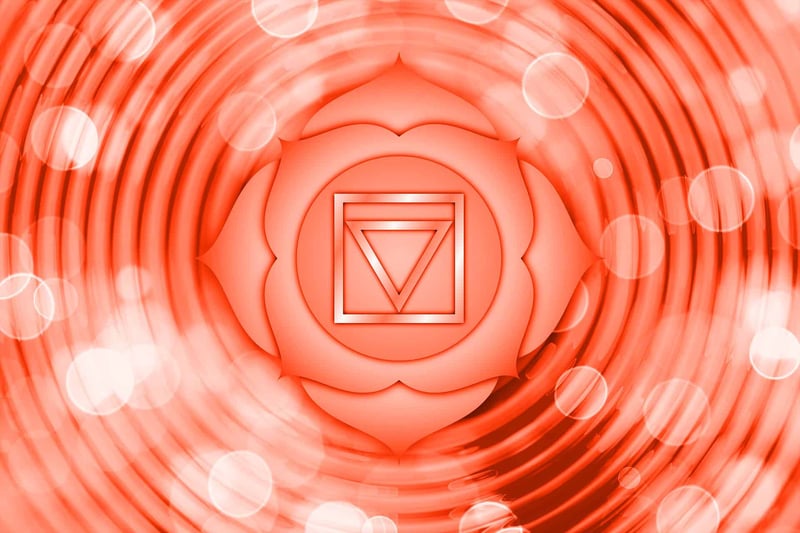
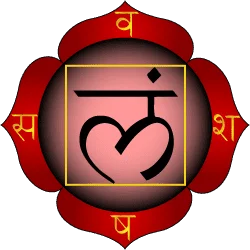
| Symbol | 4-petalled red lotus; yellow square; downward-pointing triangle |
| Ruling Planet | Saturn & Mars |
| Associated Gland | Adrenal glands |
| Nerve Plexus | Sacral-coccygeal plexus |
| Sense | Smell (Gandha) |
| Animal Symbol | White elephant (Airavata) with seven trunks |
Sanskrit Etymology and Symbolism
Muladhara breaks into two Sanskrit words. Mula means root or foundation, and adhara means support or base. Together they name this chakra’s role clearly: it is the energetic ground everything else stands on.
The symbol is a four-petalled red lotus. At its centre sits a yellow square, which is the earth yantra, and inside that a downward-pointing triangle representing Shakti’s creative force held at rest. The seven-trunked white elephant Airavata stands within the symbol. In yogic lore the elephant represents immovable strength and seven forms of wisdom.
The colour red matters here too. Red symbolises vitality, strength, and the urge to survive. Stability needs something powerful behind it, and red is the frequency that energises the instinct for self-preservation.
Location and Anatomy
Muladhara sits at the perineum, the area between the genitals and the tailbone, and connects energetically to the sacral-coccygeal nerve plexus. This plexus innervates the pelvic floor, legs, and feet. Physically, the associated structures include the spine, bones, large intestine, and the legs.
The governing glands are the adrenals, which sit on top of the kidneys. These produce adrenaline and cortisol, your stress response hormones. A chronically imbalanced root chakra often shows up as adrenal fatigue or constant low-grade anxiety. That is the science meeting the spirituality here.

What Is the First Chakra Responsible For?
Muladhara governs your relationship with the material world: the basic survival needs of food, water, shelter, and rest, plus the emotional needs that sit just behind them, safety and security. When this centre is open and doing its work, those needs feel met. Fear and worry lose their grip, or at least visit less often.
Its position at the base of the spine is symbolic of its role. It acts as the foundation on which you build your life, connecting you physically and energetically to the earth, and it opens the flow of energy for every centre above it. A stable Muladhara allows the higher chakras to develop in a balanced, integrated way.
Signs of a Balanced Root Chakra
- A calm, settled feeling in the body, even when life is busy
- Financial stability and a grounded relationship with money
- The ability to stay present rather than spinning into future worry
- Healthy boundaries with others
- Physical energy and resilience
- A genuine sense that you belong here
Signs of an Imbalanced Root Chakra
Physical
- Chronic lower back pain, sciatica, or tight hips
- Fatigue or adrenal exhaustion
- Constipation, sluggish digestion, or incontinence
- Unexplained weight loss or weight gain
- Pelvic pain
- Cold hands and feet
- Weakened immunity
Psychological and Emotional
- Persistent anxiety or fear without an obvious cause
- Feeling scattered, ungrounded, or unable to focus
- Feeling lost, stuck, or unable to act
- Lethargy and low motivation
- Hoarding or an obsessive relationship with money and security
- Difficulty committing to people, places, or decisions
- Aggression or a short fuse (over-active root)
Common Causes of Imbalance
Childhood experiences of instability are the most common root cause. Growing up with financial insecurity, a chaotic home environment, frequent moves, or abuse can leave a lasting imprint in this energy centre. Trauma stored in the body, generational patterns around fear and scarcity, and modern stressors like housing or job insecurity all affect Muladhara. So does chronic disconnection from nature.
Greed, overeating, and holding on tightly to material things can also disturb the balance of this centre. They are attempts to secure safety from the outside that end up feeding the very insecurity they try to solve.
Yoga poses for the Root Chakra
1. Tadasana -- Mountain Pose
Stand with feet hip-width apart. Press evenly through all four corners of each foot. Spread your toes, engage your thighs, and let the tailbone drop down. Feel the floor. Visualise roots growing from the soles of your feet into the earth beneath you.
2. Vrksasana: Tree Pose
Shift your weight into one foot and place the sole of the other foot against the inner calf or thigh, never against the knee. Bring your hands to prayer at the chest and rest your gaze on a point that does not move. Balancing poses train stability directly: the body learns to find the ground even on one leg. Hold for five breaths, then change sides.
3. Virabhadrasana I -- Warrior I
Step one foot back three to four feet with the back foot at 45 degrees. Bend the front knee directly over the ankle and raise both arms. Feel the strength in your legs pressing into the ground. Hold for five breaths on each side.
4. Malasana -- Garland Pose
Bring your feet slightly wider than the hips with toes turned out. Squat deeply and bring the hands to prayer at the chest. Press your elbows into your inner knees. This pose directly activates the pelvic floor and the seat of Muladhara.
5. Balasana -- Child's Pose
Kneel with big toes touching and knees wide. Fold forward with your forehead on the mat and arms extended. Breathe into the back body and let the earth hold your weight.
6. Janu Sirsasana -- Head-to-Knee Forward Bend
Seated, extend one leg and bend the other so the foot meets the inner thigh. Fold over the extended leg. This grounds the energy in the legs and opens the hamstrings gradually.
7. Savasana with Earth Visualisation
Lie flat with arms slightly away from the body. Visualise a warm red light at the base of your spine growing brighter with each exhale. Feel the floor completely supporting you.
Pranayama: Ujjayi Breath
Ujjayi, or victorious breath, creates internal warmth and anchors the mind. Breathe in and out through the nose with a slight constriction at the back of the throat, producing a soft ocean-like sound. The resulting heat settles the nervous system and builds a sense of inner steadiness. Practise for ten to fifteen minutes alongside the poses above or seated in meditation.
Go deeper with breathwork. Loka’s Online Breathwork Training takes you through the full spectrum of pranayama, from grounding and calming techniques to energising practices that build heat and focus. Self-paced and accessible from anywhere.
Mantra and Meditation
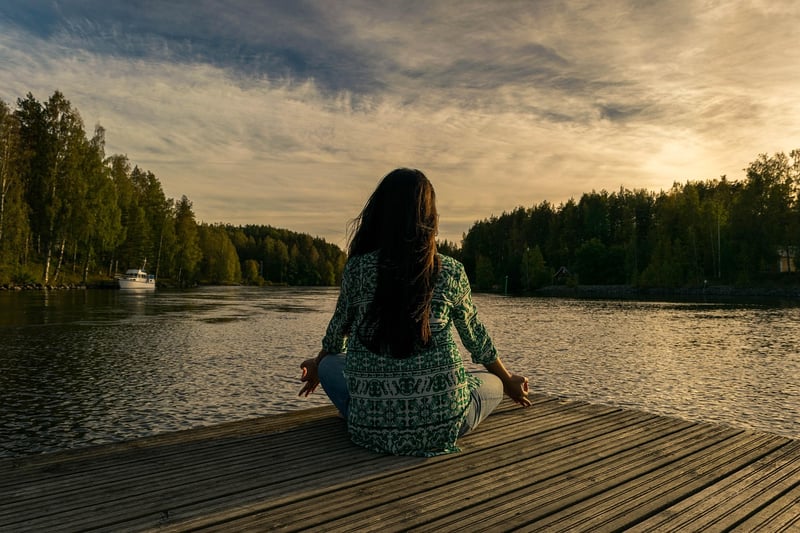
The seed syllable for Muladhara is LAM, pronounced “lum” with a soft nasal hum at the close. Chanting this sound creates a vibration that resonates at the base of the spine and connects to the earth element.
Sit comfortably with a straight spine. Bring your attention to the base of your spine and on each exhale chant LAM either aloud or internally. Visualise a four-petalled red lotus slowly opening there. Continue for ten to twenty minutes. You can also practise with a 396 Hz sound bath, which is the Solfeggio frequency associated with releasing fear and grounding.
Build a consistent meditation practice. Our Online Meditation Training gives you the techniques, guided sessions, and progressive structure to establish a daily practice, including chakra-focused meditations like this one. Study at your own pace, from anywhere.
Crystals for the Root Chakra
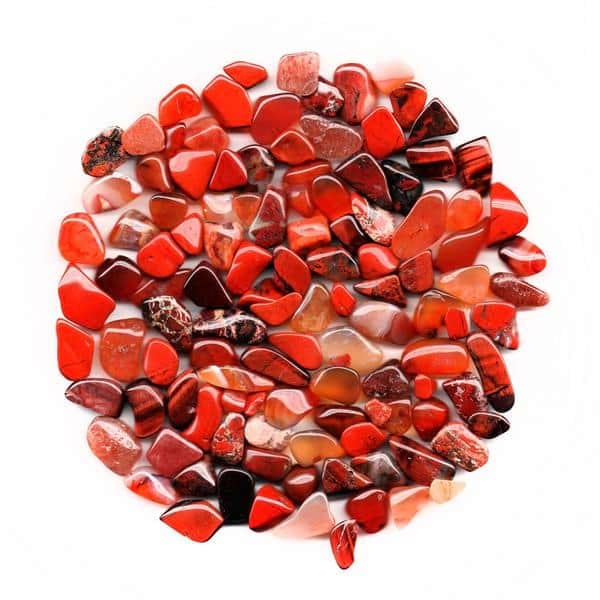
Red Jasper
Red Jasper carries a slow, stable frequency that mirrors the earth element. Place it at the base of the spine during Savasana or hold it during meditation to support feelings of safety and physical strength.
Black Tourmaline
A strong protective stone that creates an energetic boundary. It is particularly helpful during stressful periods or in environments that feel draining. Keep one near the front door of your home or carry it in your pocket.
Smoky Quartz
Gently draws out and transforms negative energy. Its earthy colour reflects its connection to grounding. Hold during breathwork or place at the corners of your meditation space.
Hematite
Dense, iron-rich, and heavy in the hand. Hematite clears mental fog and anchors scattered energy. Wear it as jewellery or rest pieces on the soles of the feet during Savasana.

Essential Oils for the Root Chakra
- Vetiver: deeply earthy; diffuse during meditation or apply diluted to the soles of the feet
- Cedarwood: evokes old-growth forests and a sense of permanence
- Patchouli: rich and grounding; calms anxiety and reconnects you to the body
- Frankincense: stabilising and sacred; bridges the earthly and the spiritual
Foods for the Root Chakra
Eat red foods and root vegetables to nourish Muladhara. Beetroot, red capsicum, tomatoes, strawberries, carrots, sweet potato, parsnip, ginger, garlic, and onion all work well. Protein-rich foods like legumes, eggs, and quality animal protein build the physical body that this chakra governs. Ginger and dandelion root teas support digestion and warmth.
Root Chakra Affirmations
- I am safe. The earth supports me.
- I have everything I need to thrive.
- I am rooted in this moment.
- My body is my home and I honour it.
- I trust life to provide for my needs.
Grounding Muladhara When Your Life Is Genuinely Unsettled
Root chakra advice assumes a stable life that has become disconnected from itself. Plenty of people arrive at this material from the other direction, with a life that is objectively unstable: a move, a visa, a job that might not exist next month, a relationship that has ended.
The advice does not transfer well. Standing postures and long exhales are not going to produce a sense of safety when the underlying situation is not safe, and telling yourself otherwise usually adds a layer of failure to an already hard week.
What practice can honestly offer in that situation is narrower and still worth having. It can give you a predictable twenty minutes. Not calm, not resolution, just something in the day that happens the same way it happened yesterday, which is the only kind of ground available when the rest is moving.
Keep it short and keep it identical. The same mat, the same time, the same three or four postures, whether or not you feel like it and whether or not it goes well. The repetition is the active ingredient, not the content, and varying it to keep it interesting defeats the point.
The first chakra is associated with survival and with the most basic questions of belonging, and those questions do not have answers that come from a mat. They come from housing, money, people, and time. Practice is a way of staying in one piece while you work on those, and it is a poor substitute for working on them.
When the ground does come back, this is the chakra that will tell you first, usually as a small return of ordinary appetite.
It is worth being careful with the language of grounding itself. Told often enough that they are ungrounded, people begin treating an ordinary hard season as a personal deficiency, which is neither accurate nor useful. Instability is usually circumstance rather than character, and naming it that way tends to help more than any amount of reframing.
If you are in one of those seasons, the kindest thing you can do is lower the bar and keep turning up. A practice you sustain badly is worth more than one you abandon well, and the root chakra responds to showing up far more than it responds to intensity.
How Muladhara Supports the Other Six Chakras
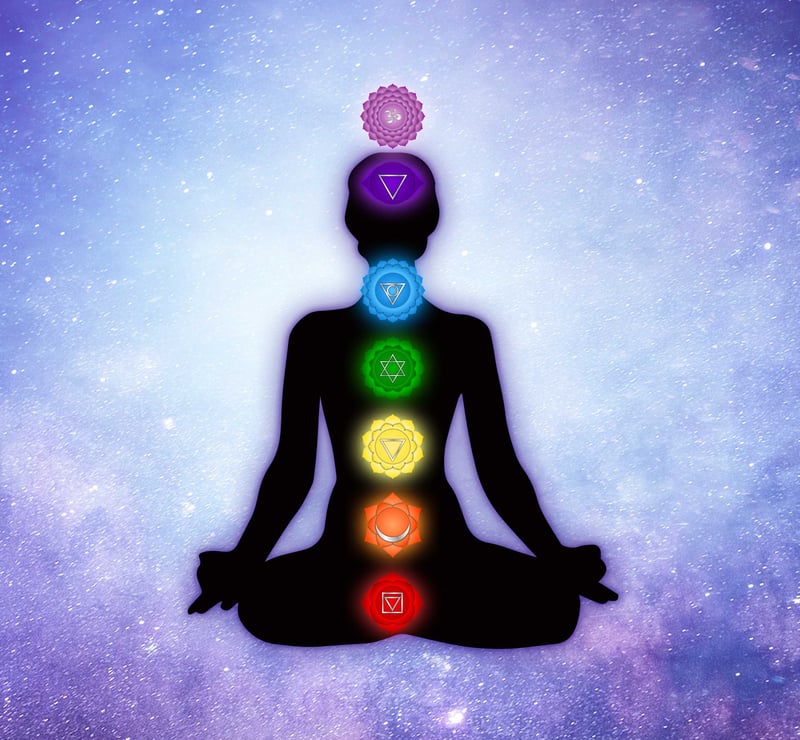
The chakra system works as an integrated whole, and Muladhara is its base layer. The Sacral Chakra needs the safety of the root before emotion and creativity can flow. The Solar Plexus Chakra draws on that same stability to fuel personal power and confidence. Higher still, the heart bridges the material and the spiritual, the throat carries clear expression, and the third eye sharpens intuition. None of it works well on shaky ground.
To see how all seven centres fit together, start with our complete guide to the 7 chakras in order.
Ground Your Practice With Loka
Reading about grounding is one thing. Practising it daily, with structure and support, is what actually changes your nervous system. Loka’s Online Meditation Training gives you the techniques, guided sessions, and progressive framework to build a practice that holds you steady, including chakra meditations like the one above.
Want to go further and teach? Our 200 Hour Yoga Teacher Training in Bali covers the chakra system in depth, alongside anatomy, philosophy, and supervised teaching practice in Kedungu, Tabanan.
Frequently Asked Questions
What is the first chakra?
The first chakra is Muladhara, located at the base of the spine between the genitals and the tailbone. It is the foundation of the seven main energy centres and governs survival, safety, and your connection to the physical world. Because it opens the energy flow for the chakras above it, most traditions treat it as the place to begin any chakra work.
How long does it take to heal the Root Chakra?
There is no set timeline. Consistent daily practice, even ten minutes of grounding meditation or breathwork, tends to produce noticeable shifts within three to four weeks. If the wounding runs deep into early childhood, working alongside a somatic therapist can speed up the process considerably.
Can you over-activate the Root Chakra?
Yes. Too much energy here can show up as materialism, rigid thinking, aggression, and a compulsive need to control. If that sounds familiar, soften the practice. Bring in Yin yoga, compassion meditation, and work with the heart chakra to create balance.
Is walking barefoot actually helpful?
Yes. Walking barefoot on grass, soil, sand, or stone, a practice sometimes called earthing or grounding, allows the body to absorb electrons from the earth’s surface. Research published in the Journal of Environmental and Public Health links this to reduced inflammation and better sleep. It is one of the simplest and most effective ways to support Muladhara.
Which yoga style is best for grounding?
Hatha, Yin, and Restorative yoga are particularly effective. Their slower pace and longer holds give the nervous system time to down-regulate and the body space to release tension held deep in the tissues.
Drawn to teach Yin yoga? Our Online Yin Yoga Teacher Training covers long-hold postures, meridian theory, anatomy, and the philosophy behind this deeply restorative practice, fully online and self-paced.
Internal Links
Continue your chakra journey: 7 Chakras in Order: A Complete Guide | Sacral Chakra Guide | Solar Plexus Chakra Guide
External Sources
The Loka Newsletter
Enliven your routine with exclusive spiritual content. There’s so much to learn.

Find us on Instagram
@lokayogaschool