Last updated on August 3rd, 2026 at 04:23 pm
A 30-Minute Chakra-Balancing Yoga Sequence
This 30-minute sequence moves through all seven chakras in order, from root to crown, with one grounding pose and focus for each. You do not need to believe anything in particular for it to work as a balanced, full-body practice that leaves you settled and clear.
If you are not sure where to focus, start by working out how to tell which chakra is out of balance. This sequence also draws on Kundalini yoga and energy, the tradition most closely tied to moving energy through the chakras.
Before You Begin
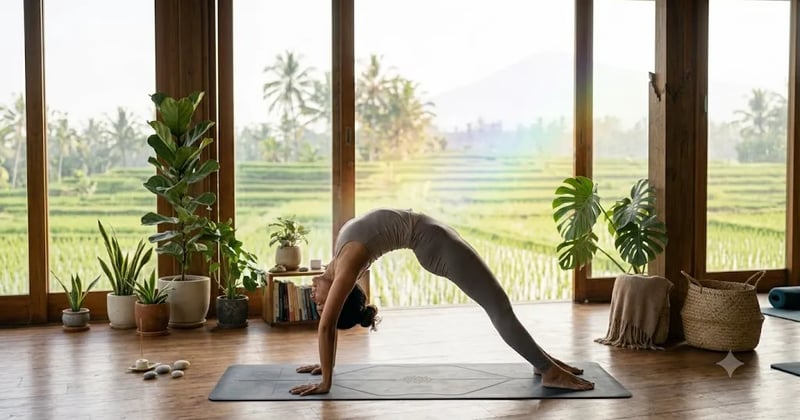
Find a quiet space and a mat. Move slowly, breathe steadily, and hold each pose for five to eight breaths. As you settle into each posture, bring your attention to the chakra’s location in the body and its theme.
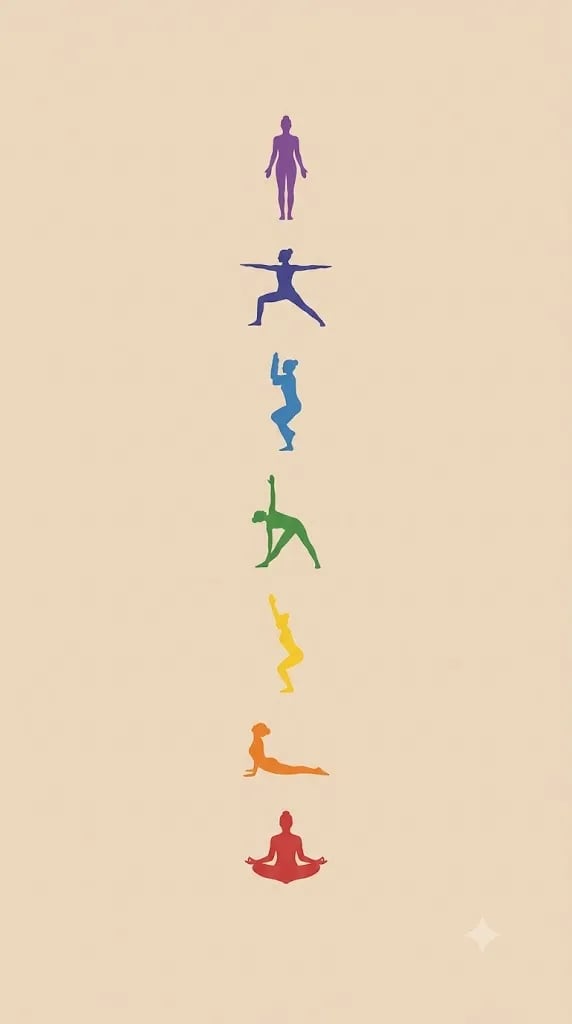
The Sequence, Root to Crown
Root (Muladhara): Mountain Pose or a grounded squat. Focus on stability and the connection of feet to earth.
Sacral (Svadhisthana): gentle hip openers such as Bound Angle. Focus on ease and creativity.
Solar Plexus (Manipura): Boat Pose or a gentle twist. Focus on strength and confidence in the core.
Heart (Anahata): a supported backbend such as Bridge. Focus on openness and compassion.
Throat (Vishuddha): Fish Pose or gentle neck movements. Focus on expression and the breath at the throat.
Third Eye (Ajna): Child’s Pose with the forehead grounded. Focus inward, between the brows.
Crown (Sahasrara): a few minutes of seated stillness or Savasana. Rest in openness and let go of focus entirely.
Finishing
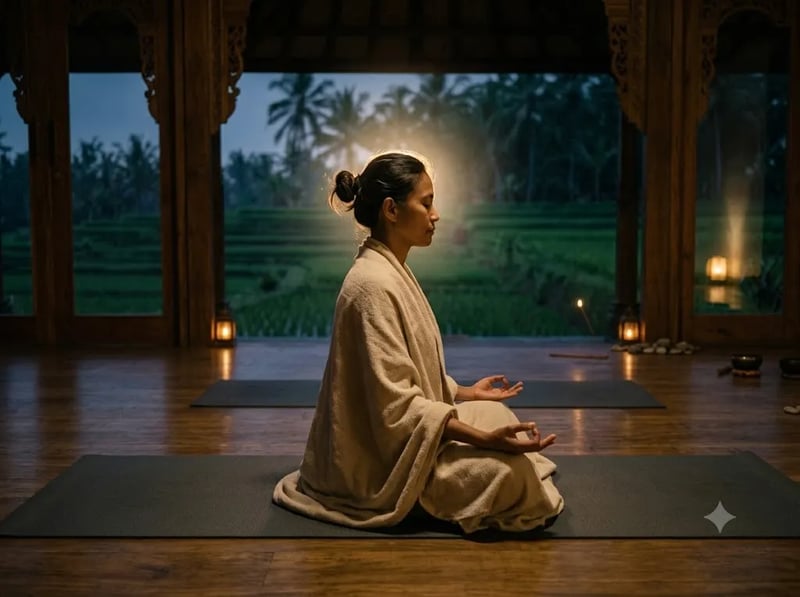
Close in Savasana for several minutes, letting the whole body settle. Notice how you feel compared to when you began. Practised regularly, this sequence becomes a reliable reset for body and mind.
How to breathe your way through the poses
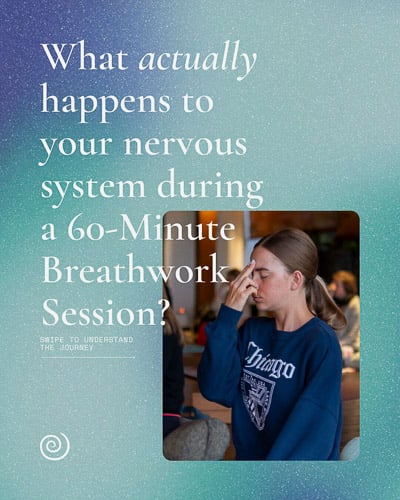
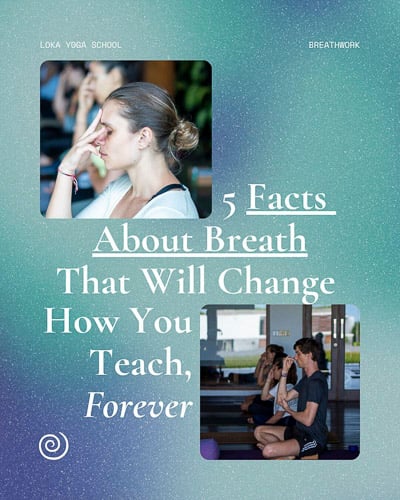
The breath is what turns a set of shapes into a practice. As you move from root to crown, let a slow, even breath lead each transition rather than following it. A longer, softer exhale is the part that tends to settle the nervous system, so let the out-breath lengthen naturally as you hold a pose.
There is decent physiology behind that instinct. Slow breathing, roughly six breaths a minute, shifts the balance of the autonomic nervous system towards its calming branch, which a review in Breathe by Russo and colleagues on the physiological effects of slow breathing sets out clearly. You do not need to count obsessively. You just need to stop rushing.
Match the breath to the intent of each section. In the grounding poses near the floor, let the breath feel heavy and slow. As you open through the chest and throat, let it become a little fuller. By the time you reach the seated poses at the end, the breath can almost breathe itself.
If your breath keeps snagging or racing, that is worth noticing rather than forcing. Come out of the pose, let the breath even out, and go back in with less ambition. The sequence works with the breath, not against it.
Making it a habit: how often and how to build it at home
Consistency does more than intensity here. A short version three or four times a week will do more for your mood and attention than one long, occasional session, because the benefit comes from the regular return, not from any single practice.
Start smaller than you think you should. 10 to 15 minutes, holding two or three poses per centre, is a real practice and one you are far more likely to keep. When that feels easy, add a few minutes or an extra pose rather than doubling everything at once.
Anchor it to something you already do. Rolling out the mat straight after you wake, or before an evening shower, removes the daily decision that quietly kills most home practices. The same slow breath and the same order of poses each time also lets your body learn the shape, so your mind can soften instead of planning.
If you are not sure where to place your attention, let how you have been feeling guide the emphasis. Our guide to reading the signs that a chakra feels out of balance can help you decide which part of the sequence to linger in on a given day.
Softer options for stiff or newer bodies
None of these poses require flexibility to be worthwhile. If your hips, hamstrings, or back are tight, the answer is support rather than strain, and a well-propped pose gives you the same benefit with none of the fight.
Use the floor and a few props generously. Sit on a folded blanket or a cushion in any seated pose so your pelvis can tilt forward and your spine can lengthen. Slide a block under each hand in a standing forward fold. Rest your forehead on a bolster in a child’s pose. Bend your knees freely in any hamstring stretch; a bent-knee fold is still a fold.
Move slowly in and slowly out, and never chase a sensation past mild stretch into pain. Sharp or pinching sensations are a signal to back off, not to push through. Stiffness eases with patient, repeated practice far more reliably than with force, and forcing is how people get hurt.
If a pose simply does not suit your body today, skip it or swap it for an easier version of the same idea. The order matters more than any single shape, and a gentle, complete sequence beats an ambitious, painful one every time.
What balancing really means here
It is worth being honest about what a sequence like this can and cannot do. It will not measurably realign anything in your body, and no one can verify a rebalanced centre. What a slow, breath-led practice can genuinely offer is a shift in how you feel: calmer, steadier, more able to pay attention.
That much is reasonably supported. Slow diaphragmatic breathing has been shown to improve attention and reduce negative feelings, as a study by Ma and colleagues in Frontiers in Psychology reported, and the calming, restful quality of gentle yoga is where its most defensible benefits lie. The evidence is more modest than the wellness world usually admits, and worth knowing plainly.
It is also worth knowing where the claims thin out. In one careful trial, ordinary stretching outperformed a restorative yoga programme on a stress marker, as the PRYSMS randomised trial by Corey and colleagues found. That does not make the practice pointless. It means the honest promise is mood and attention, not medical repair.
Hold the balancing idea, then, as a description of how you want to feel by the end: grounded, open, and present. Judged that way, the sequence delivers, and it does so without needing to overclaim.
A calm way to close the practice
How you finish shapes what you carry away. Rather than springing up when the last pose ends, give yourself a few minutes of stillness to let the practice settle, because the nervous system needs a moment to register the change.
Lie down and let the breath return to its own rhythm. You do not need to do anything with these final minutes except notice how you feel, and let the effort of the poses drain out of you. Even three or four quiet minutes here make the whole sequence feel more complete.
If you have time, add a short seated meditation before you stand. Closing with a little stillness reinforces the steadiness the practice was building, and it makes it more likely you will want to return tomorrow. If this way of practising draws you in and you want to understand how to sequence and teach it properly, our 200-hour yoga teacher training in Bali takes you from personal practice to confident teaching.
Fitting the sequence around a real week
The sequence above is written as a full pass through all seven centres, and a full pass takes time most weeks do not have. If the only version you will do is the complete one, you will do it twice and then stop. Plan for the week you actually have instead.
Split it. Run the lower three centres on one day and the upper four on another, and you have two sessions of around twenty minutes rather than one of fifty. Nothing is lost by dividing it this way. The centres are not a chain that breaks if you pause partway, and two shorter sessions you complete beat one long one you keep postponing.
Anchor each session to something already fixed in your week. Not a time of day, which moves, but an event that does not: after you drop someone off, before the first meeting on a particular morning, straight after you get home on a quiet evening. Habits attach to other habits far more reliably than they attach to intentions.
Decide your minimum version now, while you are motivated, because you will not decide it well on a tired Tuesday. Pick two poses and one breath practice and call that a complete session. On the days when the full sequence is not going to happen, the minimum version keeps the thread intact, and keeping the thread intact is most of what consistency is.
Give yourself permission to repeat rather than progress. There is a strong pull towards making each session harder or longer than the last, and it is the main reason home practice collapses. Doing the same modest sequence for two months is not stagnation. It is how something becomes familiar enough that you can finally pay attention to what you are feeling rather than to what comes next.
Review it after a month, briefly. Which parts did you look forward to, which did you skip every time, and which centre did you quietly avoid. Cut what you skipped, keep what you looked forward to, and stay curious about the one you avoided. A sequence that has been shaped by your own honest reporting is worth more than the tidiest version on any page.
Do not worry about the centres where you feel nothing. Most people have two or three that stay stubbornly quiet, and the usual response is to conclude those are the blocked ones needing extra work. It is at least as likely that the associated poses simply do not produce a strong sensation in your particular body, which tells you about your proportions rather than your inner state. Keep including them, keep your expectations low, and let the quiet ones stay quiet. Chasing sensation is the fastest way to turn a reflective sequence into a performance you are grading yourself on.
Reading how the practice landed
A short reflection after the final rest turns the sequence from a routine into a conversation with yourself, and it takes two minutes. Before you get up, ask one question: where does my attention keep going? A part of the body, a mood, a thought that circled through the practice. Whatever answers is worth a line in a notebook.
Over a few weeks those lines start to show patterns a single practice never could. Perhaps the grounding poses consistently steady you before difficult days, or the heart-opening section keeps surfacing the same reluctance. You are not diagnosing anything. You are noticing repetition, and repetition is what deserves your attention next time you choose where to linger.
Keep the reflection light enough that you will actually do it. One line, most practices, beats a page once a month. And let it change the sequence: the version of this practice that serves you in a scattered season will not be the version that serves you in a heavy one, and your own notes are the best guide to the difference.
Two notes worth keeping after each practice
Write down two things afterwards and no more: which chakra the practice kept returning your attention to, and what your breath was doing by the end. Do it within about ten minutes, before the practice becomes a story about the practice. Over a month those two notes will tell you more than any chart will.
What you are looking for in those notes is repetition, not intensity. One striking session tells you very little, and the same quiet observation turning up four weeks running tells you a great deal about where your attention actually wants to go.
Keep the notes somewhere dull, the back of a notebook or a plain file on your phone, so that writing them stays a two-minute habit rather than a project. The moment journalling becomes something you have to prepare for it stops happening, and the record is the whole point.
Train With Loka
Working with the chakras is richer when you understand the system behind it. Read our full guide to the 7 chakras in order, and deepen the practice with our Online Meditation Training.
Frequently Asked Questions
Do I need to believe in chakras for this sequence to help?
No. It works as a balanced, full-body practice regardless of what you believe about energy.
How often should I do a chakra sequence?
A few times a week is plenty. Even once a week offers a reliable reset.
Which chakra should I focus on most?
Give each attention, but linger where you feel most drawn or most stuck. Grounding the root often settles everything above it.
Is this suitable for beginners?
Yes. The poses are foundational and can be modified. Move gently and hold what feels comfortable.
How long should a chakra balancing yoga sequence take?
Anywhere from 10 minutes to about 45, depending on how many poses you hold per centre. A short daily version usually helps more than a long occasional one, since the benefit comes from returning regularly. Begin with 15 minutes, and extend the holds once the sequence feels familiar in your body.
Should I do the poses in a different order if one chakra needs more work?
Keep the root-to-crown order and adjust emphasis instead: hold the poses for your focus area a few breaths longer and pass more lightly through the rest. The sequence’s structure does the settling; where you linger inside it is the personal part.
The Loka Newsletter
Enliven your routine with exclusive spiritual content. There’s so much to learn.

Find us on Instagram
@lokayogaschool