Last updated on August 3rd, 2026 at 04:21 pm
How to Tell Which Chakra Is Out of Balance
When something feels off, physically or emotionally, the chakra system offers a useful map for locating it. Each of the seven chakras governs a set of physical, emotional, and energetic themes. Learning their signs of imbalance helps you see where your attention and practice are most needed.
If throat-related signs feel familiar, our throat chakra guide goes deeper, and once you have identified the pattern, this chakra-balancing yoga sequence gives you a place to start moving it.

A Quick Self-Assessment
Read each chakra’s themes below and notice which ones resonate most strongly right now. The one that feels most alive, whether through discomfort, emotion, or life circumstance, is often the one asking for attention.
The Seven Chakras and Their Imbalance Signs
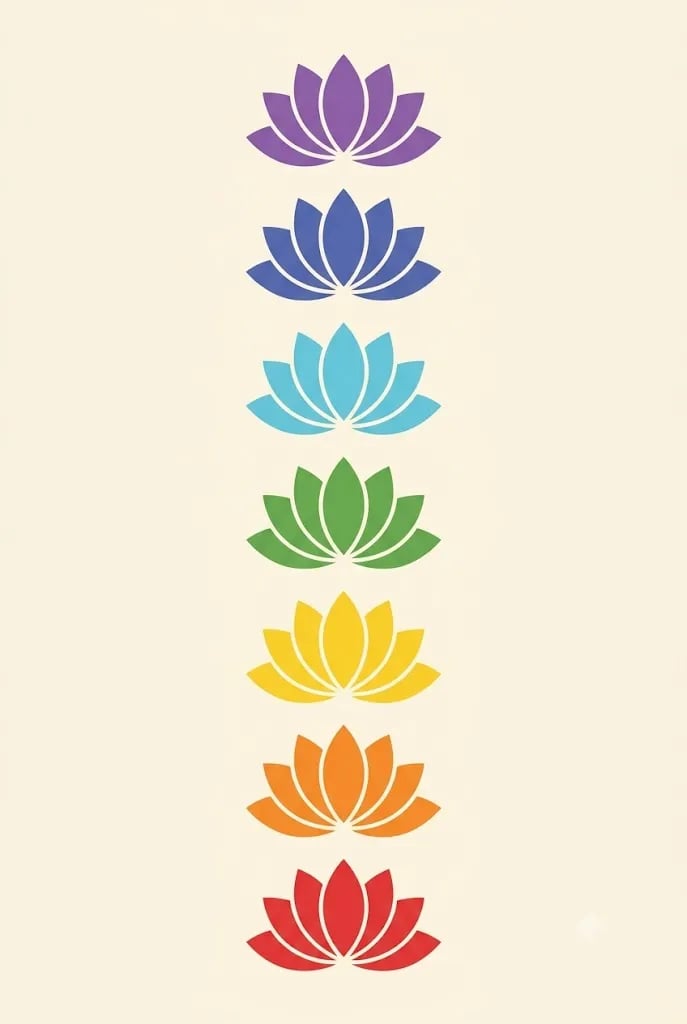
Root (Muladhara): anxiety, insecurity, feeling ungrounded, money or safety worries, lower-body and lower-back issues.
Sacral (Svadhisthana): blocked creativity, low libido, emotional numbness or overwhelm, hip and reproductive tension.
Solar Plexus (Manipura): low confidence, indecision, control issues, digestive trouble.
Heart (Anahata): grief, difficulty trusting, isolation or co-dependency, chest and upper-back tension.
Throat (Vishuddha): trouble speaking your truth, feeling unheard, throat and neck tension.
Third Eye (Ajna): confusion, overthinking, disconnection from intuition, headaches.
Crown (Sahasrara): feeling disconnected from meaning or purpose, cynicism, or the opposite, spiritual bypassing.
What to Do Next
Once you have identified the chakra, you can work with it directly through targeted postures, breath, meditation, and lifestyle shifts. Balance is rarely about one chakra in isolation; the centres influence each other, so grounding the root often steadies everything above it.
How the chakra map meets everyday life
The chakra model is old, and it was never meant to be read like a lab report. It grew out of tantric and yogic texts as a way of describing inner experience: where you feel steady, where you feel scattered, where energy seems to gather or stall. When you notice that a description of the throat centre matches a week where you kept swallowing what you wanted to say, you are recognising a pattern in your own life, not measuring a physical current.
That recognition is the useful part. A symbolic map gives you language for states that are otherwise hard to name, and language is often the first step towards paying attention. If reading about the solar plexus helps you notice a knot of self-doubt you had been ignoring, the model has done its job.
It helps to hold the map loosely. The seven centres are a lens, and like any lens they show some things and blur others. You can find them genuinely clarifying without needing to believe they are anatomical structures. If you want the fuller picture of what each centre traditionally represents, our guide to the seven chakras and what they mean lays out the classical associations one by one.
Think of it the way you might think of the seasons of a mood, or the parts of a story. None of those are measurable either, and all of them help you understand where you are. The chakra map earns its place as a contemplative tool, not as a reading of something happening in your tissues.
A symbolic framework, not a diagnosis
It is worth being plain about what the model is and is not. There is no clinical test for a blocked centre, and no reputable practitioner can scan you and hand you a reading the way a blood test reports iron levels. When a description feels accurate, that is your own honest self-recognition at work, which is valuable, but it is a different thing from a medical finding.
This matters because the same word, balance, gets used two ways. In the yogic sense it points to feeling settled, present, and able to respond rather than react. In a medical sense balance would mean something measurable, and the chakra framework does not deliver that. Keeping the two meanings separate protects you from mistaking a poetic description for a diagnosis.
Held this way, the framework is quietly powerful. It invites you to check in with parts of your life you might rush past: how safe you feel, how freely you speak, whether you trust your own judgement. Practices that support that kind of steadying attention, such as regular meditation, have a reasonable evidence base for easing stress and low mood, as a large JAMA Internal Medicine review of meditation programmes by Goyal and colleagues found, even though that research says nothing about chakras themselves.
So use the language, and skip the certainty. You do not need to decide whether energy is literally moving to benefit from asking, honestly, where in your life you feel stuck.
A simple self-enquiry you can sit with
If you want to work with the model practically, start with a quiet 10 minutes rather than a checklist. Sit comfortably, let your breath settle, and bring to mind one area of life that has felt effortful lately: your sense of security, your relationships, your voice, your direction. Notice what arises without rushing to label it a centre.
Then ask a plain question or two. Where do I feel this in my body? What have I been avoiding saying, or doing, or feeling? The point is not to arrive at a tidy answer but to let something honest surface. Often the naming itself brings a little relief.
You can loop this back to the map afterwards if it helps. If what surfaced was a fear about money and safety, the root centre gives you a frame for it; if it was a reluctance to speak up, the throat centre does. The frame is a prompt for reflection, not a verdict.
Keep a few notes over a couple of weeks. Patterns that repeat are worth more attention than any single sitting, and writing them down keeps you honest about what is actually recurring rather than what you expect to find. If you would like a structured place to sense which area is asking for attention, the self-assessment earlier on this page is a gentle starting point to return to.

When a sign is really your body asking for a doctor
Here is the part the softer articles tend to skip. Some of the experiences people file under an imbalanced centre are your body flagging something physical, and those deserve a doctor rather than a meditation cushion.
Persistent throat pain or a lasting change in your voice is a throat to have examined, not just a throat centre to reflect on. Ongoing digestive trouble, chronic pelvic or lower-back pain, unexplained fatigue, changes in your heart rhythm, or low mood that does not lift over weeks are all reasons to see a qualified health professional. The chakra frame can sit alongside proper care, but it should never replace it.
This is not a small caveat. Treating a medical symptom as purely energetic can delay a diagnosis that matters, and no honest teacher wants that for you. If a sign is severe, sudden, or simply persistent, get it checked first, then bring whatever contemplative practice you like to the recovery.
Used with that boundary in place, the model stays what it does best: a reflective language for your inner life. If working with it makes you want to understand the philosophy properly rather than in fragments, that curiosity is exactly what a full training feeds. Our 200-hour yoga teacher training in Bali sits this material inside anatomy, breath, and practice, so the symbolism has ground under it.
Working with the model without believing too hard
You can take the chakra map seriously without taking it literally, and that middle path is usually the most useful one. Treat each centre as a doorway into a question about your life, and let the practice be reflection rather than repair. Nothing needs fixing for the enquiry to be worthwhile.
Resist the urge to over-diagnose yourself. It is easy to read a list of imbalance signs and recognise every one, because the signs are broad and being human is broad. If everything seems to apply, that usually means you are tired or stretched thin, which is worth addressing directly with rest, support, and honesty rather than by assigning it to a centre.
Let the model make you more curious, not more anxious. The best outcome is that you end a sitting knowing yourself a little better and treating yourself a little more kindly. That is a modest promise, and it is one this framework can genuinely keep.

Giving the enquiry enough time to mean anything
One quiet sitting will tell you how you feel this afternoon. It will not tell you what is actually recurring in your life, and the difference between those two things is most of the value here. Patterns only become visible across weeks, which means the honest version of this practice is slower than a single reading.
Try a season rather than a session. Six to eight weeks is long enough for a genuine theme to repeat and for a passing mood to reveal itself as passing. Sit once or twice a week, keep it short, and write three or four lines afterwards. What surfaced, where you felt it, and what you were avoiding. That is the whole record.
Then read the notes back in one sitting at the end. This is the step people skip, and it is the step that works. Reading eight weeks of entries together shows you which concerns kept returning under different disguises and which ones you wrote down once and never thought about again. A worry that appears in one entry is weather. A worry that appears in six is something to attend to.
Expect the theme to be less exotic than you hoped. Most people find their notes circling money, tiredness, a conversation they have not had, or a decision they keep deferring. The chakra frame gives you somewhere to file that, and the filing is genuinely useful, but the recognition came from the writing rather than from the map.
Be careful with the opposite trap too. If your notes show a different centre every week, that is not seven imbalances. It usually means you are stretched thin and reaching for whatever language is nearest. Rest, support and a plain conversation with someone who knows you will do more than another sitting will.
Set the whole thing down when it stops helping. This is a reflective tool, not a practice you owe anything to. If the notebook has become one more thing you are behind on, close it. The enquiry is meant to make you more curious about your own life, and a curiosity that has turned into an obligation has stopped being curiosity. Come back to it when you actually want to know.
It also helps to say it out loud to someone occasionally. A pattern you have written down six times can still stay slightly abstract until you describe it to another person, and the act of putting it into speech tends to sharpen it. This does not need to be a teacher or a therapist, though either is useful. A friend who will listen without rushing to solve it is enough. What you are after is the moment where you hear yourself say the thing plainly and realise you had been circling it in your notes without ever quite naming it.
One last thing worth saying plainly, because the enthusiasm around this material can obscure it. Nothing in this enquiry is meant to produce a verdict about you. There is no correct result, no centre you are supposed to land on, and no version of this where you finish with a diagnosis in hand. If you come away from eight weeks of notes with one honest sentence about something you had been avoiding, that is the whole return, and it is a good one. People who treat the map as a puzzle to be solved tend to end up further from themselves rather than closer, which is the opposite of what a contemplative practice is for. Keep it plain, keep it curious, and let it be small.
Train With Loka
Ready to work with what you found? Start with our guide to the 7 chakras in order for the full system, then bring it into practice. Our Online Meditation Training teaches the breath and concentration skills that make chakra work grounded rather than abstract.
Frequently Asked Questions
Can more than one chakra be out of balance?
Yes, often several are. Start with the one whose signs feel strongest, as the centres influence each other.
How do I unblock a chakra?
Through targeted postures, breath, meditation, and lifestyle changes suited to that centre. Consistency matters more than intensity.
Are chakra imbalances a medical diagnosis?
No. The chakra system is a framework for self-awareness, not a substitute for medical care. See a professional for persistent physical symptoms.
Which chakra should I work on first?
Usually the root. A grounded, settled base makes working with the higher centres more effective.
is there any scientific proof that chakras are real?
No. There is no measurable evidence that chakras exist as physical structures or energy currents. They are a symbolic framework from yogic tradition for describing inner experience. That does not make them useless: as a reflective tool for noticing where you feel stuck, many people find the model genuinely clarifying, provided it is not treated as a diagnosis.
can a chakra imbalance cause physical illness?
A chakra imbalance is not a medical condition, so it does not cause illness in any tested sense. If you have real physical symptoms, treat them as physical and see a qualified doctor rather than assuming an energetic cause. The chakra frame can sit alongside proper medical care, never in place of it.

The Loka Newsletter
Enliven your routine with exclusive spiritual content. There’s so much to learn.

Find us on Instagram
@lokayogaschool