Last updated on August 3rd, 2026 at 04:25 pm
Chakra Stones and Crystals: What They Are and How They Are Used
Chakra stones and crystals are a popular way to bring the chakra system into daily life. Each of the seven chakras is traditionally associated with particular stones, usually matched by colour. Here is a clear, honest guide to what they are and how people use them.
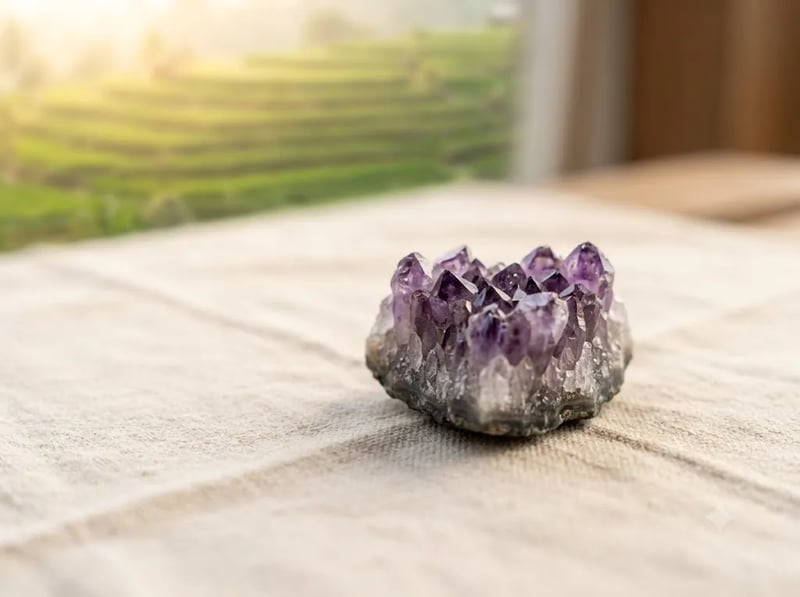
If you are not sure where to focus first, it helps to work out which chakra is out of balance. Amethyst and clear quartz are the most commonly reached-for stones for the crown, so it is worth pairing them with our crown chakra guide.
The Stones for Each Chakra
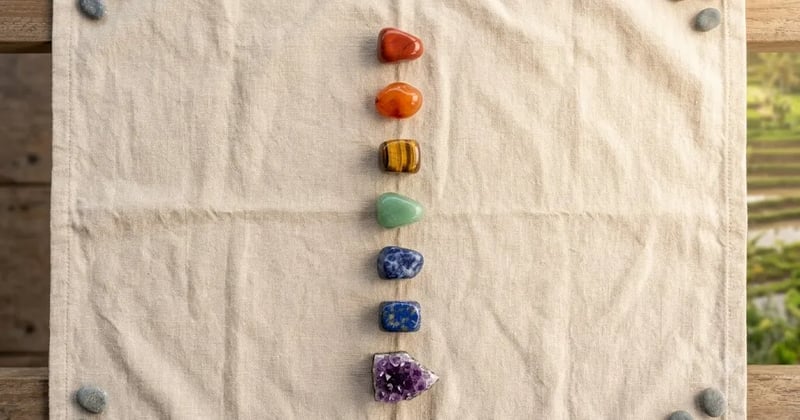
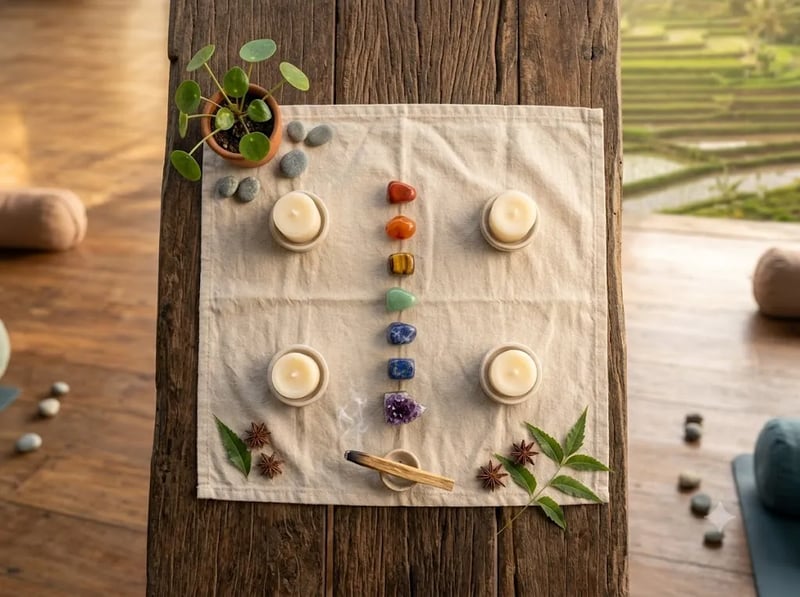
Root (red or black): red jasper, black tourmaline, hematite. For grounding and stability.
Sacral (orange): carnelian, orange calcite. For creativity and flow.
Solar Plexus (yellow): citrine, tiger’s eye. For confidence and personal power.
Heart (green or pink): rose quartz, green aventurine. For love and compassion.
Throat (blue): sodalite, aquamarine. For clear expression.
Third Eye (indigo): amethyst, lapis lazuli. For intuition and insight.
Crown (violet or white): clear quartz, amethyst. For connection and clarity.
How People Use Them
Common practices include placing stones on the body during relaxation, holding one during meditation, carrying a stone that matches a chakra you are working with, or simply keeping them in your space as a reminder of an intention.
An Honest Word
The effects of crystals are not established by science, and they are best understood as tools for intention and focus rather than as treatments. Used that way, as a gentle, tangible reminder to attend to a particular theme in your life, many people find them genuinely supportive.
Ritual meaning versus physical claims
There are two very different claims tangled up in most writing about crystals, and separating them makes the whole subject clearer. One is symbolic: a stone can hold meaning, mark an intention, and focus your attention. The other is physical: that a stone emits some measurable energy that heals the body. The first is a matter of how you use it. The second is a claim about the world, and it does not hold up.
To be plain, there is no scientific evidence that crystals emit a measurable healing energy or alter the body’s physiology. Studies that have looked for crystal effects point to expectation and suggestion doing the work, not the stone. Anyone selling you a mineral as medicine is overreaching, and you deserve to hear that plainly.
None of that empties the practice of value, though. A wedding ring has no measurable power either, and it still means a great deal, because meaning is something we assign and then feel. A stone can work the same way: as an object that carries an intention you have chosen.
So the useful question is not whether the crystal does something to you, but whether holding it helps you do something for yourself. Framed that way, it becomes an honest tool rather than a false promise.
A stone as an anchor for your attention
The most defensible way to use a crystal is the way you might use a mala, a candle, or the breath: as an anchor for attention. The mind wanders constantly, and a simple physical focus gives it somewhere to return. The stone is a reminder, not a mechanism.
Hold one in your palm during a few quiet minutes and let its weight, temperature, and texture be the thing you keep coming back to when thought pulls you away. This is a real and old technique, and it is the same principle behind counting beads or watching a flame. The object steadies a restless mind by giving it a modest job.
That focused attention is where any genuine benefit lives, and the benefit belongs to the practice of attention itself. Regular meditative practice has a reasonable evidence base for easing stress and improving well-being, as a large JAMA Internal Medicine review by Goyal and colleagues found. The stone is simply a helpful prop for showing up to that practice.
Choose whichever stone genuinely appeals to you, and let its colour or association carry your intention. If green calls to mind the heart and openness for you, then a green stone quietly reminds you of that each time you pick it up. That reminder is the point.
Choosing and caring for your stones without overclaiming
Choosing a stone can be simple and honest. Pick one whose colour matches the quality or centre you want to reflect on, or simply one you are drawn to hold, and let the meaning be yours to assign. You are not buying a treatment, so there is no right stone in a medical sense, only one that carries your intention well.
Buy from sellers who are honest about sourcing and who do not promise cures. Some stones are dyed or heat-treated, which is fine as long as it is disclosed, and ethically mined material matters if that sits with your values. A plain, well-sourced stone serves the same reflective purpose as an expensive one.
Caring for them can stay grounded too. Wiping the dust off, keeping them somewhere you will see them, and handling them gently is genuine care. Rituals like rinsing a stone or leaving it out overnight are fine as meaningful acts, provided you understand them as symbolic resets for your own intention rather than a physical recharge of the stone.
If you want a starting point for which quality to reflect on, let your recent life choose it. Our guide to reading the signs a chakra feels out of balance can help you pick a stone that matches what actually needs your attention this week.
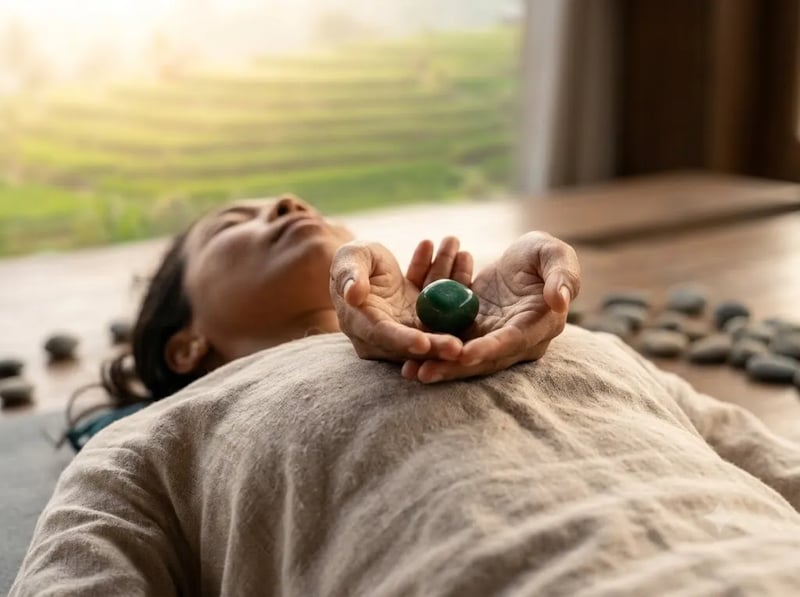
Bringing a stone into meditation
If you want to use a stone in practice, keep it simple. Sit comfortably, hold the stone in one hand or rest it where you can feel it, and settle into a few slow breaths before you begin. Let it be part of the setting rather than the focus of the whole session.
Give yourself one clear intention, said plainly in your own words. Something like, for the next 10 minutes I am practising staying present, works better than an elaborate script. Each time you notice the stone in your hand, let it return you to that intention without judging how far you had drifted.
When thoughts pull you away, and they will, the stone is your gentle cue to come back. That returning, over and over, is the actual practice, and it is where steadiness is built. The stone earns its keep purely by making that return a little easier.
Used this way, a crystal is a companion to meditation, not a substitute for it. The calm you feel afterwards comes from the attention you gave, and that is worth far more than any claim printed on the packaging.
Staying honest keeps the practice grounded
There is a quiet strength in using something without pretending it does more than it does. When you treat a stone as a symbol and an anchor rather than a cure, you get the real benefit and none of the self-deception, and that honesty tends to deepen the practice rather than diminish it.
It also protects you. The risk with crystals is not the stone itself but the story that can grow around it, where someone reaches for a mineral instead of proper care for a real problem. If you have a health concern, treat it as a health concern and see a qualified professional. A stone can sit on the bedside table beside good care, never in place of it.
Held with that honesty, the practice is genuinely lovely. A meaningful object, a few slow breaths, and a clear intention make a small daily ritual that costs nothing and asks little. If this reflective side of yoga interests you and you want to understand the philosophy behind it properly, our 200-hour yoga teacher training in Bali gives it a serious, grounded home.
A small weekly ritual that keeps them in use
Stones are sold in a market with almost no labelling standards, and a lot of what sits in the tray is dyed, heat treated, reconstituted from powder, or simply glass. None of that makes a stone worthless as a focus object, but you deserve to know what you are buying before you decide what to pay for it.
A few plain checks help. Colour that is unnaturally even and vivid, especially in bright blues and purples, usually means dye. Perfectly clear, flawless material at a low price is usually glass, and glass warms in your hand much faster than stone does. Bubbles inside a polished piece are a giveaway. Ask the seller directly whether a stone has been treated, and treat a vague answer as an answer.
Buy from someone who will tell you where it came from. Some stones carry a real human cost in how they are mined, and a seller who knows their supply chain will say so without being pushed. If nobody in the shop can tell you which country a stone came out of, you are buying from a wholesaler’s mystery box, and the price should reflect that.
Spend less than you think you should. A modest tumbled stone does exactly what an expensive specimen does in a practice like this, because the work is happening in your attention rather than in the mineral. Expense tends to raise expectation, and raised expectation is the quickest way to feel let down by an object that was only ever meant to hold your focus.
Caring for them is simpler than most guides suggest. Dust them, keep them somewhere you will actually see them, and keep softer stones out of direct sun if you would rather the colour did not fade. Skip salt water and skip long soaks, which damage porous and banded material and dissolve some pieces outright. If a stone feels stale to you, handling it and putting it somewhere new does more than any cleansing ritual.
Hold the whole practice lightly. Choosing a stone, keeping it in your pocket and reaching for it during a difficult hour is a way of giving yourself a small deliberate pause. That is a real benefit and it does not require the stone to be doing anything. If it stops helping, put it in a bowl on a shelf and let it be a nice object, which is a perfectly good thing for it to be.
If you feel nothing at all, that is worth knowing rather than hiding. A good number of people hold a stone, wait, and register only that they are holding a small cool object. Nothing has gone wrong and you have not failed at something. It may simply mean this is not your entry point, and there are plenty of others. Breath, movement and sitting practices ask nothing of an object and suit many people better. There is no obligation to persist with a tool that is not doing anything for you, and quietly setting it aside is a perfectly reasonable outcome.
Knowing when to put a stone away
There will come a point where a stone stops holding your attention, and it is worth having a plan for that rather than treating it as a failure. Usually it means the thing you picked it up for has either resolved or stopped being the thing you are working on.
When that happens, put it away. Not in the bin and not on the shelf with the others, but somewhere out of sight for a season. Objects that stay in view stop being seen, and a stone you have stopped noticing is doing nothing for you at all.
The ones worth keeping in rotation are the two or three you actually reach for. Everything else can rest. If you come back to a stone in six months and it still means something, that meaning is yours and it is real, whatever the mineral is or is not doing. If it does not, you have lost nothing by leaving it in a drawer.
Keep one shallow dish or a small pouch as the working set, and let everything else live in a box. The constraint does the work: if the dish is full, something has to come out before something new goes in.
This is also the honest answer to the question of how many you need, which is fewer than most collections contain. A stone earns its place by being used, and a shelf of thirty is a shelf where none of them is being used. Buy slowly, and only when you know what you are picking something up for.
Train With Loka
Crystals are one small doorway into a much richer system. To understand the chakras themselves, read our guide to the 7 chakras in order. To work with them through breath and meditation, explore our Online Meditation Training.
Frequently Asked Questions
Do chakra crystals actually work?
Their effects are not established by science. They work best as tools for intention and focus rather than as treatments.
How do I choose a chakra stone?
Match the stone to the chakra you are working with, usually by colour, or simply choose one you are drawn to.
How do I use a chakra stone?
Hold it during meditation, place it on the body during relaxation, or carry it as a reminder of your intention.
Do I need to cleanse crystals?
Many people like to, using running water, moonlight, or sound. Treat it as part of setting your intention.

The Loka Newsletter
Enliven your routine with exclusive spiritual content. There’s so much to learn.

Find us on Instagram
@lokayogaschool