Last updated on October 24th, 2026 at 11:48 am
How Much Experience Do You Need for Yoga Teacher Training?
You do not need years of yoga experience to enrol in a teacher training. This is one of the most common misconceptions that stops people from beginning sooner than they could have. What you need is genuine interest, a reasonable baseline of physical awareness, and the readiness to be challenged, not just physically, but emotionally and intellectually.
The Experience Question, Honestly Answered
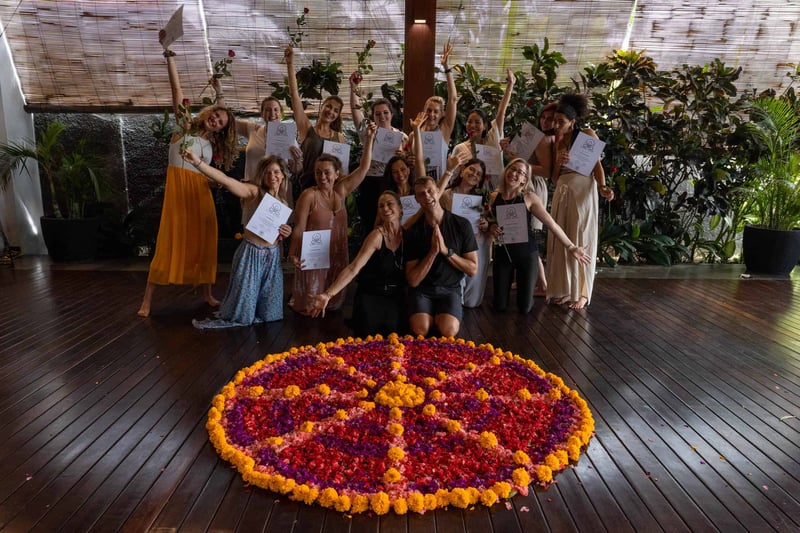
Most Yoga Alliance-accredited 200-hour teacher trainings are designed as foundational programmes. They assume no prior teaching experience and build systematically from the ground up. You are not expected to be an advanced practitioner. You are expected to be a committed, curious student.
That said, some experience with yoga before beginning training is genuinely useful. Not to demonstrate advanced asana, but to give you a sense of whether yoga resonates with you. If you have never attended a class, try a few across different styles before committing to a training. You want to know you are drawn to the practice, not just the idea of it.
Where things get more nuanced is in specialised trainings. Advanced certifications in specific styles, ashtanga mysore practice, therapeutic yoga for clinical populations, or advanced pranayama, may expect you to arrive with a more established personal practice. For a standard 200-hour programme, this is not the case.
Practising Yoga and Teaching Yoga Are Different Skills
This is important to understand before you begin. Being an advanced practitioner does not automatically make you an effective teacher. Teaching is a distinct skill set: it requires clear verbal communication, the ability to observe and respond to a group, anatomical knowledge, sequencing intelligence, and the capacity to hold space for a room full of people with different needs.
Equally, a student who has only been practising for a year but who listens carefully, communicates clearly, and shows genuine commitment can become an excellent teacher. Experience in the body matters. It is not the only thing that matters.
What to Expect Inside the Training
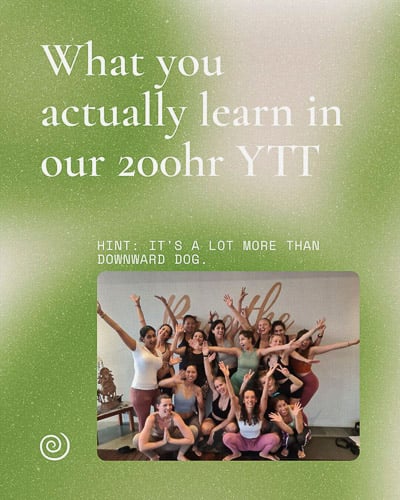
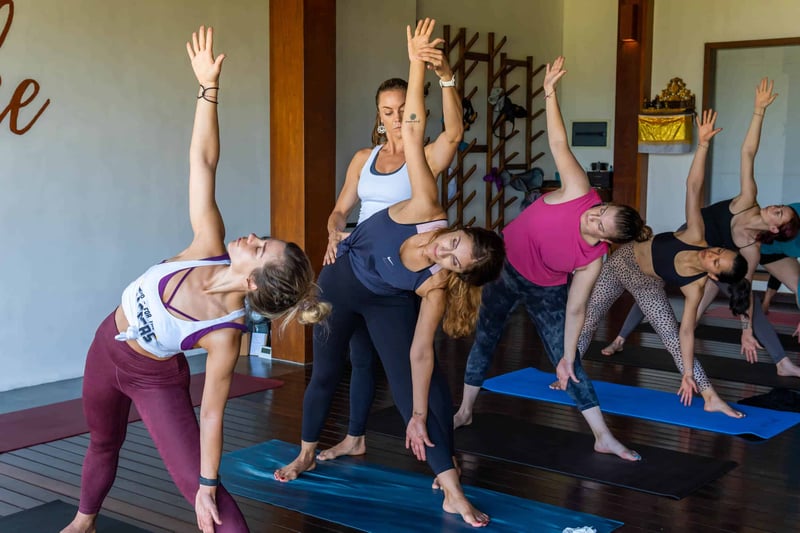
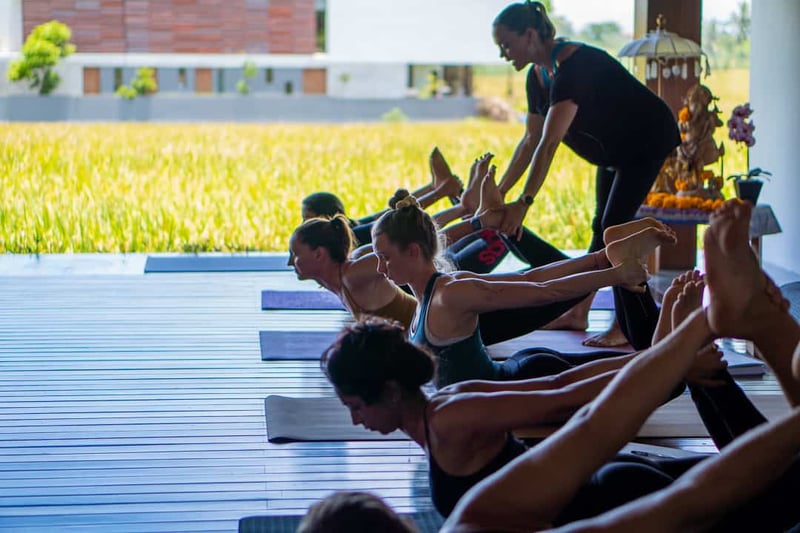
A 200-hour programme is genuinely demanding. You will encounter unfamiliar poses and face your physical limitations. You will study anatomy and physiology, yoga philosophy, pranayama, meditation, and the practical mechanics of teaching. There will be days when the volume of content feels overwhelming and days when the physical practice surfaces emotions you were not expecting.
This is normal. It is part of the process.
A few things to know before you begin: let go of expectations and arrive open, since your reasons for doing the training may shift as you progress. Know your own intention, and take time before enrolling to sit with why you want to do this. Take care of your body, since training is physically demanding and self-care is not optional. And welcome the emotions that surface, letting them move through you rather than suppressing them.
Signs You Are Ready to Enrol
You do not need to tick every box, but a few honest markers tell you the timing is right. You have attended yoga classes across a couple of different styles and know you are drawn to the practice itself, not only to the idea of teaching. You can move through a basic class safely, resting when you need to, without pushing into pain. You can commit to the schedule and the cost without straining your life to breaking point.
Just as important are the quieter signs. You are curious about the why behind the postures, not only the shapes. You are open to feedback and to being a beginner again in areas like anatomy and philosophy. And you are willing to meet the emotional side of an immersive training rather than expecting it to be purely physical.
If you can hold the longer view, that the certificate is a beginning rather than a finish line, and still feel drawn in, you are ready enough. If you would rather ease in with a shorter, lower-commitment course first, our 100-hour yoga teacher training is a good place to start.
Choosing the Right Training for You
The right training is not necessarily the most prestigious or the longest. It is the one delivered by genuinely qualified teachers who have real experience in the practice and in teaching the practice. Do your research. Read verified reviews. Look for transparency about who will be teaching and what the curriculum actually covers.
A Yoga Alliance RYS 200 accreditation means the school has met the registration requirements. It does not guarantee quality. The quality is in the teachers.
Which Training Format Suits Your Experience
Experience level also shapes which kind of training will serve you best. A residential immersion, where you practise, study, and live alongside your cohort for several weeks, gives newer practitioners the most support: daily practice, constant feedback, and no competing demands on your attention. If you are relatively new to yoga, that immersion often makes the steepest parts of the learning curve much easier to climb.
A more established practitioner may do well with an online or part-time format, spreading the training over months and fitting it around work and family. Neither format is better in the abstract. The right one depends on how much scaffolding you need at this point in your practice.
The Six Months Before Your Training
You do not need to arrive advanced, but arriving prepared changes how much of the training you can absorb. Six months of ordinary, consistent work is enough, and none of it involves learning difficult postures.
Practise three to four times a week, in a room with a teacher where you can. The point is not to build strength for the syllabus. It is to make the vocabulary familiar, so that in week one you are thinking about how a cue works rather than what the posture is called.
Spend part of that time in styles other than your favourite. If you practise vinyasa, take some hatha and some yin, and sit in a restorative class even if it bores you at first. Trainings teach principles that sit underneath all of it, and students who have only known one room find that harder than they expect.
Start reading early and slowly. A translation of the Yoga Sutras with commentary, and a plain-language anatomy text written for movement teachers, are enough. Two pages a night for a few months puts you well ahead of the person opening both books on day three.
Get your body looked at if something has been grumbling. A shoulder, knee, or lower back issue is manageable when your teachers know about it in advance, and it becomes a real problem when it surfaces during week two of daily practice.
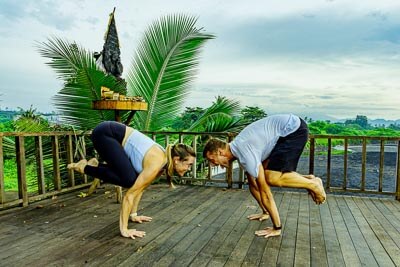
Build the habit of speaking to a room. Read aloud, record yourself describing a simple movement, or lead one friend through a short sequence you know well. Most of what frightens people in a training is about being heard rather than being flexible, and a few months of low-stakes practice takes the edge off that. If you are still weighing up the decision itself, the reasons people choose to become a yoga teacher are worth sitting with before you book. And if a pose like crow still feels out of reach, our step-by-step guide to crow pose shows how learnable these things are.
Physical Readiness Is Not Flexibility
You do not need to touch your toes. You need to practise for a couple of hours, twice a day, for several weeks, and recover enough overnight to do it again. That is stamina rather than range, and the two are trained differently.
Flexible students are not the ones who cope best. They are often the ones who get injured, because open joints and a long practice history make it easy to sit at end range for hours a day without noticing the cost. The student with tight hamstrings and good body awareness usually finishes in better condition.
Being unable to do a posture is a teaching advantage rather than a gap. If a shape has never come easily to you, you know its stages, its sticking points, and what a beginner is feeling, which is knowledge the naturally mobile student has to acquire the hard way. Your future students will look far more like you than like the person on the front mat.
What genuinely helps is general conditioning: walking, swimming, or anything that keeps your endurance up in the months beforehand. Sleep matters more than stretching, and so does hydration, particularly in a tropical climate. Plan for that properly if you are travelling from a temperate country to a 200-hour YTT in Bali.
What Goes Wrong When You Arrive Under-Prepared
Under-prepared students rarely come undone on the mat. They fall behind on the reading, then on the anatomy, and by the time they are asked to sequence a class they are carrying three weeks of unfinished material into an exercise that already frightens them.
The physical version is about volume, not difficulty. Someone practising once a fortnight arrives into a daily schedule and is exhausted by day five, which is the point where people stop listening in lectures and start collecting small injuries. Nothing in the syllabus caused that. The jump in load did.
The third failure is logistical and entirely avoidable. Arriving jet-lagged the night before, with unresolved work commitments or money worries you have not faced, means your first week goes to admin instead of study. If money is the worry, our line-by-line Bali teacher training budget puts real numbers on it. Arrive two or three days early, let your body find the time zone, and read the practical tips for yoga teacher training in Bali a month before you fly.
None of this is fatal. Trainings are built for the range of people who show up, and good teachers will support a student who is struggling. The cost of arriving under-prepared is spending the course catching up instead of learning, and you only get these weeks once.
The Students Who Struggle Most, and Why
The students who find a training hardest are almost never the least flexible. They are the ones who cannot be corrected without hearing it as criticism.
Feedback is constant in a good programme, because that is how teaching is learned. If a note on your cueing lands as a judgement of you, every practicum becomes something to survive, and you learn less than the person beside you who takes the correction and tries again. That is worth being honest with yourself about before you enrol, because it is the one thing a school cannot fix for you.
Perfectionists have a similar time of it. Teaching is a public, imperfect skill that improves only by being done badly in front of other people first, and students who need to be competent immediately tend to stall around week three. The ones who improve fastest are willing to be visibly ordinary for a while.
The other group that struggles is people who came for an escape. A training will change how you see things, and it will also surface whatever you carried onto the plane, usually in the second week when the novelty has worn off and the schedule has not. Arriving with something unresolved is common and fine. Expecting the programme to resolve it for you is what makes those weeks hard, which is one more reason to be deliberate about how to choose the right yoga teacher training school and what you want from it.
If You Have Taught Something Else Before
A fair number of trainees arrive with teaching experience from somewhere else: classroom teaching, physiotherapy, coaching, dance, personal training, corporate facilitation. That experience transfers more than people expect, though not always in the ways they assume.
What transfers most reliably is voice. Knowing how to project without shouting, how to leave a silence alone, and how to keep going while somebody at the back is plainly not listening takes most new teachers months to build. If you already have it, you can spend that attention on the practice instead.
Sequencing transfers too, if you have ever written a lesson plan. The logic is the same: warm what you are about to ask for, build towards one peak rather than four, and protect the time at the end that you will otherwise be tempted to eat into.
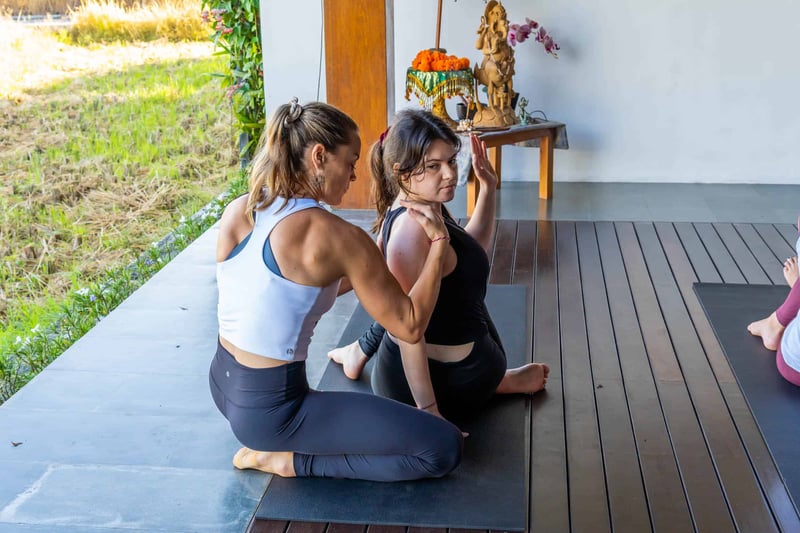
What does not transfer is authority. In a classroom or a clinic it comes with the role. In a yoga room you earn it in each class, and hands-on work in particular asks for consent and restraint rather than confidence. Trainees from clinical or coaching backgrounds tend to over-adjust in the first weeks, because touching people is ordinary in the work they came from.
So bring the experience and hold it loosely. The parts that carry over will save you months. The parts that do not tend to surface quickly, usually the first time somebody in your practice group says they would rather not be touched.
Find Out if You Are Ready
The clearest picture comes from talking to real graduates and reading honestly about what the experience involves day to day.
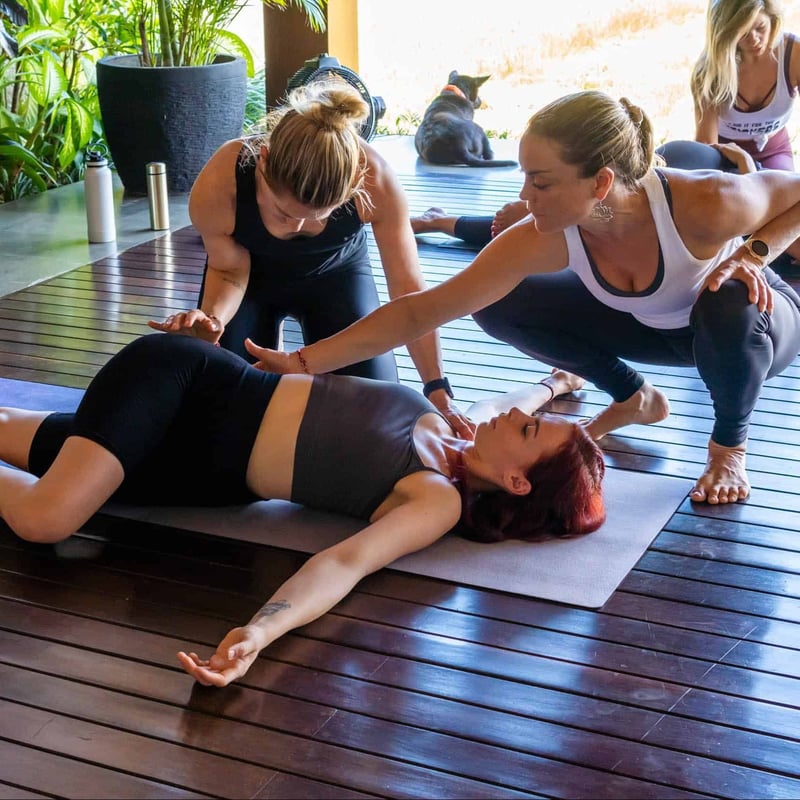
Our 200-Hour Yoga Teacher Training welcomes committed students with a steady personal practice, not just advanced yogis.
Frequently Asked Questions
Do I need yoga experience to do teacher training?
Not necessarily. Basic familiarity with yoga is helpful, but most 200-hour programmes are designed for students with a range of experience levels. What matters more than advanced asana is genuine commitment and openness to learning.
What is the minimum practice level required for a 200-hour YTT?
Most programmes have no formal minimum, though they expect you to have attended some yoga classes. The ability to practise safely and consistently matters more than achieving advanced postures.
Is yoga teacher training only for people who want to teach?
No. Many students enrol in YTT for personal development, to deepen their own practice, or to explore yoga philosophy more rigorously. A good training offers value regardless of whether you intend to teach professionally.
How hard is a 200-hour yoga teacher training?
Genuinely challenging. It demands sustained physical practice, academic study, and emotional engagement. Most graduates describe it as one of the most demanding and rewarding experiences of their lives. Showing up consistently and staying open to discomfort is the main requirement.
How do I choose between different yoga teacher training programmes?
Verify the school’s Yoga Alliance registration. Research the lead teachers’ credentials and experience independently. Read genuine graduate reviews. Look at the curriculum in detail. A low price point for an internationally accredited programme is often a warning sign.

The Loka Newsletter
Enliven your routine with exclusive spiritual content. There’s so much to learn.

Find us on Instagram
@lokayogaschool