Last updated on September 11th, 2026 at 02:49 pm
How to Choose the Right Yoga Teacher Training School
Choosing the right yoga teacher training school determines the quality of your education, the depth of your teaching, and your long-term confidence in the shala. Here is a practical framework for making this decision well.
Start with Yoga Alliance Accreditation
Yoga Alliance is the international governing body for yoga teacher training. A school registered as an RYS 200 (Registered Yoga School, 200 hours) has met the minimum standards for curriculum content, teaching hours, and instructor qualifications.
This accreditation matters for three practical reasons. It qualifies you to register as an RYT 200 after graduation, which is the credential studios, gyms, and fitness centres require before hiring. It qualifies you for professional liability insurance. And it means the school has been verified to meet international training standards, not just self-certified.
You can verify any school’s accreditation directly on the Yoga Alliance website. If a school displays the Yoga Alliance logo but isn’t listed in their directory, that’s a serious red flag.
Verify the Registration Yourself
Accreditation claims are easy to print and easy to check, and surprisingly few applicants check them.
Schools are registered, not certified. A school holds Registered Yoga School status, and its graduates then apply individually for Registered Yoga Teacher status. A school that describes itself as certifying you directly has either misunderstood the system or is hoping you have.
Look the school up in the Yoga Alliance directory and standards rather than trusting a logo in a footer. Confirm the school name matches exactly, that the registration is current, and that the programme you are being sold is the one that carries the registration. Schools sometimes hold registration for one course and market several.
If a school cannot produce its registration details when asked plainly, that answer is the information you needed.
Evaluate the Teaching Faculty Carefully
No single teacher can be the genuine authority on every dimension of yoga. A strong programme has specialised teachers for different modules: one person leading the asana and teaching methodology, another with a medical or science background leading anatomy and physiology, and ideally someone with deep philosophical training leading the yoga philosophy sessions.
This matters particularly for anatomy. Yoga Alliance requires anatomy content in every 200-hour curriculum, but the depth varies enormously between schools. At Loka Yoga School, our anatomy programme is led by Yann Cadic, who brings a genuine science background to the subject. This is the standard you’re looking for.
Read the faculty bios. Check their qualifications. A school that is proud of its teachers will make this information easy to find. A school that is vague about who teaches what is worth questioning.
Consider Location and Format
There are two primary formats: intensive immersions and part-time programmes spread over weeks or months. Both can qualify you to the same standard. The experience is very different.
Part-time programmes allow you to train without leaving your current life. They work well for people with fixed commitments who can’t take four consecutive weeks away.
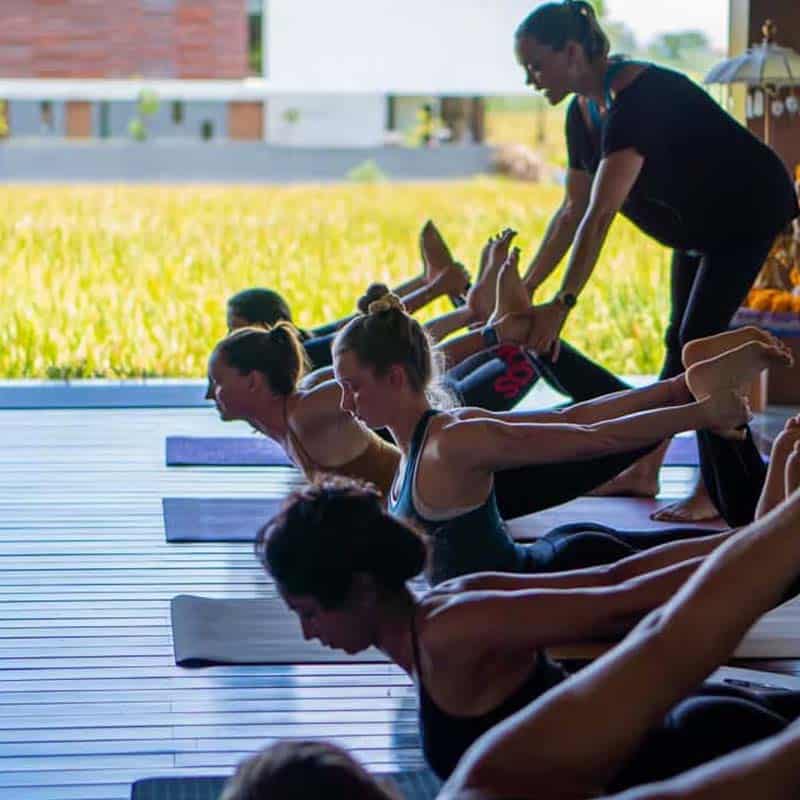
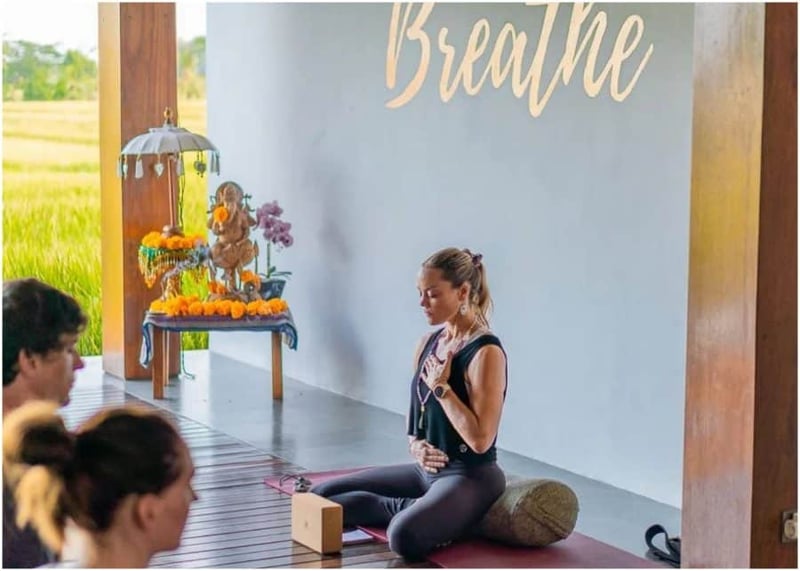
Intensive immersions, particularly those in Bali, remove you entirely from the distractions of your ordinary life. You eat, sleep, practise, and study yoga for four weeks. The depth of integration this produces is qualitatively different from training that competes with your inbox and daily responsibilities.
Bali specifically offers something beyond the physical environment. The culture, the spiritual energy of the island, and the genuine yoga community that has developed in places like Canggu create a context that accelerates learning in ways that are difficult to replicate elsewhere. If your circumstances allow an immersive programme, it is worth the investment.
Our 200-Hour YTT in Bali runs from our shalas in Canggu and Kedungu.
Work Out the True Cost
Tuition is the headline number and rarely the whole one. Two schools quoting figures a thousand dollars apart can end up costing you the same, or the reverse, once everything is counted. We have done that counting for Bali: what you will really pay for a Bali yoga teacher training.
Ask what the fee includes: accommodation and which room type, how many meals a day, manuals and props, airport transfer, and any excursions. Then add what it does not: flights, visa and any extension, travel and medical insurance, laundry, transport on days off, and the money you will not be earning for a month.
Insurance deserves its own line. Confirm your policy covers you for an intensive physical training abroad, not just for a holiday, and keep the certificate somewhere you can reach it.
Then set aside a contingency of a few hundred dollars. Something always comes up, and having it costs you nothing if it does not.
Done properly, this exercise usually reorders your shortlist. The cheapest tuition is often not the cheapest training, and the most expensive is sometimes the one with the fewest surprises attached.
Examine the Curriculum in Detail
Ask for the full curriculum before you commit. A Yoga Alliance-compliant 200-hour programme must cover specific content areas, but the depth and emphasis within those areas varies dramatically.
Look for these specific elements:
- Asana, technique and practice: not just poses, but biomechanics, Sanskrit nomenclature, benefits, contraindications, and how to teach and modify for different bodies
- Anatomy and physiology taught by a qualified specialist: if the school lists one person teaching everything from anatomy to philosophy, look closer
- Yoga philosophy beyond surface level: Patanjali’s Yoga Sutras, the eight limbs, the foundational texts of the tradition, studied seriously rather than mentioned in passing
- A practicum with feedback: you need to teach complete classes under supervision and receive detailed, honest feedback, the most important preparation for teaching professionally
- Business of yoga: how to build a teaching career, approach studios, set pricing, and position yourself professionally
Trust Your Own Intuition
After you’ve done the research, pay attention to how you feel when you interact with the school. Are your questions answered thoroughly, by someone who clearly understands the practice? Or do you receive generic, templated responses?
The initial quality of engagement often reflects the quality of care you’ll receive during the training itself. A school that treats you as an individual from the first contact is showing you something real.
If you’re ready to look at a school that takes all of these factors seriously, explore Loka Yoga School’s 200-Hour YTT here and apply when you’re ready.
Assess Class Sizes and Student-to-Teacher Ratios
You cannot receive meaningful individual attention in a large group. A training with 25 or 30 students to one teacher cannot provide the personalised feedback and support that high-quality training requires.
At Loka Yoga School, we maintain approximately 3 teachers per 16 students. This ratio allows genuine individual attention during practicum, posture labs, and anatomy sessions. When evaluating schools, ask directly what the maximum group size is and how many teachers are present for different modules.
Check the Schedule Design
A well-designed schedule builds in rest, integration time, and days off. A schedule that runs from 6am to 9pm daily with no meaningful breaks is not a sign of comprehensive teaching. It’s a sign of cost-cutting: more content crammed into fewer teacher days.
Exhausted students absorb less. A good training gives you time to practise, reflect, journal, and explore the location. At Loka, Sundays are full rest days, afternoons are largely free, and evenings are for gentle integration rather than compulsory workshops.
Ask to see the daily schedule before you commit. It tells you a great deal about how the school values your learning experience.
Review Testimonials and Independent Reviews
Look beyond the school’s own website. Check Google, Yoga Alliance’s directory comments, and independent review platforms. If possible, contact previous graduates directly and ask specific questions: was the anatomy teaching thorough, did you feel prepared to teach after graduation, were your trainers accessible and supportive?
A school with a genuine track record won’t hesitate to connect you with alumni. Resistance to this request is a signal worth heeding.
Read the Terms Before the Marketing
The brochure describes the good version of the experience. The terms describe what happens when something goes wrong, and that is the document worth your attention.
Four things are worth finding in writing before you pay anything. What portion of your deposit is refundable, and until when. What happens if the school cancels or reschedules the course. Whether your place transfers to a later date, and for how long that credit lasts. And whether tuition is refundable if you have to withdraw partway through for medical reasons.
Ask specifically about travel disruption. Schools that run international immersions have all dealt with cancelled flights and refused visas, and a good one will have a clear, unemotional policy rather than a vague assurance that it will be fine.
None of this is pessimism. Committing several thousand dollars and a month of your life to a training deserves the same care you would give a lease.
Warning Signs Worth Taking Seriously
Most schools are run by decent people doing careful work. A few are not, and the signals are consistent enough to be worth naming.
Pressure to decide quickly is the clearest one. Genuine scarcity exists, because course sizes are real, but a school that manufactures urgency to close a sale will bring the same instincts to how it treats you once you have paid.
Be wary when no individual trainers are named, or when the named trainers turn out not to be teaching your dates. Be wary of a school that never discusses scope of practice, because a training that does not tell you what you will not be qualified to do is not preparing you to teach safely.
Watch the culture too. A school that positions its lead teacher as beyond question, discourages you from studying elsewhere, or treats ordinary doubt as a personal failing is describing a dynamic that has caused real harm in this industry.
Finally, look for reviews you can trace to a person, on a platform the school does not control. Unattributed praise on a school’s own page is copy, not evidence.
Match the School to the Teacher You Want to Become
The comparison spreadsheet will only take you so far. At some point you have to decide what kind of teacher you are trying to become, because that answer changes which school is right.
If you want to teach strong, physically precise classes, weight the anatomy hours and ask who teaches them. If you are drawn to philosophy, meditation and the interior side of the practice, weight the hours spent there and ask whether they are taught as living material or recited from a slide. Both are legitimate trainings. They are not the same training.
It also helps to be realistic about what any foundation course delivers. We have written honestly about that in whether 200 hours is enough to teach professionally, and set out the day-to-day reality of an immersion in what to expect from a 200-hour training.
If what you want is small groups, named trainers who are actually in the room, anatomy taught by Yann and philosophy and practice led by Taryn, you can compare us against everything else on your shortlist. The dates, curriculum and full inclusions for our Yoga Alliance certified 200-hour YTT in Bali are all published, which is the least you should expect from any school you are considering.
Talk to Someone Who Graduated Two Years Ago
Published testimonials are collected at the end of a course, when everyone is tired, grateful, and standing somewhere beautiful. They are not dishonest, they are simply taken at the least useful moment. The people worth hearing from finished eighteen months to two years ago.
Ask the school to put you in touch with two graduates from different intakes. A confident school will do it without hesitating. A school that offers only its own curated quotes has told you something, though not necessarily something disqualifying.
You can also find graduates yourself. Teachers list their training on their own websites and in class descriptions, so searching the school name alongside the word teacher will usually surface a handful of people who have no reason to sell you anything.
Ask questions that are hard to answer with a slogan. What did you have to learn afterwards that the course did not cover. What surprised you in the first three months of teaching. Would you have paid the same money again, and if not, what would you have spent it on instead. It is also worth asking how the hours were used, since the number on the certificate says less than how the days were structured.
Ask about the parts that are awkward to raise with the school directly. How the faculty handled someone who was struggling, whether the timetable matched the one advertised, what happened when a student got injured or unwell. Those answers tell you more about a programme than the curriculum does.
Then weigh what you hear properly. One unhappy graduate is not a pattern, and one delighted graduate is not a guarantee. What you are listening for is whether several people, independently, describe the same strengths and the same gaps. That consistency is the closest thing to reliable evidence you will get before you pay.

See if Loka Is Your Fit
Once you know what to look for, read how to become a certified yoga instructor for the full pathway.
Our 200-Hour Yoga Teacher Training is Yoga Alliance registered, small-group, and taught where science meets tradition.
Frequently Asked Questions
Can a yoga school be accredited by Yoga Alliance and still be poor quality?
Yes. Yoga Alliance accreditation sets minimum standards for hours and curriculum categories, but it doesn’t guarantee depth, quality of instruction, or the quality of individual attention students receive. Accreditation is a necessary baseline, not a sufficient indicator of excellence. Research the school thoroughly beyond the Yoga Alliance badge.
Is it worth travelling to Bali for a yoga teacher training?
For most people who do an immersive YTT in Bali, the answer is an unqualified yes. The combination of full immersion, removal from daily life distractions, the quality of established schools in the region, and the unique cultural and natural environment of Bali produces an experience that most graduates describe as genuinely life-changing. The investment is substantial, but the return in terms of the depth of learning and personal transformation is consistently reported to be worth it.
How do I verify whether a school is legitimately registered with Yoga Alliance?
Go directly to the Yoga Alliance website (yogaalliance.org) and search the school’s name in the RYS directory. If the school appears there with a current registration, it’s legitimate. If it doesn’t appear, or if you find that the school displays the Yoga Alliance logo without being listed, treat this as a serious concern and continue your research.
What should I ask a school before enrolling?
Ask who teaches anatomy and what their qualifications are, what the maximum group size is and how many teachers are present, whether a practicum with feedback is included, what the daily schedule looks like, and whether you can speak with previous graduates. The quality and specificity of the school’s responses to these questions will tell you a great deal.
What happens if I need to defer my enrolment due to unforeseen circumstances?
Reputable schools have clear deferral and refund policies, and they communicate these openly before you commit. Always ask about the policy in writing before you pay a deposit. Be cautious of schools that are vague or evasive about this.

The Loka Newsletter
Enliven your routine with exclusive spiritual content. There’s so much to learn.

Find us on Instagram
@lokayogaschool