Last updated on October 22nd, 2026 at 08:45 am
13 Reasons to Become a Yoga Teacher
Becoming a yoga teacher transforms your relationship with the practice, your understanding of the body and mind, and, often, the direction of your entire working life. These aren’t marketing claims. They’re things we’ve watched happen, repeatedly, over nearly a decade of running teacher trainings in Bali.
Here are 13 reasons the path is worth taking seriously.
None of these reasons needs to stand alone. Most people arrive with one clear motivation and discover several more along the way. What follows is not a sales pitch but an honest account of what the training tends to give people, drawn from years of watching students move through it.
1. You Deepen Your Personal Practice Immediately
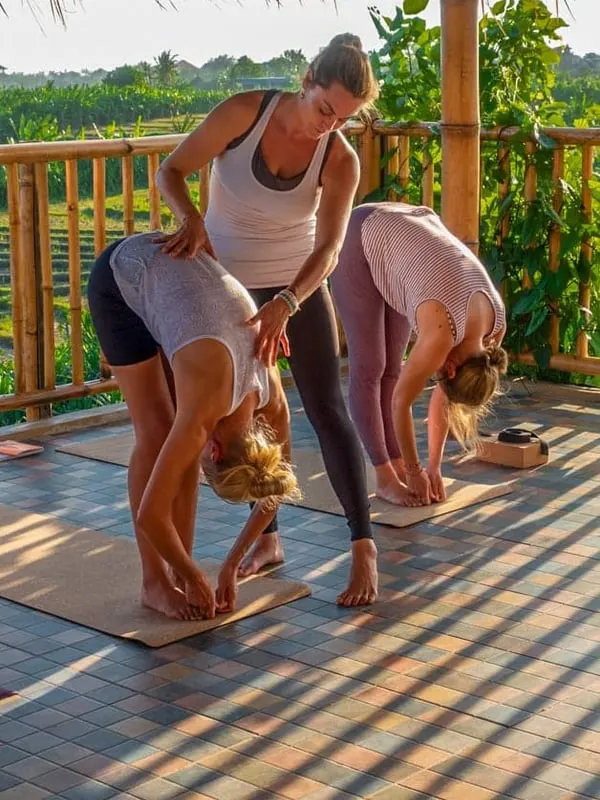
Training to teach forces you to understand yoga at a level that casual practice never reaches. When you know why a pose is sequenced a certain way, what it’s doing to the fascia and the nervous system, and how to modify it for different bodies, your own sadhana becomes completely different.
Students consistently tell us that the first week of their YTT changes their personal practice more than the previous five years combined.
Practically, this happens because you stop practising on autopilot. Once you have to explain a pose to someone else, you notice your own habits, your compensations, and the places you have been avoiding. Teaching makes you a more honest student of your own body.
2. You Learn Alignment at a Functional Level
Most yoga practitioners know roughly what good alignment looks like. Teachers understand why it matters, and what goes wrong when it’s absent.
A quality YTT teaches you anatomy, physiology, and the functional mechanics of each asana. This knowledge becomes embodied over time. You’ll notice your own alignment throughout the day, correcting posture habits you didn’t even know you had.
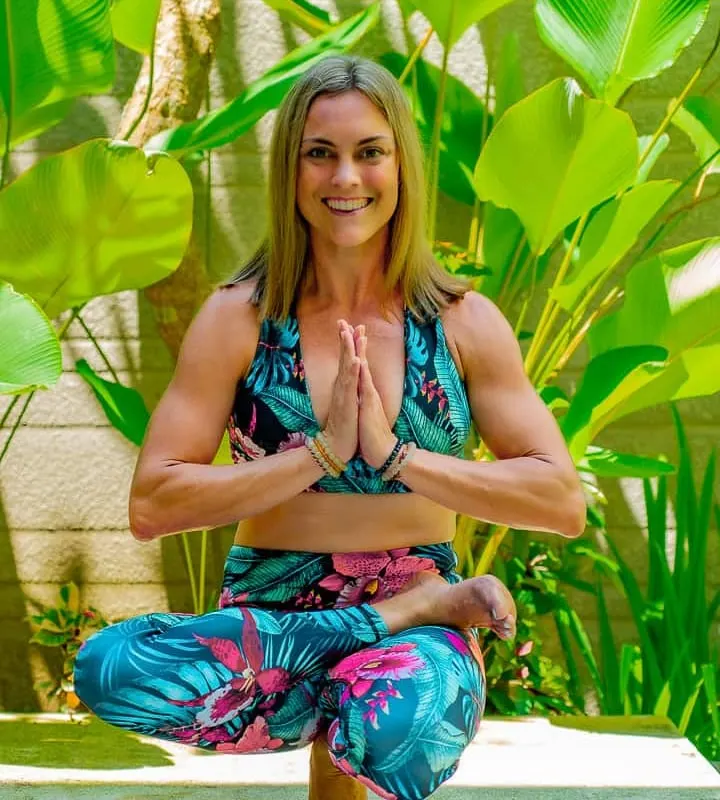
3. You Invest in Yourself, Fully
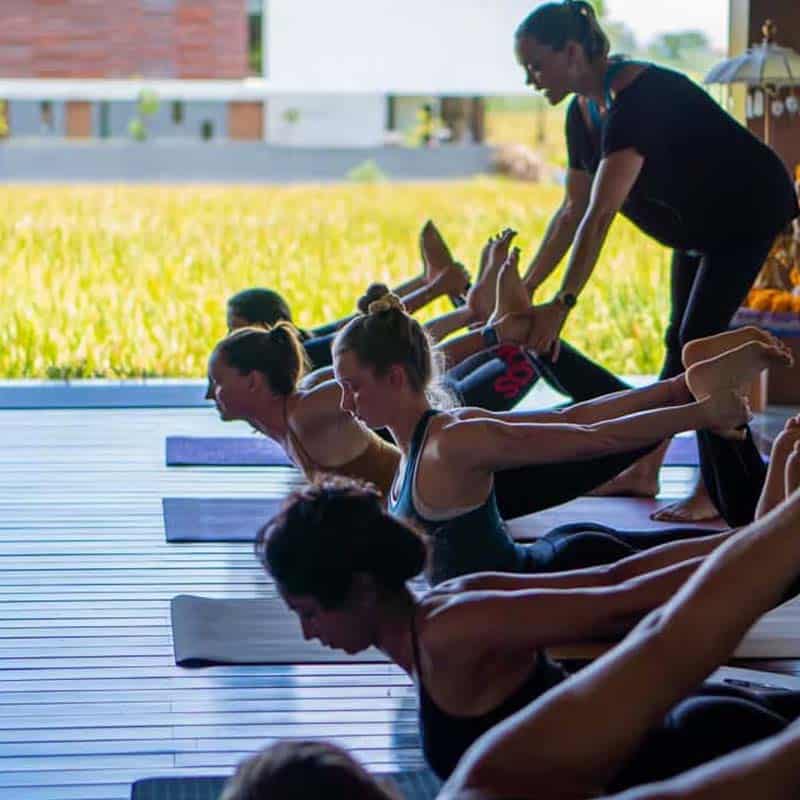
Teacher training is one of the rare experiences in adult life that demands your complete focus for an extended period. The daily immersion, the philosophical inquiry, the personal journalling, the physical practice, it all points inward.
If you’ve been running on empty, caretaking everyone around you, and neglecting your own inner life, a four-week YTT in Bali has a way of recalibrating all of that. This is one of the side effects of the training we hear about most from graduates.
4. You Turn a Passion into a Profession
Yoga is almost certainly the only subject where you can say you’ve been studying at 6am before your day job begins because you genuinely love it. That kind of passion is worth taking seriously.
A career you’re passionate about is qualitatively different from a career you simply pursue. Teaching yoga is demanding, creative, relational, and never boring. For people who love the practice, it rarely feels like work.
5. You Develop the Habit of Lifelong Learning
Yoga teacher training introduces you to an enormous body of knowledge: anatomy, Sanskrit, philosophy, breathwork, meditation, the history and lineages of the practice. There is no point at which you’ve learned all of it.
This is actually one of its great gifts. If you love learning, yoga teaching gives you a lifetime of legitimate study material and a framework for approaching all of it.
The material genuinely never runs out. Anatomy, Sanskrit, philosophy, the subtle body, and the history of the lineages each open into the next. If you are the kind of person who reads around a subject for the pleasure of it, teaching gives you a lifetime of legitimate reasons to keep going.
6. You Build Real Confidence
Teaching yoga in front of a group, adjusting students, holding space for people who are struggling physically or emotionally, these experiences build a form of confidence that is earned rather than assumed. It comes from actually doing the thing, not from thinking about doing it.
By the end of your training, you will have taught real classes, received real feedback, and worked through moments of uncertainty. That builds something durable.
7. You Become Part of a Community
The yoga community is genuinely global, connected, and oriented towards growth and wellbeing. When you become a teacher, you gain access to a professional network of people who share your values and your curiosity.
The relationships you form during your YTT are often among the most meaningful of your adult life. Training intensively with a small group of people, in a place as extraordinary as Bali, creates a particular kind of bond.
That community outlasts the training itself. Graduates stay in touch for years, cover each other’s classes, share students, and talk through the ordinary challenges of teaching. In a career that can otherwise feel solitary, that network matters more than most people expect going in.
8. You Learn to Meditate
Many people try to establish a meditation practice on their own and find it frustrating or ineffective. A YTT teaches you meditation from the inside out: multiple techniques, the physiological mechanisms behind why they work, and how to guide others into states of genuine stillness.
You don’t need to already meditate to begin a YTT. You do need to be open to it. By the end of your training, you’ll likely have found at least one technique that genuinely works for you. If you want to deepen further, our Online Meditation Training is a natural next step.
9. You Get All Your Questions Answered
If you’ve practised yoga for any length of time, you’ve accumulated a pile of questions you’ve never had a proper opportunity to ask. Why does this pose feel completely different on one side? What’s actually happening anatomically in a backbend? What do the Yoga Sutras actually say?
A YTT gives you direct access to experienced, specialised teachers for the duration of your training. The depth of learning available in that context is simply not available in a regular class setting.
10. You Understand the Full Health Picture
Yoga isn’t just movement. A serious YTT teaches you breathwork, the principles of Ayurveda, meditation, and the connection between physical practice and the autonomic nervous system. This gives you a comprehensive framework for understanding and communicating about health and wellbeing that informs everything you do, in and out of the shala.
You also learn how the pieces fit together. Breath, movement, diet, rest, and attention are not separate levers but one system, and a good training teaches you to see them that way. That perspective changes how you look after yourself long before it changes how you teach anyone else.
11. You Add a New Physical Practice
If you’ve been doing the same form of exercise for years, yoga adds something qualitatively different. It builds strength, mobility, and body awareness in ways that most gym-based training doesn’t address. The breathwork component strengthens the respiratory system and tones the deep core in ways no conventional exercise does.
For athletes, runners, and anyone doing high-load training, yoga is consistently one of the most effective recovery and injury-prevention tools available.
12. You Catalyse Real Transformation
Yoga changes people. This is not a vague claim. The combination of sustained physical practice, breathwork, meditation, philosophical inquiry, and community produces demonstrable shifts in anxiety, chronic tension, self-awareness, and quality of life.
When you become a teacher, you get to be a consistent part of that process for other people. That is a meaningful form of work.
13. You Become a Teacher
If you’ve ever felt drawn to teaching but couldn’t see yourself in a conventional classroom, yoga teacher training offers a different kind of classroom: one where what you’re teaching is genuinely useful, physically embodied, and often profoundly impactful.
You’ll teach anatomy and philosophy and breathwork and movement and stillness. You’ll work with people at some of their most open and receptive moments. That is a privilege, and it doesn’t get old.
Teaching yoga also asks something of you that conventional instruction does not. You are not only passing on information; you are holding a room, reading the energy in it, and adjusting in real time to the people in front of you. Those are learnable skills, and developing them is part of what keeps the work interesting year after year.
If any of these reasons resonate, explore our 200-Hour YTT in Bali here and apply when you’re ready.
What the Evidence Says About Teaching, and Safety
Two research findings are worth carrying into a teaching career, because they shape how you cue.
Cramer and colleagues’ meta-analysis of adverse events in randomised trials found yoga was not associated with more serious adverse events than usual care or exercise. That is a reassuring baseline, and it is the honest answer when a nervous beginner asks whether yoga is safe.
The qualifier comes from Cramer’s review of epidemiological studies and Swain and McGwin’s analysis of United States injury data: injuries concentrate in loaded end-range positions and in students moved along faster than their tissue tolerance allows.
Teaching therefore has less to do with demonstrating range and more to do with restraint. The most valuable habit you will build is noticing the student who is about to do something their body has not earned yet, and saying so without embarrassing them.
That skill is the reason supervised hours matter, and it is what our Yoga Alliance certified 200-hour YTT in Bali spends most of its contact time on.
The Reasons That Do Not Survive Contact With the Work
An honest list needs a second half, because several of the usual motivations reliably disappoint.
Wanting to fix yourself. Training will surface whatever you brought with you rather than resolve it, and a month of intensive practice among strangers is an unusually exposing place to discover that. Do the training because you want to teach, and handle the rest with appropriate support.
Wanting escape. A course in Bali is not a holiday, and the schedule is heavier than most people expect. The people who struggle most are usually the ones who booked a rest.
Wanting an income quickly. Group classes rarely cover a living on their own in the first years, and our guide to making a living as a yoga teacher sets out the arithmetic honestly.
Wanting certainty about advanced postures. Trainings teach you to hold a room safely, not to acquire a party trick, and if anything the anatomy will make you more conservative about extreme shapes.
None of these should stop you. They are simply better dealt with before enrolment than in week two.
The time and money it actually takes
Thirteen reasons make the decision sound easier than it is, so it is worth stating the cost plainly before you commit to it.
A residential 200-hour training runs three to four weeks full time, and the days are long. Budget for the training fee, flights, visa, and the income you will not earn while you are away. For most people the lost income is the larger number and the one they forget to count.
The cost after the training is smaller and lasts longer: insurance, registration if you choose to register, and the unpaid teaching hours in your first months. None of that is a reason not to do it. It is the difference between arriving with a realistic plan and arriving expecting the certificate to pay for itself by spring.
The first year of teaching is usually part time whether you intend it to be or not. Studio work arrives in single covers before it arrives as a regular slot, and the people who build a schedule quickly are almost always the ones who kept another income while they did it. Plan for that rather than against it.
It is also worth being honest about the hours that do not appear on a timetable. Sequencing, travel between studios, and the admin of running yourself as a small business take longer than the classes do in the first six months, and none of it is paid directly.
If the numbers do not work this year, they will work better next year with a deposit saved and a month genuinely cleared. Have a look at what a 200-hour yoga teacher training costs and covers before you decide either way, so the plan is built on real figures rather than an estimate. Teaching internationally also rests on clear communication, which is why English fluency matters for yoga teachers.
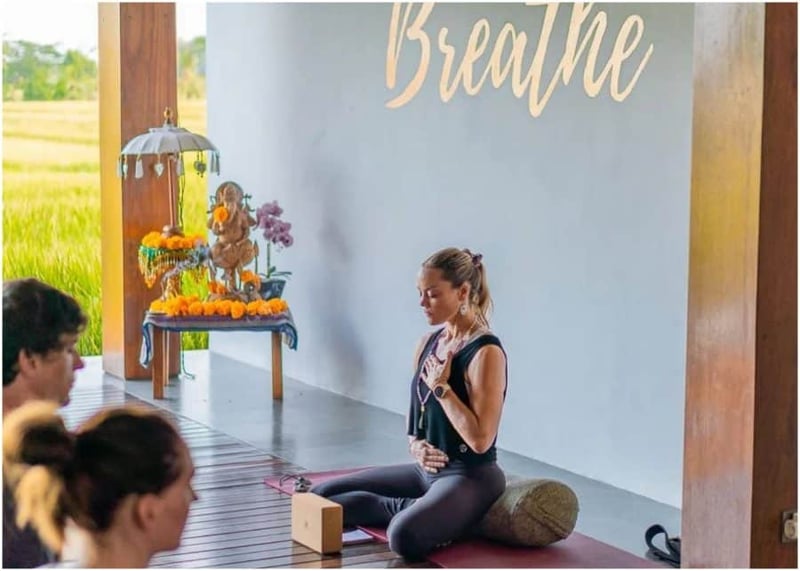
Take the First Step With Loka
Ready to move from idea to plan? Start with how to become a certified yoga instructor.
Our 200-Hour Yoga Teacher Training is where many teachers begin their career.
Frequently Asked Questions
Do you need to be an advanced yoga practitioner to become a yoga teacher?
No. You need a consistent personal practice of at least six months, enough body awareness to learn anatomy effectively, and genuine curiosity about the practice. You don’t need to perform advanced asana. Some of the best teachers we’ve trained were solidly intermediate practitioners who understood the fundamentals deeply rather than performing spectacular postures.
Can yoga teaching become a full-time career?
Yes, but it requires strategic planning alongside the certification. Teachers who build diverse income streams, combining studio classes, private clients, online teaching, and specialised workshops or trainings, can build a sustainable full-time practice. It takes two to three years of intentional effort after graduation. A good YTT will include business of yoga training to give you a realistic foundation for this.
How quickly can I start teaching after completing my YTT?
You can start teaching immediately after graduation. Most graduates begin with community classes, friends and family, or donation-based sessions to build confidence before approaching studios. Your Yoga Alliance registration and insurance can be arranged within days of graduating.
Is yoga teaching suitable as a second career?
Absolutely. Many of our graduates come from other careers in healthcare, business, education, and the arts. The transferable skills from previous careers often make them more effective teachers. The YTT provides the specific yoga knowledge; everything else you already bring to the table.
What ongoing education is available after a 200-hour YTT?
Loka Yoga School offers a range of online trainings for teachers who want to continue learning: Yin Yoga Teacher Training, Breathwork Teacher Training, Meditation Teacher Training, and an Online Yoga Philosophy Course. Each adds depth and new skills to your teaching practice. If you would rather start with a shorter foundation before committing to the full path, our 100-hour yoga teacher training is worth a look too. And our yoga teacher training articles dig further into every stage of the path.

The Loka Newsletter
Enliven your routine with exclusive spiritual content. There’s so much to learn.

Find us on Instagram
@lokayogaschool