Last updated on October 22nd, 2026 at 08:46 am
Bali Yoga Teacher Training: Everything to Know Before You Go
Bali yoga teacher training is one of the most transformative ways to complete your 200-hour YTT. But choosing the right location, school, and programme requires more thought than simply booking the one that looks good on Instagram. Here is what to consider before you commit.

Why Bali for Yoga Teacher Training?
Yoga now reaches more than 300 million people worldwide, and Bali has become one of the most sought-after places to train to teach it.
Bali is one of the most established yoga training destinations in the world, and that status exists for good reasons. The island’s Hindu Balinese culture carries a genuine spiritual dimension that is woven into daily life. The natural environment, the rice terraces, the ocean, the jungle, supports the kind of inward focus that intensive training requires.
Practically, Bali offers excellent value for a full immersive experience. Many programmes include accommodation and meals in the programme cost, which means you are investing in an experience that would cost significantly more in Australia, Europe, or the US.
And the removal from your ordinary life matters more than people expect. When you do not have your inbox, your commute, your social obligations, and your regular environment competing for your attention, you absorb the training at a different depth.
Choose Your Location Based on What You Actually Need
Bali is not one uniform environment. Where you train matters, and different areas offer fundamentally different experiences.
Canggu is an active, creative area with a strong fitness and wellness community, world-class surf breaks, excellent cafes and restaurants, and a young, international atmosphere. If you want to train near the beach and have access to a vibrant community between sessions, Canggu is an excellent base.
Kedungu (Tabanan) is quieter and more removed, offering a more immersive, nature-based environment. If your priority is stillness and you want to step further away from the social energy of a busy expat area, Kedungu is worth considering.
At Loka Yoga School, we operate from both Canggu and Kedungu, giving our students the best of both: proximity to Bali’s surf and creative community, and genuine contact with the quieter, more traditional side of the island.
Think honestly about which environment will support your focus. If you know yourself well enough to know that a buzzing social scene will pull your attention from the training, choose somewhere quieter. If isolation would make you unhappy and tense, choose somewhere with more social energy.

Verify Legality and Accreditation
Some yoga schools in Bali operate outside Indonesian legal requirements to reduce costs. This creates real risk for students: immigration can interrupt a training, and in serious cases, schools can be shut down mid-programme.
Before you commit, verify that the school holds the required operating licences and permits. A reputable school will provide this information willingly. Reluctance to share it is a red flag.
Separately, verify Yoga Alliance accreditation directly on the Yoga Alliance website. Do not take a school’s word for it. Check the RYS directory yourself. A 200-hour YTT from a non-accredited school will not qualify you for RYT registration or professional insurance.
Prioritise Reviews from Real Graduates
Cross-check any school against its Yoga Alliance listing and reviews before you commit.
Testimonials on a school’s own website are useful but limited. Seek out independent reviews on Google, TripAdvisor, and Yoga Alliance. Look for patterns across multiple reviews rather than focusing on single outliers.
When you can, contact graduates directly. Ask specific questions: was the anatomy teaching thorough? Did you feel genuinely prepared to teach after graduating? Were the trainers accessible and engaged? Loka Yoga School holds a 5.0-star rating from 244 independent reviews. We actively encourage prospective students to speak with our graduates before making their decision.
How to Research Any School Before You Commit
1. Check the Teaching Faculty in Depth
A single teacher cannot be the genuine authority on asana, anatomy, yoga philosophy, and teaching methodology. The best schools have specialised teachers for different areas of the curriculum and introduce their faculty clearly and proudly.
Look at who specifically teaches anatomy. This module determines how safe you will be as a teacher, and it deserves specialist instruction. If the faculty page is vague, or if one person appears to cover everything, ask for clarification before you proceed.
2. Ask About Group Size and Student-to-Teacher Ratios
You deserve individualised attention during your teacher training. You need feedback on your alignment, your cueing, and your presence as a teacher. This is not possible in a group of 30 students with one instructor.
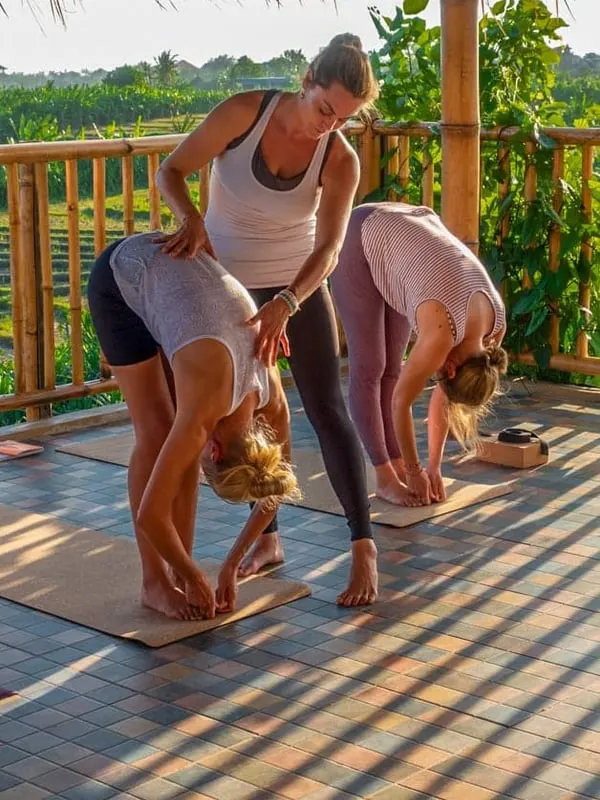
In our experience, anything above 20 students per teacher crosses into territory where individual quality suffers. We operate with approximately 3 teachers for 16 students. That ratio makes a direct, tangible difference to the depth of feedback each person receives.
3. Look at the Yoga Styles on Offer
For a versatile, long-term teaching career, a foundation in Hatha yoga is essential. The best programmes weave in Vinyasa and Yin as well, equipping you to teach dynamic, flow-based, and therapeutic practices. The goal is a comprehensive foundation, not a superficial overview.
4. Trust What the First Contact Tells You
Before you set foot in Bali, your interactions with a school reveal a great deal about what the training experience will actually be like. Are your questions answered specifically and thoughtfully? Or do you receive copy-and-pasted, generic responses from someone managing volume rather than caring about your decision?
The quality of initial contact is a reliable predictor of the quality of care you will receive during the training. A school that takes your questions seriously before you have paid anything is showing you how they treat their students.
5. Confirm That Your Specific Needs Are Addressed
Do you have dietary requirements, an injury, or a preference about accommodation? Ask specifically. A genuinely excellent school treats you as an individual, not just an enrolment. Any school worth its reputation will engage with your specific situation rather than directing you to a generic FAQ page.
Know What Your Priority Is
Most reputable schools cover the same foundational curriculum because Yoga Alliance requires it. The differences lie in emphasis, depth, and culture. Read the curriculum carefully. Look at who the trainers are and what their backgrounds bring to the school’s character. And if possible, speak with someone who actually teaches in the programme.
Check the Schedule Carefully
A well-designed training schedule builds in time for rest, integration, and personal exploration. If a school’s schedule runs wall-to-wall from 6am to 9pm with no meaningful breaks, this is not evidence of thoroughness. It is evidence of cost-cutting.
Exhausted students do not learn well. Ask to see a sample week schedule before you commit. Look for rest days, afternoon free time, and evenings designed for personal practice or integration rather than compulsory sessions.
Choose Your Dates Intentionally
Plan your booking with enough lead time to secure your place, as quality programmes with small group sizes fill quickly. Consider how your training dates align with your life. If you are leaving a job or taking extended leave, you will want certainty around dates well in advance.
Health, Heat, and Practising Safely in the Tropics
Training in a humid climate changes how your body responds, and planning for that prevents most of the problems.
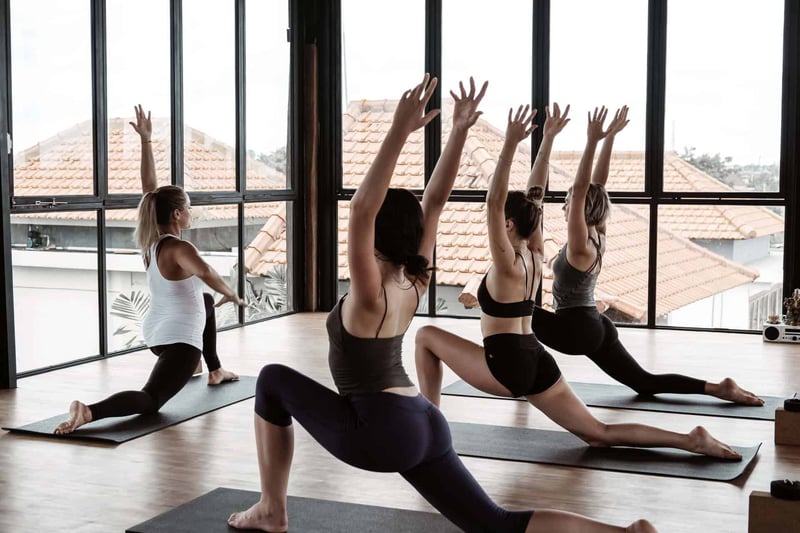
Heat and humidity make you feel more flexible than you are. Warm tissue tolerates stretch more readily, which is exactly the condition in which people push into end range and get hurt. Cramer and colleagues’ review of epidemiological studies and Swain and McGwin’s analysis of United States injury data both show injuries cluster in loaded end-range positions, and a 30-day intensive is precisely when accumulated fatigue meets ambition.
The reassurance alongside that: Cramer’s meta-analysis of adverse events in randomised trials found yoga was not associated with more serious adverse events than usual care or exercise. The practice is safe. Progressing faster than your tissue is what is not.
Practically: hydrate with electrolytes rather than water alone, expect the first week to feel harder than you predicted, treat any cut seriously because tropical infections escalate quickly, and tell your teachers about existing injuries on day one rather than week three.
Sleep is the variable people sacrifice first and regret most. A course this dense consolidates learning overnight, and there will be evenings when going to bed is the better decision than the sunset.
Visas, Money, and the Practical Side Nobody Mentions
The logistics are where most of the avoidable stress sits, and almost none of it appears in a school’s brochure.
Check your visa position against the current Indonesian rules rather than a forum post from two years ago. Requirements and durations change, overstaying carries a daily fine, and the school you enrol with should be able to tell you exactly which visa their past students used. If they are vague about it, that is information about the school.
Bring more payment methods than you expect to need. Card acceptance is patchy outside the main tourist areas, ATM limits are lower than in Europe or Australia, and a card that gets blocked on day two is a genuinely miserable way to start a month of study.
Budget beyond the course fee: airport transfers, a scooter or drivers, laundry, the meals not included, a SIM or eSIM, and travel insurance that actually covers you for scooter use. Most people underestimate the total by several hundred dollars.
Sort travel insurance before you fly, and read what it says about motorbikes specifically. It is the single most common gap in coverage among people training here.
What to Ask a School Before You Pay a Deposit
Five questions separate the schools worth your money from the ones selling a location.
Who actually teaches, and how many hours does the lead trainer personally deliver? Marquee names sometimes appear for two afternoons. Ask for the split.
What is the group size, and how many assistants are on the mat? Twelve students with two experienced teachers will teach you more than thirty with one.
How many hours are spent watching you teach, with feedback? This is the component that turns a certificate into competence, and it is the first thing cut when a school prioritises volume.
What is the refund and postponement policy in writing? Flights get cancelled and people get sick. A school that will not put its policy in writing has told you something.
What happens if you are injured or unwell mid-course? A clear answer means they have handled it before, which is exactly what you want.
Our own answers are on the 200-hour YTT in Bali page, and our guide to how much experience you need before training covers the question most people are quietly worried about.
Preparing your body in the months before you go
Most people arrive at a training fitter than they need to be in some ways and less prepared than they expect in others. The demand is not intensity, it is volume: two to four hours of practice a day, six days a week, for three or four weeks, on a body used to three classes a week.
Start building tolerance for repetition about eight weeks out, and practise more often rather than harder. Five shorter sessions a week will prepare you better than two long ones. Wrists, shoulders and hamstrings carry most of the load in a vinyasa-based programme, and they respond to frequency rather than effort.
Wrists deserve specific attention, because they are the most common complaint of the first fortnight. Bearing weight through the hands for hours a day is unfamiliar to almost everybody. Short, regular bouts of loaded wrist work, done gently and daily rather than hard and occasionally, give the tissue time to adapt before the schedule forces the issue. It is worth knowing what a 200-hour yoga teacher training actually asks of you physically before you book the flights.
Sleep will do more for you than extra asana. If you are crossing several time zones, arriving three or four days early to reset is worth more than another month of practice at home. Most people who struggle in the first week are underslept rather than underprepared.
Do not arrive injured, and do not hide an injury at the intake. A good school will work around a shoulder or a knee if it knows in advance. Nobody can work around something they first hear about in week three, once it has become a real problem.
Train for Your 200 Hours in Bali
Loka Yoga School runs its Yoga Alliance accredited 200-hour Yoga Teacher Training in Kedungu, Tabanan, a short walk from the beach and a world away from the noise.
New to the process? Start with how to become a certified yoga instructor, then choose your dates with confidence.
Frequently Asked Questions
What is the best time of year to do a yoga teacher training in Bali?
Bali’s dry season runs from approximately May through October and is the most popular period for training. The weather is consistently good, humidity is lower, and ocean conditions are excellent. That said, Bali’s climate is generally warm year-round.
Is Bali safe for solo travellers doing a yoga teacher training?
Yes. Bali is one of the most welcoming and well-established tourist destinations in Southeast Asia, and the yoga training community is particularly supportive of solo travellers. Most YTT cohorts include a significant proportion of people travelling alone.
Do I need a special visa to do a yoga teacher training in Bali?
Most nationalities receive a 30-day visa on arrival that can be extended to 60 days. For a four-week programme, a standard tourist visa is typically sufficient. Always verify current Indonesian visa requirements well in advance of your trip.
What is typically included in a Bali YTT programme cost?
This varies significantly between schools. Always clarify exactly what is included before comparing prices. A programme that appears cheaper on the surface may cost more in total once you add accommodation, meals, and transport. We break every line item down in our full Bali yoga teacher training cost breakdown.
Can I surf or explore Bali during a yoga teacher training?
Yes, and a well-designed programme builds in time for this. At Loka, afternoons are largely free and Sundays are full rest days. Canggu is one of Bali’s premier surf destinations. Exploring Bali and integrating the practice are both part of the experience.

The Loka Newsletter
Enliven your routine with exclusive spiritual content. There’s so much to learn.

Find us on Instagram
@lokayogaschool