Last updated on October 24th, 2026 at 11:45 am
Is a 200-hour yoga teaching training enough to teach yoga professionally?
Completing such a course can be very beneficial and satisfying, but it is not always the right thing for everyone. Allow us to help you look more closely at the question and discover the eternal question – is a 200-hour yoga teacher training enough, or maybe you need more or less?
The onset of the pandemic a few years ago made everything easier and more difficult. From the aspect of easy things, anyone who wanted to had both the time and resources to begin formal yoga training – and all of it was executed online. However, this is a practice that has its pros and cons. That is why today, as we previously mentioned, we will be answering whether completing a 200-hour training course is really important and how you can advance further on your yoga journey!
What is the 200-hour yoga teacher training?
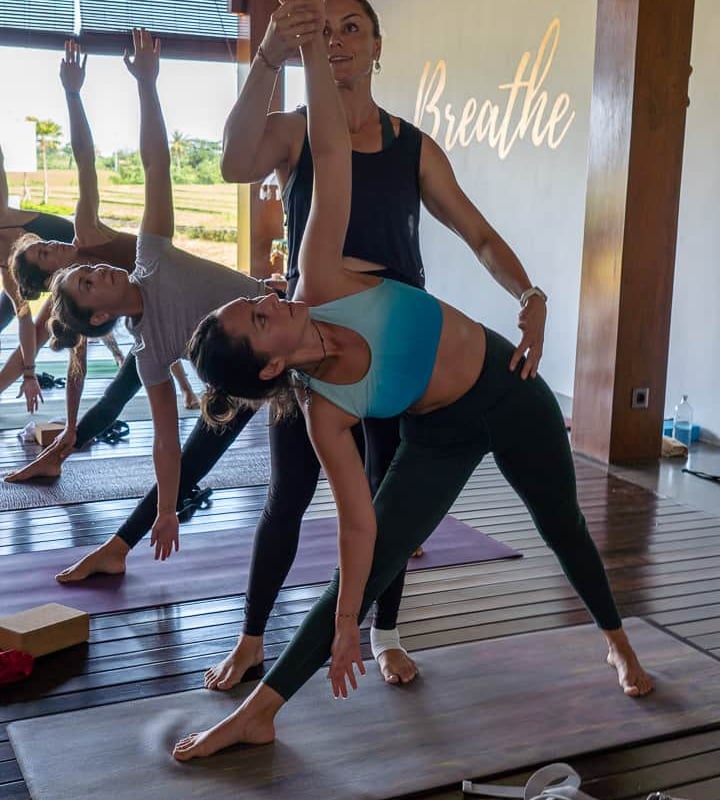
The 200-hour yoga teacher training (commonly known as YTT) is a training program where yoga enthusiasts, beginner and advanced, sign up to learn all about yoga on their path to becoming teachers. This is a model that was created decades ago in North America by a certified body, and it is called Yoga Alliance. They have an online directory and provide standardised guidelines for approaches and training programs for people worldwide.
If you want to become a yoga teacher, a YTT is the first thing you need to look into. Take a look at this course and remember that you need to understand it as a fundamental point on your path to becoming a certified yoga teacher.
Of course, you can study this at a yoga retreat. However, this is where things get a bit tricky. Starting an in-depth search for the perfect place can take a while, especially because you want to study where you will be provided with enough space and be taught by certified teachers. So don’t worry about convenience – focus on excellence, and the best option will present itself to you in no time.

A little more on the Yoga Alliance
This is not just a practice where you will learn plenty of yoga poses – think about it if it is a 200-hour yoga teacher training, then there is a lot more than that. So, we are sharing some of the curricula to give you an idea of what to expect as soon as you start your 200hr YTT.
Training, practice, techniques
Naturally, this is the favourite part with all students because it involves a variety of asanas. You will learn the Sanskrit name of the yoga poses, you will learn about the benefits that come from each pose (both emotional and physical), and you will learn all about the techniques as well as the yoga tradition.

Teaching methodology
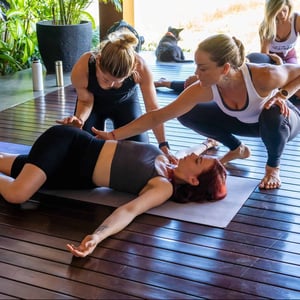
There is a certain structure to each class, so if it ever happened to you that your yoga class went by in a flash, this is the part where you will learn how to do the same. The structure of the yoga class is incredibly important, so you will learn how to create a wonderful flow of asanas that you and your students will enjoy. This is where you will also learn about the business aspect of yoga in case you want to open up your studio one day.
Physiology and anatomy
Alignment is everything, and knowing how to place your body correctly to get the most out of the poses is a form of art yet to be learned. If you want to become a teacher, you need to know the positive and negative sides to each pose, and this is where you learn it.
Practicum
Last but not least, the practicum is there to help you show off everything you have learned during this course and even add a touch of yourself to the presentation. You get to showcase what you know in a supportive environment, preferably at a yoga retreat, surrounded by peace and love, and there is nothing better than that!
Are these 200 hours enough to enable you to teach yoga?
The answer here is both yes and no. Think about it this way – as you need a lot of passion and a good plan for everything in life, you need that here too. The 200-hour yoga teacher training is something you need if you are a beginner, but it is not enough if this is the first time you are interested in the subject. If you are a beginner, you might need special certifications that you can combine. A few YTTs are better than just one! In this case, you can combine several and take in all the knowledge, deepen your passion, and become a professional along the way.
On the other hand, it is a great learning opportunity that can help you become more, experience more, and set you on the right path to becoming a yoga teacher. You can take the training at a yoga retreat and study from one or a few teachers. There are varieties to discover and plenty to learn, so all you need to do is pick a starting point and begin from somewhere!
The bottom line is that you will never stop learning, not after the 200hr YTT, not long after that. Also, you need to know which kind of yoga you want to focus on. Both newer and older students should be much more specific when interested in this subject. In the end, you might even find yourself a little scared of a room filled with people where you are the teacher! But, however you look at it, it is an adventure that you should not miss!
What 200 Hours Can and Cannot Cover
It helps to see the arithmetic. The RYS 200 standards set minimums of 75 hours for techniques, training and practice, 15 for teaching methodology, 10 for anatomy and physiology, 20 for philosophy, lifestyle and ethics, and 5 for practicum.
Read that as a teaching load rather than a certificate and the picture sharpens. Fifteen hours of methodology is roughly two working days spent on the actual craft of instructing a room. Five hours of practicum might mean you teach three or four times before you are certified.
That is not a criticism of the standard. It is a foundation qualification and it is honest about being one. The trouble starts when a graduate reads the certificate as a statement of readiness rather than a licence to begin learning in public.
What 200 hours reliably gives you is a coherent map: the shape of a class, a working vocabulary, a first pass at anatomy, and enough philosophy to know the tradition you are standing in. What it cannot give you is the thing only repetition gives anyone, which is fluency.
The Gap Between Certified and Competent
Certification is a threshold. Competence is a curve, and the two are measured differently.
You leave training able to do the job in the way a new driver is able to drive: legally, carefully, and with most of your attention consumed by the mechanics. The experienced teacher in the studio next door is not following better rules than you. They have simply taught the same sequence enough times that the sequence no longer occupies them, which frees their attention for the room.
This is why the question is not really whether the hours are enough. It is whether you intend to keep learning after them. Graduates who treat the certificate as the end of their education plateau quickly and can be spotted years later, still teaching the exact class they were taught to teach.
Graduates who treat it as a beginning look unremarkable for about a year, then become the teachers people follow between studios.
Where New Teachers Actually Struggle
Ask teachers in their second year what caught them out, and the same four things come up.
Sequencing under time pressure is first. Planning a beautiful class at your kitchen table is a different skill from adapting it when eleven people arrive instead of four and two of them have never practised before.
Cueing is second. New teachers talk too much, and the instinct to fill silence with instruction is strong when you are nervous. Learning when to stop speaking takes longer than learning what to say.
Third is knowing what to do with the body in front of you when it does not match the diagram. This is where thin anatomy hours show. Much of what circulates in yoga rooms does not hold up: gains in range after static stretching are not explained by structural change in muscle and tendon, and of the myofascial chains taught as fact, a systematic review found only some are evidenced. If you were taught those claims as certainties, you will pass them on as certainties.
Fourth is the business: pricing, invoicing, and asking to be paid properly. Almost no one feels prepared for that part.
When 200 Hours Is Genuinely Enough
For a great deal of real teaching, it is enough, and saying otherwise sells people an anxiety they do not need.
It is enough to teach general-level classes to healthy adults in a studio, gym or community hall, provided you teach within what you know and refer out what you do not. It is enough to cover a friend’s class, to run a weekly session at your workplace, or to build a small regular group of your own.
It is not enough, on its own, to work with pregnancy, acute injury, serious mental illness, or clinical populations. Those need further training, and the mark of a safe new teacher is knowing where that line sits rather than guessing at it.
The honest answer to the question in the title is therefore conditional. Enough to start teaching well: yes. Enough to stop learning: no, and no reputable school would tell you otherwise.
Choosing a Training That Closes the Gap
If the hours are fixed by the standard, the variable is what a school does with them. That is the thing worth being fussy about.
Look for small groups, a named lead trainer who is actually in the room, and a practicum where you teach real people rather than only your classmates. Ask how many contact hours go beyond the minimums, and where; we checked eight Bali schools on their published hours. We have set out the full comparison in our guide to choosing the right yoga teacher training school, and a day-by-day account of what an immersion involves in what to expect from a 200-hour training.
For the first year after you qualify, the practical habits matter more than the certificate: teach often, get watched, and take feedback from someone with nothing to sell you. Our seven tips for becoming a better yoga teacher covers that ground.
If you want a training built to close this gap rather than paper over it, with anatomy taught by Yann and philosophy and practice led by Taryn, you can see dates and curriculum for our Yoga Alliance certified 200-hour YTT in Bali.
What Studios Actually Ask For
Worth knowing, because the fear and the market do not match. Most studios hiring a general-level teacher ask for a 200-hour registered qualification, current insurance, and a demo class. That is the standard package.
What decides the outcome is nearly always the demo. Studio owners are listening for whether you can hold a room, keep people safe, and teach the level advertised rather than the level you personally enjoy practising.
Insurance is the piece new teachers forget. Most providers will cover you on a 200-hour certificate from a recognised school, and many will not cover techniques you were not trained in, which is another reason to be clear about your scope.
So the certificate opens the door. What you do in the demo, and in the first three months of covering other people’s classes, decides whether you stay in the room.

So, we can discover from today’s subject that taking a 200-hour yoga teacher training (or YTT) is sometimes enough to start teaching yoga professionally, but sometimes it is not. It all depends on you, your wishes, aspirations, and how far you feel you have advanced during the course. If you want to master your knowledge and skills, advance and enrol in a training course, head to our page and look at our 100-hour yoga teaching training!