Last updated on October 22nd, 2026 at 08:45 am
200-Hour Yoga Teacher Training: What to Expect
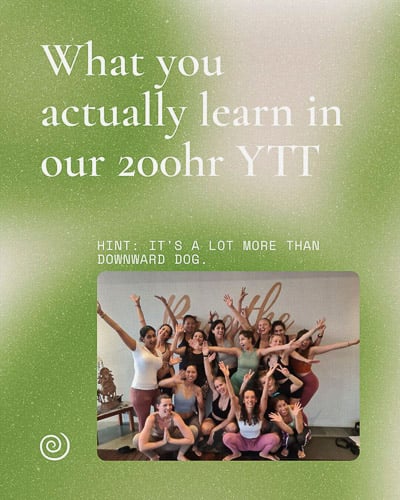
A 200-hour yoga teacher training covers asana, pranayama, anatomy, yoga philosophy, teaching methodology, and business skills over approximately four weeks of full immersion. It is the global standard qualification for becoming a registered yoga teacher and the foundation for a long, credible teaching career.
Here’s what you can realistically expect, day to day and from start to finish.
It’s Far More Than Learning Poses
This is the first thing to understand. A 200-hour YTT is not an extended yoga class. It’s a professional training programme that changes how you think, how you move, and how you see your practice.
A good school will take you through the physical practice in depth, yes. But equally important are the subjects that make you an effective, trustworthy teacher: anatomy and physiology, yoga philosophy, sequencing theory, the art of cueing, and how to run a yoga business.
At Loka Yoga School, we describe our approach as where science meets spirituality. Both are essential. You need to understand how the body works at a physiological level, and you need to understand the philosophical and energetic framework that gives yoga its depth. Neither alone is enough.

Prerequisites: What You Need Before You Begin
A 200-hour YTT is not a beginner’s yoga course. You need an existing personal practice before you enrol, typically at least six months of regular asana practice, whether in a shala, a studio, or through a structured online programme.
You don’t need to be advanced. You do need to be familiar with foundational postures, have some experience with breath awareness, and be genuinely ready to study rather than simply practice.
What the Yoga Alliance Standard Actually Requires
Behind the photographs and the schedules, the certification itself is a set of contact-hour minimums. The RYS 200 standards require 75 hours of techniques, training and practice, 15 hours of teaching methodology, 10 hours of anatomy and physiology, 20 hours of philosophy, lifestyle and ethics, and 5 hours of practicum.
Add those together and you get 125. The remaining 75 hours are distributed at each school’s discretion.
That gap is the most useful thing you can hold in mind when you compare programmes. Two certificates carrying the same name can sit on top of very different educations, because more than a third of the hours are whatever the school decides they are.
Some schools put those hours into a second daily practice. Others put them into mentoring, business skills, or supervised teaching with real students. Ask a school where its discretionary hours go, and you will learn more from that one answer than a brochure will tell you in ten pages.
A Typical Day at a Loka Yoga School Immersion
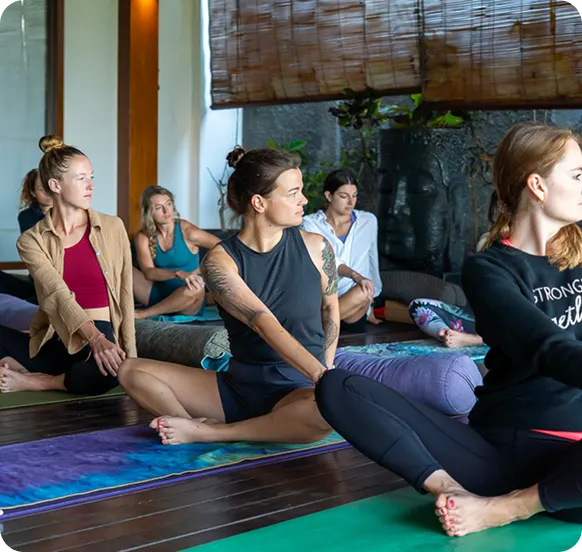
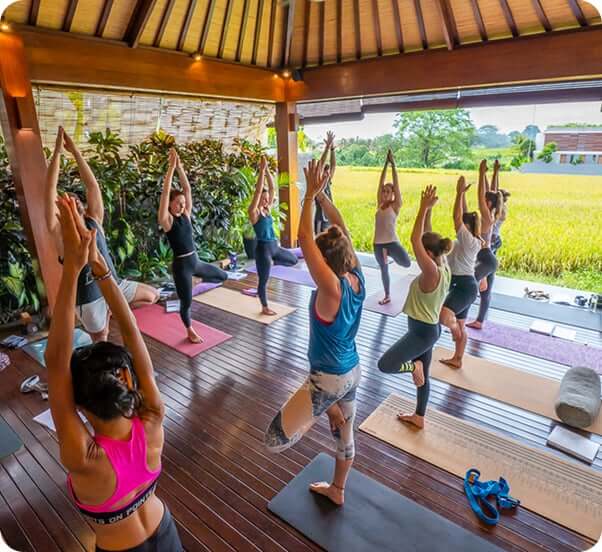
Each day is structured to balance learning, practice, and integration. You won’t be on your mat for twelve hours straight. There is time for rest, for meals, and for the kind of wandering, reflecting, and absorbing that makes an immersion in Bali different to a weekend course at home.
A typical day looks like this:
- Early morning asana practice, including pranayama, meditation, mantra, mudras and bandhas
- Nourishing breakfast
- Anatomy and physiology workshop with Yann Cadic
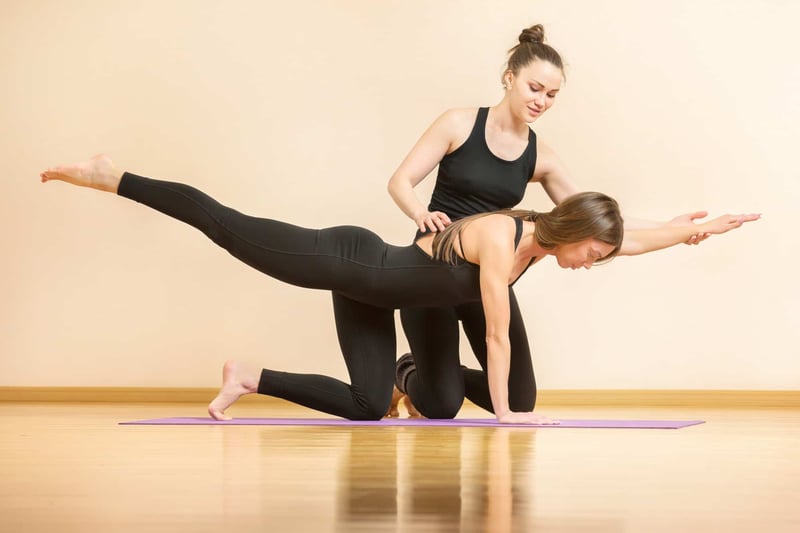
- Asana posture lab: deep dives into alignment, adjustments, and functional anatomy
- Lunch break and free time
- Yoga philosophy or teaching methodology workshop
- Evening: Yoga Nidra, breathwork, or restorative practice
Sundays are full rest days. This is deliberate. Integration requires space, and exhausted students don’t learn well.
What the Four Weeks Ask of You
The schedule above reads as a list. Lived, it asks more of you than a list can convey, and it helps to know that in advance rather than discover it in week two.
The physical load is real but manageable: two practices most days, plus hours of sitting, watching, and being on your feet to adjust. Bodies that have never trained daily usually protest somewhere around day five. That passes.
The harder load is cognitive. You are learning a vocabulary, a set of physical skills, and a philosophy at once, then being asked to teach all three back while people watch you. Most trainees hit a dip somewhere in the middle, where the material stops feeling exciting and starts feeling like a great deal to hold.
That dip is not a sign you chose wrong. It is what learning at this density feels like, and every group we have taught has moved through it. What helps is sleep, water, and resisting the urge to measure your progress against the person on the next mat.
The final week tends to feel different again. The pieces connect, the practicum stops being frightening, and you start sounding like a teacher rather than someone reciting one.

The Core Curriculum Modules
Asana, technique and practice. You’ll learn the Sanskrit names, physical mechanics, benefits and contraindications of the foundational postures. You’ll understand what makes a pose safe or unsafe for different bodies, and how to offer modifications confidently.
Anatomy and physiology. This is where science meets spirituality in the most direct sense. You’ll understand the skeletal and muscular systems, how connective tissue responds to yoga practice, and how to spot and work around common injuries. This is one of the most important modules for any teacher.
Yoga philosophy and history. The Yoga Sutras of Patanjali, the eight limbs, the Bhagavad Gita, the origins of modern yoga. You’ll understand not just what to teach but why.
Teaching methodology. Class structure, sequencing, cueing language, adjustments, holding space, trauma-informed teaching principles, and how to build confidence in front of a group.
Practicum. You’ll teach two complete classes to your training group and receive detailed, constructive feedback from your lead trainers. This is non-negotiable in any programme worth joining. It’s the single most important preparation for teaching in the real world.
Business of yoga. How to market yourself, build a client base, price your services, and set yourself up as a professional. This is often missing from programmes that focus solely on the physical practice.
The Anatomy Hours Are the Thinnest Part of the Standard
Ten hours. That is the minimum required for anatomy and physiology, and none of them need to be delivered by the lead trainer. It is the lowest bar anywhere in the standard, and it is where schools differ most.
Ten hours is enough to name some bones and move on. It is not enough to teach you why a cue that helps one student is unhelpful for the next, or how to tell the difference between a sensation worth exploring and one worth stopping for.
It matters for a second reason. A fair amount of what gets repeated confidently in yoga rooms does not survive contact with the research. Increased range of motion after static stretching is not explained by changes in muscle and tendon structure, which should change how you talk to a beginner about flexibility. And of the myofascial chains often taught as established fact, a systematic review of the evidence found support for only some of them.
You will not be teaching that literature to a Tuesday evening class. You do need a trainer who has read it, so that what you pass on is accurate. Yann teaches ours, and our writing on the hip flexors and what yoga teachers should know about them is held to the same standard.
What You’ll Take Away
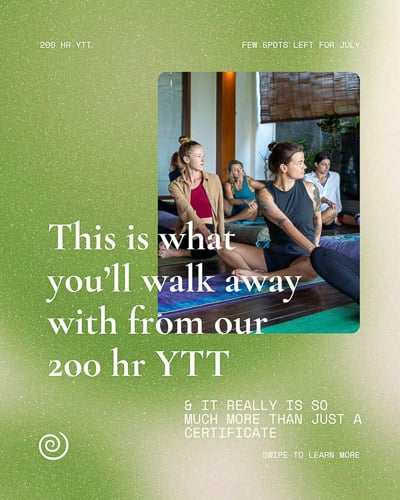
You’ll graduate with an internationally recognised Yoga Alliance certificate and the ability to register as an RYT 200. You’ll have the knowledge and skills to begin teaching immediately.
More than the certificate, you’ll have a deepened personal sadhana, a thorough understanding of the body, and the confidence that comes from having actually taught classes and received real feedback.
You’ll also leave with a community. The people you train alongside become part of your practice, and many of our graduates maintain connections years after their training.
What to Ask Before You Pay a Deposit
Three questions separate a serious school from a well-photographed one. Who is actually in the room teaching, as distinct from who appears on the website. How many trainees there are per trainer. And what the practicum involves: whether you teach real students who give you honest feedback, or you teach your classmates while a trainer watches.
Choosing well deserves more room than this section can give it. We have written the full comparison in our guide to choosing the right yoga teacher training school. Read it before you shortlist, not after. If Bali is on your shortlist, see what a month of Bali teacher training really costs before you pay anything.
Choosing the Right Format
Some programmes are structured as weekend intensives spread over six to twelve months. Others, including ours, are full immersions of approximately four weeks.
Immersive programmes allow you to step entirely outside your daily life and commit fully to the training. Without the distractions of work, family routines, and the ordinary busyness of your week, you absorb the material differently. Bali, with its spiritual culture, extraordinary nature, and genuine yoga community, amplifies this effect considerably.
If you’re ready to go deep, an immersive Bali YTT is worth it. You can explore our 200-Hour YTT and apply here.
The Doubts That Come Up Before You Enrol
Almost everyone arrives carrying one of three worries, and none of them is the obstacle it feels like from the outside.
The first is flexibility. Training is not an audition for how deep your forward fold goes. It is an education in how much bodies vary and how to teach the ones actually in front of you. A very mobile trainee often has more to unlearn than a stiff one, because nothing has ever forced them to think about why a shape works.
The second is age. Our groups routinely span several decades, and the trainees who arrive in their forties and fifties tend to ask the most useful questions. They have lived in their bodies long enough to be curious rather than competitive.
The third is experience: how long you should have practised before you train. That one has a real answer rather than a reassurance, and we have set it out in our piece on how much experience you need before teacher training.
After the Certificate: Your First Year
Graduating is the start of the useful part. The certificate makes you employable; the first year makes you a teacher.
Most graduates teach badly for a while, in the ordinary sense that anyone is clumsy at a new craft. Your sequencing is over-planned, your cueing is too wordy, and you talk through savasana because the silence feels like a gap you should fill. All of it resolves with repetition, and faster if someone experienced watches you and tells you the truth.
Teach anything you can get in that first year: community classes, friends in a living room, cover shifts nobody else wants. Volume matters more than venue. We have collected the specifics in seven practical tips for becoming a better yoga teacher.
If you want that first year to begin with a group who already know your teaching and a trainer you can still write to, that is what a full immersion is for. You can see dates, curriculum and fees for our Yoga Alliance certified 200-hour YTT in Bali.
What the Month Costs Beyond the Tuition
The course fee is the number everyone compares, and it is the number that tells you least about what the month will actually cost you. Work the rest out before you pay a deposit rather than afterwards.
Start with getting there and staying legal. Flights, a visa appropriate to the length of your stay, travel insurance that genuinely covers the country you are going to, and any vaccinations or medication you need to organise in advance. Visa rules change without much warning, so confirm yours with the relevant embassy rather than with a school, including this one.
Then the things a training quietly assumes you already own. A mat you are willing to practise on twice a day for four weeks, clothing for a hot room, the books on the reading list, and a notebook you will actually write in. Some courses include the manual and some do not, which is worth asking before you arrive.
Then the cost most people leave out altogether, which is the income you are not earning. Four weeks away is four weeks unpaid for most students, on top of rent, phone, and subscriptions still running at home while you are not there. For a fair number of people this is larger than the tuition itself.
Then the costs that turn up after the certificate. Registering with a yoga registry carries an annual fee, teaching insurance carries another, and both recur rather than being settled once. If you intend to teach, plan for a first year in which you are paying to be a teacher before you are earning much as one.
None of this is an argument against going. It is the difference between arriving with a small buffer and arriving already worried about money, which is not the frame of mind you want for the anatomy hours. If the full figure makes the timing wrong this year, a Yoga Alliance certified 200-hour yoga teacher training in Bali will still be running next year, and the month is far better done unhurried.
Train With Loka in Bali
A 200-hour immersion in Bali gives you the space to step out of ordinary life and absorb the material fully, with anatomy taught by Yann and philosophy and practice led by Taryn.
If you are ready to go deep and graduate as a confident, Yoga Alliance registered teacher, our 200-hour programme in Kedungu, Tabanan is built for exactly that.
FAQ
Is there a practicum in every 200-hour YTT?
There should be, but not every school includes one. A practicum, where you actually teach a full class and receive feedback, is essential preparation for teaching professionally. Always check whether a programme includes supervised teaching practice before you enrol.
What is the Yoga Alliance, and why does accreditation matter?
Yoga Alliance is the international governing body that sets standards for yoga teacher training globally. Graduating from a Yoga Alliance Registered Yoga School (RYS) allows you to register as an RYT 200, which is required by most studios, gyms, and fitness centres before they’ll hire you. It also qualifies you for professional teaching insurance.
How much free time will I have during a four-week immersion?
A well-designed programme builds free time into the daily schedule. At Loka Yoga School, afternoons and evenings are largely free, and Sundays are full rest days. You’ll have time to explore Canggu and Kedungu, swim, surf, visit temples, eat well, and actually enjoy being in Bali.
Will I be ready to teach professionally immediately after graduating?
You will have the knowledge, credentials, and practicum experience to start teaching. Your first classes will still feel like learning, because they are. Most teachers find the first six months of teaching solidifies everything from training in ways no classroom can. The YTT gives you the foundation; teaching gives you the fluency.
Can I specialise during or after a 200-hour YTT?
Specialisations are typically pursued after your 200-hour base certificate. Common and valuable additions include Yin Yoga Teacher Training, Breathwork Teacher Training, and Meditation Teacher Training, all of which Loka Yoga School offers online.
The Loka Newsletter
Enliven your routine with exclusive spiritual content. There’s so much to learn.
Find us on Instagram
@lokayogaschool