Last updated on October 24th, 2026 at 11:50 am
100-Hour vs 200-Hour Yoga Teacher Training: Which Is Right for You?
Choosing your first yoga teacher training comes down to a simple question: how far do you want to go, and how much time do you have to get there? The 100-hour and 200-hour trainings are the two most common starting points, and they suit different people for different reasons.
If you are still weighing whether this path is right for you at all, it helps to start with our reasons to become a yoga teacher and a look at how much experience you need before YTT.
What a 200-Hour YTT Is
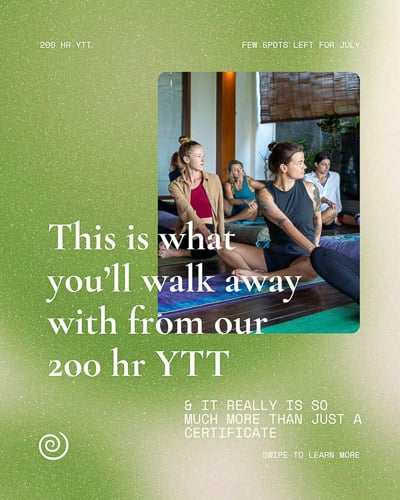
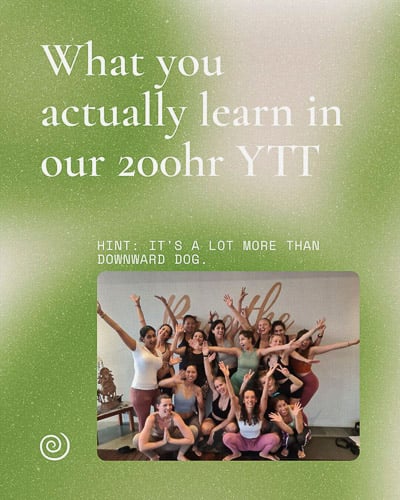
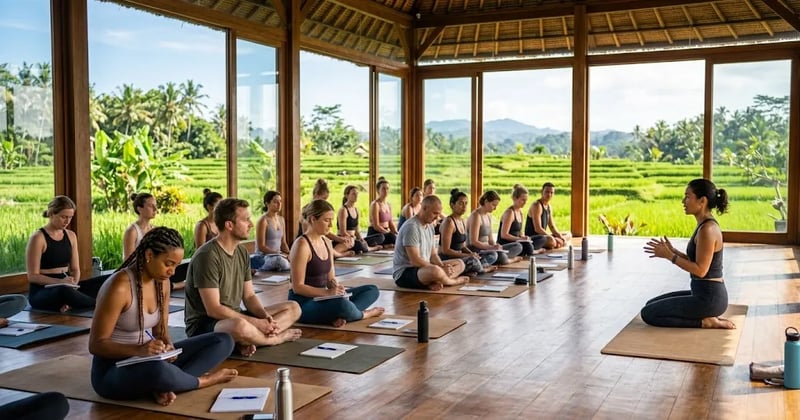
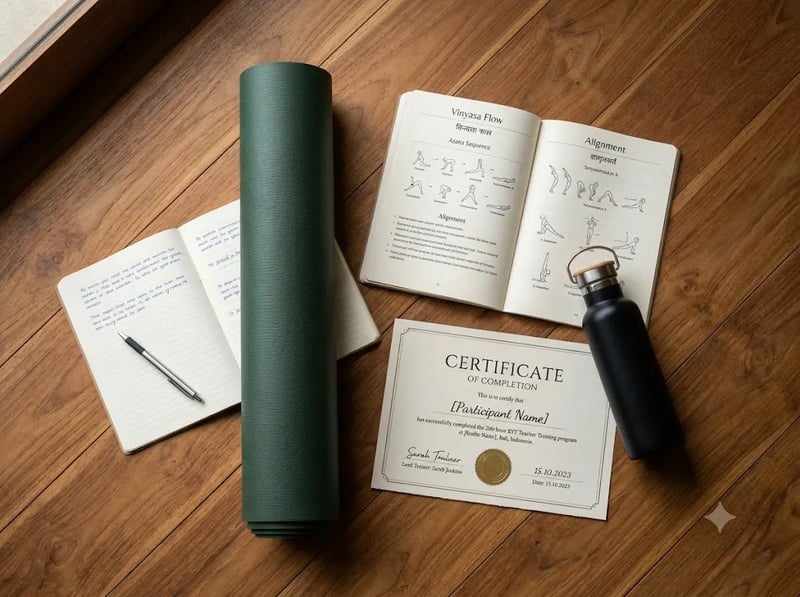
The 200-hour training is the global standard qualification for teaching yoga. It is the level Yoga Alliance recognises for the RYT 200 credential, which most studios, gyms, and retreats ask for before they will hire you. It covers asana, pranayama, anatomy, philosophy, teaching methodology, and a supervised practicum over roughly four weeks of immersion. If your goal is to teach professionally, this is the qualification that opens the door.
What a 100-Hour YTT Is
A 100-hour training is a focused foundation. It gives you a solid grounding in practice, technique, and the essentials of teaching, in about half the time and cost. It suits people who want to deepen their own practice, who are not yet ready to commit to a full month, or who want to specialise later. A 100-hour certificate can also be stacked toward a 200-hour qualification with some schools.
The Real Differences That Matter
Certification: only the 200-hour makes you an RYT 200. The 100-hour is a foundation, not a full teaching licence.
Depth: the 200-hour includes far more practicum, anatomy, and methodology. You leave having actually taught classes and received feedback.
Time and cost: the 100-hour is shorter and cheaper, which makes it a lower-risk way to test whether teaching is for you.
Career: if you want to be hired to teach, employers look for the 200-hour.
How to Choose
If you know you want to teach, do the 200-hour. It is the qualification the industry recognises and the foundation everything else builds on. If you are still deciding, or you mainly want to deepen your practice, a 100-hour is a genuine, lower-commitment start that you can build on later.
How Yoga Alliance treats each qualification
The single fact that decides most of this comparison is registration. Yoga Alliance, the largest registry teachers use to signal their training, recognises the 200-hour standard as the entry-level teaching credential. Complete a 200-hour programme with a Registered Yoga School and you can apply to become a Registered Yoga Teacher, the qualification studios, insurers, and online platforms tend to ask for by name.
A 100-hour course sits in a different place. In most cases it is a module, a foundation, or a specialised add-on rather than a standalone licence to teach. Yoga Alliance does not offer a 100-hour teacher registration for general vinyasa or hatha, so finishing one on its own usually will not make you a Registered Yoga Teacher.
That distinction matters more than the marketing on any course page. A 100-hour certificate can be excellent training and still not be the thing an employer means when they write “200-hour minimum” in a job listing. Before you enrol in anything, read what the school actually registers the hours as, and check it against the registry rather than the brochure.
There are honest, valuable 100-hour courses. Some are the first half of a 200-hour programme, delivered as a separate intake. Others are continuing education for teachers who already hold a full credential and want a focused deep-dive into, say, restorative work or prenatal teaching. The word to watch for is “standalone”: a 100-hour course rarely functions as one.
What each course costs you in time and money
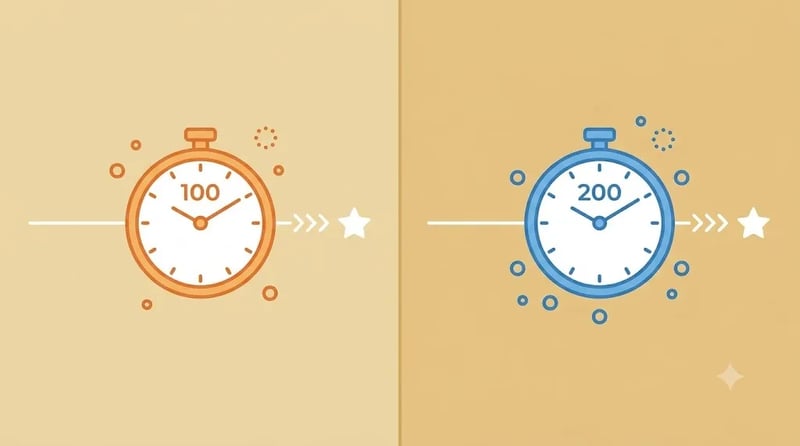
Time is where the two diverge most obviously. A 200-hour programme runs full time across roughly three to four weeks in an immersion setting, or part time across several months when it is spread over weekends. A 100-hour course is, by design, about half of that, which is part of its appeal to people with limited leave from work or family commitments.
Cost tends to track hours, though not perfectly. A 100-hour course is usually cheaper up front, but if you later decide you want to teach and need the full 200, you may end up paying for two enrolments, two sets of travel, and two blocks of time away. Two half-steps can cost more than one full one, both in money and in momentum. For real numbers, see what a Bali 200-hour actually costs.
There is also the harder-to-price cost of depth. A 200-hour immersion gives you time to practise teaching, receive feedback, adjust, and teach again before you are let loose on real students. A 100-hour course compresses that, so you often leave with knowledge you have not yet had the reps to apply. Neither is wrong; they answer different questions.
When you compare price tags, compare what is inside them too. Accommodation, meals, manuals, and post-course support vary widely, and a slightly higher fee that includes daily practice, mentoring, and a clear registration pathway is frequently the cheaper option once you account for everything you would otherwise arrange yourself.
Which one fits where you are now
Choose the 200-hour path if your goal is to teach, full stop. If you can already picture yourself leading a class, want to work in a studio, teach online, or run retreats, the full credential is the qualification the industry is built around. Starting there saves you from the two-step detour and gives you a certificate that answers the question employers and insurers are really asking.
A 100-hour course suits a narrower set of situations. It works well as a foundation year if you genuinely cannot commit to the full block yet, as does a hybrid yoga teacher training that needs only a week on site, provided you have confirmed with the school that your hours will carry forward. It also suits dedicated practitioners who want to understand their own practice far more deeply without any intention of teaching, and it suits qualified teachers topping up with a specialty.
Be honest with yourself about the “I just want to deepen my practice” reasoning, because it is the most common thing people say and it hides two very different intentions. Some genuinely want personal study. Others secretly hope to teach but feel nervous committing, and for that second group a 100-hour course can become an expensive way of delaying the decision rather than making it.
If teaching is anywhere in your thinking, the more useful preparation is knowing what a full training actually involves day to day. Our guide to what a 200-hour yoga teacher training is really like walks through the structure, the workload, and the moments students find hardest, so you can decide from information rather than nerves.
Turning a shorter course into a full credential
Yes, you can usually build a 100-hour foundation up to a 200-hour qualification, but the details decide whether it is smooth or painful. The cleanest case is a single school that runs its 200-hour programme as two 100-hour modules and lets you complete them in separate intakes. Your hours are recognised as one continuous training, and you finish eligible to register.
It gets messier across different schools. A 100-hour certificate from one provider will not automatically count toward another school’s 200-hour registration, because each Registered Yoga School is accountable for the full curriculum it certifies. Some schools will assess prior learning and offer a shortened pathway, but many will not, and you should never assume transferability without written confirmation before you pay.
If you already hold a 100-hour certificate and want to complete the credential, ask three questions in writing. Will the school recognise your existing hours, how many additional hours will you need to reach registration, and will the combined qualification make you eligible to become a Registered Yoga Teacher. Vague answers are a reason to keep looking.
For most people who know they want to teach, the shortest honest route is to enrol directly in a residential 200-hour yoga teacher training and complete the full credential in one continuous block. You leave with the registration studios and insurers ask for, and without the risk of half-recognised hours that no second school will accept.

What each certificate lets you do afterwards
The comparison above covers the courses themselves. The question underneath it, for most people weighing this up, is what each one actually allows once you have finished, and that is worth setting out plainly because it is where the practical difference is largest.
The 200-hour is the recognised threshold for teaching. It is what studios ask for when they advertise, what most insurers expect before they will cover you to teach, and what registration bodies require. If your intention is to teach publicly, whether occasionally or as a career, this is the qualification that opens those doors, and a shorter course does not substitute for it.
The 100-hour is better understood as a serious immersion than as a teaching credential. It gives you a genuine grounding in practice, anatomy and philosophy, and many people take it with no intention of teaching at all. Where it is used towards teaching, it is usually as a first module that later counts towards a full qualification, so check before enrolling whether the hours transfer to a specific 200-hour course.
There is a useful middle path that people often miss. Teaching does not begin and end with public studio classes, and a shorter training is often enough to bring practices into work you already do, such as leading a short session for colleagues, adding breath work to another discipline, or teaching friends and family informally. Be careful about the insurance question if you are charging, and ask a broker directly rather than assuming.
Consider the timeline as well as the outcome. A 100-hour course fits inside a normal amount of leave, which for many people is the deciding factor, and it can be taken now rather than postponed until a month is available. A qualification you actually complete this year is worth more than a better one indefinitely deferred.
Be honest about which situation you are in, because the wrong choice is expensive in both directions. If you know you want to teach, the shorter course is a detour and the full training is the destination. If you are not sure, the shorter one is a reasonable way to find out. Our 200-hour yoga teacher training in Bali sets out the full syllabus and hours if you want to see exactly what the longer route involves before committing.
Whichever you choose, expect it to be the start rather than the end of the training. Both certificates are foundations, and most teachers keep adding to them: shorter courses in a particular area, mentoring, assisting someone more experienced, and simply teaching regularly, which teaches you faster than anything else. Many registration bodies also require continuing education to stay current, so ongoing study is part of the arrangement rather than an optional extra. Budget a little each year for it, and choose based on what you actually find yourself needing in the room rather than on what looks impressive.
What the hour count does not tell you
Two courses can both advertise the same number of hours and deliver very different amounts of teaching. The figure counts programme hours, not contact hours with a senior teacher, and the gap between those two is where most of the variation lives.
Ask how the hours are made up. A schedule that counts your own morning practice, meal breaks framed as community time, and evening self-study will reach its total faster than one built mostly from taught sessions. Neither approach is dishonest, but you should know which one you are paying for.
Ask who stands in front of the room for each block. Larger schools often bring in specialists for anatomy and philosophy, which is usually a good thing, while the bulk of the technique hours sits with one or two lead trainers. Find out how much time you will actually spend with those leads.
Ask about practice teaching. It is the part people underestimate and the part that changes them most. Ten hours of teaching in front of your peers with feedback afterwards will do more for your confidence than another forty hours of lecture. Some courses build it in from the first week, others save it for the final days when everybody is tired.
Ask about group size, because it decides how much individual feedback exists. Twelve students with two trainers is a different education from thirty students with two trainers, whatever the timetable claims.
The hour count is a floor set by a registration body rather than a description of quality. Use it to filter your shortlist, then ask the questions above to choose from what is left.
Train With Loka
Ready to take the step that fits you? Explore our 200-Hour Yoga Teacher Training for the full professional qualification, or our 100-Hour Teacher Training if you want a focused foundation first. Either way, our guide to how to choose the right yoga school can help you decide. If that lower-commitment start sounds right for you, take a look at our 100-hour yoga teacher training.
Frequently Asked Questions
Can I teach with a 100-hour certificate?
A 100-hour is a foundation, not a full teaching qualification. Most studios require the 200-hour (RYT 200) before they will hire you.
Does a 100-hour count toward a 200-hour?
With many schools, yes, you can stack a 100-hour toward the full 200-hour. Check with the specific school.
Which is better value?
If you intend to teach, the 200-hour is better value because it is the recognised qualification. If you only want to deepen your practice, the 100-hour costs less.
How long does each take?
A 200-hour immersion is roughly four weeks full time; a 100-hour is about half that.
Will studios hire me with only a 100-hour certificate?
Most studios advertise for 200-hour qualified teachers because that is the registry standard their insurers and clients recognise, so a 100-hour alone rarely satisfies a job listing. Some community settings are more flexible. If employment is the goal, the full credential is the safer investment.
Is a 100-hour training worth it purely for my own practice?
Yes, if you go in with that intention and no teaching ambitions. A structured 100 hours of technique, philosophy, and anatomy deepens a personal practice far beyond what classes alone manage. Just choose one whose hours can carry forward, in case the teaching question reopens later.

The Loka Newsletter
Enliven your routine with exclusive spiritual content. There’s so much to learn.

Find us on Instagram
@lokayogaschool