Last updated on July 26th, 2026 at 09:47 pm
What Should Yoga Teachers Know About the Fascia?
Fascia is the continuous connective tissue network that surrounds and penetrates every muscle, organ, bone, nerve, and blood vessel in the body. It is not simply packaging. It is a dynamic, sensory, load-transmitting system, and understanding it changes how you teach, cue, and sequence.
What Fascia Actually Is
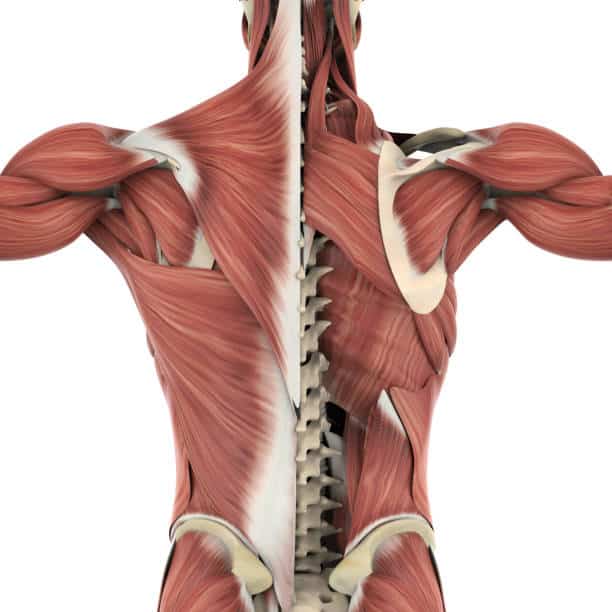
Fascia is composed of three main fibre types. Collagen fibres provide tensile strength, allowing the tissue to resist pulling forces without tearing. Elastin fibres allow the tissue to recoil after deformation. The ground substance, a gel-like matrix surrounding these fibres, provides lubrication and allows adjacent structures to glide against each other without friction or damage.
There are three broad categories of fascia relevant to yoga teachers. Superficial fascia sits directly beneath the skin and contains fat, nerves, and blood vessels. It is responsive to gentle touch and temperature. Deep fascia is denser and more fibrous, wrapping around individual muscles and muscle groups, tendons, and ligaments. This is the layer most directly engaged by yoga postures. Visceral fascia suspends and separates the organs, maintaining their position and allowing independent movement between adjacent structures.
These layers are not separate. They are continuous. A restriction in one region of the fascial network creates tension that can be felt or expressed elsewhere. This is why a student with chronic hip tightness may also report lower back pain or limited thoracic mobility.
Why Fascia Matters More Than Muscle Alone
Traditional anatomical models focus on muscles as discrete, isolated units. Fascia tells a different story. Through fascial continuity, a contraction in the plantar fascia of the foot can transmit force all the way to the occiput at the base of the skull. Thomas Myers’ Anatomy Trains research mapped these myofascial meridians, showing how tension travels in predictable lines through the body.
For yoga teachers, this means that no pose is a local event. Trikonasana (triangle pose) is not merely a hip and hamstring stretch. It loads the superficial back line, engages the lateral line, and transmits tension across the thoracolumbar fascia. Knowing this lets you offer more precise cues and safer progressions.
Fascia also contains a high density of proprioceptive and nociceptive nerve endings. It is, in fact, one of the richest sensory organs in the body. When students describe a deep, diffuse sensation in a long-held yin pose, they are likely experiencing fascial mechanoreception, not muscle stretch. That sensation is information, and it is valuable.
Teaching Fascia-Informed Yoga
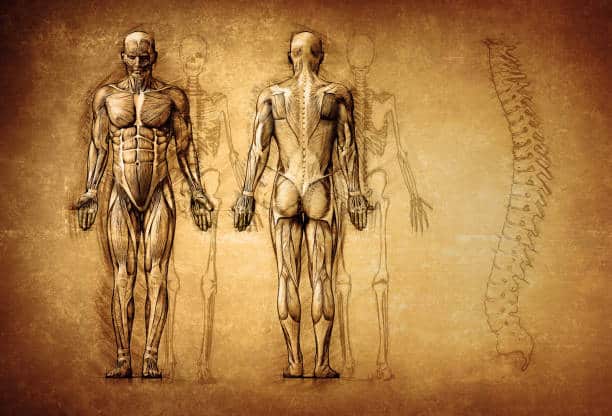
When you cue from a fascial perspective, you stop thinking in isolated muscles and start thinking in connected lines and spirals. Instead of “stretch your hamstrings”, you might cue “reach through the heel and lengthen the back of the leg from the base of the skull to the sole of the foot”, engaging the superficial back line as a continuous unit.
Encourage students to explore the edges of sensation in long holds rather than pushing to maximum range of motion. The nervous system, not the tissue, is the primary limiter of flexibility in most healthy adults. Slow, attentive practice trains the nervous system to permit greater fascial elongation over time. Remind students to drink water before and after practice, since fascia is a hydrated tissue and performs better when the body is well hydrated.
Our Online Yin Yoga Teacher Training includes comprehensive fascial anatomy, myofascial meridian theory, and practical sequencing methodology.
How Yoga Affects Fascial Health
Hydration and Glide
The ground substance of fascia is hydrophilic. Movement, particularly the compression and release cycle of yoga poses, pumps fluid through the fascial matrix, maintaining its viscosity and the gliding capacity between layers. This is why students often feel looser after practice even without significant muscle warming.
Multi-Directional Loading
A varied yoga practice loads the fascial network in multiple planes, preventing the cross-linking and adhesion that develops when tissue is repetitively stressed in one direction only. Rotational poses, lateral stretches, and diagonal movement patterns are particularly valuable.
Yin and Long Holds
Fascia responds to slow, sustained loading rather than quick stretching. A passive hold of three to five minutes at a mild to moderate intensity creates a gradual viscoplastic change in the tissue. This is the physiological rationale for yin yoga, targeting the fascial and connective tissue layers rather than the muscles.
Posture and Alignment
The fascial network is a tensegrity structure, meaning it distributes load throughout the whole body rather than concentrating it at joints. When alignment is compromised, tension accumulates unevenly. Consistent yoga practice that attends to postural habits rebalances these loads over time.
Fascia Is a Sensory Organ
If you carry one research finding into your teaching, make it this one: fascia is densely innervated, and much of what students report in a pose is sensory information rather than structural fact.
Tesarz and colleagues mapped the sensory innervation of the thoracolumbar fascia in both rats and humans and found free nerve endings, sympathetic fibres, and nociceptive endings distributed through the tissue, with the outer layer more richly supplied than the muscle beneath it. A later systematic review of fascial innervation found the same pattern across multiple fascial sites in the body: mechanoreceptors, nociceptors, and proprioceptive endings in meaningful density.
The clinical follow-up is more striking. When Schilder’s team stimulated the thoracolumbar fascia with hypertonic saline, participants described pain that lasted longer and felt more unpleasant than identical injections into the muscle below or the subcutaneous tissue above. Fascia can generate pain on its own account, not merely transmit someone else’s.
This reframes a lot of what happens in a room. A student who feels a broad, burning band across the low back in a seated forward fold is not giving you a reliable report on hamstring length. They are telling you what their nervous system is doing with input from a well-innervated sheet, and that is a different problem with different solutions.
It also gives proprioception a home. Benjamin’s review of the fascia of the limbs and back describes fascia’s continuity with tendon, aponeurosis, and joint capsule, all tissues that feed position sense. When a student says a pose feels clearer after a slow, loaded hold, that is a plausible sensory story you can name out loud without inventing a mechanism.
What Stretching Actually Changes, and What It Does Not
Most teacher trainings still describe stretching as lengthening tissue. The measurement studies do not support that, and understanding why makes you a better teacher rather than a disappointed one.
Konrad and Tilp used ultrasound to track muscle and tendon structure across six weeks of static stretching. Range of motion improved. Muscle fascicle length, muscle stiffness, and tendon stiffness did not. The gain came from increased tolerance to the sensation of stretch, not from a longer or more compliant structure.
That correction changes what you promise. If range of motion is largely a tolerance phenomenon, then breath, attention, pacing, and how safe a student feels are not soft add-ons to the stretch, they are most of the mechanism.
Structural adaptation is possible, but the stimulus is load rather than duration. Kjaer’s review of the extracellular matrix in tendon and muscle adaptation describes collagen synthesis and turnover responding to mechanical loading over weeks and months, with the matrix remodelling to suit the forces habitually placed on it. The consensus statement on fascial tissue research in sports medicine reaches a similar position and is refreshingly candid about how much remains unresolved.
In practice, that means long passive holds and loaded end-range work do different jobs. Holds change what a student can tolerate and therefore access. Load is the better candidate for changing the tissue itself. This is part of why yin yoga and vinyasa are not interchangeable, and why a complete practice includes both.
It also explains the question you get every January. Tolerance is trainable and losable, which is why flexibility fades after two weeks away and returns faster than it was first built.
Myofascial Chains: What Is Evidenced and What Is Marketing
Continuity diagrams are persuasive teaching props, and some of what they show is real. The problem is that the map gets presented as uniformly verified when it is not.
Wilke’s systematic review of what is evidence-based about myofascial chains examined the six commonly taught lines. Three showed strong evidence of anatomical continuity: the superficial back line, the back functional line, and the front functional line. The spiral and lateral lines had weaker support. The superficial front line, the one most often invoked to link hip flexors, chest, and neck, had no supporting evidence at all.
Anatomical continuity is also not the same thing as functional force transmission. Huijing’s historical review of epimuscular myofascial force transmission shows that force can pass between a muscle and its neighbours through connective tissue rather than only through tendon, though most direct measurement comes from animal preparations and the magnitude in intact, moving humans remains contested.
Human evidence for remote effects does exist. A study on remote effects of lower limb stretching found measurable range of motion change at the cervical spine after stretching the lower limb, which the authors describe as preliminary evidence of myofascial connectivity rather than confirmation of it.
So cue what holds up. Working the plantar fascia before a forward fold sits on the superficial back line, the best-evidenced chain of the six, and that is a defensible thing to say. Explaining a stiff neck by way of tight hip flexors travels the superficial front line, and there is nothing under it. Naming which claims you are confident about earns you more credibility than sounding certain about all of them.
What Fascial Release and Foam Rolling Actually Do
The word release carries a mechanism inside it, and that mechanism is the part least supported by evidence.
Take the mechanical claim first. Schleip’s work on strain hardening of fascia found that static stretching of dense fibrous connective tissue produced a temporary increase in stiffness alongside changes in matrix hydration, which is close to the opposite of the softening the language implies. Whatever happens under a foam roller, tissue is not melting.
The outcome data is both more encouraging and more modest. A meta-analysis of acute foam rolling effects on range of motion found small increases compared with doing nothing, no advantage over stretching, and effects that faded quickly.
For pain, a systematic review and meta-analysis of myofascial release for chronic low back pain found improvements in pain and function, graded the evidence as low quality, and found no effect on quality of life, balance, or trunk mobility. An earlier review of randomised trials of myofascial release reached a comparable verdict: worth doing, poorly standardised, and not yet strong.
Read together, these techniques do something real, mostly short-lived and probably mediated by the nervous system rather than by tissue deformation. That is a perfectly good reason to hand a student a ball or a roller if it helps them settle into a position more comfortably. It is not a reason to tell them adhesions are breaking down or that their tissue has been restructured in four minutes.
How to Talk About Fascia in Class Without Overclaiming
Teachers overclaim because the accurate version sounds less impressive. It does not have to.
Start with the terminology, which is genuinely unsettled. Adstrum and colleagues wrote on defining the fascial system precisely because researchers could not agree on what counts as fascia and what does not. If the field is still arguing about the noun, you are entitled to be careful with the verbs.
Instead of saying we are releasing the fascia, try we are loading this tissue slowly and seeing what changes. Instead of this breaks up adhesions, try this often makes the area feel less guarded. Instead of fascia holds emotion, try this tissue is richly innervated and often sensitive, and sensitivity shifts with how safe you feel.
That third swap deserves care rather than mockery. Students do report emotional responses in hip and chest work, and waving that away is poor teaching. You can take the report seriously, describe what is known about innervation and autonomic state, and leave the storage metaphor out of it.
The discipline is simple to state and harder to hold: describe what you observe, describe what the student feels, and attribute mechanisms sparingly. That is the standard we teach in the anatomy modules of our 200-hour yoga teacher training in Bali, and the same standard applies when you talk about the hip flexor muscles or any other region with a strong folklore attached.
Students rarely want certainty from you. They want someone who knows the difference between what is established and what is a good story, and who will tell them which is which.
Teach the Body With Confidence
Fascia and muscle work together. See our companion guide to hip flexor muscles and yoga.
Our Online Yoga Mechanics Course gives teachers a working knowledge of anatomy they can use in every class.
Frequently Asked Questions
What is fascia and why does it matter in yoga?
Fascia is the continuous connective tissue matrix surrounding every structure in the body. It transmits force, provides sensory input, and maintains structural integrity. Yoga affects fascia through varied loading, hydration, sustained holds, and postural rebalancing.
Does yoga improve fascial health?
Yes. Yoga’s combination of multi-directional movement, compression and release, long holds (particularly yin), and breath work all contribute to fascial hydration, mobility, and reduced adhesion between tissue layers.
What is the difference between stretching muscles and stretching fascia?
Muscle responds to relatively short, dynamic stretch. Fascia responds better to slow, sustained loading held for two minutes or more at a mild intensity. This is the core rationale for yin yoga, which targets connective tissue rather than muscle.
How does fascial restriction cause pain?
Fascia contains a high density of sensory nerve endings. When it becomes restricted through dehydration, adhesion, or chronic postural loading, these nerves can generate pain signals. Fascial restriction also alters load transmission, placing compressive stress on joints that would otherwise be protected.
Can yoga help with fascial adhesions?
Consistent yoga practice, particularly yin-style long holds and movement in multiple planes, can gradually reduce fascial adhesion and improve tissue glide. Significant restrictions may also benefit from myofascial release therapy alongside yoga practice.

The Loka Newsletter
Enliven your routine with exclusive spiritual content. There’s so much to learn.

Find us on Instagram
@lokayogaschool