Last updated on July 29th, 2026 at 01:05 pm

From ‘I’ll Try’ to ‘I Will’: The Mindset Shift
The phrase “I’ll try” carries the energy of doubt before you have even begun. The mindset shift this article describes is the move from that hedged intention to a resolve you return to without renegotiating it each morning. In the yogic tradition, intention is not a motivational concept, it is a living force: sankalpa, the heartfelt resolve, is what decides whether a practice deepens or quietly dissolves.
What Sankalpa Actually Means
Sankalpa comes from the Sanskrit roots san, meaning a connection with the highest truth, and kalpa, meaning a vow or rule to be followed above all others. It is not a goal written on a vision board. It is a clear, unwavering direction of will.
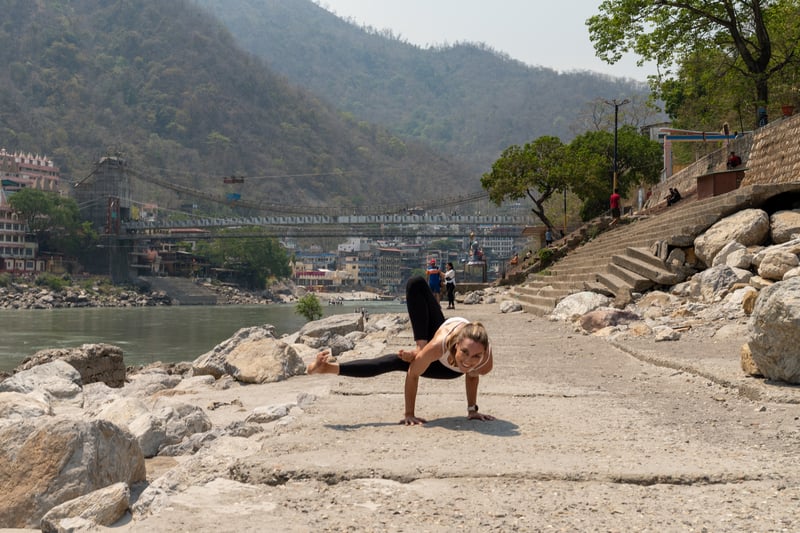
When you stand at the top of your mat before a challenging pose, Bakasana, an arm balance, a deep backbend, and whisper “I’ll try,” you have already placed a ceiling on your capacity. The mind has built in an exit. You have given yourself permission to fail before the attempt has begun.
“I will” removes the ceiling. Not through toxic positivity, but through clear direction of prana, the vital force that responds to the quality of your intention.
The Obstacle of Ahamkara
Why is “I will” so difficult to say? Because the ego, ahamkara in Sanskrit, is terrified of failure. The ego equates failure with diminished worth. If you say “I’ll try to meditate every morning” and miss three days, the ego is protected: you only tried, after all.
A clear commitment, “I will sit for 10 minutes each morning before I open my phone”, leaves no such protection. It requires you to meet yourself honestly when you fall short, and to return with self-compassion rather than self-judgement.
This is where the practice becomes real. The return after stumbling is not failure. It is the very practice of abhyasa: consistent, dedicated, patient engagement with the path.
Tamas and the Pull Toward Comfort
The yogic concept of tamas describes the quality of inertia, heaviness, and resistance to movement. Tamas is not negative in itself, it is the quality of earth, of rest, of deep sleep. But when tamas dominates your intention, it produces the “I’ll try” that never quite becomes action.
“I’ll try to be more patient” means you will negotiate with yourself many times each day, burning through decision fatigue every time impatience arises. “I will pause and breathe before I respond” is a single, non-negotiable instruction. You have spent your willpower once and need not spend it again.
This is why clear sankalpa is energy-efficient, not effortful. You simplify the inner landscape by removing the debate.


The Role of Ahimsa Toward Yourself
This is not a call to harshness. Ahimsa, non-harming, applies first and most essentially to your relationship with yourself. Sometimes “I’ll try” is the honest first step, particularly when you are emerging from a period of genuine depletion or are navigating significant tamas.
The point is to be conscious of the difference. There are times when a gentle, exploratory commitment is appropriate and kind. There are times when “I’ll try” is simply the ego avoiding accountability. Only you know which is which.
The Gap Between Intending and Doing
The distance between deciding and doing has been measured, and it is wide. Rhodes and de Bruijn’s meta-analysis of the physical activity intention-behaviour gap found that a large share of people who fully intend to meet activity guidelines never go on to meet them, while almost nobody acts without intending to first.
Read that carefully, because it cuts both ways. Intention is close to necessary and nowhere near sufficient. Deciding is the entry fee, not the result.
Kwasnicka and colleagues’ systematic review of behaviour maintenance theories found that what sustains a change is rarely the motivation that started it. Maintenance depends far more on habit, environment, and whether the behaviour has become part of how you see yourself.
The yogic reading is not far from this. Sankalpa is not described as a burst of enthusiasm but as a resolve returned to repeatedly, in the same words, until it stops requiring a decision.
What Makes the Mindset Shift Hold
Gardner’s account of habit formation in the British Journal of General Practice puts the mechanism plainly. Habits form through repetition of a behaviour in a consistent context, until the context alone is enough to prompt the action.
The practical implication is unglamorous. What matters is not how strongly you feel about your resolve, but how reliably it is attached to something that already happens every day without your input.
This is why the traditional instruction places sankalpa at a fixed point in yoga nidra rather than whenever inspiration arrives. The cue is built into the practice, and the practice is built into the week.
It also explains the most familiar failure. A resolve made on retreat, in an unusual setting and an unusual state, has no cue waiting for it at home. The intention survives the flight. The context does not.
Designing the Cue Rather Than the Willpower
Choose an anchor that happens whether or not you feel like it: the kettle boiling, sitting down at your desk, the moment you unroll the mat.
Attach one small action to it, small enough that a bad day cannot break it. Three breaths counts. In the first month the point is not the dose, it is the link between cue and action.
Keep the wording of the resolve identical each time. Rewriting it every week restarts the process, and gives you the pleasant sensation of progress without any of the repetition that actually produces it.
Then leave it alone for longer than feels reasonable. Most people abandon a new practice while it still takes effort, which is precisely the stage immediately before it stops taking effort.
When “I Will” Becomes Another Form of Force
There is a version of resolve that is self-attack in better clothing. You can tell the difference by what happens on the day you miss.
If a missed day produces a clear note to resume tomorrow, the resolve is working. If it produces a case against your character, the practice has become a stick, and it will eventually be dropped along with everything attached to it.
Ahimsa applies inwardly as well as outwardly, and it is not an excuse for drift. The most useful thing you can do for a practice is make it small enough to survive an ordinary bad week.
The language matters here. “I will sit for five minutes” is a commitment you can keep. “I will become someone who never misses” is a promise about a future you have no power to make.
Four Resolves That Fail, and Why
The resolve that is really a wish. “I will be calmer” names an outcome you cannot perform on a given morning. Rewrite it as an action: what would a calmer version of you actually do at 7am?
The resolve that depends on conditions. “I will practise when work settles down” hands the decision to circumstances that have no interest in your practice. Work does not settle down. Choose an anchor that exists in an ordinary week.
The resolve that is too large to fail gracefully. An hour a day is a fine ambition and a poor starting commitment, because the first missed day proves the whole thing unworkable. Smaller commitments bend instead of breaking.
The resolve nobody knows about. Privacy protects you from embarrassment and also from accountability. Telling one person what you intend, and when you will report back, costs nothing and changes the odds.
None of these are character failures. They are design faults, and design faults are fixable in an afternoon.
How to Tell It Is Working
The signal is not enthusiasm. Enthusiasm is what you had at the start, and its absence is not evidence of failure.
The signal is that the decision gets quieter. In the first weeks you argue with yourself about whether to practise. Later you notice you have already sat down. That shift from deliberation to default is the whole mechanism, and it arrives without ceremony.
Track the count, not the quality. Note whether you practised, not whether it was any good, because the quality of a single sitting tells you almost nothing and the count across a month tells you nearly everything.
Expect the graph to be uneven. A week off does not undo a habit, though a month usually does. If you have missed a stretch, resume at the smallest version rather than the version you had reached, and let the cue rebuild before the duration does.
Finally, notice where it shows up outside practice. A resolve that is genuinely taking hold tends to make other commitments feel slightly less negotiable too.
Where to Practise This
Resolve is easier to hold inside a structure that already exists. That is much of what a training provides: a fixed time, a room, and people who notice when you disappear.
If you want the groundwork first, our piece on the two foundational steps covers abhyasa and vairagya, which is the same idea in older language. Our overview of what meditation delivers sets out what regular practice does and does not change.
When you want to build the habit inside a full curriculum, our online meditation teacher training and our Yoga Alliance certified 200-hour YTT in Bali both supply the structure that makes a resolve ordinary rather than heroic.
When You Break the Resolve
You will break it. Not because you are weak, and not because the resolve was wrong, but because a sankalpa is held across weeks, and weeks contain illness, travel, grief, and ordinary flat days. The question that matters is not whether you keep the resolve unbroken. It is what you do on the morning after you did not.
Most people restart. They mark the lapse as a failure, set the count back to zero, and quietly attach a small amount of shame to the practice itself. Do that often enough and the practice becomes a place where you are found wanting, which is the surest way to stop going there.
Repair is not the same as restarting. Repair means returning to the same resolve without renegotiating it and without commentary. You sat for 10 minutes most mornings. You missed four. You sit tomorrow. A sankalpa was never a streak, so a gap does not break it, and treating the gap as though it does gives it more weight than it has earned.
The practical version is a rule you set in advance, while you are calm rather than disappointed. Decide now what a missed day means and what it does not. Decide the smallest version of the practice that still counts, so that on a difficult day you have somewhere to land other than nothing. Two slow breaths on the edge of the bed is not the practice you intended, but it keeps the thread in your hand, which is the whole job of a small morning routine you can actually keep.
Some people find the repair easier when the structure is external rather than self-imposed, which is part of why a month of daily practice inside a 200-hour yoga teacher training in Bali changes what people believe they can sustain. That is not a requirement, though. The resolve is yours either way, and so is the return.
Putting Sankalpa Into Practice
In yoga nidra, the sankalpa is planted at the beginning and end of the practice, when the mind is in its most receptive, hypnagogic state. This is not accidental. Like a seed requires soft soil, intention takes deepest root when the conscious mind is relaxed and the subconscious is accessible.
You can use this principle without a full yoga nidra practice. Before your morning sadhana, before you sit in meditation, before you begin anything significant, take three conscious breaths and state your sankalpa internally. State it in the present tense, as if it is already true.
“I am committed to my practice.” Not “I will try to be.” The nervous system, like the subconscious, responds to the language of the present moment.
Consider what shift you are wanting to make, perhaps establishing a consistent daily meditation practice. If so, the Loka Yoga School Online Meditation Training provides the structure, community, and depth that transform a wavering intention into an embodied commitment.
Turn Intention Into Practice
Commitment is a skill you can train. The same principle underpins the two most important steps in yoga: steady practice and letting go of the outcome.
Our Online Meditation Training gives you a structure that turns good intentions into a daily practice.
FAQ
What is sankalpa in yoga?
Sankalpa is a Sanskrit term for heartfelt intention or resolve. In yogic philosophy, it is a vow or commitment made from the deepest level of the self, rather than the surface mind. It is considered one of the most powerful tools for personal transformation and is often planted during yoga nidra when the mind is most receptive.
Why is "I'll try" less effective than "I will"?
“I’ll try” contains implicit permission to fail, which reduces the full commitment of your attention and energy. Research on goal-setting confirms that specific, unconditional intentions produce significantly better outcomes than vague or conditional ones. The yogic concept of sankalpa reflects this understanding at a much deeper level.
How does tamas relate to procrastination?
Tamas is the guna, or quality, of inertia and resistance. When it is dominant, the mind gravitates toward comfort and avoidance. Procrastination is tamas in action. Clear, firm intention activates rajas (the quality of energy and movement) to counterbalance tamas and initiate action.
Can sankalpa be changed over time?
Yes. A sankalpa is not a life sentence. As your practice deepens and your understanding of yourself grows, your deepest resolve may evolve. What matters is that at any given period, you know what your sankalpa is, and you return to it consistently rather than abandoning it each time difficulty arises.
How does intention affect physical yoga practice?
Research on motor learning shows that intention quality directly affects execution. When attention is clear and directed, the neuromuscular system responds more precisely and efficiently. In asana, a clear internal commitment produces more stable, sustained engagement than a tentative approach. The body follows the quality of the mind.

The Loka Newsletter
Enliven your routine with exclusive spiritual content. There’s so much to learn.

Find us on Instagram
@lokayogaschool