Last updated on August 3rd, 2026 at 02:35 pm
Do You Really Need to Go on a Yoga Retreat?
The honest answer is: not in the way you need food or sleep. But if you have been practising yoga consistently and feel like something is plateauing, or if you are looking for a concentrated reset that a weekly class simply cannot provide, a retreat may give you exactly what you need.

What a Yoga Retreat Actually Offers
A retreat is not a holiday that happens to include yoga. It is an immersive environment where the practice is the priority, and everything around it, food, rest, schedule, community, is organised to support it.
In a daily life context, your yoga practice competes with work demands, family obligations, sleep deprivation, and the residual noise of everything else. A retreat removes those variables temporarily. Without them, practice deepens faster and further than months of incremental progress at home.
What you gain access to that a regular class does not provide:
Daily practice in a dedicated environment. Multiple sessions per day, across different styles, with different teachers, creates momentum that accumulates in the body differently than once or twice a week.
Sustained stillness. Without the need to be anywhere else, your nervous system begins to genuinely regulate. The shift often happens on day two or three, when the first decompression is complete and something deeper becomes available.
Genuine community. People who choose to spend a week deepening their yoga practice have something in common before they have even spoken. The connections formed in a retreat context tend to be unusually real.
Immersion in yoga philosophy and breathwork. A quality retreat goes beyond asana. You learn pranayama in depth, explore philosophy, and develop a relationship with the practice as a whole rather than just its physical expression. If you are drawn to a quieter, more contemplative setting, our retreat in Kyoto, Japan is worth a look. If you are weighing a retreat against a training, our comparison of yoga retreats and yoga teacher training breaks the decision down. The rest of our yoga retreat guides cover the other sides of the decision.
Why Bali Specifically
We have been based in Bali for close to two decades, between Canggu and Kedungu on the island’s south-western coast. We chose this island and we stay on this island because it is genuinely extraordinary as a context for practice.
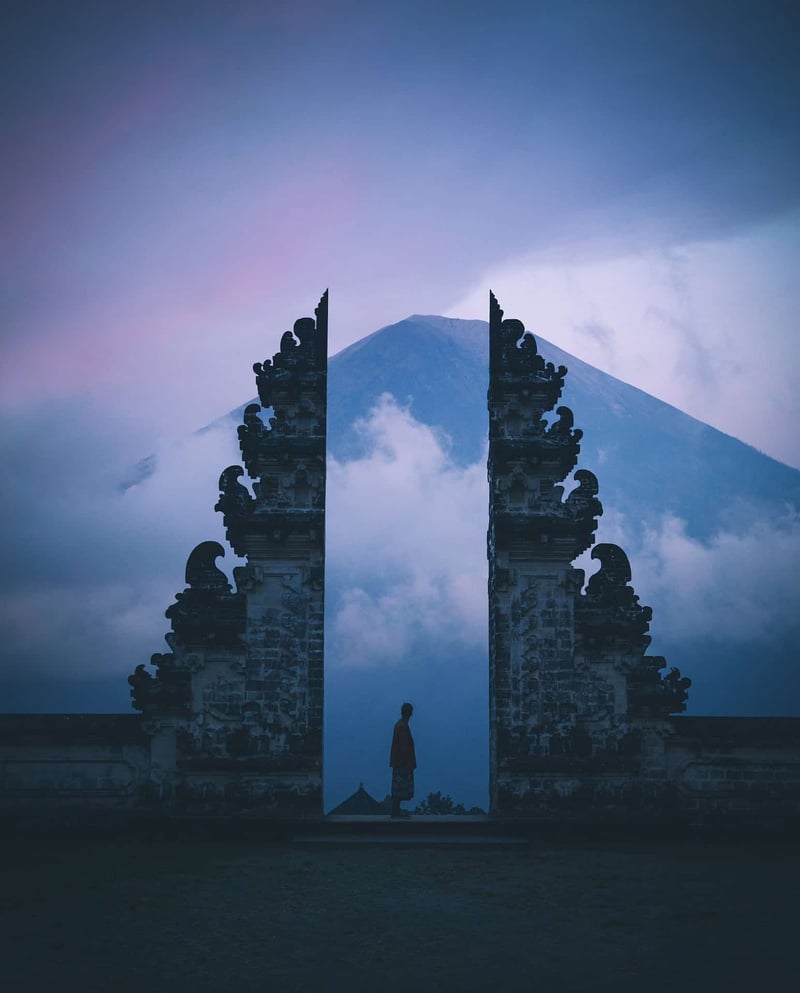
The physical environment, volcanic mountains, rice fields, the ocean, does something measurable to the nervous system. The air quality, the scale of the natural world, the absence of the grey urban visual field: these are not irrelevant to practice. They are part of it.
The Balinese cultural context adds another layer entirely. Daily offerings, temple ceremonies, a living tradition of spiritual practice that has been maintained for hundreds of years. You are practising in a place where the culture itself understands and honours the impulse to connect with something larger than the immediate self.
Food is part of the experience too. Bali’s traditional produce, snake fruit, papaya, durian for the brave, arrives fresh and full of antioxidants, and most retreat menus lean on it heavily. Eating this way for a week is its own quiet reset.

What to Expect
A quality yoga retreat will include morning and evening practice, pranayama and meditation sessions, time for integration and rest, nourishing food, and some form of engagement with the local environment and culture.
You do not need to be an experienced practitioner. Retreat environments are specifically designed to meet students where they are. Beginners find an accelerated foundation. Experienced practitioners find the depth that daily life often does not permit.
Physical practices will range across styles, giving you exposure to approaches you may not encounter in your regular class. Philosophy sessions and breathwork workshops extend your understanding beyond the mat. Community meals and shared experience make the whole thing human.
At Loka, physical practice is grounded in the customs of the original Hatha teachings, with sessions across yin, vinyasa, kundalini and power yoga, so you can try new approaches or deepen familiar ones with experienced retreat leaders.
What You Take Back
The most common thing people say after a retreat is that they return to daily life with a reset perspective, greater clarity, and a renewed motivation for practice. These effects are real and documented. Retreats create compressed experiences of growth that take much longer to develop incrementally.
What you build in a retreat, whether a stronger pranayama practice, a better understanding of your own nervous system, a set of relationships with like-minded practitioners, or simply a restored sense of what is actually important, those things do not disappear when you fly home.
You also leave with time actually spent reflecting. A retreat gives you room to absorb what you have learned rather than rushing to the next obligation, and most people find that clarity carries home with them.
They come with you.
If you want to explore what an immersive retreat looks like with Loka Yoga School, visit our 200-Hour YTT in Bali page, which includes an immersive residential component, or reach out to us directly to ask about upcoming retreat offerings.
When the Money Is Better Spent Elsewhere
A week away is not the right purchase for everyone, and an article that only argues for it is not much use to someone deciding in July whether to book.
If you have never held a regular practice at home, a week of practising three times a day will feel extraordinary and change almost nothing. The pattern is well known to anyone who has run one: people leave transformed and are back where they started inside a month, because the thing that was doing the work was the environment, not the practice.
If you are exhausted rather than stuck, what you probably need is sleep, not a 6am start and two sessions a day. Plenty of programmes are more demanding than an ordinary working week.
If you are in the middle of something genuinely difficult, grief, a diagnosis, a separation, a week of intensive practice with strangers can open more than it closes. That is not a reason never to go. It is a reason to tell the organiser what you are carrying before you arrive.
And if the sum involved is money you do not have, a fortnight of practising at home four mornings a week will get you further than a week you spend the next six months paying off.
Three Different Products With Similar Photographs
The word covers at least three things that get marketed with the same images of rice fields and a swimming pool, and knowing which one you are buying prevents most disappointment.
A holiday with yoga in it is a good holiday with a morning class. Nothing wrong with it, and the practice is an amenity rather than the point. Book it when you want a rest.
A retreat proper has a structure, a limit on numbers, and something being worked on across the week. There is usually silence in it somewhere, the schedule is not optional, and by day four something is meant to be uncomfortable.
A training is a different animal again. You are there to learn a body of material and be assessed on it, the days are long, and there is homework. People sometimes book one hoping for the second, which is how you end up with anatomy revision on a week you meant to spend recovering. Our guide to what a 200-hour training actually involves lays out the difference in detail.
Read the daily schedule rather than the description. A timetable tells you which of the three you are buying in about 30 seconds, and the marketing copy will not.
The Questions Worth Asking Before You Pay
How many people will be there. Six and 40 are entirely different experiences of the same schedule, and group size is the single variable that most changes how much attention you get.
Who is teaching, and are they teaching all of it. Programmes are regularly sold on a name that appears for two sessions while a junior teacher runs the rest of the week.
What happens if you do not want to do something. A good programme has an answer ready. A programme that treats the question as a problem is telling you something useful about the week ahead.
What is genuinely included, and what the transfers cost. In Bali specifically, the airport to Tabanan run and the daily transport to and from a beach or a temple add up quickly, and they are the most common line item left out of a headline price.
Is there any contact before you arrive. Somebody asking about injuries, medication, or what you are hoping for is a reasonable proxy for how the week will be run. Our practical tips for coming to Bali cover visas, seasons, and what to bring.
Coming Home Without Losing All of It
The fortnight after you get back decides whether the week was worth the money, and almost nobody plans for it. You return to the same commute, the same kitchen, and the same people, and the state you were in on day six has no support at all.
Choose one thing before you fly home. Not a new morning routine, one thing: 15 minutes of practice on four days a week, or the breathing you learned, done in the car before you go into work. One thing that survives is worth more than five that do not last past the first bad week.
Write down what actually shifted while it is still fresh, in specifics rather than adjectives. “I stopped checking my phone before getting out of bed” is a note you can act on in November. “I felt so much more present” is not.
Expect a low patch around day 10 back. It is not a sign the week did not work, it is the ordinary contrast between an environment built entirely around practice and one that was not.
And if what you actually want is not a week off but a change of direction, the thing you are describing is a training rather than a retreat. Our 200-hour YTT in Bali is the version of this with a syllabus and a certification at the end of it.
What a Week Cannot Do
The honest limit is worth stating, because the marketing never does. Seven days changes your state reliably and changes your habits hardly at all.
State is what you feel: rested, clear, less reactive, sleeping properly. That shifts within about four days of removing your ordinary inputs, and it is real while it lasts. It is also mostly the environment rather than anything you have acquired, which is why it does not travel home with you.
Habit is what you do without deciding to. That takes months of unremarkable repetition in the environment you actually live in, and no residential week can supply it. A retreat can start one, and only if you deliberately carry a small piece of it back.
Nor will a week resolve something structural. If the problem is the job, the relationship, or the amount you are working, seven days of practice will make the problem more visible and no easier to act on. Some people find that clarity valuable and some find it destabilising, and it is worth knowing which you are before you book.
What a week does well is interrupt. It breaks a pattern long enough for you to see its shape, and it gives you a fortnight of leverage afterwards in which change is unusually easy. What you do with that fortnight is the whole return on the money.
How Long a Retreat Needs to Be
Weekend stays are the cheapest way to find out whether the format suits you, and the least likely to change anything. Two nights is mostly travel, arrival and one good sleep. If you go in exhausted you will spend the whole thing catching up on rest, which is worth having, but it is not what the brochure promised.
A week is the shortest stay where the shape most people describe actually happens. The first two days are decompression, and they feel oddly flat. Somewhere around day three or four the noise drops, and the last few days are the ones people remember. Cut the trip at four nights and you often leave just as it starts.
Ten days to a fortnight changes the register again. You stop being a visitor, the practice becomes ordinary rather than special, and habits have time to bed in. It also costs roughly double, and the second week has diminishing returns for anyone who is not there for a 200-hour yoga teacher training.
Travel time belongs in the maths. Flying to Bali from Europe and staying five nights means two of them are recovery from the flight. The further you go, the longer you should stay, or the trip becomes an expensive way to be jet-lagged somewhere beautiful.
If your leave is limited, a shorter stay closer to home usually beats a longer one on the other side of the world. Nobody comes back from three unhurried nights in their own time zone wishing they had spent the same money on airports.
The other thing worth checking is what the last day looks like. Some programmes finish with a full morning and a midday checkout, others taper into a closing circle and a long lunch. A trip that ends at dawn with a taxi is a night shorter than the number on the invoice suggests.
Retreat With Loka
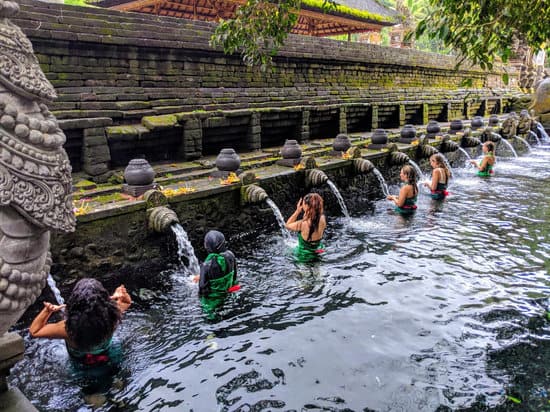
Part of the magic is the place. Our piece on the true meaning of Bali offerings captures why setting matters.
Explore our Loka retreats when you are ready to step fully out of ordinary life.
Frequently Asked Questions
What is the difference between a yoga retreat and a yoga holiday?
A yoga holiday includes yoga as one activity among others. A yoga retreat places practice at the centre of the experience, with everything else, food, schedule, rest, environment, designed to support deepening. The intent is transformation or significant progress, not just relaxation.
Do I need to be an experienced yogi to go on a retreat?
No. Most retreats are designed for mixed levels. Beginners benefit from the immersive environment and personalised attention. Experienced practitioners benefit from the depth and consistency of daily multi-session practice.
How long should a yoga retreat be?
Even a weekend retreat produces noticeable shift. Five to seven days allows real decompression and integration. Longer programmes, such as teacher trainings with a residential component, create the deepest structural change in practice and perspective.
What should I look for when choosing a yoga retreat?
Clear information about who is leading it, their credentials and experience. A programme that includes more than physical asana. A setting that genuinely supports relaxation and practice. Honest reviews from previous participants. Avoid retreats where the lead teachers are unnamed or underqualified.
Is a yoga retreat worth the cost?
For most people who attend quality retreats, yes. The combination of accelerated practice development, nervous system reset, genuine community, and perspective shift is difficult to replicate through weekly classes alone. It is an investment in your practice and in yourself.

The Loka Newsletter
Enliven your routine with exclusive spiritual content. There’s so much to learn.

Find us on Instagram
@lokayogaschool