Last updated on September 6th, 2026 at 09:30 am
Online Yoga Training: 7 Courses to Improve Your Teaching Skills
More than 300 million people practise yoga worldwide, and roughly 100,000 yoga teachers are registered in the US alone. More people are seeking yoga for stress relief than ever before, which is great news for any teacher. It also raises the obvious question: how do you differentiate yourself?
The most effective way to stand out is to keep learning. Completing an online yoga training in a new modality signals to students and employers that you take your craft seriously, and it widens the range of people you can genuinely help.
These seven courses are worth your time and investment. Each adds a distinct skill to your teaching, and each counts towards your continuing education.
1. Yin Yoga Teacher Training
Yin is one of the most therapeutically valuable styles you can add to your repertoire, and one of the most anatomically nuanced. A proper Yin Yoga Teacher Training teaches far more than a set of slow poses: you gain an in-depth understanding of human anatomy and learn to differentiate between tension and compression, pain and discomfort, stressing and stretching.
That knowledge makes you a safer, more effective teacher across every style, because you understand how students avoid physical harm or injury in class and how to develop classes that cater to all, no matter their flexibility level.
Yin also lets you teach a much wider range of students: anyone from senior citizens to office employees carrying chronic tension, and athletes, who commonly practise Yin for recovery. You will learn to use yoga safely to relieve tension and stress from the body, increase recovery, adjust poses, and create sequences for settings well beyond the traditional studio.
An ideal Yin Yoga Teacher Training is 50 hours, self-paced, and internationally certified.
2. Children and Teens Yoga Training
This training is for you if you want to teach yoga to kids between the ages of 3 and 17. Teaching under-18s requires a fundamentally different pedagogical approach from adult teaching, and you will learn to build creative yet effective sequences for various classroom settings using Howard Gardner’s learning styles.
The course covers the fundamentals of teaching kids safely, catering to different age groups and developmental stages, and keeping young students engaged. You will gain the skills to teach yoga and mindfulness to children with disabilities and mobility restrictions, along with mindfulness strategies to assist kids with special needs such as ADHD, anxiety, autism, Down syndrome, or primitive reflexes.
You will also learn how to help kids manage emotions and the challenges they face from a young age, such as fear of acceptance, lack of confidence, or bullying. Demand is growing in schools, after-school programmes, sports settings, and family yoga contexts, and relatively few teachers are properly trained for it. If you have always dreamed of working with children, this is a way of teaching the next generation and creating a better world.
The Children and Teens Yoga Training is an 80-hour, self-paced training that is internationally recognised.
3. Breathwork Teacher Training
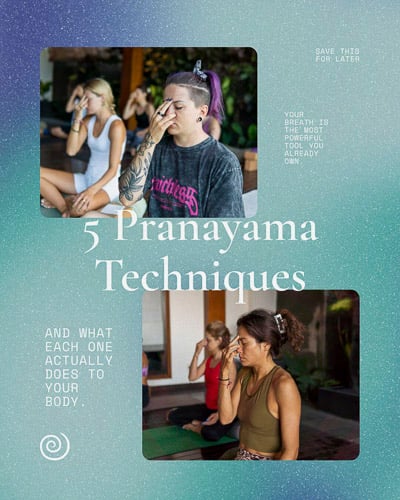
Breathwork is experiencing a significant resurgence, for good reason: the science behind pranayama and modern breathwork is now substantial. A Breathwork Teacher Training is an excellent course to add to your repertoire if you want to help students manage stress and anxiety.
A thorough programme covers the ancient pranayama techniques alongside modern methods such as Circular Breathing, Holotropic Breathing, and Rebirthing. Our Online Breathwork Training teaches 24 techniques, patterns, and methods, including techniques that:
- help students experience calmness and relaxation
- stimulate and energise
- regulate body temperature by heating and cooling the body
- balance the yin and yang energies
- release ‘stuck’ energy
You will study the fundamentals of the breath and the respiratory system, which helps you understand common respiratory issues and how to modify the breath accordingly. Teachers who can explain what happens physiologically when a student practises Nadi Shodhana or Kapalabhati have a genuine advantage over those who teach techniques without the underlying understanding.
Breathwork enhances healing and supports transformation, and nearly everyone benefits from correct breathing technique, so the skills apply in yoga classes, corporate wellness, athletic environments, and therapeutic contexts alike.
This Breathwork Teacher Training is a 20-hour, self-paced training that is internationally certified.
4. Meditation Training
Many people complain that they can’t meditate; usually they simply haven’t found the technique that suits them. A Meditation Teacher Training addresses this directly. Look for a course that teaches at least 20 techniques: the diversity matters because different students respond to different approaches, and someone who struggles with silent sitting may thrive with a body scan or a visualisation. You will learn the most popular meditation styles, the lesser-known ones, and techniques you might not have realised are meditation at all.
You will gain a deeper knowledge of meditation, a useful step-by-step guide for assisting students to break unhealthy habits and addictions, and a collection of guided meditations you can use anytime.
A good programme also teaches the neuroscience of why meditation works: the effects on the default mode network, stress hormones, and sleep architecture. That bridges ancient practice and contemporary understanding, which is what science-meets-tradition teaching is all about.
Meditation keeps gaining popularity, and this training is a great way to meet your yoga teacher continuing education requirements. It is a 10-hour, self-paced course that is internationally accredited.
5. Yoga Mechanics Course
Yoga Mechanics focuses on the biomechanics of the body: how joints load, how muscles coordinate, where dysfunction typically originates, and how specific yoga exercises address specific mechanical issues. It is a great addition for any teacher who wants to deepen their understanding of the physical benefits of yoga and the body’s mobility.
Biomechanics makes you significantly better at two things: spotting and adjusting incorrect or potentially harmful poses, and composing classes that achieve specific physical outcomes. You become confident in understanding your students’ physical concerns and guiding them through poses without fear.
You will learn functional movements that address physical discomfort at a deeper level, and exercises you can teach safely and effectively to all ages and flexibility levels, whether in yoga studios, fitness centres, or offices. It is particularly valuable if you work with athletes, older adults, or people managing chronic musculoskeletal conditions.
Yoga Mechanics is a 20-hour, self-paced training that is internationally certified and accredited.
6. Yoga Philosophy Training
This is the training most teachers wish they had done earlier. It is especially beneficial after completing a yoga teacher training in Bali or elsewhere: a 200 hour YTT introduces yoga philosophy, but the depth available in a dedicated course is categorically different. This is deeper knowledge, often not shared in a 200 hour programme.
You will study the roots of yoga and the Yoga Sutras with genuine rigour, learn the teachings and Mantras, understand the Value of Values, study Tattva Bodhah, and master the Sacred Vedic Shanti Prayers and the Sacred Devi Prayers.
You will also learn the language of yoga itself: how to read, write, and speak Sanskrit. Many teachers cannot correctly pronounce the names of the asana they teach daily, so this skill alone will set you apart, improve your vocabulary, and help you communicate with real impact in any classroom setting.
Yoga Philosophy is a 300-hour, self-paced training, and a cornerstone of any teacher’s continuing education.
7. English Course for Yoga Teachers
If English is not your native language but you have always dreamed of teaching yoga in English, this course makes it possible. Teaching in a second language is intimidating: there are many poses to remember, sequences to learn, students to guide, and adjustments to explain in real time.
You will gain the vocabulary for over 40 yoga poses, learn how to set up a class, and practise guided instructions for breathwork, meditation, and positions.
Becoming proficient at running your own classes in English means bigger exposure and more teaching opportunities, anywhere in the world and with real confidence. The English Course for Yoga Teachers is a 10-hour, self-paced training that is internationally certified and accredited.
Bonus: An Advanced 100-Hour Training to Deepen Your Foundations
If your foundational training left gaps, particularly in anatomy, philosophy, or teaching methodology, the most effective remedy is a structured advanced programme rather than an accumulation of short courses. Our 100-Hour Advanced Yoga Teacher Training is designed for teachers who want to deepen their foundations, expand into advanced content, and lift the overall quality of what they deliver in the shala.
How to Choose the Best Online Yoga Training
With hundreds of millions of practitioners worldwide, you need ways to stand out from the crowd, and gaining additional skills is one of the most reliable. The right course depends on your goals and your current gaps.
If students consistently struggle to meditate in your classes, prioritise the meditation training. If you want to teach a broader demographic, add Yin. If you want to speak about yoga with genuine authority, invest in philosophy. And if you want to work with kids, the Children and Teens training is exactly what you have been looking for. Once you have chosen a specialisation, our guide to crafting your own premium yoga programme covers how to turn that new skill into an offering students will pay for.
The best teachers are always students. Whether you teach weekly studio classes or lead retreats, the commitment to continuing education is what ultimately distinguishes a good teacher from a great one. Not sure which course fits? Contact us and we will help you choose.
What Remote Study Cannot Give You
Every course on this list teaches something real, and none of them can see your students. That limit is worth naming before you spend money.
Yoga is not a risk-free activity, and the risk sits mostly in the postures you cue without being able to watch. Cramer and colleagues’ systematic review of epidemiological studies found injuries and other adverse events are reported often enough to take seriously, and Swain and McGwin’s analysis of United States injury data from 2001 to 2014 documents the pattern in emergency presentations.
The reassuring counterpart is Cramer and colleagues’ meta-analysis of adverse events in randomised trials, which found yoga was not associated with more serious adverse events than usual care or exercise. The practice is broadly safe. What raises risk is unsupervised progression into loaded end-range shapes, which is precisely what a screen cannot correct.
So use remote study for what it does well, and get your hands-on hours somewhere a teacher can watch you and, more importantly, watch you teach.
Where Remote Study Genuinely Wins
The advantage is not convenience, it is repetition. You can watch a sequence breakdown four times, pause on the cue you missed, and return to it a year later when it finally means something. No in-person module offers that.
For the meditation and breath components specifically, the evidence is reasonable. Spijkerman and colleagues’ meta-analysis of internet-delivered mindfulness interventions found small but significant improvements in mental health, and the updated analysis of 97 trials reached similar conclusions. Notably, programmes with some human guidance outperformed fully automated ones, so choose courses that include contact rather than a video library.
Theory travels well too: anatomy, philosophy, sequencing principles, and business skills lose almost nothing in translation to a screen.
A sensible plan is to build breadth remotely and depth in person. Our guide to making a living as a yoga teacher sets out why that combination tends to pay, and our Yoga Alliance certified 200-hour YTT in Bali is where the supervised hours happen.
How to tell whether the hours are real
Course length is the easiest number to inflate and the hardest for a buyer to check. A 50-hour listing can mean fifty hours of taught material, or twelve hours of video with thirty-eight hours of assumed reading, and the sales page will often describe both the same way.
Ask what the hours are made of. A straight answer separates recorded lectures, live sessions, assigned reading, written assignments, and practice teaching. If nobody can give you that breakdown, the number is a marketing figure rather than a syllabus.
Check when the material was recorded. Courses are re-listed for years with the same footage, which is fine for anatomy and unhelpful for anything touching scope of practice, insurance, or research, where the sensible position moves.
Look at what happens to your questions. Some courses include a tutor who replies within a working week, some run a forum where students answer each other, and some have no channel at all. That difference shapes what you learn more than the syllabus does.
Check how continuing education hours are counted before you rely on them. Registries set their own rules about what counts, how much may be non-contact, and which categories apply. A course describing itself as accredited is not the same as a course whose hours your registry will accept, so confirm it with the registry rather than the seller.
Finally, ask what you leave with. A course that produces a recording of you teaching, marked assignments, or a sequence you have taught to real people gives you something to show. One that ends with a downloadable certificate and nothing else has given you a receipt. Our guide to becoming a certified yoga instructor covers registration and insurance in more detail.
Keep Growing With Loka
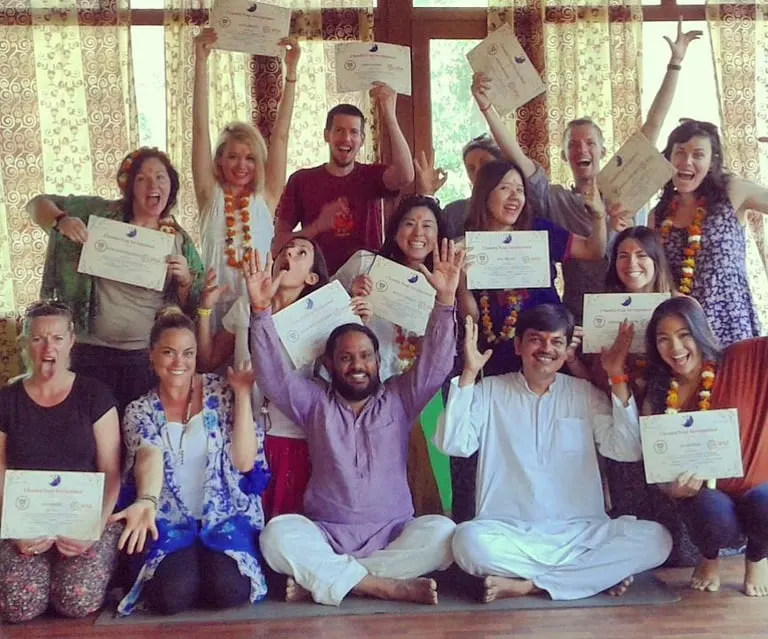
The fastest way to grow as a teacher is structured, accredited study with teachers who have walked the path. Our online trainings in Yin, breathwork, meditation, philosophy, and mechanics are self-paced, internationally accredited, and designed to fit around a working teacher’s schedule.
Start with the modality your students are already asking for. Your teaching, and your career, will feel the difference within weeks.
Every course in this list is priced on one page, alone or as a bundle: see the online yoga teacher training courses and prices.
Frequently Asked Questions
Do online yoga teacher training courses carry the same credibility as in-person ones?
For specialisation and continuing education courses, online programmes from reputable schools carry full credibility. Yoga Alliance recognises online continuing education hours (YACEP). The quality of the content, the credentials of the instructors, and the accreditation of the school matter far more than the delivery format.
How many continuing education hours do I need to maintain my Yoga Alliance registration?
Yoga Alliance requires 30 hours of continuing education every three years to maintain your RYT registration. Completing specialisation courses in areas like Yin, breathwork, or meditation typically counts towards these hours, provided the programme holds YACEP accreditation.
Is breathwork a separate qualification from pranayama?
In professional contexts, yes. Pranayama is a core component of standard yoga teacher training, while a dedicated breathwork training covers a significantly broader range of techniques, including modern therapeutic methods that fall outside the traditional pranayama canon. The two complement each other.
How long does it take to complete an online specialisation course?
It varies by course. A meditation training might be 10 hours; a Yin Yoga Teacher Training is typically 50 hours; a philosophy programme can run to 300. Most are self-paced, so you can complete them in a few weeks of consistent study or spread them over several months.
Which course will have the greatest impact on my teaching immediately?
It depends on your current gaps. If anatomy is your weakness, Yoga Mechanics will have the most immediate impact. If students ask about meditation and you feel underprepared, choose the meditation training. For the most broadly applicable addition, Yin tends to have the widest immediate effect because it deepens your anatomical understanding in ways that improve all of your teaching.
The Loka Newsletter
Enliven your routine with exclusive spiritual content. There’s so much to learn.

Find us on Instagram
@lokayogaschool