Last updated on September 8th, 2026 at 11:32 am
The 8 Limbs of Yoga: Patanjali's Complete Blueprint for a Meaningful Life
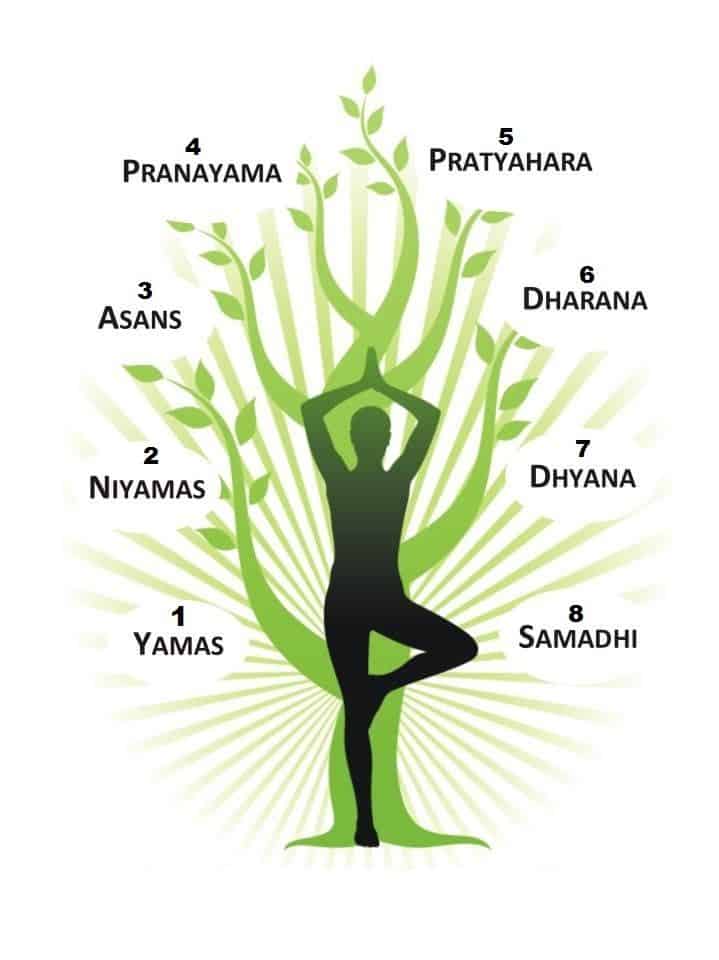
The 8 limbs of yoga are the eight practices Patanjali sets out in the Yoga Sutras as the complete path of yoga: yama (ethics), niyama (personal discipline), asana (posture), pranayama (breath regulation), pratyahara (sense withdrawal), dharana (concentration), dhyana (meditation), and samadhi (absorption). Posture is one limb of eight. The limbs are practised together, not mastered in sequence.
Say “Ashtanga Yoga” and most people picture a physically demanding style of practice. The original meaning is much bigger. The eight limbs, set out by the sage Patanjali in his Yoga Sutras, are not a supplement to posture practice, they are the full practice, with asana as one of eight equal components. Together they form a blueprint for living with more integrity and a quieter mind.
It helps to think of the eight limbs not as a ladder you climb in strict order, but as the legs of a chair: all are needed at the same time to create a stable foundation, on and off the mat.
This guide walks you through each limb, what it meant in Patanjali’s time, what the evidence says today, and how to practise it in a modern life.
The Eight Limbs at a Glance
| Limb | Sanskrit | Meaning | Everyday practice |
|---|---|---|---|
| 1. Yama | यम, yama | Five ethical restraints towards others: ahimsa, satya, asteya, brahmacharya, aparigraha | Before a hard conversation, ask whether what you are about to say is both true and kind |
| 2. Niyama | नियम, niyama | Five personal observances: saucha, santosha, tapas, svadhyaya, ishvara pranidhana | Keep one small daily commitment (tapas); write three honest lines each night (svadhyaya) |
| 3. Asana | आसन, āsana | Seat or posture; “sthira sukham asanam”, steady and comfortable | Sit five minutes without fidgeting: that stillness is the original purpose of asana |
| 4. Pranayama | प्राणायाम, prāṇāyāma | Regulation and extension of the breath | Five minutes of slow nasal breathing with a longer exhale, before you open your inbox |
| 5. Pratyahara | प्रत्याहार, pratyāhāra | Withdrawal of the senses from their objects | Phone in another room for one meal a day; attention on taste and texture |
| 6. Dharana | धारणा, dhāraṇā | Concentration: holding attention on one object | Count ten breaths; when you lose count, start again without comment |
| 7. Dhyana | ध्यान, dhyāna | Meditation: sustained, effortless attention | Keep the same anchor for a set time and let the counting drop away when it does |
| 8. Samadhi | समाधि, samādhi | Absorption; the sense of a separate observer subsides | Not a technique. Notice the moments of full absorption you already have, in music, work, or nature |
The Source: Patanjali and the Yoga Sutras
Patanjali compiled the Yoga Sutras somewhere between roughly 200 BCE and 400 CE; scholars do not agree on the date. He distilled existing yogic philosophy into 195 short aphorisms. It is the foundation of Classical Yoga, not a manual of poses, but a precise guide to psychological transformation.
The opening definition sets the goal: “Yogas chitta vritti nirodhah”, yoga is the stilling of the fluctuations of the mind. Everything that follows, including all eight limbs, is a methodical answer to how that stillness is achieved.
The first four limbs (Yamas, Niyamas, Asana, Pranayama) refine your relationship with the outer world and your body. The last four (Pratyahara, Dharana, Dhyana, Samadhi) turn the attention fully inward. The path begins with ethics, because a practice divorced from how you actually live lacks integrity and depth.
The Yamas: Ethics in Relationship
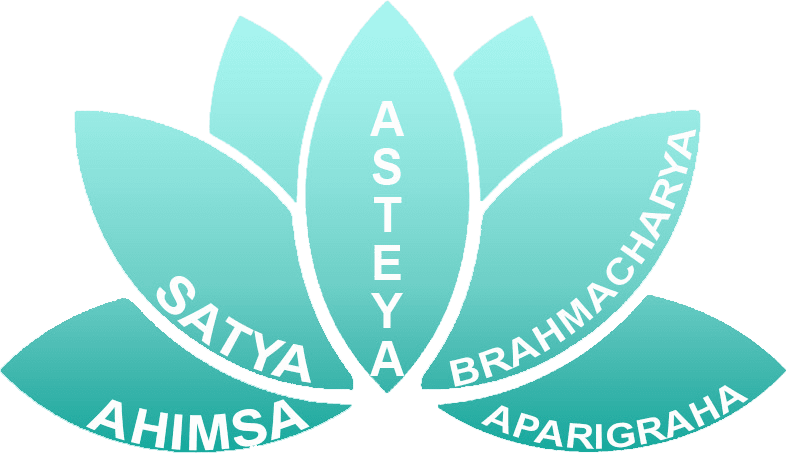
The Yamas are five ethical principles governing how you relate to others and the world. They are the groundwork for everything that follows: self-discipline and mindful action first, subtler inner work second.
1. Ahimsa: Non-Harming and Compassion
Ahimsa translates as non-violence, non-harming, kindness. It asks you to minimise harm in thought, word, and action, toward all living beings, starting with yourself. Your inner world shapes your outer world: if your self-talk is brutal, your compassion for others sits on an unstable base.
In practice, Ahimsa is active, not passive: choosing words that build rather than wound, making lifestyle choices that account for their impact, and standing up for the wellbeing of others as an expression of non-harm at scale.
- Mindful communication: choose words that create connection and understanding rather than damage.
- Conscious choices: weigh the impact of your actions on other people, animals, and the environment.
- Self-compassion: release habitual self-judgment; treat yourself with the same care you extend to people you love.
- Broader view: act in ways that support the wellbeing of your whole community.
2. Satya: Truthfulness and Authenticity
Satya is truthfulness: living in alignment with your inner truth and dropping the masks you wear for different audiences. It goes beyond not lying, it is communicating with clarity and integrity, and using your voice against injustice when you see it.
Satya is always balanced by Ahimsa. Speak the truth skilfully and with compassion; truth used as a weapon is not yoga.
- Mindful speech: honest, clear communication without exaggeration or spin.
- Self-awareness: see your strengths and your growth edges without self-delusion.
- Integrity: align inner beliefs with outer actions.
- Openness: receive feedback without defensiveness.
- Accountability: own your mistakes and make amends.
3. Asteya: Non-Stealing and Abundance
Asteya means non-stealing, and it reaches far beyond physical possessions. It covers other people’s time, energy, and ideas: not taking credit for another’s work, respecting intellectual property, showing up on time.
At a deeper level, Asteya questions your relationship with the world. Taking from the Earth without giving back creates imbalance; taking yoga from its cultural roots without honouring its heritage is also a form of theft. The practice cultivates a sense of “enough” that frees you from grasping at what has not been offered.
- Respecting ownership: physical, intellectual, and emotional.
- Contentment: finding sufficiency in what you have instead of constant comparison.
- Conscious consumption: weighing social and environmental cost alongside personal desire.
- Gratitude: appreciating what you have; releasing entitlement.
4. Brahmacharya: Mindful Energy Management
Brahmacharya is the most misunderstood Yama. Traditionally rendered as “celibacy,” its more useful modern meaning is the conscious management of your vital energy, creative, sexual, and emotional. Your energy is a finite resource; this limb asks you to notice what replenishes it and what drains it.
It is moderation in everything, not just sexuality: one slice instead of the whole pizza, one glass instead of three, focus instead of overstimulation. Restraint here is not repression, it is directing energy toward what actually matters to you.
- Self-mastery: discipline over impulses; balance instead of extremes.
- Respectful relationships: every interaction honours consent and boundaries.
- Focus and vitality: channel energy into growth, creativity, and purpose.
- Healthy boundaries: avoid any overindulgence that depletes you.
5. Aparigraha: Non-Attachment
Aparigraha is non-possessiveness: freedom from clinging, to objects, outcomes, expectations, even your self-image. It does not demand renunciation. It asks you to find peace inside the natural flow of change and to loosen the grip of endless acquisition.
In a culture engineered to make you want more, Aparigraha is a powerful antidote. Cultivating “enough” within yourself also has a collective edge: hoarding at societal scale drives resource disparity and environmental harm.
- Letting go: release the need to control or possess beyond genuine need.
- Contentment: joy in the present moment and in what already is.
- Adaptability: meet change without clinging to specific outcomes.
- Inner steadiness: calm amid life’s fluctuations.
For the full deep-dive on this ethical foundation, read our dedicated guide: The Yamas and Niyamas: The Two Most Important Foundations in Yoga .
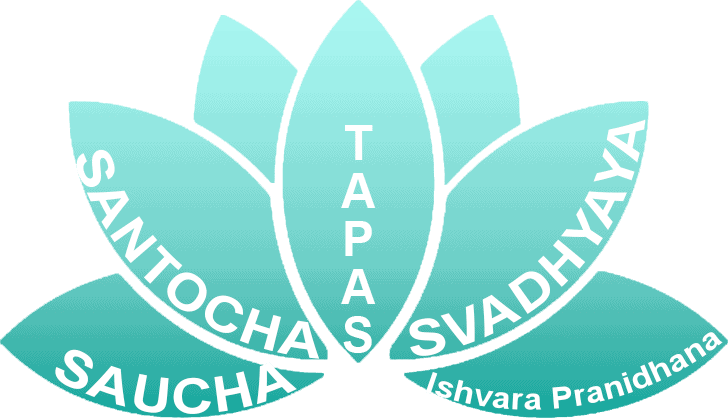
The Niyamas: Personal Discipline
Where the Yamas govern your relationship with the world, the Niyamas turn inward: five personal observances that build self-awareness and inner strength. These are not abstract ideals. Each one is a habit you can practise this week.
1. Saucha: Purity, Inside and Out
Saucha is cleanliness, of body, but also of thought, diet, speech, and environment. You brush your teeth daily; Saucha extends the same hygiene to the mind. Meditation and mindfulness are mental flossing: they clear the negative thought residue that accumulates through a day.
- Physical: hygiene, nourishing food, habits that serve the body.
- Mental: cultivate constructive thoughts; release negativity.
- Environmental: keep your living and working spaces clean and ordered.
- Inner: let go of limiting beliefs and self-judgment.
2. Santosha: Contentment
Santosha is contentment, a radical act in a world that profits from your dissatisfaction. It does not mean abandoning goals or tolerating what needs to change. It means sourcing fulfilment from within rather than from the next purchase, milestone, or comparison.
- Practise gratitude: actively attend to what you have rather than what you lack.
- Drop comparison: stop measuring your life or practice against others.
- Inner abundance: lasting fulfilment comes from your inner state, not external validation.
3. Tapas: Discipline and Inner Fire
Tapas literally means “to burn.” It is the disciplined heat that transforms: the willpower to choose long-term growth over short-term comfort. Not self-punishment, commitment. Tapas is what gets you on the mat on the day you feel least like practising.
- Consistent practice: show up even when it’s hard.
- Resist the impulse: override habits that pull against your goals.
- Mental tenacity: stay on course through difficulty.
4. Svadhyaya: Self-Study
Svadhyaya is self-study. Traditionally it meant study and recitation of sacred texts; in modern practice it also means the honest study of yourself, your thoughts, motivations, and patterns, observed without judgment. As the Bhagavad Gita puts it: “Yoga is the journey of the self, through the self, to the self.”
- Mindful introspection: observe thoughts, feelings, and behaviour without judgment.
- Meditation: stillness as a mirror.
- Journaling: writing as self-exploration.
- Honest reflection: ask hard questions about your habits and beliefs.
- Study: sacred texts, philosophy, or your own concept of the sacred.
5. Ishvara Pranidhana: Surrender
The final Niyama is surrender: releasing the ego’s need to control everything and trusting something larger, a deity, the universe, nature, or simply the recognition that you are part of an interconnected whole. No specific religious belief is required. Patanjali’s practical suggestion is meditation on the mantra Om, the sound expressive of that larger Self.
- Humility: recognise your limits and your interdependence.
- Letting go: release attachment to outcomes and control.
- Openness: meet life’s unfolding with trust.
- Devotion: cultivate connection to something beyond yourself.
Asana: The Physical Foundation
Asana is the third limb and the one modern yoga is best known for, but Patanjali gives only one instruction: “sthira sukham asanam”, the posture should be steady and comfortable. The original purpose was not physical achievement. It was preparing the body to sit still, without complaint, for long meditation.
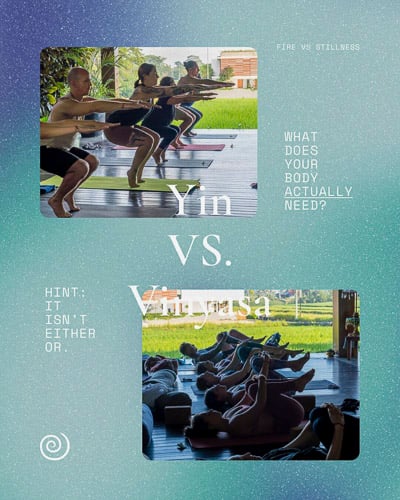
Modern asana has expanded enormously from that seed, and different styles serve the deeper limbs differently. Dynamic flows build strength and stamina; practices like Yin Yoga, master the “steady and comfortable” hold, releasing deep connective tissue and training the stillness the later limbs demand.
Practise with respect for your body’s limits. It is exploration, not competition: modify freely, use props, and learn from a qualified teacher.
Pranayama: Breath as a Bridge
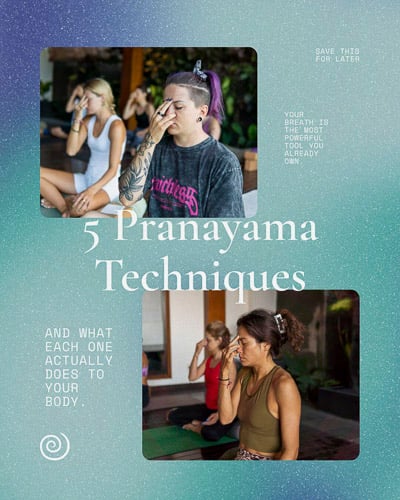
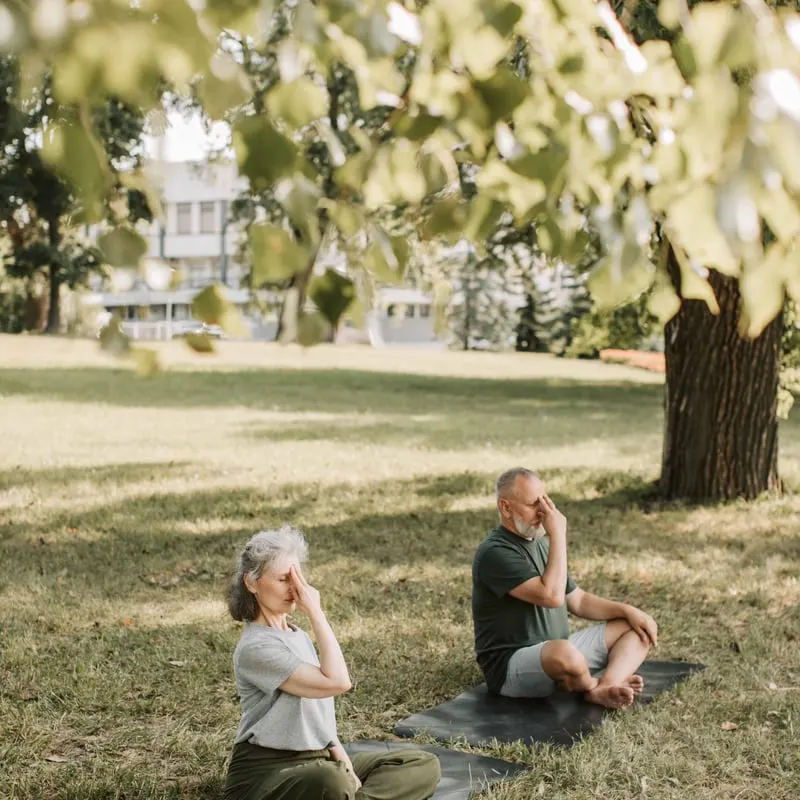
Pranayama, the fourth limb, is the conscious regulation of breath. The Sanskrit holds a deliberate duality: prana-yama, breath control; prana-ayama, breath liberation. You learn to control the breath not to restrict it, but to free the life force (prana) it carries.
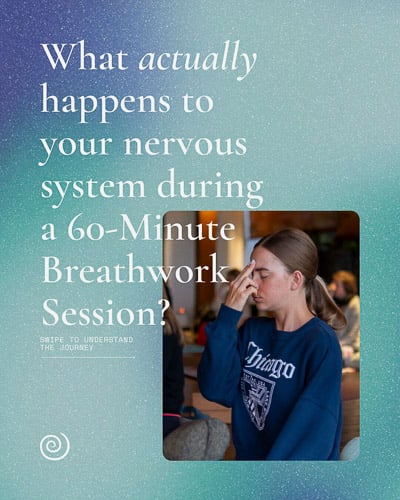
The breath is the one autonomic process you can take under conscious control at any moment, which is why it works. Through pranayama you can shift the state of the nervous system and slow the heart rate (Russo 2017), and create the internal conditions for meditation. It is the bridge between the outer practices and the inner ones.
- Deep diaphragmatic breathing: the foundation, calms the system and increases oxygen efficiency.
- Nadi Shodhana (alternate nostril): balances energy flow; promotes calm and clarity.
- Kumbhaka (breath retention): carefully practised pauses that deepen the work.
Benefits with consistent practice: reduced stress and anxiety, sharper focus, stronger respiratory function, and steadier energy.
To master these techniques, and learn to teach them safely, explore our Online Breathwork Training.
Pratyahara: Withdrawal of the Senses
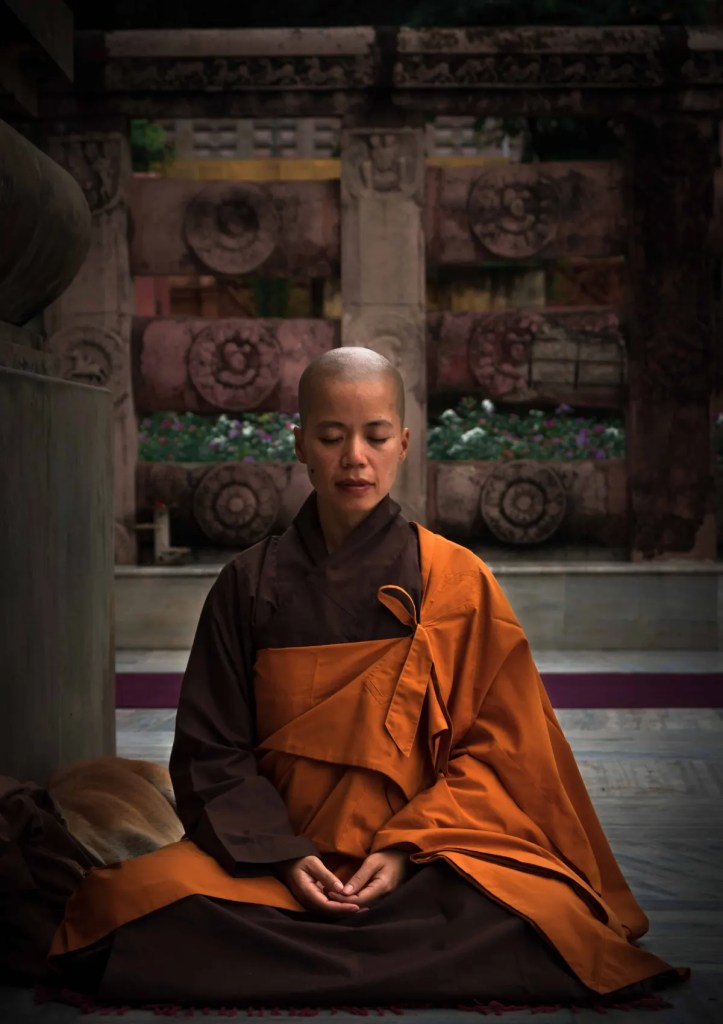
Pratyahara, the fifth limb, is the pivot point of the whole path: the turn from outer to inner. It means withdrawal of the senses, not switching perception off, but no longer being driven by it. In a world of engineered distraction, this limb is a revolutionary act of reclaiming your attention.
Think of the mind as a garden. Untended, the weeds of external stimulation choke everything. Pratyahara is the tending.
- Sensory management: close the eyes, find quiet, silence notifications, small acts that create inner space.
- Visualisation: rest attention on an internal image to draw focus inward.
- Savasana: one of the most accessible entry points, the pose is not rest; it is active withdrawal.
Dharana: Focused Concentration
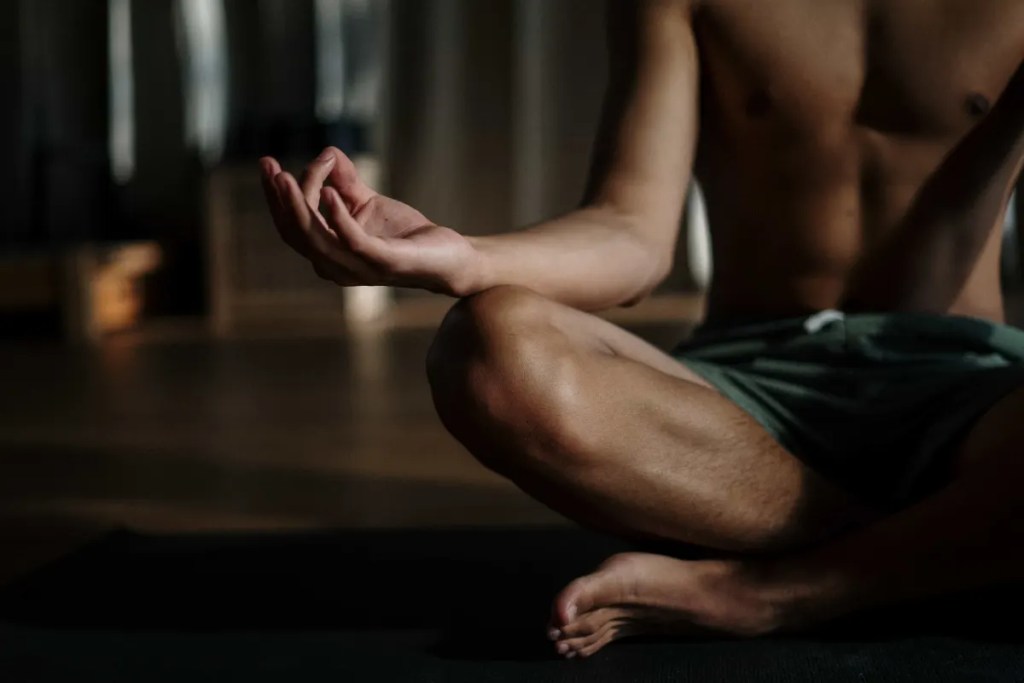
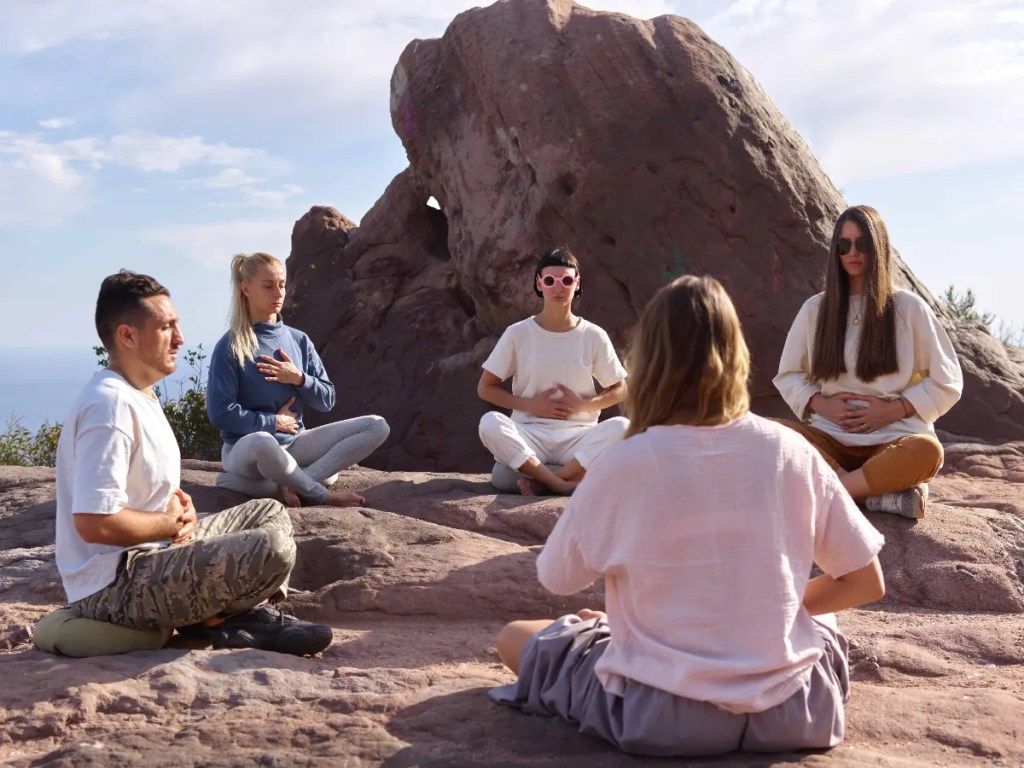
Dharana, the sixth limb, is concentration: anchoring the mind to a single object, breath, image, mantra, or candle flame (Trataka), and holding it there. This is where formal meditation training begins, and it works like strength training for attention.
The mind will wander. That is not failure. The practice is the gentle return, repeated thousands of times. A 2024 meta-analysis of 111 randomised trials found that mindfulness training improves measured cognitive performance, attention included (Zainal 2024).
- Breath awareness: the simplest anchor, observe the rhythm and sensation of breathing.
- Visualisation: hold a single image until it fills the mind.
- Mantra: silent repetition of a word or phrase as an anchor.
- Trataka: steady gazing at a candle flame to build one-pointed focus.
The payoff extends well beyond the cushion: better focus at work, deeper presence in relationships, less reactivity to triggers.
Dhyana: Meditative Absorption
Dhyana, the seventh limb, is what happens when Dharana sustains itself. Where Dharana is the effort to focus, Dhyana is the effortless state that emerges from sustained focus: the distinction between observer and observed begins to dissolve, and awareness settles into flow.
You cannot force Dhyana, you can only build the conditions for it. The same anchors (breath, mantra, visualisation) carry you there with consistent practice. Reviews of meditation programmes find moderate evidence for reduced anxiety, depression, and pain (Goyal 2014), and small but consistent gains in sleep quality (Rusch 2019). The effects are real and modest; the tradition promises more than the trials measure, and it is honest to say so.
- Consistency: short daily sessions beat occasional long ones.
- Dedicated space: a quiet, comfortable spot the mind learns to associate with stillness.
- Guidance: a qualified teacher shortens the learning curve.
For those called to guide others, our Online Meditation Training teaches multiple meditation lineages and the tools to lead effective sessions.
Samadhi: Integration and Freedom
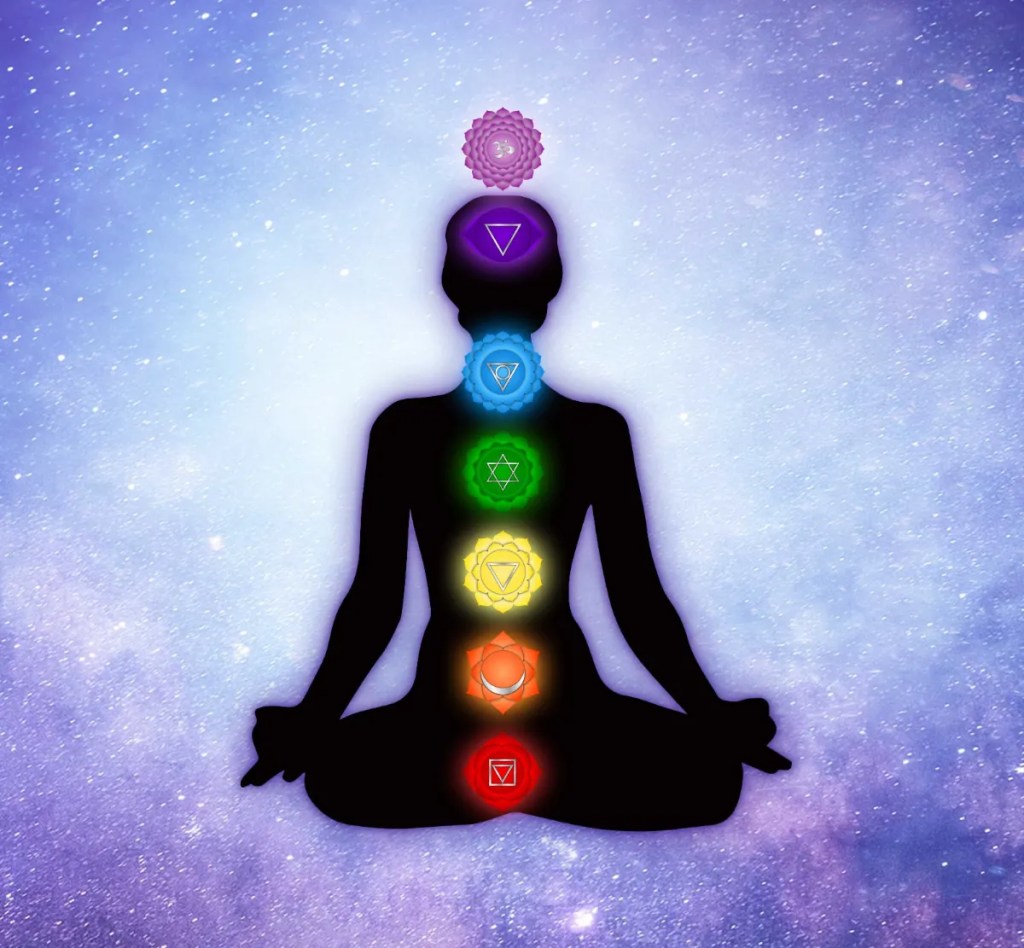
Samadhi is the eighth limb and the stated goal of the entire path. The word parses as sama (equal) and dhi (to see): to see all things equally, exactly as they are, without the distortions of preference and mental chatter. Imagine your being as the ocean, Samadhi is not one wave, but the experience of the ocean’s vastness, where the sense of a separate self dissolves.
Tradition distinguishes two stages. Savikalpa Samadhi: deep absorption with a trace of self-awareness remaining, glimpses of unity, profound peace. Nirvikalpa Samadhi: complete absorption with no residue of separation, described as liberation itself.
Samadhi cannot be forced by willpower. It arises when the preceding seven limbs have done their work. And partial tastes of it are available in ordinary life: the scientist lost in discovery, the athlete in flow, the musician inside the music. Those states mirror Savikalpa Samadhi, and they hint at what sustained practice makes possible.
Living the 8 Limbs of Yoga
Each limb reinforces the others: ethics stabilise the mind, posture steadies the body, breath bridges body and mind, and the inner limbs carry attention home. You do not master them in sequence, you practise all of them, imperfectly and progressively, at once.
Yoga is a practice, not a destination. Start wherever you feel called: a class, a breathing exercise, or an honest look at how you speak to yourself.
If you want to go deeper, the eight limbs are a cornerstone of our Online Yoga Philosophy Course
…and they are woven through the entire curriculum of our 200-Hour Yoga Teacher Training in Bali.
Ready to Go Deeper?
Loka’s Online Yoga Philosophy Course works through the Yoga Sutras, the Bhagavad Gita, and the Hatha Yoga Pradipika with a practising teacher, over 100 hours of Yoga Alliance continuing education. The eight limbs are the spine of the curriculum.
FAQ
What are the 8 limbs of yoga?
The eight limbs are Yama (ethics), Niyama (personal discipline), Asana (posture), Pranayama (breath regulation), Pratyahara (sense withdrawal), Dharana (concentration), Dhyana (meditative absorption), and Samadhi (integration or union). Together they form the complete path of Classical Yoga described in Patanjali’s Yoga Sutras.
What are the 8 limbs of yoga in order?
Yama, niyama, asana, pranayama, pratyahara, dharana, dhyana, samadhi. The order runs from outer conduct to inner absorption, but the limbs are practised together rather than completed one at a time.
How many limbs of yoga are there?
Eight. “Ashtanga” means eight limbs in Sanskrit, ashta (eight) and anga (limb). The physical postures most people call yoga are one limb of the eight.
What does Ashtanga Yoga mean?
Ashtanga means “eight limbs.” The eight-limbed philosophy predates and encompasses the Mysore-style physical practice that also carries the name Ashtanga.
Do I need to master each limb before moving to the next?
No. The limbs are simultaneous, not sequential. You practise all of them, imperfectly and progressively, at the same time, progress in one supports progress in the others.
What is the difference between Dharana and Dhyana?
Dharana is the effort to concentrate: holding the mind on a single object. Dhyana is what happens when that concentration sustains itself effortlessly. Dharana is the training; Dhyana is the state it produces.
Is Samadhi a realistic goal for modern practitioners?
As a permanent state, it may be rare. But partial experiences of the unified awareness it describes, deep flow, complete absorption, are accessible to dedicated practitioners, and the path toward it improves everyday life at every step.
How does modern yoga relate to the eight limbs?
Most modern classes focus on asana and some pranayama. That is not wrong, but it is partial. The full practice extends beyond the mat into how you relate to others, manage your energy, and train your attention.
The Loka Newsletter
Enliven your routine with exclusive spiritual content. There’s so much to learn.

Find us on Instagram
@lokayogaschool