Last updated on October 24th, 2026 at 05:56 pm
Yoga Nidra: The Practice of Conscious Sleep
Yoga Nidra, often called yogic sleep, is a guided practice in which you lie down and are led into a state on the edge of sleep while remaining aware. It is one of the most accessible practices in yoga, because all you have to do is lie still and listen.
It is worth being clear on one thing early: Yoga Nidra is practised fully awake, resting in that borderland just short of sleep, not a technique for falling asleep itself. If it is actual sleep you are after, our the ultimate guide to sleep meditation is the better place to start. If you would like structured guidance, our look at the benefits of taking an online meditation course covers what a course adds.
What Actually Happens
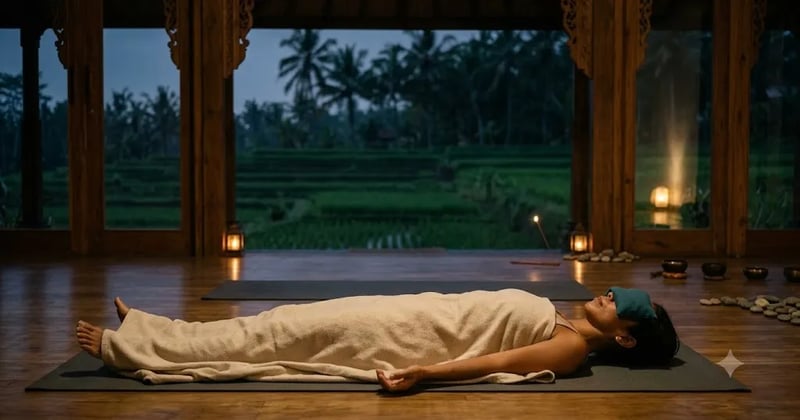
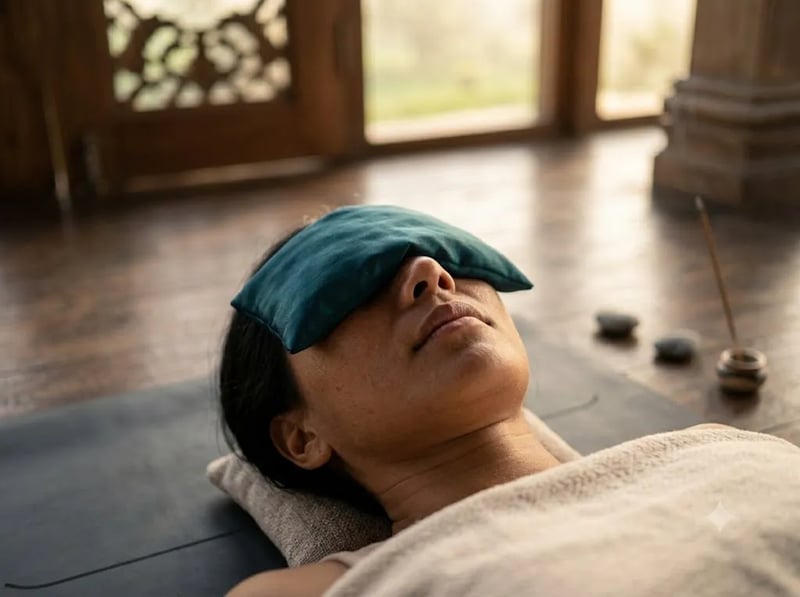
You lie down, usually covered and comfortable, and a teacher or recording guides your attention through the body, the breath, and imagery in a set sequence. The body sleeps while the mind stays lightly aware. Twenty minutes of Yoga Nidra is often said to feel as restful as far longer sleep.
How It Differs From Meditation and Sleep
Seated meditation trains focused, upright awareness. Sleep switches awareness off. Yoga Nidra sits between them: deeply relaxed like sleep, yet consciously aware like meditation. That unusual combination is what gives it its restorative power.
The Benefits
Deep rest and recovery for a tired nervous system.
Reduced stress and anxiety through profound relaxation.
Better sleep, as it teaches the body how to let go.
Accessibility, since no flexibility, strength, or experience is needed.
How to Practise
Lie down somewhere warm and quiet where you will not be disturbed, and follow a guided Yoga Nidra recording or class. There is no wrong way to do it. If you fall fully asleep, that is fine; with practice you learn to rest at the threshold.
What the research so far suggests
It is worth being straight with you about the evidence, because the practice is often described in grander terms than the studies support. The research base is small, and most of it is early-stage, so the sensible position is cautious interest rather than certainty.
The most quoted study is a 2012 trial by Nina Markil in the Journal of Alternative and Complementary Medicine, which found that a guided relaxation session raised heart rate variability, a marker linked with the body’s rest-and-recovery state. That is a promising and plausible result, and it fits what people report feeling.
The caveat is that a single small study cannot carry a long list of health claims. There is no strong body of large, replicated trials here, so the honest framing is that the practice reliably helps many people feel deeply rested, with the deeper physiological claims still open.
None of that should put you off. A practice can be genuinely useful while the science is still catching up, and rest that leaves you calmer and clearer is worth having on its own terms.
Setting up a simple practice at home
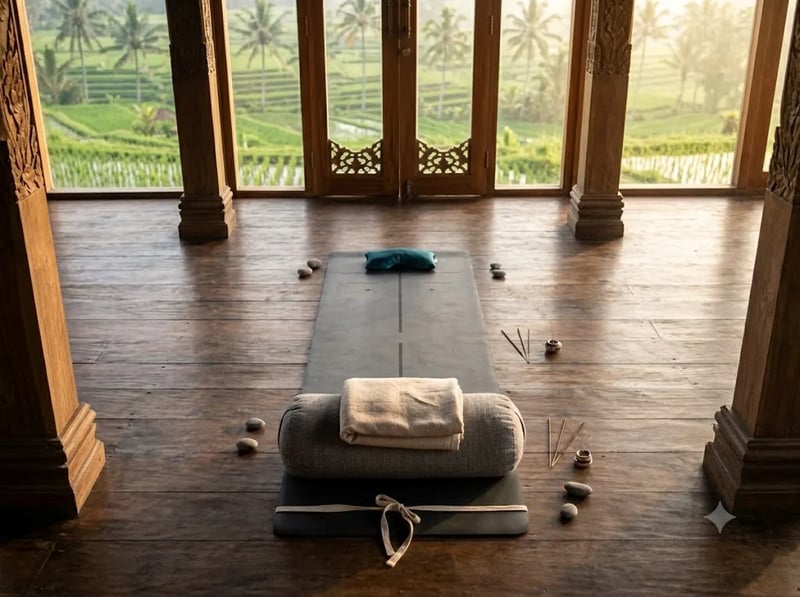
You need very little. Lie down somewhere warm and quiet, on your back if that is comfortable, with a pillow under your head and another under your knees to take the pressure off your lower back. A blanket over you matters more than you would expect, because your body temperature drops as you settle.
Pick a time when you are unlikely to be interrupted, and use a guided recording to begin with rather than trying to lead yourself. The voice does the steering, moving your attention slowly around the body, so all you have to do is follow and stay awake.
Staying awake is the small art of it. Drifting off is common and harmless, but the practice works best in that in-between state where you are deeply relaxed yet still just aware. If you keep falling asleep, try practising earlier in the day, or slightly propped up rather than fully flat.
Start with 20 minutes and do not judge a session by how mystical it felt. Feeling rested, or simply less wound up afterwards, is the practice working.

Who tends to benefit, and when to take care
People who find seated meditation difficult often take to this readily, because lying down and following a voice asks less of a busy mind than sitting in silence does. It also suits anyone who is tired, wired, or short on the kind of deep rest that ordinary sleep does not always deliver.
A few cautions are worth naming. If you live with trauma or significant anxiety, extended body-based attention and stillness can occasionally feel exposing rather than soothing. That does not mean the practice is off-limits, but it is worth starting with shorter, well-guided sessions and, if you are in treatment, mentioning it to whoever supports you.
In late pregnancy, lying flat on your back for long periods is generally discouraged, so practise on your side with support instead. As with anything here, this complements care rather than replacing it, and it is not a treatment for a medical or psychological condition.
Where it fits alongside a meditation habit
Think of the two as different tools rather than rivals. Seated meditation trains active, upright attention, the skill of noticing where your mind has gone and gently bringing it back. This practice trains something closer to conscious rest, letting the body drop into deep relaxation while awareness stays lightly switched on.
Many people find they support each other. A session of deep rest can steady you enough to sit more easily afterwards, and a regular sitting practice can make it easier to stay in that alert-but-relaxed state without tipping into sleep. If you are building a broader practice, Loka’s guide to the benefits of meditation is a good companion piece.
There is no correct order. Some people use deep rest in the evening to unwind and sit in the morning to sharpen; others do the reverse. What matters is that you keep returning, in whatever shape fits your week.
If you want to understand how rest, breath, and attention practices are built and sequenced, Loka’s 200-hour yoga teacher training teaches the how and the why together, not just the techniques.
The obstacles most people hit in the first month
Almost everyone runs into the same handful of problems early on, and almost everyone assumes their particular version means they are doing it wrong. Knowing the list in advance saves a good deal of unnecessary discouragement.
Falling asleep is the most common by a wide margin. It is not a failure, and for a tired person it is close to inevitable in the first few weeks. If you would rather stay on the edge of sleep, practise earlier in the day, keep the room a little cooler, and put a thin cushion under your head so your chin is not tipping back. If you keep sleeping through regardless, take the hint that you are short on sleep and address that first.
The second is a busy mind that refuses to settle, usually accompanied by the conviction that everyone else is drifting serenely. The instruction to follow the voice is not an instruction to stop thinking. You will lose the thread repeatedly, and the practice is the returning rather than the staying. A session in which you came back forty times is a completely normal session.
Physical restlessness catches people out too. Lying still for half an hour is more demanding than it sounds if your hips or lower back are unhappy, and low-level discomfort will occupy all your attention. Fix it structurally rather than enduring it. A bolster or rolled blanket under the knees, a folded blanket under the head, and something over you for warmth solves most of it. Adjusting mid-session is allowed.
Then there is the disappointment of the third or fourth session, which often feels flatter than the first. Novelty does some of the work early, and when it wears off the practice can seem to stop delivering. This is the point at which most people quietly stop. It is worth pushing through, because what follows the novelty is the actual practice.
Give it about a month of two or three sessions a week before you form a view. Keep a one-line note each time, covering how you felt beforehand and how you felt in the twenty minutes afterwards. The afterwards is where the change usually shows up first, and it is easy to miss without a record. If a session leaves you agitated rather than settled, particularly if you have a history of trauma, shorten it, keep your eyes open, and consider working with an experienced teacher rather than a recording.
Give some thought to the voice you practise with. You will spend a long time listening to it, and a voice you find grating or overly performed will keep pulling your attention back to the recording rather than letting it settle. Try three or four before committing, and prefer the plainer ones. Pace matters as much as tone: recordings that move too quickly through the body scan leave you hurrying to keep up, which is the opposite of the point. Once you find one that suits you, stay with it for a while rather than sampling continuously. Some practitioners pair this with sound healing and gong baths for an even deeper drop into stillness.
The stages of a session, and what each is doing
A guided session follows a fairly consistent architecture, and knowing the map makes the practice easier to trust, because nothing that happens is random. It usually begins with settling: getting comfortable, a few slower breaths, and an invitation to let the body become heavy. This stage simply signals to your system that nothing is required of it for a while.
Many traditions then invite a short intention, sometimes called a sankalpa: a simple, positive phrase you bring to mind without forcing. Whether you use it is up to you. Its practical function is to give the practice a quiet direction, and if the idea does not appeal, resting attention on the breath serves perfectly well.
The body rotation comes next and takes up much of the session. The voice moves your attention systematically through the body, part by part, often quite quickly. You are not tensing or relaxing anything on purpose. You are simply noticing each part as it is named, and the steady movement of attention is what draws the mind away from its usual churning without asking it to be empty.
Later stages vary: awareness of the breath, of paired sensations like heaviness and lightness, sometimes simple imagery. If an image does not arise for you, nothing is wrong. The instructions are invitations rather than tests, and drifting in and out of following them is part of how the practice works.
The return matters more than people expect. A good recording brings you back gradually, and it is worth honouring that rather than sitting up the moment the voice stops. Take a minute on your side before rising, let your eyes open on their own schedule, and re-enter the room slowly. The settled quality you feel is easiest to carry into the day when the exit is as unhurried as the practice.
Once the map is familiar, you can choose recordings more intelligently: shorter ones that stop after the body rotation for a quick reset, longer ones with the full architecture when you have the time to spare.
Using Yoga Nidra when your sleep is already broken
Jet lag, shift work, a new baby, or a run of anxious nights all leave you in the same place: tired, wired, and no longer trusting that lying down will lead anywhere. Yoga Nidra earns its place here because it asks nothing of you beyond staying horizontal and letting a voice do the work.
The move that helps most is to stop trying to sleep. Put a session on, let it run, and accept whatever happens. If you drift off, you needed it. If you stay on the edge for forty minutes, your nervous system has still had a long stretch of very low demand, which is more than another hour of scrolling was ever going to give you.
Travellers often ask what to do on the first days after a long flight. Rather than napping in the afternoon and wrecking the night that follows, lie down for a session at around three in the afternoon, then stay up until a normal local bedtime. You get the rest without moving your body clock in the wrong direction.
Be careful about what you expect. Research on this practice specifically is thin and short-term. The closer evidence sits with mindfulness-based approaches to insomnia, where a 2016 meta-analysis of randomised trials in the Journal of Psychosomatic Research found modest improvements in sleep quality. Modest is the operative word, and none of those trials tested yogic sleep as such.
There is also a point at which a recording is the wrong tool. If broken sleep has run for months, or you snore heavily and wake unrefreshed, speak with a doctor. Sleep apnoea, thyroid problems, and depression all present as poor sleep, and none of them respond to a practice, however pleasant it feels.
If you want to learn to guide this for other people rather than only receive it, the teaching skills sit inside our 200-hour yoga teacher training in Bali, alongside the wider case for a regular meditation habit.
Train With Loka
If deep rest is what you need, Yoga Nidra is one of the gentlest ways in. Our Online Meditation Training includes relaxation and Nidra-style practices alongside seated meditation, drawing on the wider benefits of meditation. For a similarly still, supported practice, see restorative yoga.
Frequently Asked Questions
Is Yoga Nidra the same as sleep?
No. In Yoga Nidra the body rests deeply while the mind stays lightly aware, which is different from ordinary sleep.
What if I fall asleep during Yoga Nidra?
That is completely fine, especially at first. With practice you learn to rest at the threshold rather than dropping off.
How long is a Yoga Nidra practice?
Commonly 20 to 45 minutes. Even a short session can feel deeply restorative.
Do I need experience to try Yoga Nidra?
No. You simply lie down and follow the guidance, which makes it one of the most accessible practices in yoga.
Can I practise this at night to help me fall asleep?
Yes, with one adjustment: use a recording designed for sleep, which drops the return stage. The standard practice deliberately keeps you lightly awake, so a full session at bedtime can leave you rested but alert. Sleep-specific versions let you drift off without being guided back.
Is it normal to twitch or feel like I am floating?
Both are common and harmless. Twitches are the body discharging tension as it drops towards deep rest, and floating or drifting sensations reflect how differently the settled brain processes body position. If anything ever feels distressing rather than odd, simply open your eyes and move gently.
The Loka Newsletter
Enliven your routine with exclusive spiritual content. There’s so much to learn.

Find us on Instagram
@lokayogaschool