Last updated on July 31st, 2026 at 06:52 pm
What Are the Benefits of Meditation?
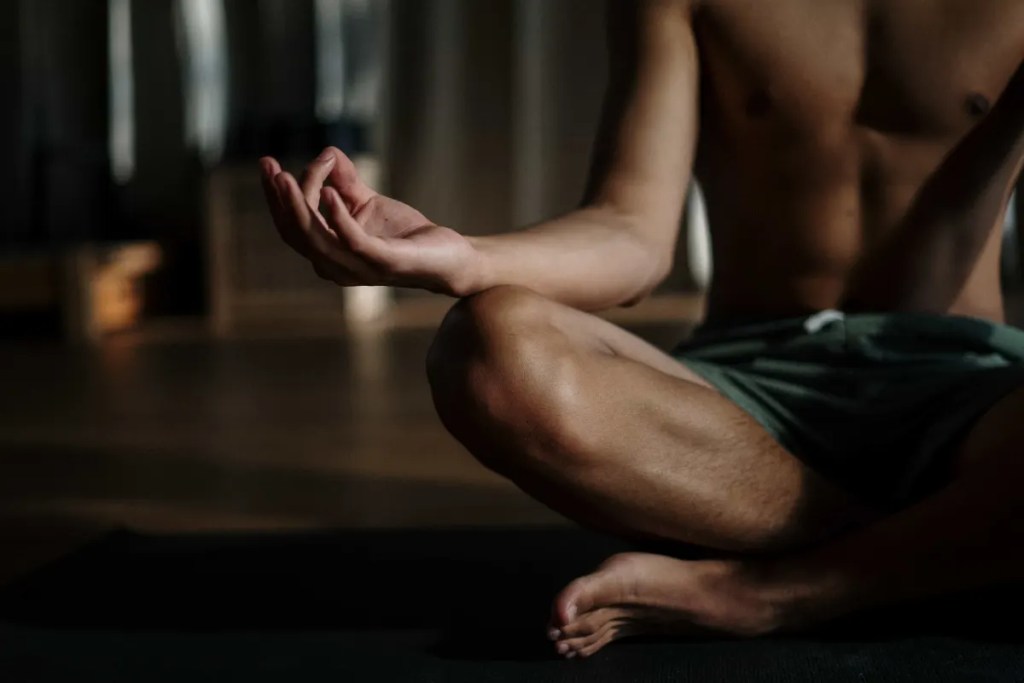
The benefits of meditation are measurable, and they are also narrower than most of the internet suggests. Regular practice is associated with lower cortisol, steadier attention, and a shift towards parasympathetic activity. These are not abstract claims, they are changes that show up when researchers measure people who sit, breathe, and observe.
What Meditation Actually Is
Meditation is not about silencing your mind. Your mind generates thoughts the way your lungs generate breath, that is its nature. The practice is simpler and more honest than the myth: you place your attention on something specific, often the breath, notice when the mind wanders, and return your focus without judgement.
That act of returning, repeated hundreds of times over weeks and months, is what gradually changes the brain. Neuroscientists call this experience-dependent neuroplasticity. Yogis have called it abhyasa, dedicated and consistent practice.
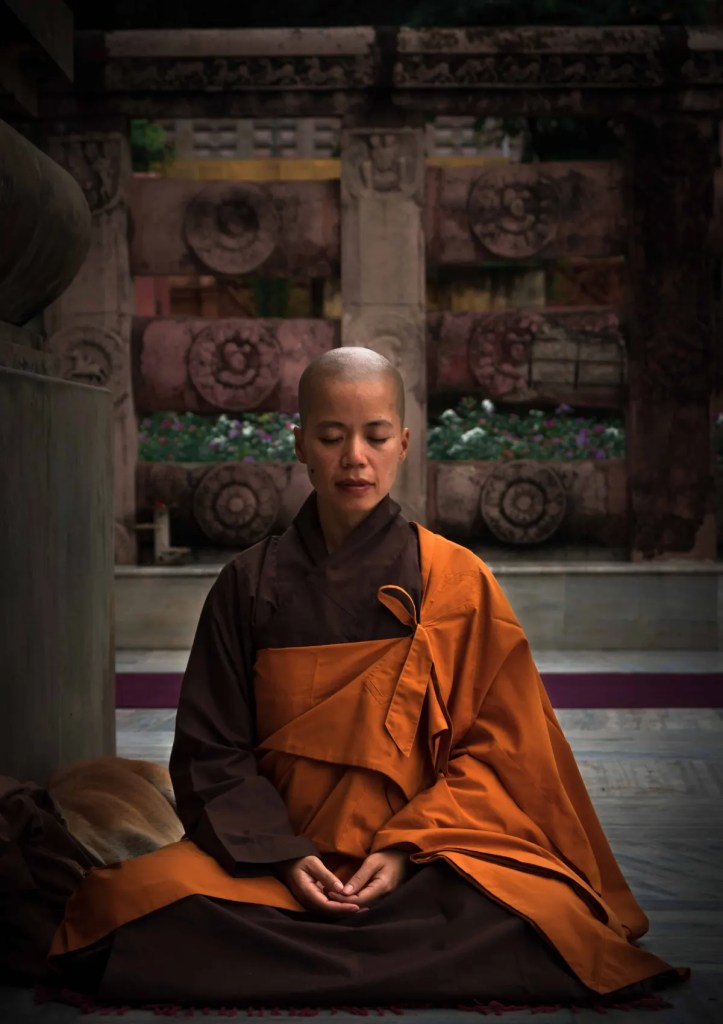
How Meditation Lowers Stress and Anxiety
When you are under threat, real or perceived, your hypothalamic-pituitary-adrenal axis floods the body with cortisol. In acute situations, this is useful. Chronically activated, it suppresses immunity, disrupts sleep, and taxes the cardiovascular system.
Mindfulness meditation measurably reduces cortisol output and has been shown to reduce the grey matter density of the amygdala, the brain’s threat-detection centre. You are not just feeling calmer. Your brain is physically changing in ways that make calm more accessible.
Sharpening Focus and Concentration
Sustained attention is trained, not innate. Every time you notice your mind has drifted and guide it back to the breath, you are strengthening the neural pathways associated with executive function in the prefrontal cortex.
Studies on meditators consistently show improvements in selective attention, working memory, and cognitive flexibility. If you find yourself scattered or easily distracted, a daily 10-minute sitting practice is among the most evidence-based interventions available to you.
Emotional Regulation and Resilience
Meditation builds the gap between stimulus and response. You learn to observe an emotion arising, frustration, fear, sadness, without immediately being propelled into action by it. This is not emotional suppression. It is the opposite: fuller awareness with less automatic reactivity.
Over time, practitioners report greater emotional stability, less rumination, and a stronger capacity to meet difficulty. Loving-kindness meditation (metta) specifically cultivates compassion, both for yourself and others, with research showing it can reduce social isolation and increase prosocial behaviour.
Better Sleep Quality
Racing thoughts at night are largely the result of an unregulated nervous system carrying the day’s cortisol load into bedtime. Meditation before sleep, particularly body-scan and breath-focused techniques, signals the parasympathetic system to downregulate arousal and supports the natural rise of melatonin.
Consistent meditators report falling asleep faster, experiencing deeper sleep cycles, and waking with greater restoration. If you are reaching for sleep aids, a structured evening meditation practice is worth exploring first.
Physical Health: The Mind-Body Connection
Chronic psychological stress drives systemic inflammation, which underpins conditions ranging from cardiovascular disease to autoimmune disorders. By reducing the frequency and intensity of the stress response, meditation supports heart rate variability, blood pressure regulation, and immune function.
Pain research also shows that meditation changes not the intensity of a pain signal, but your relationship to it, reducing the suffering that amplifies physical sensation.

Greater Self-Awareness and Insight
Meditation is, at its core, a practice of paying attention to your own inner life. As you sit with your thoughts and sensations without rushing to fix or judge them, you start to notice the patterns that usually run in the background: the habitual worries, the running commentary, the beliefs you did not realise you were holding. This is not navel-gazing. It is the raw material of genuine self-knowledge.
That clearer view of your own mind has practical value. When you can see a reaction forming, you have a real choice about whether to follow it. People who practise regularly often report that they understand their own motivations better and make decisions that sit more honestly with what they actually value.
Kindness and Compassion
Some styles of meditation train warmth as directly as others train focus. In loving-kindness practice you repeat simple phrases of goodwill, first towards yourself and then towards others, until the sentiment becomes less of an idea and more of a felt state. It sounds soft, but the effect is measurable: regular practitioners tend to show greater empathy and report feeling less isolated.
This matters because so much everyday stress is relational. Learning to meet yourself with less harshness usually spills over into how you treat the people around you, which is one of the quieter and longer-lasting rewards of a steady practice. For the anxious mind specifically, our guide to yoga for anxiety goes into the practices that settle the nervous system.

Different Approaches to Practice
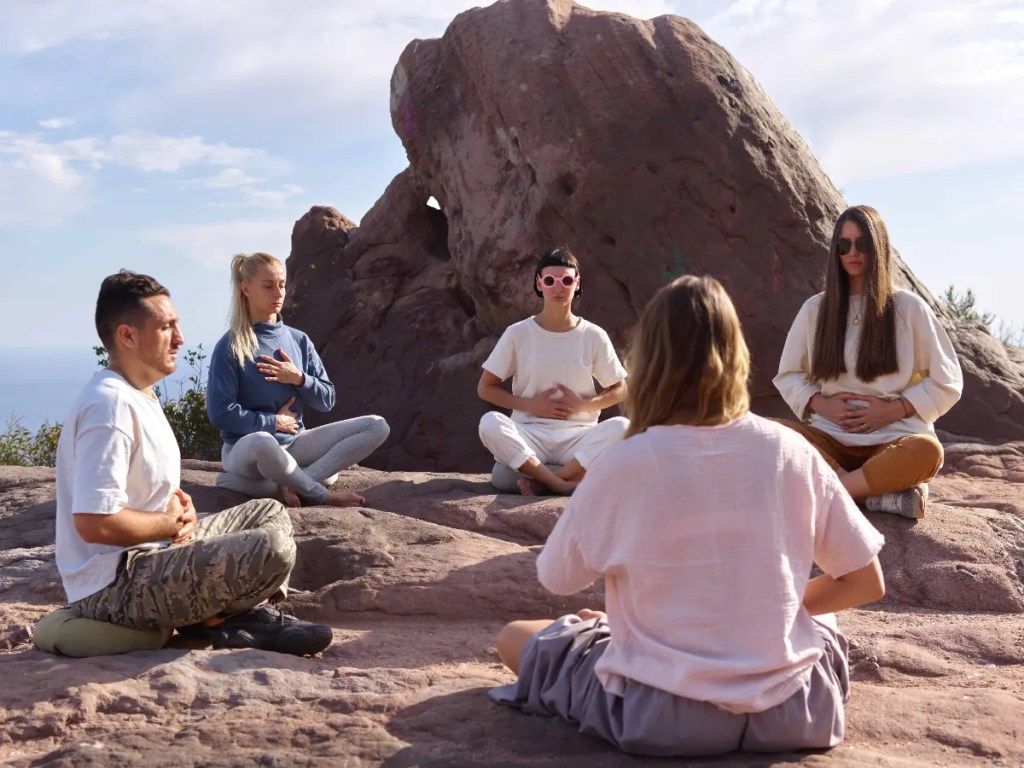
There is no single correct style of meditation. The main traditions each offer a distinct entry point:
Mindfulness focuses on present-moment awareness, observing thoughts and sensations without judgement. It is well-suited for stress reduction and building attention.
Mantra meditation uses a repeated word or sound to anchor the mind and access deeper states of stillness. It is one of the oldest forms of practice within the yogic tradition.
Yoga Nidra is a guided practice that brings you to the hypnagogic state between waking and sleep, producing profound rest and accessing subconscious material.
Metta (loving-kindness) systematically cultivates warmth and compassion, starting with yourself and expanding outward.
Vipassana is insight meditation, developed in the Theravada Buddhist tradition, aimed at direct perception of impermanence.
Concentration meditation, known in the Buddhist tradition as samatha, steadies the mind on a single object such as the breath or a candle flame, building the stability that deeper insight practices rely on.
Walking meditation brings the same quality of attention to the physical sensations of each step, which makes it a good option if sitting still feels difficult or if you simply want to practise while moving.
Transcendental Meditation uses a specific mantra, given by a certified teacher and repeated silently, to settle the mind, and it has one of the larger bodies of clinical research behind it.
You do not need to commit to one approach permanently. Explore with curiosity and let your experience guide you. For more on the practice itself, browse our full set of meditation guides.
What the Evidence Says About the Benefits of Meditation
Meditation has been studied properly, and the honest summary is narrower than most wellness writing suggests. Goyal and colleagues’ systematic review and meta-analysis in JAMA Internal Medicine pooled 47 trials covering 3,515 participants and found moderate-strength evidence that meditation programmes reduce anxiety, depression, and pain.
The same review found only low-strength evidence for improvements in stress and mental health-related quality of life, and insufficient evidence to draw conclusions about positive mood, attention, substance use, eating habits, sleep, or weight. The effect sizes were small to moderate, in the range you would expect from an antidepressant in a comparable population.
Cognition is better supported. Zainal and colleagues’ meta-analysis of 111 randomised controlled trials found that mindfulness training produced small but reliable gains in cognitive functioning, including attention and executive function.
Those are real results and they are worth having. They are not the same as the claim that eight weeks of practice rewires your brain, and a teacher who tells you otherwise is selling something.
When Practice Gets Uncomfortable
Sitting quietly with your own mind is not universally pleasant, and researchers have finally started measuring that properly. Farias and colleagues’ systematic review of adverse events in meditation practices examined 83 studies covering 6,703 people and found an overall adverse-event prevalence of 8.3%.
A population-based survey by Goldberg and colleagues in Psychotherapy Research put the figure higher. Of 434 people with meditation experience, 32.3% reported an unwanted effect and 10.4% reported effects lasting a month or longer. Anxiety, re-experiencing of past trauma, and heightened emotional sensitivity were the most commonly named, and a history of childhood adversity raised the risk.
None of this is an argument against practising. It is evidence that the practice is active rather than inert, and active things have side effects. If you carry a trauma history, start with shorter sittings, keep an external anchor such as sound or movement, and practise somewhere a teacher can actually see you.
Britton and colleagues have since published a framework for defining and measuring these effects in mindfulness-based programmes, which is the unglamorous work that makes a field trustworthy.
Choosing What to Practise Next
Technique matters less than fit. If your difficulty is falling asleep, a body scan or a structured wind-down will serve you better than open awareness, and our guide to sleep meditation covers that ground properly rather than repeating it here.
If your mind resists silence, give it something to hold. Mantra meditation suits people who have decided, more than once, that they cannot meditate.
If you want to understand why these techniques work rather than following recordings indefinitely, that is what structured study offers. Our online meditation teacher training teaches the mechanisms alongside the practices, and the meditation and pranayama modules inside our Yoga Alliance certified 200-hour YTT in Bali set the same material in a full yogic context.
Whichever you choose, the variable that predicts benefit is not intensity. It is whether you are still practising in six months.
How Long Before You Notice Anything
This is the question people actually want answered, and it is the one answered least honestly. The usual replies are either that it works straight away if you are open to it, or a vague gesture towards consistency.
Start with what the trials do rather than with what they conclude. Most run an eight-week programme, because eight weeks fits a university term, a funding cycle, and the limits of a volunteer’s patience. That number has been repeated often enough that it now reads as a biological threshold. It is not one. It is a research convenience that hardened into a folk fact.
What people report in practice is less tidy and more useful. The first thing to change is usually not calm. It is noticing. You catch yourself mid-spiral a few seconds earlier than you used to, which feels like nothing at the time and is in fact the whole mechanism.
The second change, and this one takes months rather than weeks, is what you do with the noticing. The gap between the thought and the reaction widens slightly, and you start using it. That is the part that shows up in your relationships before it shows up in your sitting.
What does not arrive on any schedule is a permanently quiet mind. Long-term practitioners still have loud days. If your measure of progress is silence, you have set a target the practice was never aiming at, and you will conclude you are failing at something you are doing correctly.
So judge it on ordinary hours rather than on the sit. Ask whether you recover from irritation faster than you did in autumn, not whether this morning felt peaceful. A practice can feel unremarkable for weeks while that shift is happening underneath it.
If several months have passed and nothing has moved at all, change one variable rather than abandoning the whole thing. Time of day, length, or technique: giving the mind a sound to return to suits people who find open awareness too slippery to hold.
Common Obstacles and How to Work With Them
The most common worry is some version of I cannot stop thinking. You are not meant to. The goal is not a blank mind but a different relationship with your thoughts: you notice one, let it pass, and return your attention. Each return is the repetition that builds the skill, so a busy session is still a successful one.
Restlessness and boredom are also normal, especially early on. If you feel fidgety, bring your attention closely to the physical detail of the breath, or move slowly through a body scan. A shorter session done well beats a long one spent fighting yourself.
Drowsiness usually means either your body is genuinely tired or your posture is too relaxed. Sitting upright rather than lying down helps, as does practising with your eyes slightly open, or at a time of day when you are more alert.
And if you find yourself asking whether you are doing it right, the answer is almost certainly yes. If you are sitting with the intention to pay attention, noticing when you drift, and gently coming back, you are meditating. It is a practice, not a performance.
Starting Simply
Begin with five minutes each morning. Sit comfortably, close your eyes, and follow the natural rhythm of your breath. When the mind wanders, and it will, return without criticism. That return is the practice.
Consistency matters more than duration. Five minutes every day for a month will change your inner landscape more than an hour once a week.
Guided recordings can make the early weeks easier. A short guided session, whether from an app or a teacher you trust, gives your attention something to follow while the habit forms. Above all, be kind to yourself on the days it feels difficult. Showing up at all is the part that counts.
If you want structure, professional guidance, and a thorough grounding in technique and philosophy, the Loka Yoga School Online Meditation Training offers a comprehensive certification you can complete entirely from home.
Deepen Your Meditation With Loka
Reading about the benefits is one thing; building a practice that sticks is another. If you are new, start with our guide to mantra meditation.
Our Online Meditation Training teaches you to meditate with confidence and, if you choose, to guide others. If you want a structured way into the practice, our 7 benefits of taking an online meditation course lays out what a guided course adds on top.
FAQ
Does meditation have to take a long time to work?
No. Research shows measurable changes in cortisol and attentional performance within eight weeks of daily practice, even with sessions as short as 10 minutes. Consistency is more important than duration. A brief daily practice outperforms longer, infrequent sessions.
Can anyone meditate, or do you need prior experience?
Anyone can meditate. No prior experience, physical ability, or spiritual background is required. The practice begins exactly where you are. Even people who describe themselves as “unable to quiet their mind” are already practising the moment they notice the distraction and return their attention.
What is the difference between meditation and relaxation?
Relaxation is a passive state. Meditation is an active practice of attention. You may feel relaxed during meditation, but the aim is heightened awareness, not absence of awareness. The physiological changes from meditation are distinct from those produced by simply resting.
How does meditation affect the brain physically?
Long-term meditators show measurable differences in grey matter density in areas associated with self-awareness, attention, and compassion. The amygdala, the brain’s fear centre, shows reduced volume and reactivity. The prefrontal cortex, which governs decision-making and focus, shows increased activity and connectivity.
Is meditation linked to yoga?
In the classical yogic system, meditation (dhyana) is the seventh of Patanjali’s eight limbs. It is preceded by pranayama (breath regulation) and pratyahara (withdrawal of the senses), which prepare the mind for sustained inward focus. Meditation and yoga are therefore deeply intertwined traditions.

The Loka Newsletter
Enliven your routine with exclusive spiritual content. There’s so much to learn.

Find us on Instagram
@lokayogaschool