Last updated on October 21st, 2026 at 02:38 pm

The Ultimate Guide to Sleep Meditation
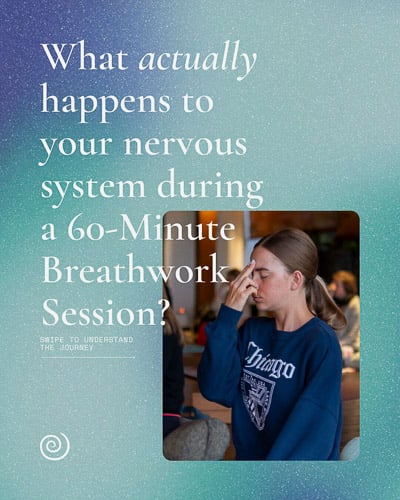
Sleep meditation works by activating the parasympathetic nervous system, reducing cortisol, and creating the physiological conditions the body needs to transition into deep, restorative sleep. If you are lying awake with a churning mind, the problem is not insomnia, it is an unregulated nervous system that has not been given permission to power down.
Why Good Sleep Matters
It is worth remembering what you are actually working towards. Sleep is not downtime for the body; it is when a great deal of essential maintenance happens. During deep sleep the body regulates hormones, repairs tissue, and supports immune function, while during REM sleep the brain consolidates memory and processes the emotional residue of the day.
When sleep is consistently short or broken, the effects show up quickly: concentration slips, mood becomes harder to regulate, appetite hormones shift, and stress feels closer to the surface. Seen this way, learning to fall asleep well is not a luxury. It is one of the highest-leverage things you can do for both mind and body, and meditation is one of the most reliable tools for getting there.

Why Your Mind Won’t Switch Off
The brain does not automatically separate waking-state arousal from sleep readiness. If you have spent the day in a heightened sympathetic state, responding to demands, managing stress, processing screens, your nervous system needs an active transition, not just a horizontal body.
Melatonin, the hormone that signals sleep onset, is suppressed by cortisol and by blue light exposure. Racing thoughts at night are cortisol still doing its job, long after the actual stressors of the day have passed. Meditation interrupts that cycle at the source.
This is not theory. It is what happens when you give your nervous system a clear, consistent signal that the day is finished.
Create the Conditions for Sleep
Your environment either supports or undermines the transition to sleep. Dim the lights at least an hour before bed to signal dusk to the brain’s suprachiasmatic nucleus, the internal clock that governs melatonin release. Lower the room temperature, the body’s core temperature must drop to initiate sleep.
Remove screens from the bedroom. The issue with devices is not only the blue light but the cognitive and emotional arousal they produce. A quiet bedroom that feels like a sanctuary is not a luxury. It is a physiological necessity.
Pay attention to the finer details of the room as well. A slightly cool temperature suits sleep better than a warm one. If noise disturbs you, a fan or a white-noise machine can smooth over sudden sounds. Invest in bedding that genuinely feels good, since you spend a large share of your life there. Some people also find that a few drops of lavender or chamomile essential oil in a diffuser help signal that the day is over.


A Pre-Sleep Wind-Down Practice
The body responds well to ritual. A consistent pre-sleep sequence trains the nervous system to recognise the cues and begin downregulating before you even lie down.
A few minutes of gentle Yin Yoga postures, supported forward folds, reclined twists, legs up the wall, activate the vagus nerve and shift the body toward parasympathetic dominance. This is the same mechanism targeted by restorative yoga and yoga nidra, and it is measurably effective.
Write in a journal if your mind tends to cycle through unresolved thoughts. The act of externalising concerns onto paper reduces their neurological grip. You are not solving the problems; you are simply moving them out of working memory for the night.
A brief gratitude practice fits naturally here too. Before you turn off the light, bring to mind three small things from the day that went well, however ordinary. This is not forced positivity. It gently shifts your attention away from unfinished tasks and towards a calmer state, which is a far more useful place to fall asleep from.
Breath Techniques for Sleep
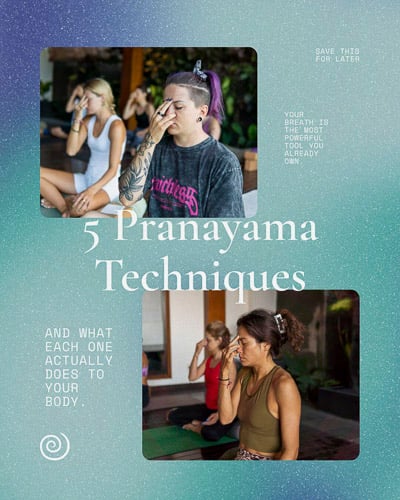
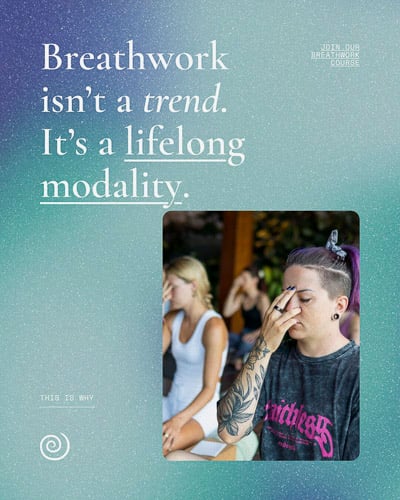
The breath is the only part of the autonomic nervous system you can consciously control, which makes pranayama your most accessible tool for shifting physiological state.
Diaphragmatic breathing is the starting point. Place one hand on your abdomen and breathe so that the belly rises on the inhale and falls on the exhale. This activates the vagus nerve and signals safety to the nervous system.
4-7-8 breathing is a structured technique: inhale for four counts through the nose, hold for seven, exhale completely through the mouth for eight. The extended exhale activates the parasympathetic system. Repeat six to eight cycles and notice the shift.
Box breathing, four counts in, four counts hold, four counts out, four counts hold, produces a similar calming effect and is particularly useful if anxiety is present.
A gently extended exhale is the common thread in all of these. Because the out-breath is tied to the parasympathetic branch of the nervous system, making it longer than the in-breath is what actually shifts you towards rest. A soft humming sound on the exhale, sometimes called bee breath, lengthens it further and adds a light vibration that many people find quietens a busy mind.
Body Scan and Progressive Muscle Relaxation
We hold enormous amounts of residual tension in the body without being aware of it. A systematic body scan, moving attention from the soles of the feet upward through each region of the body, brings conscious awareness to contracted tissue and invites it to release.
Progressive muscle relaxation takes this further: deliberately tense each muscle group for a breath cycle, then release completely. By the time you reach the crown of the head, the contrast between held tension and full release produces a profoundly heavy, restful body.
Both practices work partly through the nervous system and partly through the simple act of redirecting attention away from thought and into physical sensation.
Guided Visualisation
The brain does not reliably distinguish between vivid imagination and direct experience at the level of physiological response. A detailed, sensory-rich visualisation of a calm, safe environment, a warm beach, a forest, a quiet garden, will produce a measurable reduction in cortisol.
Engage all senses: the temperature of the air, the sounds present, the texture beneath you, the light quality. The more specific and immersive the imagined scene, the more effectively it displaces anxious cognition.


Giving Yourself Permission
One of the most overlooked components of chronic insomnia is psychological: the belief that sleep must be forced or earned rather than allowed. The nervous system cannot relax under self-imposed pressure. A quiet, internal acknowledgement, there is nothing else to do, the day is complete, rest is allowed now, is not a spiritual affirmation. It is an instruction to the nervous system, and it works.
A simple change of self-talk helps here. Instead of lying there demanding sleep, which only raises the pressure, remind yourself that you have created the right conditions and that rest is allowed to arrive in its own time. Something as plain as telling yourself there is nowhere else to be and nothing else to do can lower the very arousal that keeps you awake.
If you want to build a comprehensive, structured practice around these techniques, the Loka Yoga School Online Meditation Training covers yoga nidra, pranayama, and breath-based meditation in depth, with audio practices you can use directly in your evening routine.
What the Research Says About Sleep Meditation
The evidence here is better than average for a wellness practice, though it is not overwhelming. Gong and colleagues’ meta-analysis of randomised controlled trials in the Journal of Psychosomatic Research found that mindfulness meditation improved total wake time and sleep quality in people with insomnia, with effects that held at follow-up.
A larger review by Rusch and colleagues in the Annals of the New York Academy of Sciences reached a similar conclusion, finding that mindfulness meditation improved sleep quality against non-specific active controls, which is a harder test than comparing against a waiting list.
The most useful single trial is Black and colleagues’ randomised trial in older adults with moderate sleep disturbance, where a six-week mindfulness programme outperformed a sleep hygiene education programme on sleep quality, and also reduced daytime fatigue and depressive symptoms.
Read those results honestly. The trials are mostly small, the practices differ between them, and nobody has shown that meditation beats the best available treatment. What they support is a modest, real improvement in how well you sleep and how you feel the next day.
When to Stop Practising and Get Assessed
If your sleeplessness has lasted longer than three months and happens most nights, you are describing chronic insomnia disorder, which is a diagnosis rather than a habit. The American College of Physicians recommends cognitive behavioural therapy for insomnia as the initial treatment for all adults with the condition, ahead of medication.
That matters because this therapy includes sleep restriction, which asks you to spend less time in bed rather than more. A calming evening practice sits comfortably alongside it, but it is not a substitute, and no amount of breathing will resolve an untreated sleep disorder.
Get assessed rather than self-managing if you snore loudly, if someone has witnessed you stop breathing in your sleep, if you wake gasping, or if you remain unrefreshed after a full night in bed. Those signs point towards sleep apnoea, which meditation does not treat.
If your sleep is broadly fine and you simply want a steadier mind, that is different ground. The wider evidence on meditation covers what to expect, and if you want to learn the mechanisms properly, our online meditation teacher training and the meditation modules inside our Yoga Alliance certified 200-hour YTT in Bali both teach them in depth.
What to Do When You Wake at Three in the Morning
Nearly all sleep advice, including most of what is above, is about getting to sleep. A different complaint is just as common: you drop off without trouble, then surface at 3am with your mind already running. None of the wind-down material applies, because you are not winding down. You are wide awake.
The first decision is whether to stay in bed at all. Lying there for an hour trying to meditate your way back under is usually counterproductive, because it trains you to associate the bed with effortful wakefulness. That advice comes from insomnia treatment rather than from meditation research, and it is one of the better-established findings in that field. If roughly 20 minutes have passed and you are plainly still awake, get up, go somewhere dim, and do something undemanding until you feel sleepy again.
What a practice is good for at that hour is not sleep. It is not stacking a second problem on top of the first. Three in the morning is when everything feels final and unfixable, and the reason is that your judgement at 3am is genuinely worse than your judgement at 9am, not that your life has quietly become worse overnight. Knowing that in advance takes some of the weight out of it.
Use the plainest technique you have. Counting exhales, or feeling the weight of your body on the mattress, with no visualisation and no full body scan. Elaborate practices need attention you do not have at that hour, and failing at one will wake you further.
Do not check the clock repeatedly. The arithmetic about how many hours remain is the single most reliable way to convert being awake into being distressed about being awake.
If the waking is regular rather than occasional, treat it as information rather than as a practice problem, and read the section above on when to get assessed. In the meantime, a guided rest practice asks less of you at 3am than sitting meditation does.
Making It a Consistent Practice
None of these techniques work as a one-off rescue on your worst night. They work because repetition teaches your nervous system to associate a set of cues with letting go. Choose one or two that suit you, use them at roughly the same time each night, and give the habit a few weeks before you judge it.
Progress is rarely linear. Some nights will still be restless, and that is normal. The aim is not a perfect record but a gradual lowering of the baseline tension you bring to bed, so that over time sleep arrives sooner and runs deeper without a fight.
Common Sleep Mistakes to Avoid
A few habits quietly undo good intentions. Reaching for your phone when you cannot sleep floods the brain with light and information at exactly the wrong moment. Trying too hard is another: sleep is not something you can force, and the effort itself keeps you alert.
Relying on a nightcap is a common trap as well. Alcohol may help you drop off, but it fragments the second half of the night and leaves sleep shallower. Large late meals and caffeine into the afternoon work against you in a similar way. Removing these obstacles often matters as much as adding any new technique.
Rest Deeper With a Real Practice
If an evening practice helps, a broader practice helps more. Understanding the benefits of meditation shows why the effects compound over time.
Our Online Meditation Training covers relaxation, yoga nidra, and the techniques that make rest reliable.
FAQ
How long should a sleep meditation be?
Between 10 and 30 minutes is sufficient for most people. The aim is nervous system downregulation, not duration. A focused 10-minute body scan or pranayama practice before bed is more effective than a 45-minute session practiced inconsistently.
Is sleep meditation the same as yoga nidra?
They overlap. Yoga nidra is a specific practice that guides you into the hypnagogic state between waking and sleep, producing a measurable shift in brainwave activity toward theta waves. Many recorded practices draw from yoga nidra principles without being a formal yoga nidra practice.
Can sleep meditation replace medication for insomnia?
Meditation addresses the root cause of stress-driven insomnia, rather than masking symptoms. Research supports it as an effective intervention. However, if you are currently on sleep medication, work with a qualified health practitioner before making changes to your prescription.
Why does my mind race more when I try to meditate at night?
This is normal and expected at first. The stillness of lying down makes thoughts more noticeable, not more frequent. The practice is to observe them without engagement, returning attention to the breath or body. This settles with consistency, usually within two to three weeks of nightly practice.
What is the best breath technique for falling asleep quickly?
The 4-7-8 technique has strong anecdotal and emerging clinical support. The extended exhale phase specifically activates the vagal brake, slowing the heart rate and reducing cortisol. Diaphragmatic breathing alone, practised slowly and deliberately, is equally effective and easier to maintain through the transition into sleep.

The Loka Newsletter
Enliven your routine with exclusive spiritual content. There’s so much to learn.

Find us on Instagram
@lokayogaschool