Last updated on September 22nd, 2026 at 08:23 am
Travelling Solo to a Yoga Retreat: What to Know
Going to a yoga retreat on your own can feel daunting, but it is one of the most rewarding ways to do it. Retreats are designed for connection, and arriving solo often means you leave with new friends and a deeper sense of yourself.
If you are still on the fence, our honest answer to do you really need a yoga retreat is worth reading first. And if Bali is on your list, our first-timer’s guide to Ubud covers the cultural heart of the island.
Why Solo Is Easier Than It Sounds
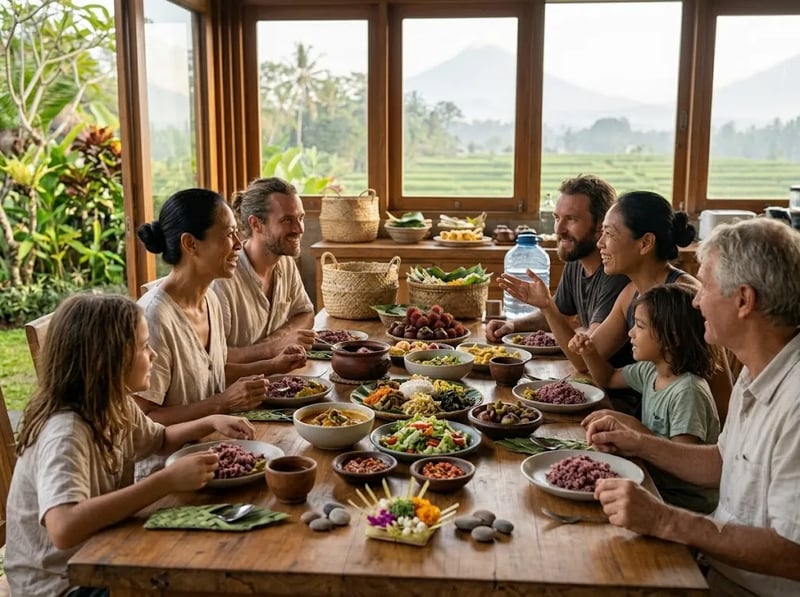
On a retreat, everyone shares the same daily rhythm: practising, eating, and resting together. That shared structure does the social work for you. Many people arrive alone, so you are never the odd one out, and the environment is welcoming by design.
Choosing the Right Retreat
Look for a small-group setting where connection comes naturally.
Check the daily schedule suits you, with a balance of practice and free time.
Read reviews for the atmosphere, not just the facilities.
Consider a beginner-friendly retreat if it is your first. If a change of scenery appeals, our Sakura Zen retreat in Kyoto, Japan is a small-group option worth a look.
Making the Most of It
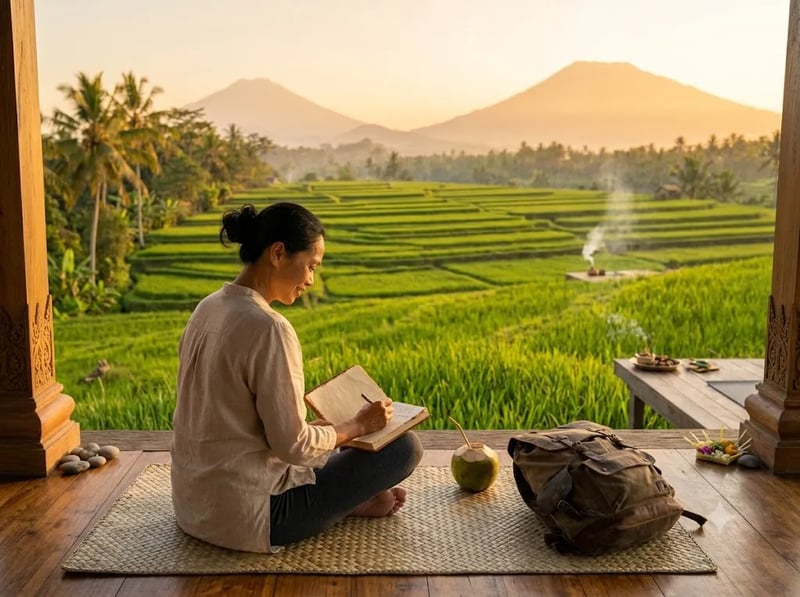
Say yes to shared meals and conversations, but also honour your need for solitude; a retreat is a rare chance to be with yourself. Keep a journal, rest fully, and resist the urge to over-schedule your free time. The space is part of the point.
Staying Comfortable and Safe
Choose a reputable retreat with clear communication and good reviews. Share your travel plans with someone at home, keep copies of your documents, and trust your instincts. With basic preparation, solo retreat travel is safe and freeing.
Practical safety for solo travellers, especially women
Safety worries are usually the loudest voice talking you out of going alone, so it helps to answer them with practical habits rather than either alarm or blind reassurance. A retreat is one of the more protected ways to travel solo, since you are arriving into an organised setting with staff, a schedule, and other guests, but a little sensible preparation still pays off.
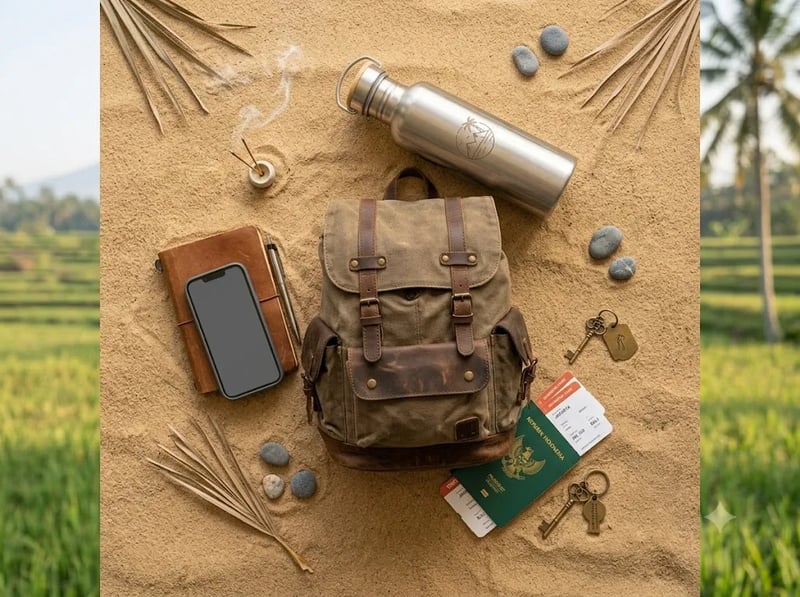
Start before you leave. Share your itinerary and the retreat’s address with someone at home, keep digital and paper copies of your passport and booking, and set up a local SIM or eSIM so you have data from the moment you land. Arrange your airport transfer through the retreat rather than sorting a ride while tired and disoriented, which removes the one moment solo arrivals most often feel exposed.
Once you are there, the ordinary rules travel well. Trust your instincts, keep an eye on your drink and your belongings, dress with awareness of local custom, and favour registered rides through apps like Grab and Gojek over unmarked cars. Women travelling alone in Bali generally report feeling comfortable and welcomed, and choosing a reputable, well-reviewed retreat with a settled community around it is the single biggest thing you can do for your own peace of mind. To pack for that setting without over-thinking it, our guide on what to pack for a yoga retreat in Bali covers the practical kit.
Meeting people without any pressure
One of the quiet gifts of a retreat is that the hardest part of solo travel, meeting people, is largely solved for you. A shared schedule of classes, meals, and activities means connection happens naturally, without you having to engineer it or walk into a room of strangers cold.
Communal meals do most of the work. Sitting down to breakfast or dinner at a shared table turns fellow guests into familiar faces within a day, and because everyone has arrived for the same reasons, conversation tends to start from common ground rather than small talk. Many solo travellers are surprised by how quickly a group of strangers becomes a temporary little community.
The important part is that none of it is compulsory. If you want company, it is right there at the table and in the shala, but if you need a quiet afternoon to yourself, stepping back is completely normal and nobody reads it as rude. That balance, easy company when you want it and genuine solitude when you do not, is exactly what makes a retreat such a forgiving place to travel alone.
Managing the nerves before you go
Almost everyone who books a solo retreat feels some version of the same nerves beforehand, so if you are anxious about it, you are in very normal company. The worries usually cluster around a few themes: eating alone, not knowing anyone, and a fear of missing out on the shared experiences that couples and friends seem to have.
It helps to name what is actually underneath the nerves. Fear of eating alone tends to dissolve on day one, because retreat meals are communal by design. Fear of not knowing anyone forgets that everyone else arriving solo feels exactly the same, which makes strangers unusually quick to be kind. The fear of missing out is often the opposite of the truth, since travelling alone means every choice about how you spend your time is yours, with no compromise and no one else’s mood to manage.
There is also a deeper reason the nerves are worth pushing through. Solo travel asks you to rely on yourself and to sit with your own company, which is uncomfortable at first and quietly transformative by the end. Many people describe returning from a solo retreat more confident than they left, having proved to themselves that they could do the very thing they were afraid of.
Budgeting when it is just you
Travelling solo has one real financial catch worth planning for: you carry costs alone that couples and friends split. Understanding where that bites, and where it does not, keeps a solo trip from feeling like a penalty.
The main one is the single supplement. Many retreats price on shared, twin-occupancy rooms, so choosing a private room as a solo guest often adds a surcharge to cover the space you are not sharing. You have two honest options: pay the supplement for privacy, or opt into a shared or dormitory room where you split the cost and, as a bonus, meet people fast. Neither is wrong, and which suits you depends on how much you value a room of your own.
Beyond the room, solo travel is often more affordable than people expect, because a good retreat bundles accommodation, meals, and classes into one price, so your biggest daily expenses are fixed and predictable. Your variable spending, transport, day trips, and the odd massage, can sometimes be shared with other guests you meet, which trims the extras. If you are weighing a longer, more structured trip against a short retreat, our 200-hour yoga teacher training is priced as one package with tuition and three meals a day, which makes solo budgeting simpler than piecing a trip together yourself. Here is what a 200-hour course in Bali costs, counted line by line.
Coming home after a week on your own
The return is the part of solo travel that nobody prepares for, and it catches people out more often than anything that happens on the trip. A week of quiet, structure and unfamiliar company is a genuine shift, and going straight back into an ordinary week is more jarring than it sounds.
Give yourself a day at home before anything else. Not a day of catching up on everything, an actual day. Unpack, sleep, get outside for a walk, eat something ordinary. People who land and return to work the next morning consistently report that the trip evaporated within days, and the difference between that and a day’s buffer is substantial.
Expect a flat patch somewhere in the first fortnight. It usually arrives once the photographs are shared and the novelty of being back has worn off, and it is a fairly standard response to the ordinary resuming rather than a sign that you have lost something. Knowing it is coming takes most of the sting out of it.
Keep one small thing from the trip, deliberately chosen and small enough to survive a busy week. Ten minutes of practice in the morning, or the early night you got used to. Attempting to import the whole retreat schedule into your normal life fails within a week and tends to take the smaller habit down with it. One thing, kept, does more than five things attempted.
Be prepared for the conversations to be unsatisfying. Most people will ask how it was and want a sentence, and what happened on a good retreat does not compress into a sentence. That gap can leave you feeling oddly isolated just when you expected to feel refreshed. Writing a page for yourself, purely for your own reading, does more than trying to explain it at a dinner table.
Stay in touch with one or two people from the group if you clicked with them, and let the rest go without guilt. Group messages from a retreat are usually lively for a fortnight and quiet thereafter, which is normal and not a verdict on the friendships. One person you keep speaking to is a better outcome than a group chat, and it is often the thing people are most glad of a year later.
The first evening alone is usually the hardest hour of a solo trip, and it passes. Arriving somewhere unfamiliar, tired, with nobody to talk to, is when most people feel the decision most keenly and occasionally wonder what they were thinking. Have a plan for that specific hour rather than leaving it open: somewhere to eat that you chose in advance, a message home, an early night. By the second evening you will know the way to breakfast and one or two faces, and the feeling generally does not return.
A first-day plan that settles the nerves
Almost all of the anxiety of arriving alone is concentrated in the first day, so it is worth planning that day with a little care and letting the rest of the retreat take care of itself. The goal is simple: get yourself fed, oriented, and briefly acquainted with one or two people before you sleep.
Arrive earlier in the day if you can choose. Landing at a new place in daylight gives you time to find your room, walk the property, and locate the practice space and dining area before dinner, which removes the small uncertainties that loom largest when you are tired. If your travel runs late, lower the bar: dinner and bed is a perfectly good first day.
Go to the welcome session or the first shared meal even if you are exhausted, and give it half an hour. You do not need to sparkle. Introducing yourself to the person seated next to you, asking where they travelled from, and letting the conversation do what it does is enough to break the seal, and tomorrow becomes easier for it.
Then let yourself off the hook. Jet lag and arrival fatigue distort mood reliably, and a wobbly first evening says nothing about the week ahead. Unpack properly so the room feels like yours, set out what you need for the morning class, and sleep. Most solo travellers report that the strangeness they braced for was gone by the second breakfast.
If it helps, decide one small default in advance: which class you will attend first, or where you will sit at dinner. Decisions cost more when you are new and tired, and pre-making a few of them keeps the first day light.
Sharing a room, and when to pay for your own
Most retreats price a shared twin room as standard and charge a supplement for a single. On a week-long stay that supplement is often a few hundred dollars, and it is the decision solo travellers agonise over most.
Sharing works better than people expect. You are both there alone, both slightly nervous on the first evening, and the room gives you a natural person to walk to breakfast with. A good number of the friendships that come out of a week away start with the person on the other bed.
It works less well if you sleep badly, if you need quiet to settle after a heavy day, or if you are travelling partly to be by yourself. Those are all reasonable, and none of them requires an explanation. If any is true, pay the supplement and treat it as part of the cost of the trip rather than an indulgence.
Ask two questions before you decide. Whether roommates are matched or simply assigned, and whether there is an ensuite or a shared bathroom down a corridor. The bathroom answer changes the experience more than the bed arrangement does.
Ask also what happens if the pairing does not work. Any retreat that has run for a while will have a plan, usually a spare bed somewhere, and the way they answer tells you how they handle discomfort generally. A vague answer is worth noticing, and it is part of working out whether the trip is the right call at all.
If you do share, agree on the small things in the first hour: lights out, alarms, whether the fan stays on. Two minutes of slightly awkward conversation on day one prevents a week of quiet resentment, and it is far easier to raise before anything has gone wrong.
Train With Loka
A solo retreat or immersion can be a turning point. If you want to go deeper than a retreat, our 200-Hour Yoga Teacher Training welcomes solo travellers into a close community. For packing, see what to pack for Bali.
Frequently Asked Questions
Is it awkward to go to a yoga retreat alone?
Rarely. The shared daily rhythm connects everyone, and many people arrive solo, so you fit right in.
Will I have to share a room?
It depends on the retreat. Most offer both shared and private options, so check when booking.
Is solo retreat travel safe?
Yes, with basic precautions: choose a reputable retreat, share your plans with someone at home, and keep your documents safe.
What if I want time alone?
Good retreats build in free time. Honour your need for solitude alongside the shared activities.
Is it normal to feel nervous about going to a yoga retreat alone?
Completely normal. Nearly everyone who books a solo retreat feels some anxiety about arriving alone, eating alone, or not knowing anyone. Those worries usually ease within the first day, because retreats are built around shared meals and classes, and most other guests have arrived on their own with exactly the same feelings.
How do I avoid the single supplement on a solo retreat?
Choose a retreat that offers shared or twin rooms and opt to share rather than book a private room, which removes the surcharge and often helps you meet people quickly. Some retreats waive or reduce the supplement in quieter seasons, so it is always worth asking directly before you book.
The Loka Newsletter
Enliven your routine with exclusive spiritual content. There’s so much to learn.

Find us on Instagram
@lokayogaschool