What to Pack for a Yoga Retreat in Bali: The Complete Checklist
Packing for a yoga retreat in Bali is about being prepared without overpacking. The climate is warm and humid, the practice is daily, and the setting is relaxed. Here is a practical checklist so you arrive with exactly what you need.
Timing shapes your packing list too, so it helps to check the best time to visit Bali for yoga. And if you are heading over alone, our guide to travelling solo to a retreat covers a few extra essentials.
Clothing for the Climate
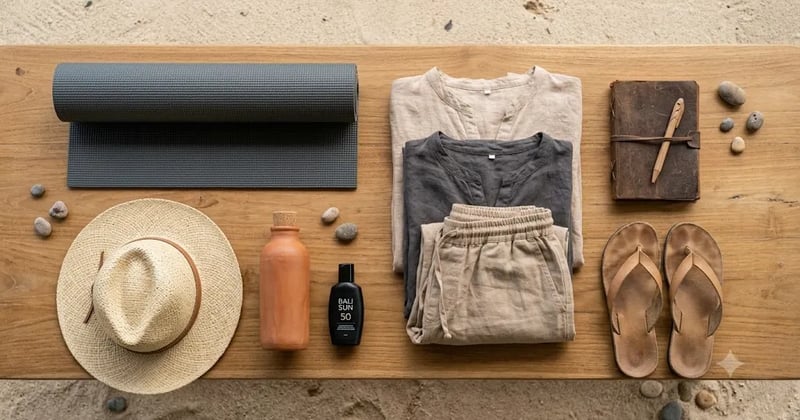
Bali is warm year round, so pack light, breathable clothing. Bring enough yoga wear for daily practice, plus loose, comfortable clothes for the rest of the day. Include one light layer for cooler evenings, a swimsuit, and modest clothing (covered shoulders and knees) for visiting temples.
Your Yoga Kit
A travel yoga mat if you prefer your own, though most retreats provide mats.
A light shawl or wrap for meditation and relaxation.
A reusable water bottle to stay hydrated in the heat.
Health and Wellbeing
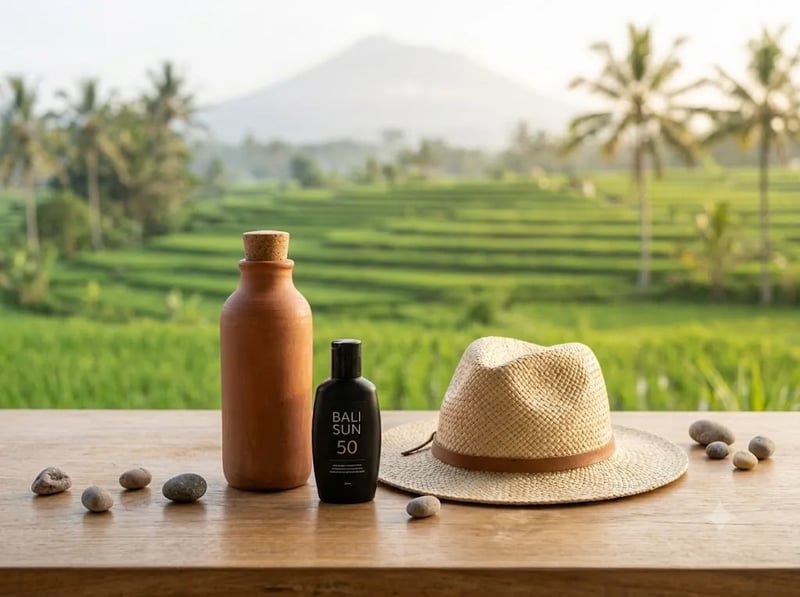
High-SPF reef-safe sunscreen and insect repellent.
Any personal medications, plus a basic first-aid kit.
Electrolytes or rehydration sachets for the climate.
Tech and Practical Items
A universal travel adapter (Bali uses the European two-pin plug).
A portable power bank.
Copies of your travel documents and insurance details.
The Things People Forget
A quick-dry towel, a journal for reflection, and cash in small notes for local markets and offerings. Leave room in your bag, because you will almost certainly want to bring something home.
A room-by-room checklist you can pack from
Lists are easier to trust than paragraphs when you are standing over an open suitcase the night before a flight, so here is the whole kit laid out the way you would actually gather it. Work through it drawer by drawer rather than trying to hold it all in your head, and tick things off out loud if that helps.
Start with what goes on your body most days. Everything else is built around this core, and if you only nailed this section you would still be comfortable for a fortnight in the tropics.
- Five to seven breathable tops, a mix of loose and fitted
- Two or three pairs of leggings or movement shorts you have already practised in
- One light long-sleeve layer for early mornings and air-conditioned buses
- A sarong, which doubles as a beach layer, a temple cover and a blanket
- Swimwear, two sets, because one is always drying
- Sandals you can walk in, plus thongs for around the pool
Then the practice and self-care pile, which is smaller than most people fear. Your studio will have mats and props, so you are packing for the gaps rather than the whole kit.
- A quick-dry towel and a small hand towel for sweaty sessions
- Reef-safe sunscreen and an after-sun or aloe
- Insect repellent, ideally one you have used before
- A refillable water bottle
- Any supplements or medication in their original packaging
Finally, the small things that make a room feel like yours: an eye mask, earplugs, a journal, and a book you will genuinely read. That is the retreat sorted. Everything past this point is refinement.
What to leave at home
The most common packing mistake is not forgetting something, it is bringing far too much. Bali is warm, casual, and forgiving, and a heavy bag becomes your problem every time you change accommodation or climb into a small car with three other people.
Leave the “just in case” wardrobe behind. You will not need heels, a blow dryer, a full make-up kit, or five going-out outfits, because retreat days run on comfort and most evenings end early. Hair straighteners rarely survive the humidity anyway, and many properties run on power that struggles with high-draw appliances.
You can also skip bulky yoga props. A quality studio provides mats, blocks, bolsters, and straps, so a travel mat is optional rather than essential, and hauling your own bolster across the world is effort you will resent by day two. If you love your own mat towel, bring that instead: it is light and it earns its place.
Toiletries are the other trap. You do not need full-size bottles of anything, since shops in Bali stock the same brands you use at home, often more cheaply. Decant what you love into small bottles, and buy the rest when you land. A lighter bag leaves room for the things you will actually want to carry back.
Dressing with respect at temples and in the village
Bali is a deeply religious place, and the way you dress signals whether you understand that. In everyday village life a relaxed standard applies, but the moment you step towards a temple, a ceremony, or a family compound, modesty is expected rather than optional.
The simple rule for temples is shoulders and knees covered. Most temples ask visitors to wear a sarong tied at the waist, and many will lend or hire one at the entrance, but carrying your own means you are never caught out. A light scarf or the sarong from your packing list covers you in seconds, so keep one in your day bag whenever you leave the property.
Beyond the temple gate, a little awareness goes a long way. Walking through a village in swimwear or very little clothing reads as disrespectful, even if nobody says so, and covering up between the beach and your room is a small courtesy that locals notice and appreciate. Women who are menstruating are traditionally asked not to enter temple grounds, a custom worth knowing before you find yourself at an entrance.
None of this needs to weigh on you. Pack one modest outfit you feel good in, keep a sarong within reach, and you will move through Bali as a considerate guest rather than an obvious tourist.
Packing for the season you are arriving in
Bali has two seasons, and they ask for slightly different bags. The dry season, roughly April to October, is the easy one: light clothing, plenty of sun protection, and layers only for cool mornings. The wet season, November to March, is where people over-prepare in the wrong direction, imagining monsoon washouts that rarely arrive.
Wet season in practice means warm, humid days broken by heavy afternoon showers that often pass within an hour. You are not packing for a cold, grey winter, you are packing to stay dry and comfortable through short bursts of rain. A compact travel umbrella, a light rain jacket, and quick-dry clothing that will not stay damp for days are worth their space, and a dry bag for your phone and journal saves a soggy scooter ride from ruining anything.
Footwear shifts a little too. Paths and steps get slippery when the rain comes, so sandals with some grip beat smooth-soled slides during the wetter months. If you are unsure which window you are travelling in and how it shapes the trip, our guide to the best time to visit Bali for yoga walks through both seasons in more detail.
Whichever season you land in, humidity is the constant. Natural, breathable fabrics beat synthetics that trap heat, and anything you can rinse in a sink and hang to dry overnight will serve you far better than a bag full of clothes that need real laundering.
A few things that make solo arrivals smoother
If you are coming on your own, your packing list barely changes, but a handful of small additions make the first day feel calmer. Arriving somewhere new by yourself is easier when you are not fumbling for essentials in an unfamiliar airport.
Keep a slim cross-body bag or secure day bag for your passport, a printed copy of your booking, some cash in small notes, and a local SIM or eSIM set up before you leave home. Having data the moment you land means you can message the retreat, order a ride, and orient yourself without stress. A portable charger keeps all of that running through a long travel day.
It also helps to pack one thing that makes a shared space feel private and yours: a good eye mask, your own pillowcase, or a scent you associate with winding down. Small comforts do a lot of quiet work when you are settling into a new place alone. If you are weighing up the wider experience of coming by yourself, our piece on travelling solo to a yoga retreat covers the emotional side as thoroughly as this covers the practical one.
Packing for the journey home as well as the way out
Nearly every packing list is written for the outbound flight and stops there. The return trip is where people run into trouble, and a small amount of planning before you leave saves a good deal of awkwardness at the airport.
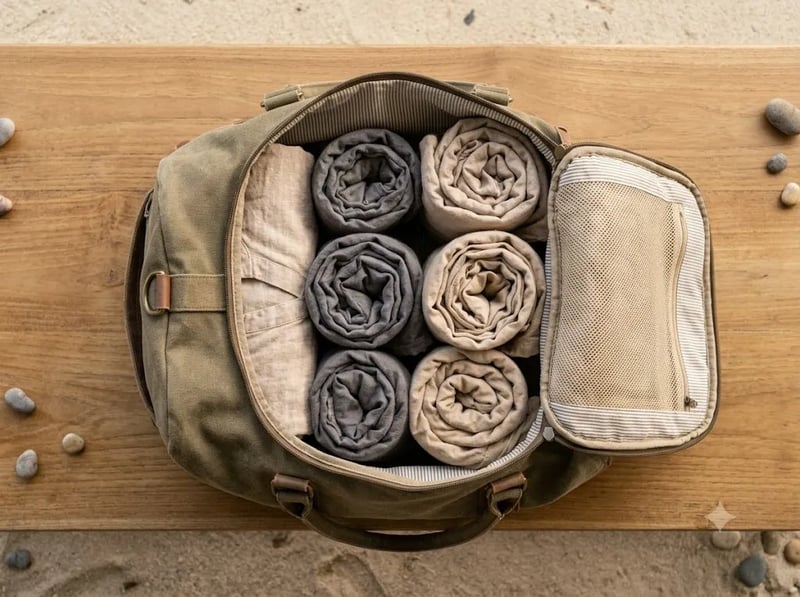
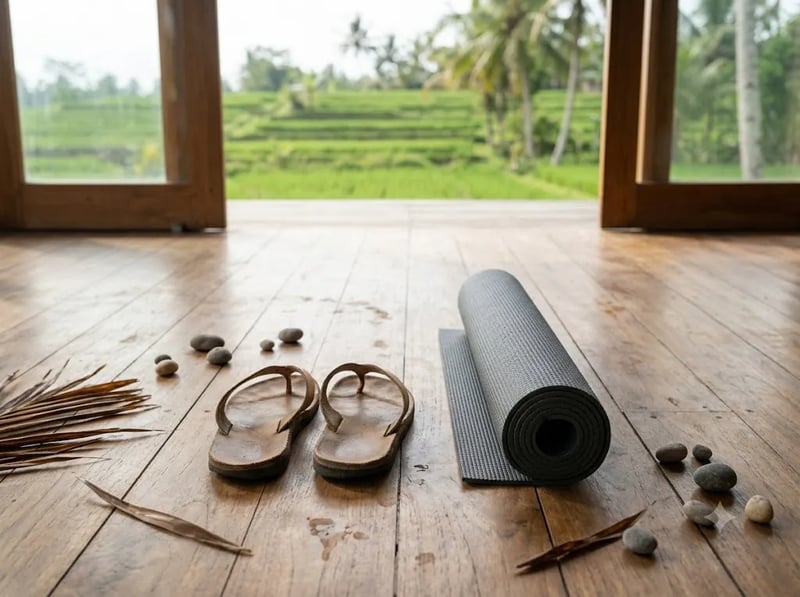
Leave room, and know roughly how much. Most people come home with noticeably more than they left with, between gifts, textiles, a few things bought at a market and anything given to you during the stay. A third of your case free on the way out is a reasonable allowance. A light foldable bag in the bottom of your luggage costs nothing to carry and solves the problem outright if you misjudge it.
Check the baggage allowance on your return leg specifically, because it is often different from your outbound one, particularly on connecting or codeshare flights. Weighing your case is much cheaper at home than at a check-in desk, and a small luggage scale is worth the space it takes.
Think about what will not travel well. Anything liquid needs to go in the hold and inside two bags, because pressure changes are unkind to lids. Wooden and woven items are fine, but check whether your own country has restrictions on untreated wood, seeds, plant material or shell, as several do and the rules are enforced. If you are unsure about a particular item, declare it rather than risk it.
Plan for damp. Anything worn or washed in a humid climate in the final couple of days will not be properly dry when you pack it, and a sealed case of slightly damp cotton smells memorable by the time you land. A couple of dry bags or a large plastic bag keeps the damp things away from everything else.
Then leave a margin on the last day. Set out anything you are giving away or leaving behind the night before rather than sorting it in the last hour, keep documents, medication and one change of clothes in your hand luggage in case a connection goes wrong, and take a photograph of your packed case. Arriving home is easier when the last morning was calm, and the last morning of a retreat is a poor time to be making decisions in a hurry.
It is worth knowing what to leave at home too. Heavy shoes, a thick jumper, more books than you will read, hair dryers and travel irons that will not match the voltage, and most of the clothing people pack for evenings that turn out to be casual. Anything valuable or sentimental is better left behind entirely, since retreat accommodation is rarely designed for securing things. Most people wear roughly a third of what they bring and buy a sarong in the first week that then does the work of several items. Pack for the week you will actually have.
What to buy once you land instead of carrying it
Half the weight in most suitcases arriving in Bali is things that are cheaper and easier to buy here. Working out which is which before you close the bag saves you a checked bag fee and a fair amount of money.
Buy on arrival: sunscreen, insect repellent, shampoo and soap, a sarong, flip flops, a hat, a reusable water bottle, and any beach towel you were planning to bring. Canggu, Ubud, and Tabanan all have supermarkets and small shops stocking the international brands, and the local equivalents are usually fine. Fresh fruit, coconut water, and snacks are everywhere and cost very little. A sarong bought in a village shop for a few dollars will serve you better at a temple than anything you brought from home.
Bring from home: prescription medication in its original packaging with the prescription, contact lenses and solution, any specific supplements you rely on, and a mat if you are particular about yours. Most retreats provide mats, so ask before giving up the space. Bring your own good sports bras and any technical clothing in sizes you know fit, as the range stocked locally is limited at the larger end. Bring a proper rain jacket in the wet season rather than trusting a poncho.
Sunscreen deserves its own note. It is easy to find, but high-factor options can be expensive and reef-safe formulations are harder to track down, so if either matters to you, carry one bottle and buy the rest here.
The other thing worth leaving room for is the trip home. People almost always go back heavier than they arrived, and if you travelled with a full bag there is nowhere to put any of it. Half-empty out and comfortably full back works better than the reverse. If you are still deciding on dates, the best time to visit Bali for yoga will change what you pack more than anything else on this list.
Train With Loka
The right preparation lets you arrive open and ready to practise. If a Bali immersion is calling you, our 200-Hour Yoga Teacher Training in Kedungu, Tabanan is a deep, four-week experience. Still deciding? Read do you really need a yoga retreat.
Frequently Asked Questions
Do I need to bring my own yoga mat to Bali?
Most retreats provide good mats. Bring your own only if you strongly prefer it; a travel mat saves space.
What should I wear for temple visits?
Modest clothing that covers the shoulders and knees. A light sarong is useful and easy to pack.
Do I need cash in Bali?
Yes, carry some cash in small notes for markets, offerings, and small vendors, alongside a card.
What is the plug type in Bali?
Bali uses the European style two-pin plug, so bring a universal adapter.
What should I not pack for Bali?
Heavy clothes, hair tools that fight the humidity, full-size toiletries, and your own props: studios provide mats and bolsters, and shops stock the rest cheaply. The bag you want is half empty, breathable, and easy to carry up a guesthouse staircase.
What should a woman pack for a yoga retreat in Bali?
The same breathable practice clothes and sun protection everyone needs, plus a sarong or light scarf for temples, modest cover-ups for village walks, and any personal-care items you prefer from home. Bali stocks most toiletries, so pack light and buy the bulky things once you arrive.

The Loka Newsletter
Enliven your routine with exclusive spiritual content. There’s so much to learn.

Find us on Instagram
@lokayogaschool