Last updated on October 22nd, 2026 at 08:45 am
Yin Yoga vs Vinyasa: Which Style Is Right for You?
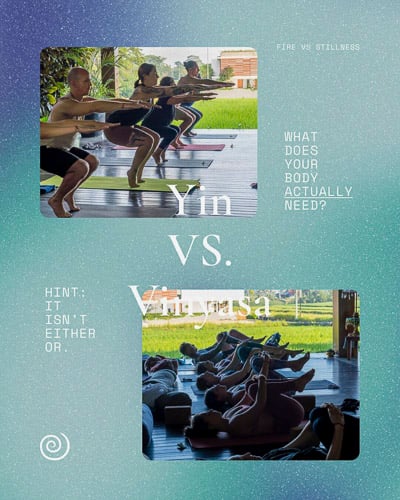
Yin yoga vs vinyasa comes down to what each style loads. Vinyasa links postures to the breath in continuous movement, builds heat, and works muscle; poses last a breath or two. Yin holds passive floor poses for three to five minutes with muscles relaxed, stays cool, and trains your tolerance for deep stretch in the hips, spine, and shoulders. Most people need both.
Yoga comes in many styles, and no single style suits everyone. Some practices centre on dynamic movement, others on stillness and long, gentle holds. Yin yoga vs Vinyasa is the comparison students ask about most, and the honest answer is more useful than declaring a winner.
Yin and Vinyasa are not competitors. They target entirely different tissues, nervous system states, and aspects of the human experience. Understanding the distinction will help you practise both more intelligently, and use each one for what it actually does well.
This guide covers the origins of both styles, what each one does in the body, who each suits best, and how they complete each other.
Yin Yoga vs Vinyasa: The Core Difference Is Tissue Type
This is the most important thing to understand about the Yin versus Vinyasa distinction, and most people never learn it.
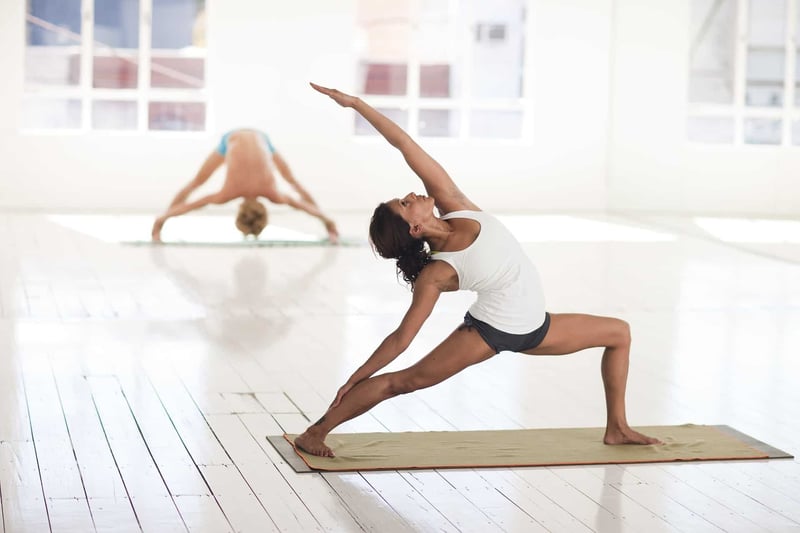
Vinyasa, like all Yang-style practices, targets muscle tissue. Muscles are elastic, respond to rhythmic loading and release, and adapt quickly. A consistent Vinyasa practice will improve muscular strength, endurance, and the kind of functional flexibility that muscles contribute.
Yin targets connective tissue: fascia, ligaments, tendons, and joint capsules. These structures are relatively inelastic, have limited blood supply, and do not respond to the muscular contractions of a Yang practice. The only way to create positive adaptation in connective tissue is through sustained, moderate, passive stress applied over time. That is exactly what Yin provides, with poses held for three to five minutes or longer.
This means Yin and Vinyasa are not alternative versions of the same thing. They are complementary practices targeting different biological structures.
The Difference Between Yin Yoga and Yang Yoga
Yoga’s many styles sort into two broad families. Yang-style yoga focuses on dynamic movement and strong standing work, while Yin offers seated and supine positions held softly for minutes at a time. Traditional Chinese philosophy describes these as the two primary qualities present in everything: receptive and active, still and dynamic, cool and warm. Neither is superior. Health requires both.
Most modern yoga styles, and most modern lifestyles, are firmly Yang: active, heating, rhythmic, effortful. Yin provides the essential counterbalance. A body that only ever does Yang practice becomes tight, depleted, and brittle over time. A body that only does Yin lacks the strength, heat, and cardiovascular capacity it also needs.
What Is Yin Yoga?
Yin yoga draws from the Taoist tradition, specifically Tao Yin, long-held stretching practices that were part of Kung Fu training for centuries. Paulie Zink introduced Tao Yin to Western students in the 1970s, blending it with elements of Hatha yoga. His student Paul Grilley is considered the mind behind modern Yin yoga: he merged Zink’s practice, Hatha yoga, and the Chinese meridian system into the style taught today.
In a Yin class you come into a pose with as little muscle engagement as possible, find a moderate edge, not a maximum stretch, and stay. Most poses are seated or supine and held anywhere from two to twenty minutes, with three to five being typical.
The stillness is harder than it sounds. The physical sensation of sustained tissue stress, combined with the absence of movement to distract from your thoughts, makes Yin a challenging practice. It is often described as more psychologically demanding than a vigorous physical class.
Connective tissue does adapt to sustained load, but slowly: the sports-medicine consensus is that fascia and tendon remodel over months of repeated loading (Zügel 2018; Kjaer 2004). What changes first in yin, within weeks, is your tolerance for the stretch. Both matter, and the research section below explains the difference.
The long holds and slow exhales favour a rest state: across trials, yoga practices are associated with lower cortisol, heart rate, and blood pressure (Pascoe 2017). Yin is the style built around that state. For desk-bound workers with hunched shoulders, people in high-pressure seasons of life, and athletes who need genuine recovery, this is precisely the medicine.
Yang Yoga: Hatha, Vinyasa, Ashtanga, Power, Kundalini, Bikram
Vinyasa is the most popular member of the Yang family, and its history is richer than most class descriptions suggest. The classical roots reach back to Patanjali, who systematised yoga as a discipline of mind and body, though flowing, breath-linked sequences are a modern development. Vinyasa’s modern lineage runs through T. Krishnamacharya, whose students BKS Iyengar and Sri Pattabhi Jois developed parallel traditions emphasising breath-synchronised movement. Western students of Jois carried the practice out of Mysore from the early 1970s.
The term Vinyasa refers to the linking of postures through breath. For the fuller definition, history, and what a typical class contains, read what vinyasa yoga is, then come back to the comparison. Inhale opens, exhale folds or releases. Practitioners describe it as riding the breath: a seamless flow of movement in which the mind focuses and the body works. A Vinyasa class is physically active and cardiovascularly demanding. The continuous movement generates internal heat, which serves both physical and spiritual purposes. Physically, the heat increases tissue pliability and circulation. In yogic terms, the heat is tapas, the purifying fire of disciplined effort.
Vinyasa is excellent for building strength, improving cardiovascular fitness, and developing the coordination of breath and body that experienced practitioners describe as a meditative state. It is stimulating to the sympathetic nervous system, which means it energises. If the pace feels like a workout at first, do not let that discourage you: the sync of breath and movement arrives with practice, and restless minds often settle faster in motion than in stillness.
For people with sedentary lifestyles, desk-bound work, or low energy states, Vinyasa provides the activation and heat their system needs. For people who are already depleted, inflamed, or in a chronic high-stress state, adding more Yang practice can compound the problem.
Vinyasa Yoga Is Perfect for You If…
- You love dynamic, fluid movement and want an athletic practice
- You want to build strength, stamina, and cardiovascular endurance
- You are working through low energy or a flat mood and need activation
- You get bored easily and enjoy creative, music-driven sequences
- You want to develop breath-body coordination
- You are new to yoga and want a physically engaging entry point
Yin Yoga Is Perfect for You If…
- You want to slow down and release deep-seated tension
- You carry chronic tightness in your hips, lower back, or shoulders
- You want to increase flexibility and joint mobility, or your gains from dynamic practice have plateaued
- You train hard in sport and need genuine recovery
- You are in a high-stress period and need to downshift your nervous system
- You want a meditative practice that challenges your ability to be still
Yin and vinyasa side by side
| Yin yoga | Vinyasa yoga | |
|---|---|---|
| Pace | Still; perhaps 8 to 12 poses in a class | Continuous; one movement per breath |
| Hold time | 3 to 5 minutes typical, up to 10 for experienced students | 1 to 5 breaths; longer only in peak poses |
| Target tissues | Passive stretch of the hip, spine, and shoulder regions; stretch tolerance changes first, tissue length does not | Muscle strength, endurance, coordination; cardiovascular load |
| Heat | Cool; muscles relaxed; a blanket helps | Warm to hot; internal heat from continuous work |
| Nervous system | Downshifts; long exhales and stillness favour rest | Activates; energising during, calming afterwards |
| Props | Bolsters, blocks, blankets, used generously | Optional; blocks and a strap |
| Who it suits | High-stress periods, chronic tightness, athletes in recovery, anyone who finds stillness hard and wants to train it | Low energy or low mood, people who want a physical challenge, minds that settle faster in motion |
| Injury notes | Do not load an acute injury or a hypermobile joint without guidance; come out early if sensation is sharp, electric, or in the joint line | Wrist, shoulder, and lower-back strain from repeated chaturanga and fast transitions; reduce volume before changing form |
| Learn to teach it | Online Yin Yoga Teacher Training | 200-hour Yoga Teacher Training in Bali |
What Long Holds Actually Change
Yin is usually explained as stretching connective tissue rather than muscle. That is a reasonable teaching image, and the research underneath it is more careful than the slogan.
Start with what a held stretch does not appear to do. When range of motion improves after a stretching programme, the gain is not explained by measurable change in muscle and tendon structure. What changes first is tolerance: how much sensation you accept before your nervous system says stop. That is a real adaptation, and it is a nervous-system one.
Fascia is also not the inert wrapping it is often drawn as. It is densely supplied with sensory nerve endings, and stimulating the thoracolumbar fascia produces pain and referral patterns of its own. So when a long hold feels significant, that is not imagination. It is a heavily innervated tissue reporting.
Be sceptical of the tidier claims. Of the myofascial chains commonly taught as anatomical fact, a systematic review found only some are supported by dissection evidence. Yin works. It works through sensation, tolerance and time rather than through remodelling you on the mat.
How Do Yin Yoga and Vinyasa Complete Each Other?
Yin and Yang energies coexist, and paired well they create balance. Yin restores flexibility, calm, and downward regulation; Vinyasa builds energy, strength, and focus. Many shalas teach hybrid classes that open or close the active Yang sequence with long Yin holds, bracketing effort with restoration.
The ideal practice contains both. Alternate them across your week, or stack them: Vinyasa in the morning to mobilise, Yin in the evening to unwind. If you find yourself drawn deep enough into either style to teach it, it is worth reading the truth about working in the yoga industry before you take the leap.
Building a Week That Uses Both
Most people do not have to choose. The useful question is how to arrange both across a week so they support rather than cancel each other.
A workable pattern for someone practising four times a week: two vinyasa sessions on the days you have energy, one yin session on an evening when you do not, and one day of something else entirely or nothing. Put yin after a strong day rather than before one, since long passive holds immediately before dynamic work can leave you feeling less stable rather than more open.
If you are training for something, or coming back from injury, invert the emphasis. Load tolerance is built by the dynamic practice; patience and interoception are built by the still one. Both are trainable and neither substitutes for the other.
Teachers face a further version of this question, because the style you practise and the style you can hold a room in are not automatically the same. Our overview of the main schools and lineages of yoga is a good place to work that out, and our Yoga Alliance certified 200-hour YTT in Bali covers both dynamic sequencing and the slower, more precise end of practice rather than treating them as separate worlds.
When long holds are the wrong choice
Yin is often recommended as the gentle option, which is the wrong frame. A five-minute hold at end range is a demanding load applied to a joint with the muscles switched off, and it does not suit everyone or every week.
If your joints are hypermobile, long passive holds tend to take you further into ranges you already have and cannot control. The useful work for a hypermobile body is usually the opposite: mid-range positions held with the muscles engaged, and strength through the range you can already reach. Sensation is easy to find in those bodies and is not the point.
If something is recently injured or currently irritated, use next-day soreness as the test rather than how the pose felt at the time. Discomfort that settles within an hour is usually fine. Discomfort still there the following morning means the load was too long or too deep.
Nerve symptoms are a stop signal rather than a stretch. Pins and needles, numbness, or a line of electrical pain down the leg in a forward fold is a nerve being compressed or tensioned, and holding that for four minutes makes it worse, not looser.
Ligament laxity during pregnancy and in the months after birth changes what end range means, and the ranges available then are not ranges the joint is ready to be loaded in.
One thing worth naming plainly: the mechanism usually offered for yin, that long holds remodel connective tissue, is not well established in living people. Treat the practice as a way to work near end range with the muscles quiet, which it clearly is, rather than as a tissue-remodelling protocol. If any of the signals above turn up repeatedly, a physiotherapist is a better next step than a longer hold. Our guide to downward dog alignment applies the same reasoning to an active shape.
Deepen Both Sides With Loka
If Yin is calling you, our Online Yin Yoga Teacher Training covers the anatomy, meridian theory, and sequencing principles that underpin an intelligent Yin practice, and certifies you to teach it, self-paced, over 50 hours.
Prefer the dynamic path? The 200 Hour Yoga Teacher Training in Bali trains you across the full spectrum, Vinyasa included.
Frequently Asked Questions
Can I practise Yin and Vinyasa in the same week?
Yes, and most experienced practitioners do. Alternating between the two gives you the benefits of both tissue types and both nervous system states. Many practitioners do Vinyasa in the morning and Yin in the evening, or alternate days.
What is the difference between hatha, vinyasa, and yin yoga?
Hatha is the umbrella term for physical yoga; in modern studios it usually means slower, alignment-focused classes where poses are held for several breaths. Vinyasa is Hatha’s flowing cousin: postures linked continuously with the breath. Yin sits apart from both: passive shapes held for minutes at a time to target connective tissue rather than muscle. A balanced week can happily include all three.
Is Yin yoga suitable for beginners?
Yes. Yin does not require strength or existing flexibility. It requires a willingness to be still, which is harder for some people than any physical challenge. Beginners often find Yin more accessible than vigorous styles.
Does Yin yoga build strength?
Not significantly. Yin works on stretch tolerance and stillness, not on muscle loading. If building strength is your goal, Vinyasa, Ashtanga, or another Yang practice will serve that better.
Why does Yin yoga feel so difficult?
The difficulty is primarily psychological. Sitting with discomfort without moving, without distraction, and without the endorphin release of vigorous exercise asks you to develop a different kind of mental capacity. This is one of Yin’s most valuable contributions.
How long should I hold Yin poses?
Generally three to five minutes for most people. Holding longer, up to ten minutes, increases the effect on connective tissue but also increases the demand on your ability to stay present. Start with three minutes and extend gradually as your practice develops.
The Loka Newsletter
Enliven your routine with exclusive spiritual content. There’s so much to learn.

Find us on Instagram
@lokayogaschool