Last updated on October 22nd, 2026 at 08:43 am
What Is Hatha Yoga? The Foundation Every Style Is Built On
Hatha yoga is the foundation that almost every modern yoga style grew from. When you take a slower, alignment-focused class that holds postures and pairs them with breath, you are practising Hatha. Understanding it gives you a clearer map of the whole yoga world.
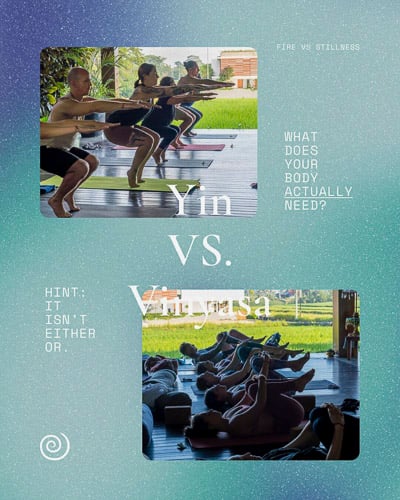
If you want to see how Hatha fits into the wider landscape, our overview of types of yoga schools is a helpful next stop, and if you are curious about a more dynamic alternative, we have Yin yoga vs Vinyasa compared.
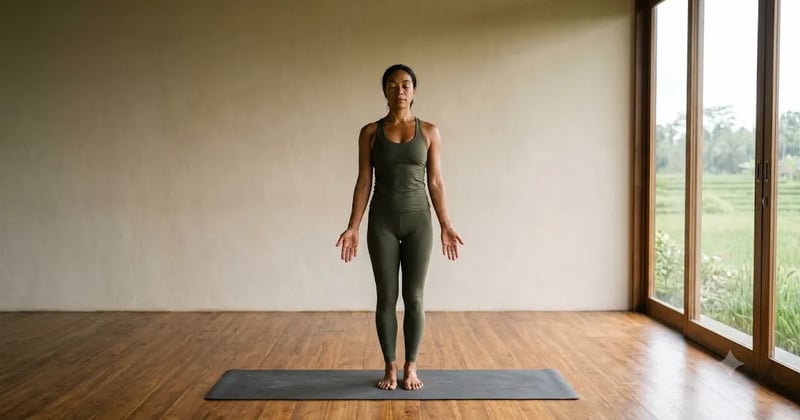
The Meaning of Hatha
The word Hatha is often translated as “forceful,” reflecting the effort the practice asks of you. It is also read symbolically: “ha” as sun and “tha” as moon, the union of opposing energies, active and receptive, effort and ease. Hatha yoga is the practice of bringing these into balance through the body.
A Short History
Hatha emerged from the wider yogic tradition as a system of physical practices, postures, breath control, and cleansing techniques, designed to prepare the body and mind for meditation. Classical texts such as the Hatha Yoga Pradipika codified these methods centuries ago. Almost every physical style practised today, from Vinyasa to Yin, traces its lineage back to this foundation.
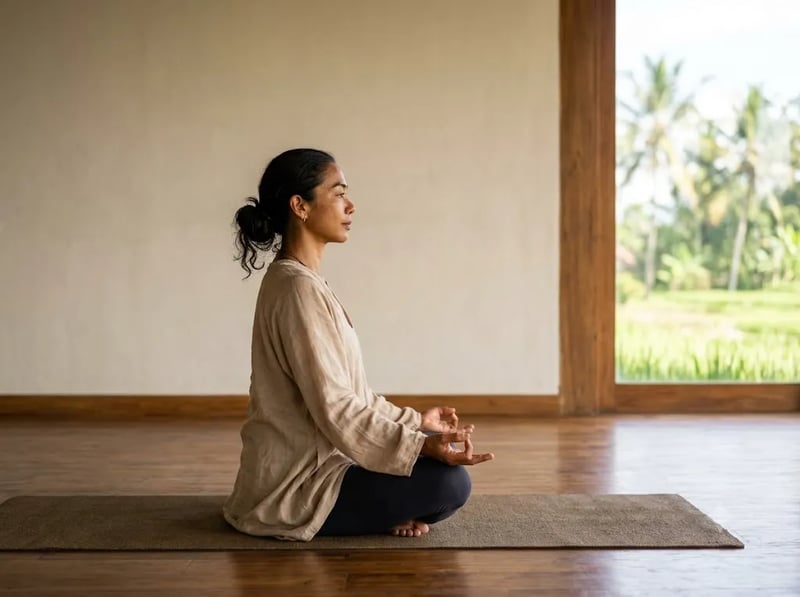
What a Hatha Class Involves
A Hatha class is typically slower and more deliberate than a flowing Vinyasa class. You hold postures for several breaths, with attention on alignment and the breath itself. Expect foundational standing poses, gentle backbends and twists, seated postures, and often some pranayama and relaxation. The pace makes it one of the best entry points for beginners.
The Benefits
Builds strength, flexibility, and balance gradually and safely.
Teaches the breath awareness that underpins every other style.
Calms the nervous system through slower, held postures.
Creates the foundation you need before exploring faster or more advanced practices.
What to expect in your first few classes
Your first classes are likely to feel slower and more deliberate than you imagined, and that is the point rather than a shortcoming. You will spend time setting up each pose, holding it for several breaths, and being asked to notice how it feels, which can be unfamiliar if you are used to workouts that keep you moving.
Expect a fair amount of instruction. A good teacher will walk you into a shape step by step, offer a prop or a gentler version, and encourage you to work at your own edge rather than copy the person next to you. Wobbling, resting, and sitting a pose out are all completely normal on day one.
You may also notice the breath being drawn to your attention again and again. Steady breathing through a held pose is a skill in itself, and it is often the part beginners find hardest and most useful. Give it a few classes before you judge whether the style suits you; the early awkwardness usually fades quickly.
How this foundation shapes other styles
Much of what you learn here carries directly into everything else you might try. The alignment of the standing poses, the way the breath pairs with movement, and the basic vocabulary of shapes are shared ground across most modern styles, so time spent building them is rarely wasted.
In brief, a flowing class such as Vinyasa strings these same poses together at a quicker pace and links each movement to a breath, whereas this style tends to hold them longer with pauses between. That is the whole of the comparison worth making here; if you want it properly unpacked, Loka’s guide to what Vinyasa yoga is covers the differences in full.
The practical upshot is that a solid grounding makes faster styles safer and more rewarding later. When you already know how a pose should feel, you can flow through it without losing the alignment that keeps you sound.
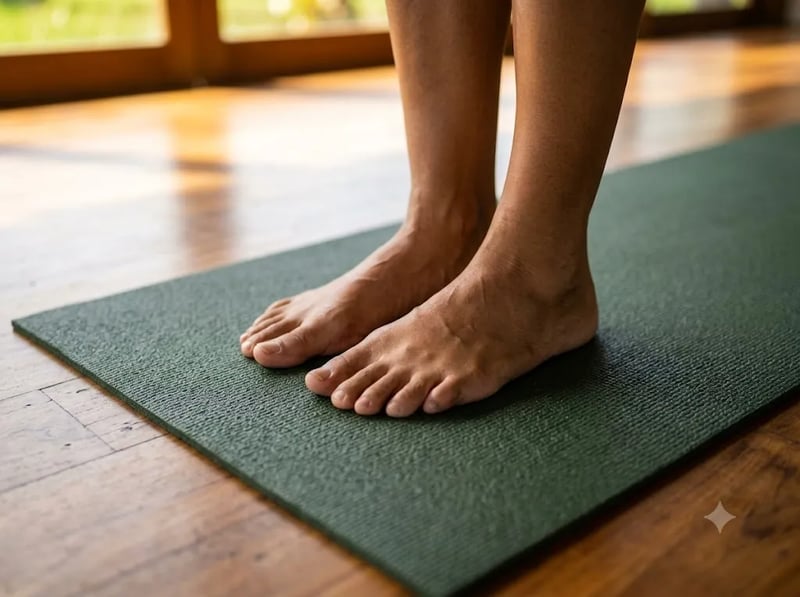
Common misconceptions worth clearing up
The first misconception is that it is only for people who are already flexible. Flexibility is an outcome of practice, not a prerequisite for it, and the props and gentler variations exist precisely so that stiff, strong, or simply new bodies can take part fully.
The second is that a slower practice is not real exercise. Holding poses builds strength, balance, and endurance in ways that are easy to underestimate until you try, and many people are surprised by how worked they feel after a class that never once left them out of breath.
A third is that it is inseparable from a particular religion. The practice has deep roots in Indian philosophy, and those roots are worth respecting, but a modern class is generally taught as a physical and breathing practice you can approach whatever your beliefs. You are free to engage with the philosophy as much or as little as you wish.
How to keep progressing
Progress here is quieter than adding weight to a bar, but it is just as real. It tends to show up as steadier balance, a longer and calmer breath, and poses that once felt precarious starting to feel like home. Learning to spot those small shifts keeps you motivated when nothing dramatic is happening.
Regularity beats intensity. Two or three classes a week will move you along faster than one occasional marathon session, and a short home practice on the days between helps the learning settle. Keep working with a teacher who can correct what you cannot see in yourself, since ingrained habits are hard to fix alone.
When you feel ready, deepen your understanding rather than only chasing harder poses. Learning why a pose is built the way it is, and how breath and attention fit together, is what turns a set of shapes into a practice you can sustain for decades.
Reading a timetable and choosing your first class
Class names are not standardised, and the same word can mean quite different rooms in two studios a street apart. That is the main reason first classes go wrong. A little translation before you book saves you from landing somewhere that does not suit you and concluding the style is not for you.
Treat the class description as more informative than the class name. Look for words about pace and about holds. Slow, gentle, foundations, alignment and beginners all point towards longer holds and more explanation. Flow, dynamic, energetic and level two point towards continuous movement and fewer pauses. If the description says nothing at all, that is itself a signal, and it is worth an email.
Ask the studio two direct questions. How long are the poses held, and how much of the class is spent moving between them. Anyone teaching a class can answer both in a sentence, and the answers tell you more than any label. A third question is worth adding if you have an injury or are pregnant, which is simply whether the teacher is comfortable offering alternatives during class.
Go to the same teacher three times before you decide anything. A first class is spent working out where to put your things, which way to face and what the words mean, and almost nobody enjoys it much. By the third you can actually pay attention to the practice. Judging a style on a single unfamiliar hour is the most common way people decide yoga is not for them.
Arrive early enough to speak to the teacher, and say one useful sentence. That you are new, and anything relevant about your body. That single exchange changes the class you get, because a teacher who knows you are there will offer you options rather than leaving you to guess. It takes thirty seconds and it is the highest-value thing you can do.
Expect to feel uncoordinated, and expect the person beside you to look more competent than you feel. Nobody is watching, everyone was new once, and the awkwardness passes faster than you think, usually within three or four classes. If a room genuinely does not suit you, try another teacher rather than abandoning the style. The variation between teachers is far wider than the variation between the labels on the timetable.
If there is no suitable class near you, online is a reasonable substitute with one caveat. You lose the adjustment and the teacher noticing what you cannot see, which matters most at the beginning. Compensate by choosing recordings that explain rather than simply demonstrate, by setting your screen where you can see it from the floor, and by treating anything that hurts as a reason to stop rather than to try harder. A few in-person classes early on, even if you then practise mostly at home, pays for itself in habits that are hard to acquire alone.
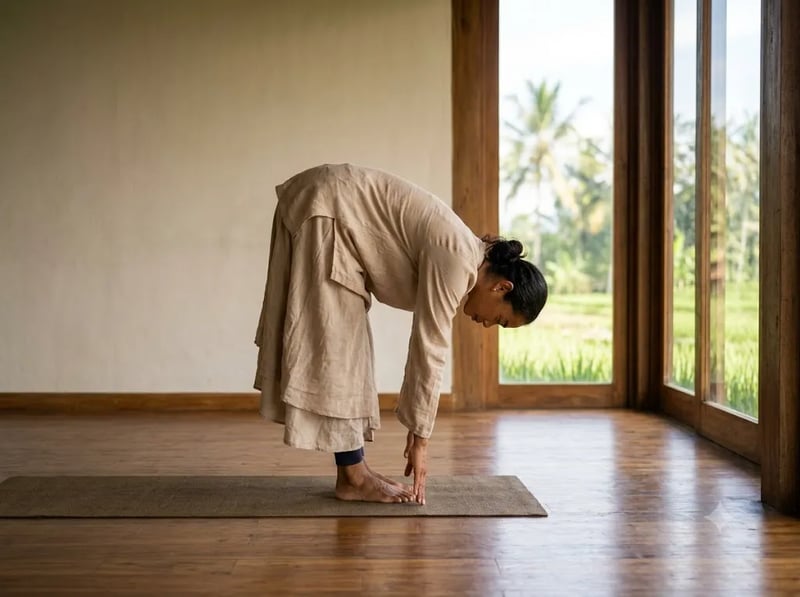
Beyond the poses: breath, stillness, and the older meaning
Most modern classes present this practice as a sequence of postures, and that is only part of what the tradition describes. In the classical texts, the physical postures sit alongside breathing practices, cleansing techniques, and preparation for meditation, all of them serving one purpose: steadying the body so the mind can settle. The poses were never the destination. They were the groundwork.
You will feel traces of this in any well-taught class. The instruction to hold a pose and breathe rather than rush onward comes straight from that older logic, where the value of a posture lay in what it made possible: a body comfortable enough to sit still, and a breath smooth enough to watch. When your teacher closes a class with a few minutes of quiet sitting, that is not filler. It is the point the previous hour was building towards.
The breath work deserves particular attention, because it is the part beginners most often treat as decoration. Slowing and evening out the breath while you hold a demanding shape is a skill with real carry-over: it teaches you to stay calm inside effort, which is useful far beyond the mat. If a class offers a few minutes of seated breathing before or after the postures, take it seriously rather than waiting politely for the movement to resume.
Stillness is the other half. A held pose is a small experiment in staying put: sensation arises, the mind wants to fidget or bail, and you practise remaining steady anyway. Over months this builds a quality that is hard to name but easy to recognise, a kind of unhurried composure that follows you off the mat. The slower pace that makes this style look easy from the outside is precisely what makes it demanding from the inside.
None of this requires you to adopt any belief system. The older framework is there if you want to explore it, and the practice works at face value if you do not. Come for the stretch and the strength, stay for the steadiness, and let the deeper layers reveal themselves at whatever pace suits you.
A good way to test all of this is to pick one class a week and treat it differently: arrive a few minutes early, sit quietly instead of scrolling, follow the breath cues as carefully as the shape cues, and stay all the way through the final rest. Do that for a month and compare it with the classes you took the ordinary way. Most people notice the difference within two weeks, and it is the difference the tradition was pointing at all along.
If you are curious where to begin with the older layers, ask your teacher which breathing practice suits a beginner, and start with five minutes at home on days you do not attend class. Sitting for five minutes after the breathing, doing nothing in particular, completes the miniature version of the full traditional arc: posture, breath, stillness. It is a small daily practice with a very long lineage behind it, and it costs you less time than making a coffee.
What the classical manuals include that a class does not
The medieval manuals that give this practice its name are not sequencing guides. Read them and the proportions are startling: a small number of seated postures, then long sections on cleansing practices, breath retention, locks, gestures, diet, and the conditions the practitioner should be living in.
Postures occupy a few pages. The cleansing practices, which involve swallowing cloth, drawing water through the nose, and abdominal manipulation, occupy considerably more. Modern classes have quietly dropped nearly all of it, and there are good reasons for that. Several of those practices carry real risk without supervision, and a few have no plausible benefit at all.
The texts also assume things a weekly class cannot. A secluded place, a restricted diet, moderate quantity, a teacher present daily, and no other occupation to speak of. They were written for someone whose whole life was arranged around the practice, not for someone arriving after work. The same is true of the dietary instructions, which sit closer to the way the texts talk about quality and food than to anything a nutritionist would recognise.
What survives the translation well is the breath work, the attention it trains, and the insistence that postures are preparation rather than the point. That much comes through intact, and it is the part most worth carrying.
It is worth being careful about how these texts get cited. Dates and authorship are contested, translations differ considerably, and popular summaries often present one rendering as though it were settled. If a claim about what the tradition says matters to you, look at more than one translation before repeating it.
None of this diminishes a modern class. It means the relationship between the manuals and what happens in a studio is a loose one, and anybody telling you otherwise is either simplifying or selling.
Train With Loka
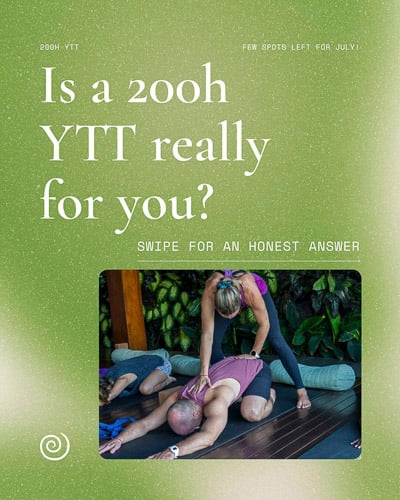
Hatha is where a deep, lasting practice begins. If you want to understand it from the inside, and perhaps one day teach it, our 200-Hour Yoga Teacher Training grounds you in the foundations behind every style. For the philosophy beneath the postures, see our guide to the 8 Limbs of Yoga. Curious about a more energetic, meditative branch of practice? Explore Kundalini yoga.
Frequently Asked Questions
Is Hatha yoga good for beginners?
Yes. Its slower pace and focus on alignment make it one of the best styles to start with.
Is Hatha the same as Vinyasa?
No. Hatha holds postures with the breath; Vinyasa flows continuously from one posture to the next. Vinyasa grew out of the Hatha foundation.
Is Hatha yoga a good workout?
It builds real strength and flexibility, though more gradually than dynamic styles. Its benefits extend well beyond fitness to the breath and nervous system.
What does "ha-tha" mean?
It is read as the union of sun (ha) and moon (tha), the balancing of opposing energies through practice.
The Loka Newsletter
Enliven your routine with exclusive spiritual content. There’s so much to learn.

Find us on Instagram
@lokayogaschool