Yoga for Anxiety: What the Research Actually Shows
Yoga is often recommended for anxiety, and here the enthusiasm is largely supported by evidence. Research consistently links yoga and breath practices with reduced anxiety symptoms. Understanding why helps you use it well, as one tool among several.
Note: this article is for general information and is not medical advice. If anxiety is affecting your daily life, please speak with a qualified health professional.
Much of the science here comes down to polyvagal theory in yoga and breathwork, and the wider benefits of meditation extend well beyond anxiety alone.
Why It Works: The Nervous System
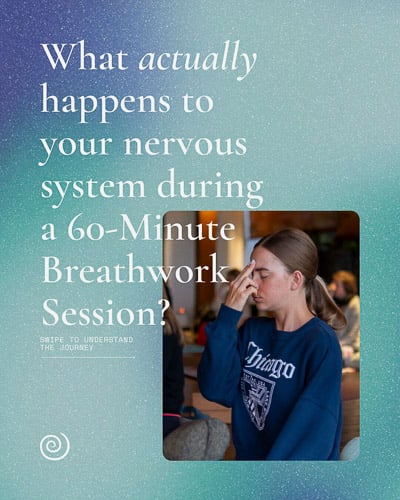
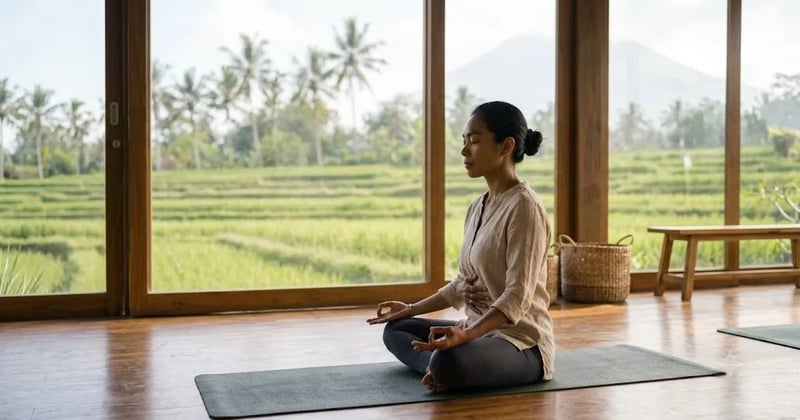
Anxiety is, in part, a nervous system stuck in a heightened, sympathetic state. Slow breathing, longer exhales, and mindful movement stimulate the vagus nerve and shift the body toward the parasympathetic, the rest and digest state. Over time, a regular practice can improve how resiliently your nervous system responds to stress.
What the Evidence Suggests
Studies have found that yoga and breath-based practices can lower self-reported anxiety and reduce markers of stress such as cortisol. The strongest effects tend to come from practices that emphasise slow breathing and body awareness, and from consistency over intensity. Yoga is best seen as a complement to, not a replacement for, professional care where that is needed.
Simple Practices to Try
Extended exhale breathing: inhale for a count of four, exhale for six, for a few minutes.
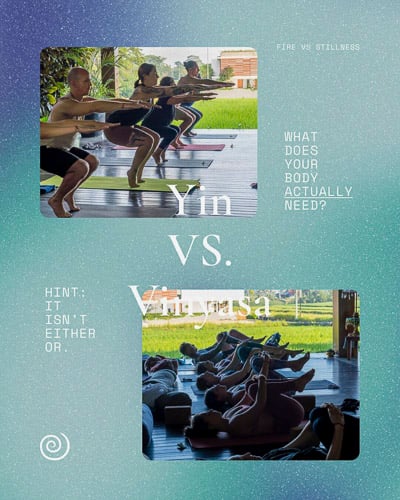
Gentle, slow movement rather than a vigorous flow when you are anxious.
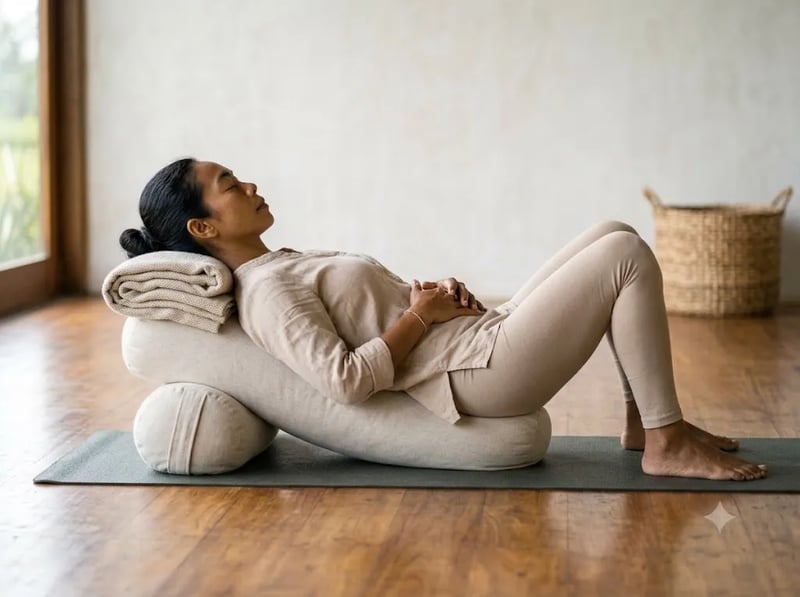
A short body scan or restorative pose to signal safety to the nervous system.
Reading the research without overselling it
The honest summary is that a regular practice helps many people feel calmer, and that the evidence for it is more modest than the wellness industry likes to suggest. When researchers pool the stronger trials, the picture is encouraging but qualified rather than dramatic.
A widely cited 2014 meta-analysis in JAMA Internal Medicine led by Madhav Goyal reviewed meditation programmes across 47 trials and found moderate evidence for reduced anxiety. The effect sizes were small, though, and many of the weaker studies lacked an active comparison group, which is exactly where overstated claims creep in.
Movement-based practice sits in a similar place. A 2017 meta-analysis by Michaela Pascoe in Psychoneuroendocrinology found that yoga and mindfulness-based programmes lowered markers of physiological stress, yet the author was careful about study quality and the risk of reading too much into the numbers. Small samples, short follow-up, and the difficulty of blinding a physical practice all limit how confident anyone can be.
None of this means the practice does nothing. It means the fair claim is that it works as an adjunct: something that sits alongside therapy, medication, or other care, not a replacement for them. If you treat it as one supportive habit among several, you are reading the evidence correctly.
Why slow breathing steadies the body
The most reliable mechanism behind that calmer feeling is not mystical. It is the effect of slowing your breath on the autonomic nervous system, the network that runs your heart rate, digestion, and stress response without any conscious effort from you.
When you lengthen the exhale and drop your breathing rate, you shift the balance towards the parasympathetic branch, the side associated with rest and recovery. A detailed 2017 review by Marc Russo in Breathe describes how slow breathing at around six breaths a minute raises heart rate variability and supports a steadier autonomic state in healthy people.
A broader 2018 systematic review by Andrea Zaccaro in Frontiers in Human Neuroscience reached a similar conclusion across dozens of studies, linking slow, controlled breathing with reports of comfort, relaxation, and reduced arousal. This is why the breath you practise on the mat matters more than the shapes you make.
A long, unforced exhale is the part of a class most directly tied to the physiology of calm, and it is something you can carry into a hard moment at your desk or before sleep. If you want the mechanism in more depth, Loka’s article on the effect of yoga on the parasympathetic nervous system walks through the same physiology within a full practice.
Finding a realistic place for it in your week
Consistency does more here than intensity. A short daily practice tends to serve an anxious nervous system better than an occasional long class, because the benefit comes from repeatedly teaching your body that it can settle.
Ten to fifteen minutes of gentle movement and slow breathing on most days is a sustainable target, and it is far easier to keep than an ambitious schedule you abandon within a fortnight. Keep your expectations grounded, too. Some sessions will leave you noticeably calmer, others will feel like little happened, and both are normal.
The point is not to chase a dramatic shift each time but to build a habit your body learns to trust. It also helps to practise before you need it, not only in a crisis: rehearsing slow breathing when you are already reasonably settled makes the skill available later, when your heart is racing.
If the physiology of calm genuinely interests you and you want to understand it properly, Loka’s 200-hour yoga teacher training covers the nervous system, breath, and practice design in far more detail than any single article can.
Common missteps that undercut the calm
A few habits quietly work against you. The first is forcing the breath. Straining to breathe deeply, or over-breathing in the hope of speeding things up, tends to leave you light-headed and more wired, not less. Slow and easy beats big and effortful every time.
The second is pushing the intensity when what you actually need is to down-regulate. A hard, heat-building session has its place, but on an anxious day a slower, quieter practice usually settles you more, though this does vary from person to person and it is worth noticing your own pattern.
The third is all-or-nothing thinking. Missing a few days does not undo your progress, and treating one skipped week as failure is a good way to quit entirely. A brief, imperfect practice you keep returning to is worth far more than a perfect one you cannot maintain.
Knowing when to reach for more support
A yoga practice is a supportive habit, not a treatment for an anxiety disorder, and there is no shame in needing more. If your anxiety is persistent, if it interferes with work, sleep, relationships, or daily function, or if it comes with panic attacks or low mood, speak to a general practitioner or a qualified mental health professional. Effective treatments exist, and a movement practice works best alongside them.
Be honest with yourself about the difference between ordinary nerves and something heavier. Occasional worry that passes is part of being human. Fear that is constant, out of proportion, or that you cannot talk yourself down from deserves proper assessment, and seeking that assessment is a sign of self-respect, not weakness.
If you are in crisis or having thoughts of harming yourself, please contact your local emergency services or a crisis support line straight away. Nothing in this article is a substitute for that help.
Building something you can reach for on a difficult day
The practices above are worth learning when you are relatively settled. The harder problem is that anxiety tends to arrive precisely when your capacity to remember a sequence, make a decision or set up a room is at its lowest. A practice you can only access on a good day is not much use on a bad one.
So build the bad-day version deliberately, and build it now rather than then. It should be one thing, not a sequence. It should need no props, no mat and no floor space. It should work sitting in a chair, and it should be short enough that starting it feels like nothing. A single breath practice done for two minutes usually meets all of that.
Write it down somewhere you will find it. A note on your phone, three lines long, in plain instructions. Anxiety narrows attention and makes recall unreliable, and reading a short instruction is far easier than retrieving one. This sounds excessive until the first time you use it, at which point it stops sounding excessive.
Practise it when you do not need it. This is the part that makes the difference. A technique rehearsed twenty times on ordinary afternoons is available to you under pressure in a way that a technique you have only read about is not. Two minutes, most days, when nothing much is happening. That is the whole training.
Set the aim correctly, because the wrong aim makes things worse. You are not trying to make the feeling disappear, and trying to force that usually adds a layer of frustration to what is already there. You are giving yourself something steady to do while it moves through, and letting your attention rest on something other than the thoughts driving it. Lowering the aim in this way tends to make the practice more effective, not less.
Be clear about where this fits. Breath and movement practices are a reasonable support alongside proper treatment, and many people find them genuinely steadying. They are not a treatment for an anxiety disorder, and they are not a reason to delay getting help. If anxiety is interfering with your sleep, your work, your relationships or your ability to leave the house, or if it has been building over weeks, speak to your doctor or a mental health professional. Bring the practice to the recovery. Do not ask it to do the whole job.
Tell one person what you are doing. Not for accountability in the productivity sense, but because anxiety is very good at convincing you that you are the only one managing something like this, and saying it out loud to someone who knows you punctures that reliably. It also means that on a day when you cannot reach for the practice yourself, there is somebody who might ask. Choose someone steady rather than someone who will worry, and keep what you tell them simple. That you get anxious, that you have something you do about it, and that it helps sometimes.
What to tell your teacher before class
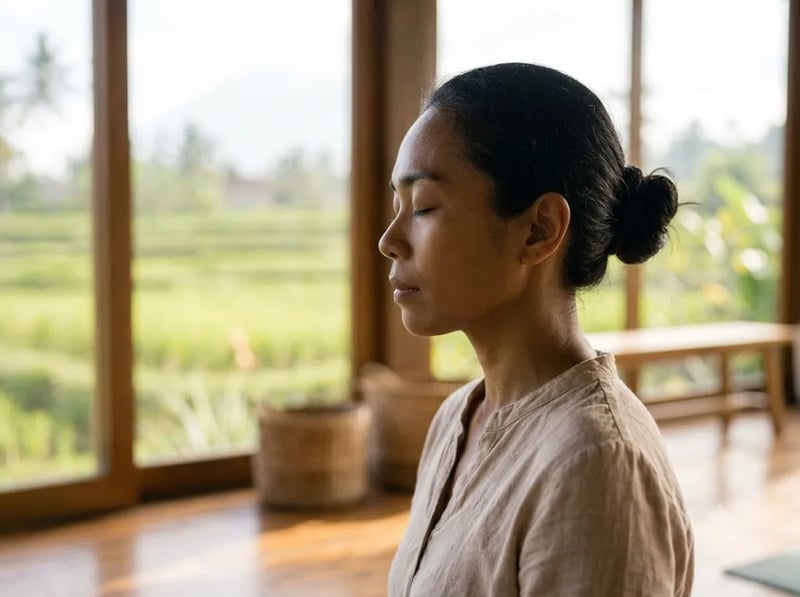
If anxiety is part of why you are coming to class, a brief word with the teacher beforehand can change the experience considerably, and it asks less courage than people fear. One or two sentences is plenty: that you deal with anxiety, and that you may step out or rest if you need to. You do not owe anyone the history.
A good teacher hears this often and responds practically. They might place you where the exit feels reachable, skip hands-on adjustments unless you ask, or simply know not to read anything into you taking a long child’s pose mid-class. Knowing the teacher knows removes a whole layer of self-monitoring, which is precisely the layer anxiety feeds on.
Give yourself permissions in advance rather than negotiating them in the moment. Permission to keep your eyes open in poses where closing them feels unmooring. Permission to breathe normally if a breath practice feels too intense, since slow breathing is a skill that builds with practice and forcing it can backfire early on. Permission to leave and come back, or to leave and not come back, with no story attached.
And if a class or a teacher consistently leaves you more wound up than you arrived, treat that as information rather than failure. Styles and rooms differ widely, and the right fit exists. The aim is a place where your nervous system can practise settling, not another arena to perform in.
When stillness makes it worse, not better
For some people, lying still and turning attention inward makes things feel worse rather than settling them. This is common enough to have a name in the clinical literature, relaxation-induced anxiety, and it is not a sign that you are doing the practice badly.
The usual triggers are predictable. Closing the eyes removes the visual information you use to feel oriented. Slowing the breath draws attention to the breath, which for someone who already monitors their body closely is the last thing they want to notice. Long silent holds leave nothing to occupy the mind, and it fills the space with whatever it was already carrying.
The adjustments are small. Keep the eyes open with a soft gaze towards the floor. Sit rather than lie down. Choose practices with some movement in them, since a slow standing sequence gives attention somewhere useful to go. Shorten the still parts rather than removing them, and let them lengthen on their own if they do.
Anchoring outward often works better than anchoring inward. The sound of the room, the weight of your feet on the ground, the temperature of the air: these steady you without asking you to scan your own body. Practices that turn attention inward, including a guided rest practice, are worth returning to later rather than pushing through now.
Two caveats worth stating plainly. The research here is small and mostly descriptive, so it explains the experience better than it predicts who will have it. And if the practice reliably leaves you more distressed than when you started, that is information worth taking to a doctor or therapist rather than to a teacher.
None of this means the practice is not for you. It usually means the order is wrong: movement first, stillness later, and no obligation to close your eyes at any point.
Train With Loka
If you want reliable tools for a calmer nervous system, our Online Meditation Training teaches breath and awareness practices you can lean on. To understand the mechanism more deeply, read how yoga and the parasympathetic nervous system work together. For a practice you can use tonight, try Yoga Nidra for deep rest.
Frequently Asked Questions
Can yoga cure anxiety?
No practice cures anxiety. Yoga is a well-supported tool that can reduce symptoms and build resilience, alongside professional care where needed.
How quickly does yoga help anxiety?
Many people feel calmer after a single session. Lasting change comes from regular practice over weeks.
What type of yoga is best for anxiety?
Slower, breath-led styles and restorative practice tend to help most. Gentle beats vigorous when you are anxious.
Is breathing exercise enough on its own?
Breathwork is powerful and accessible on its own, and pairs well with gentle movement and, where appropriate, professional support.
How often should I practise to feel calmer?
Consistency matters more than length. Ten to fifteen minutes of gentle movement and slow breathing on most days tends to help more than an occasional long class, because the calming effect builds through repetition. Practise on settled days too, so the skill is available when you actually feel anxious.
Is a slow class better than a strong one when I feel anxious?
Usually, though not universally. Many people settle fastest in slower, breath-led practice, while some find vigorous movement burns off the physical charge first. Notice your own pattern over a few weeks and choose accordingly; the right class is the one you leave steadier than you arrived.
The Loka Newsletter
Enliven your routine with exclusive spiritual content. There’s so much to learn.

Find us on Instagram
@lokayogaschool