Last updated on July 25th, 2026 at 01:25 pm
How Polyvagal Theory Influences Yoga and Breathwork
Polyvagal theory, developed by neuroscientist Dr Stephen Porges, explains why your nervous system has three distinct gears: social engagement, fight-or-flight, and freeze. Once you understand these states, polyvagal theory turns yoga and pranayama from vague wellness tools into precise interventions for the autonomic nervous system. This article walks through the physiology, then shows how to apply it on the mat and in the way you teach.
Understanding the Autonomic Nervous System
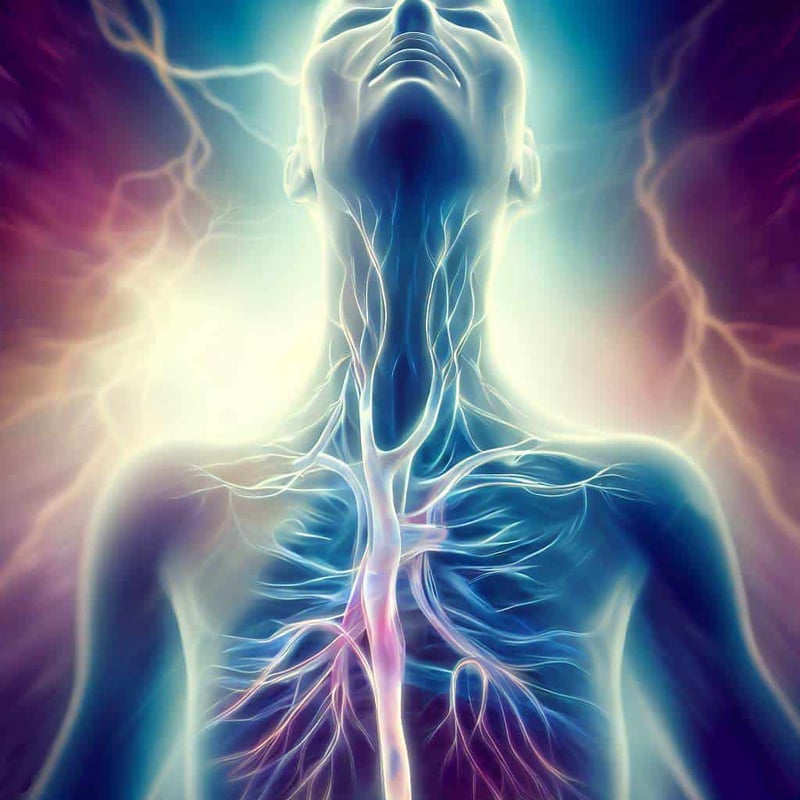
Your autonomic nervous system runs the background processes of life: heart rate, digestion, respiratory rate, pupil size, and immune response. You cannot consciously will your heart to beat or your gut to move, yet these systems respond continuously to what is happening around you and inside you. That responsiveness is the doorway a yoga or breathwork practice works through.
The autonomic system has two classic branches. The sympathetic nervous system (SNS) is the accelerator: it mobilises the body for effort, releasing adrenaline and cortisol, raising heart rate, and diverting blood to the large muscles. The parasympathetic nervous system (PNS) is the brake: it slows the heart, stimulates digestion, and supports repair and recovery. Health does not come from silencing one branch. It comes from being able to shift between them as circumstances demand, and to return to rest once a challenge has passed.
When one branch dominates for too long, the cost shows up in the body. Chronic sympathetic activation is linked to disrupted sleep, digestive problems, high blood pressure, and anxiety. Prolonged parasympathetic shutdown shows up as low mood, fatigue, and disconnection. Polyvagal theory refines this picture by pointing out that the parasympathetic side is not a single system at all.
The Vagus Nerve Has Two Pathways, Not One
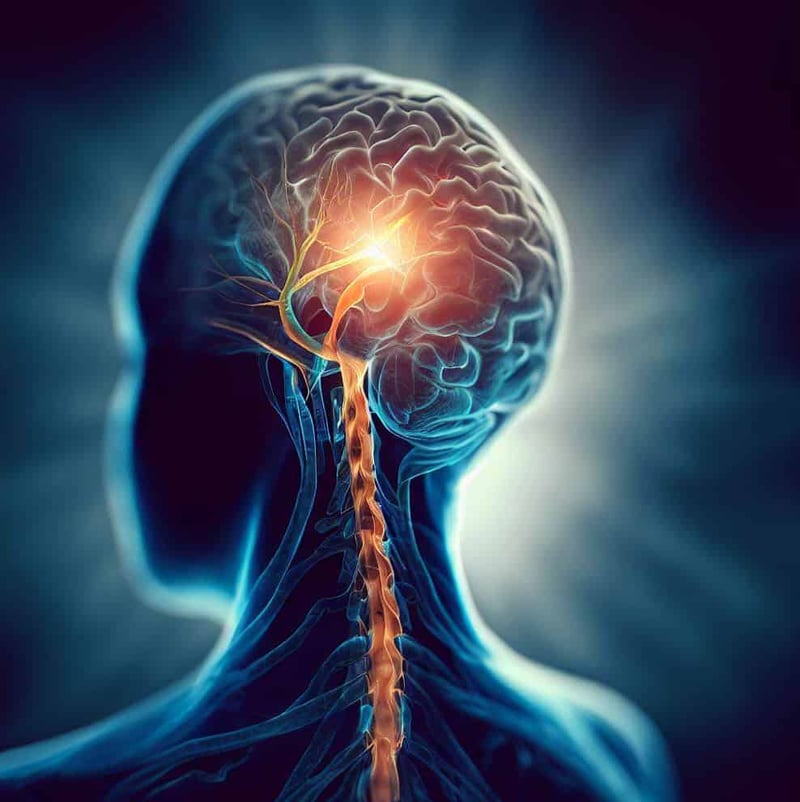
The vagus nerve is the longest cranial nerve in the body. It runs from the brainstem down to the heart, lungs, and gut, and most of its fibres carry information upward, from the organs to the brain, rather than the other way around. This is the anatomical reason breath and posture can change how you feel: you are feeding new signals into a system that is constantly reading the body’s state.
Porges’s key insight was that the vagus splits into two functionally different pathways. The older, unmyelinated dorsal branch drives immobilisation and shutdown when a threat feels inescapable. The newer, myelinated ventral branch supports calm alertness, social connection, and the fine regulation of heart rate. Because the ventral fibres are myelinated, they act fast, applying and releasing the vagal brake on the heart moment to moment. This is why you can settle within a few slow breaths rather than waiting minutes for adrenaline to clear.
The ventral vagus also connects to the muscles of the face, throat, and middle ear, linking your physiological state to expression, voice, and listening. Porges called this the face-heart connection. It explains why a warm voice and a steady face in a teacher genuinely calm a room: those cues are read by the student’s nervous system as evidence of safety.

Neuroception and Interoception: How the Body Reads Safety
Porges coined the term neuroception for the way the nervous system scans for danger and safety below the level of conscious thought. Your body evaluates faces, tones of voice, posture, and internal sensations continuously, and shifts autonomic state accordingly, often before your thinking mind has caught up. You do not decide to feel uneasy in a tense room. Your neuroception has already made the call.
This matters for practice because you cannot talk a nervous system out of a state it has entered through neuroception. Telling an anxious student to relax rarely works. Changing the inputs does: a predictable sequence, a calm environment, slow rhythmic breathing, and gentle movement give the body concrete evidence that it is safe.
Interoception, your sense of the body’s internal state, is the raw material of self-regulation, because you cannot steer a state you cannot feel. Yoga is essentially interoceptive training: holding a posture and noticing sensation, following the breath, and scanning the body in stillness all sharpen this sense. As interoception improves, students catch the first signs of sympathetic climb, a shallow breath or a tight jaw, early enough to respond with a long exhale rather than being carried into full activation.
The Three States of Polyvagal Theory
Porges described three hierarchical circuits, each with its own physiology and felt sense. They are automatic settings the body drops into depending on what neuroception detects, not moods you choose.
Ventral vagal (safety and connection): heart rate is steady, breathing is easy, and you feel safe enough to connect, learn, and rest. In yoga, chest and throat opening, extended exhalations, humming, and group chanting all recruit this state.
Sympathetic (mobilisation): adrenaline rises, heart rate climbs, and attention narrows. This is fight-or-flight, and it is not a fault. The problem in modern life is that the same cascade fires for deadlines and traffic and often has nowhere to discharge. Dynamic asana and short breath retentions can engage this system on purpose, but the goal is always to move through activation and back down to ventral rest.
Dorsal vagal (shutdown): heart rate and blood pressure drop, and the body conserves energy by going still. This can feel like numbness, dissociation, or the flat exhaustion of burnout. It is not weakness. A student here needs gentle, grounding, predictable input, not a demanding sequence.
These three states sit on a ladder, ventral at the top, sympathetic in the middle, dorsal at the bottom, and the nervous system moves through the rungs in order. A student in shutdown cannot be soothed straight into calm connection; the route back passes through mobilisation first. In a real class, sympathetic activation shows up as fidgeting and shallow chest breathing, dorsal shutdown as a glazed expression and collapsed posture, and ventral engagement as a relaxed face and easy breath. Reading which state is in front of you, and meeting it there, is most of skilful teaching.
A Practice Catalogue for Building Vagal Tone
Extended-Exhale Breathing
Inhale for a count of four, exhale for a count of eight. A longer exhale increases vagal activity and shifts you toward parasympathetic rest.
Diaphragmatic Breathing
Breathe low into the belly and lower ribs rather than high into the chest, engaging the vagal pathways to the heart and lungs.
Humming, Chanting, and Bhramari
Vibration through the throat combined with a long exhale stimulates the vagus and calms the system quickly.
Nadi Shodhana (Alternate Nostril Breathing)
Balances sympathetic and parasympathetic activity and steadies attention.
Restorative Postures with Support
Long, well-propped holds signal safety and let the parasympathetic system consolidate rest.
Skilful Breath Retention
Brief, comfortable pauses train the system to tolerate mild activation without tipping into panic, widening the window of tolerance.
Cold Exposure
A cool splash or the end of a shower briefly activates the vagus. Use it thoughtfully, never as a shock.
Integrating Breath and Movement
Breath is the most direct tool you have for changing autonomic state, because it is the one automatic function you can also take conscious control of. Every time you lengthen an exhale, you are speaking to the vagus and asking for the brake. Every time you quicken the breath, you invite mobilisation. Synchronising breath with movement, as yoga does, means each posture is also a nervous-system cue.
This is why sequencing matters more than any single pose. A class that builds toward strong effort and then returns, deliberately, to slow breathing and stillness teaches the body the full arc of activation and recovery. A class that only ever soothes never builds capacity, and a class that only ever intensifies leaves students dysregulated. The art is in the transitions.
Why the Exhale Is the Brake: Breath Mechanics
It is worth understanding why the exhale calms you, because it is not vague. When you inhale, the vagal brake on the heart eases slightly and the heart speeds up. When you exhale, the vagus reasserts the brake and the heart slows. This is respiratory sinus arrhythmia, and it is the mechanical basis of heart rate variability. Lengthen the exhale relative to the inhale and you spend more of each breath cycle under vagal influence, which is why a four-count in and eight-count out reliably settles the system.
There is a second mechanism at work. Slow breathing at around five to six breaths a minute resonates with the baroreflex, the loop that regulates blood pressure beat to beat. Breathing at this pace amplifies the natural oscillation between heart rate and blood pressure, which trains and strengthens the whole regulatory system over time. This is the physiology behind coherent or resonance breathing, and it is why slow pranayama is more than a nice idea. It is a specific input to a specific reflex arc.
For teaching, the takeaway is simple. If you want to calm a student, do not just tell them to breathe. Lengthen the exhale, slow the overall pace toward six breaths a minute, and keep the breath low in the belly. You are then working with the baroreflex and the vagal brake directly rather than hoping relaxation arrives on its own.
The Window of Tolerance and Vagal Tone
The window of tolerance describes the zone where you can feel stress and challenge while staying regulated. Push above it and you tip into sympathetic hyperarousal: panic, agitation, racing thoughts. Drop below it and you fall into dorsal hypoarousal: numbness and collapse. Good practice widens the window by repeatedly guiding students to the edges of activation and back to calm, so the nervous system learns it can meet intensity and recover.
Vagal tone, how active and responsive the ventral vagus is, is one of the few nervous-system qualities you can track, usually through heart rate variability, the natural beat-to-beat variation in your heart rate. Higher vagal tone is associated with faster stress recovery, steadier mood, and better cardiovascular health. It is trainable: diaphragmatic breathing, extended exhales, humming, cold exposure, and consistent yoga all nudge it upward over weeks and months.
The mechanism is direct. When you inhale, the vagal brake on the heart eases and the heart speeds up; when you exhale, the vagus reasserts the brake and the heart slows. Lengthen the exhale relative to the inhale and you spend more of each breath cycle under vagal influence, which is why a four-count in and eight-count out reliably settles the system. Slow breathing at around five to six breaths a minute also resonates with the baroreflex, the loop that regulates blood pressure beat to beat, strengthening the whole regulatory system over time.
The Polyvagal Ladder: A Map for Moving Between States
A helpful way to hold the three states, developed by clinician Deb Dana from Porges’s work, is to picture them as a ladder. Ventral vagal safety sits at the top, sympathetic mobilisation in the middle, and dorsal vagal shutdown at the bottom. Under stress you climb down the ladder; as safety returns you climb back up. Crucially, you move through the rungs in order. You do not leap from shutdown straight to calm connection.
This ordering has direct consequences for practice. A student in dorsal shutdown cannot be soothed straight into ventral rest, because the route back passes through mobilisation. That is why gentle, activating movement often has to come before deep stillness for someone who arrives flat and disconnected. Trying to force relaxation onto a shut-down system can deepen the shutdown. Meeting it with rhythm and gentle effort first gives the nervous system a rung to step onto.
Equally, a highly activated student cannot drop straight into savasana. They need to discharge some of the sympathetic charge through movement and then be guided down gradually. The ladder is a reminder that regulation is a sequence, not a switch, and that good sequencing honours the order the nervous system actually travels in.
Co-regulation: Nervous Systems Settle Each Other
Humans are not designed to regulate entirely alone. From infancy, our nervous systems calm in the presence of another calm nervous system, a process called co-regulation. A steady adult settles a distressed child; a composed colleague can defuse a tense meeting. The same mechanism operates in a yoga class, whether or not anyone names it.
This is why the teacher’s own state is not a side issue. Through the face-heart connection and neuroception, your regulated presence is a signal students’ bodies borrow from. A rushed, anxious teacher transmits that state; a grounded one offers a template for safety. Group practice adds another layer: breathing and chanting together literally synchronises rhythms across a room, which is part of why community practice feels steadying in a way solo practice sometimes does not. When you teach, you are offering co-regulation, and it is one of the most powerful tools you have.
Designing a Polyvagal-Informed Class
Breath is the most direct tool you have for changing autonomic state, because it is the one automatic function you can also consciously control. Synchronising breath with movement, as yoga does, means each posture is also a nervous-system cue, which is why sequencing matters more than any single pose.
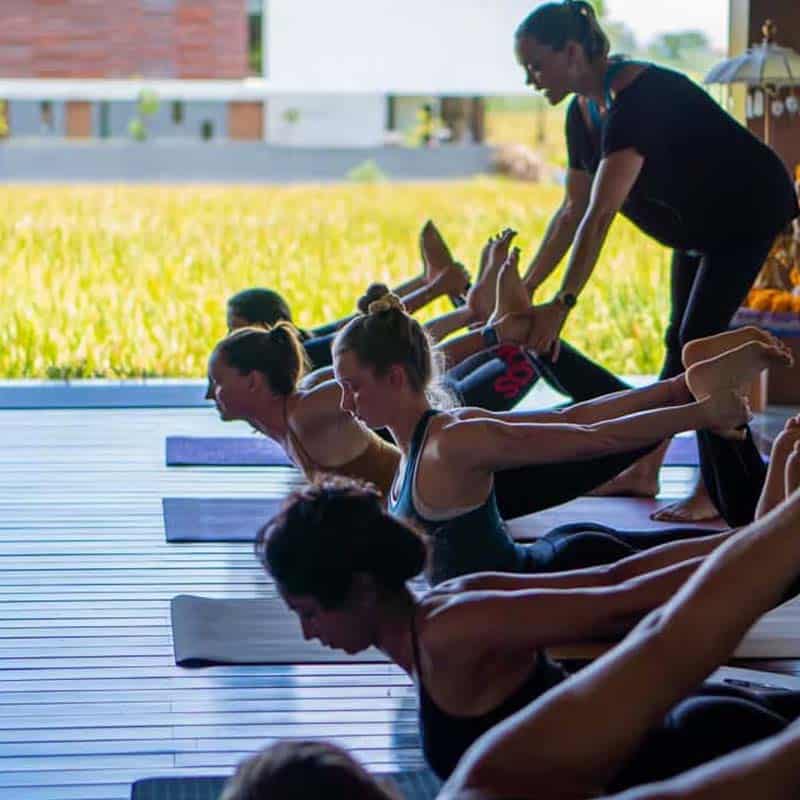
Consider a 60-minute class for a mixed group after a working day. Open with 10 minutes of grounding: slow diaphragmatic breathing and a gentle body scan, establishing safety through neuroception. Move into 15 minutes of warming, rhythmic movement synced to the breath so the body discharges the day’s held sympathetic charge in a contained way.
Through the middle 20 minutes, offer genuine effort: standing sequences, balance, a peak posture, perhaps a short retention, cueing calm and predictable so the challenge stays inside the window of tolerance. Spend the final 15 minutes coming down deliberately: forward folds, twists, a supported restorative shape, and a long savasana with extended exhalations. That downshift is the part most classes rush, and it is where the nervous-system learning is locked in.
Practical Implications for Teachers
Understanding polyvagal theory changes how you sequence, how you cue, and how you hold space. A student who cannot settle into savasana may be running high sympathetic activation and need more downshift, not more stillness demanded of them. A student who seems disengaged may be in dorsal shutdown and need gentle, activating movement before any deep relaxation. The same instruction does not serve both.
Your own state is part of the method. Humans co-regulate: from infancy, our nervous systems calm in the presence of another calm nervous system. Through the face-heart connection and neuroception, your voice, pace, and steadiness are read directly by your students, and group breathing and chanting literally synchronise rhythms across a room.
Three mistakes show up repeatedly: treating relaxation as the only goal, when a resilient nervous system also needs to meet activation and recover; rushing the downshift at the end of class, where the real learning consolidates; and ignoring your own state, since a dysregulated teacher undercuts even a perfectly sequenced class. The anatomy of the vagus and the value of slow breathing for stress recovery are well supported by research, though some of the broader evolutionary claims are still debated, so it is worth holding the framework as a useful map rather than settled fact in every detail.
Our companion article on how yoga affects the parasympathetic nervous system goes further into the mechanisms.
Reading the Three States in a Real Class
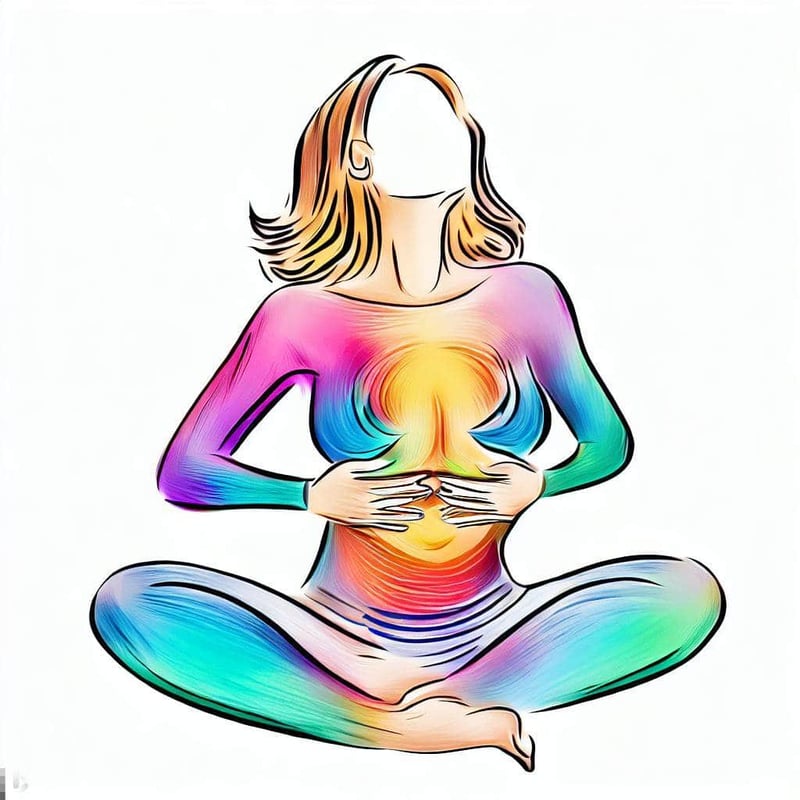
Theory only helps if you can see it in the room. Sympathetic activation tends to show up as fidgeting, shallow high-chest breathing, a tight jaw, darting eyes, difficulty staying still, or a student who pushes too hard and cannot slow down. These students often struggle most in savasana, because stillness without enough prior downshift can feel exposing rather than restful.
Dorsal shutdown looks different: a glazed or absent expression, very low energy, collapsed posture, minimal engagement, or a student who seems physically present but emotionally elsewhere. They are not being difficult or lazy. Their system has dropped to the bottom of the ladder. Pushing intensity at them rarely lands; gentle, warming, predictable movement usually does more.
Ventral engagement is easy to recognise once you look for it: relaxed face, easy breath, responsiveness to cues, quiet alertness, and a willingness to make eye contact and connect. Much of skilful teaching is simply noticing which state is in front of you and adjusting, rather than delivering the same class to every nervous system regardless of where it starts.
What the Research Shows, and What It Does Not
Honesty about the evidence matters, because polyvagal theory is often oversold. The parts that rest on solid ground are the anatomy of the vagus, the use of heart rate variability as a marker of autonomic regulation, and the well-replicated finding that slow breathing and yoga reduce sympathetic activation and improve stress markers. These are not in serious dispute, and they are enough to justify the practices described here.
Some of Porges’s broader evolutionary claims, particularly about the precise sequence in which the two vagal pathways evolved, are seriously contested among physiologists. A 2026 multi-author evaluation in Clinical Neuropsychiatry, signed by dozens of autonomic researchers, argues the theory’s core premises do not hold. Separately, Grossman has argued that respiratory sinus arrhythmia is not an invariably reliable index of cardiac vagal tone, which complicates the common shorthand that a rise in HRV means a rise in vagal tone.
None of that undermines the practical value of the framework. It simply means it is best treated as a useful map rather than settled fact in every detail. As a teacher, you can use polyvagal language to make the nervous system understandable without claiming more certainty than the science supports. That restraint is itself part of teaching well.
A Worked Pranayama Sequence for Downshifting
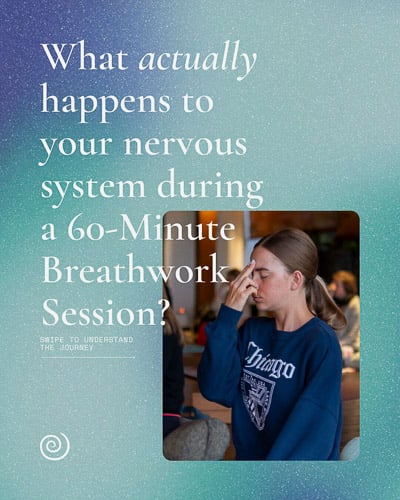
To make this concrete, here is a short sequence you can use to guide a group from activation toward rest. Begin with two minutes of simple observation: let students notice their natural breath without changing it, which brings interoception online. Then introduce diaphragmatic breathing for two minutes, hands on the lower ribs, breathing low and slow.
Move into extended-exhale breathing for five minutes: inhale for four, exhale for six, then progress to inhale four, exhale eight as it becomes comfortable. Finish with two minutes of Bhramari, the humming bee breath, where the vibration and the long exhale together deepen vagal engagement. In under fifteen minutes you have walked the nervous system down the ladder using nothing but breath, and students can feel the shift for themselves rather than being told to relax.
Matching Breathwork to the State in Front of You
Not every breath practice suits every state, and this is where many well-meaning classes go wrong. Offering fast, energising breathwork to an already activated student can push them further up into hyperarousal. Offering long, passive stillness to a student in dorsal shutdown can sink them deeper into collapse. The skill is matching the technique to where the nervous system actually is.
For a student stuck in sympathetic activation, favour slow, exhale-led breathing: extended exhales, diaphragmatic breathing, Bhramari, and gentle nadi shodhana. The goal is to apply the vagal brake and bring the system down through mobilisation toward rest. Avoid strong retentions or rapid breathing until the initial charge has settled.
For a student in dorsal shutdown, the priority is gentle activation, not deep relaxation. Slightly more rhythmic breathing, light movement synced to the breath, and warmth help lift the system off the bottom of the ladder. Only once there is some mobilisation and engagement does it make sense to guide toward calm. Reading the state first, then choosing the breath, is what separates a genuinely regulating practice from a generic one.
Common Mistakes to Avoid
Three errors show up repeatedly once teachers start applying this material. The first is treating relaxation as the only goal. A nervous system that can only relax is not resilient; it needs to meet activation and recover, which means honest effort belongs in the sequence too. The second is rushing the downshift. The final third of a class, the deliberate return to ventral rest, is where the learning consolidates, and cutting it short wastes the work that came before.
The third mistake is ignoring your own state. Because co-regulation and neuroception are always operating, a dysregulated teacher undercuts even a perfectly sequenced class. Arriving early, taking a few slow breaths before you begin, and teaching from a settled place is not indulgence. It is part of the intervention, and your students’ nervous systems will read it whether or not you say a word about polyvagal theory.
If you want to ground this in real anatomy and physiology, our 200-Hour Yoga Teacher Training in Bali covers polyvagal theory, breathwork facilitation, and nervous-system anatomy in practical depth, and our Online Breathwork Training goes further for those who want to specialise. It pairs closely with our companion article on the effect of yoga on the parasympathetic nervous system.

Understand Your Nervous System with Loka
Polyvagal theory is one of the most useful frameworks a modern yoga teacher can hold, because it turns intuition about calm and stress into something you can sequence for on purpose.
Our course on Understanding the Vagus Nerve and Polyvagal Theory takes the science in this article and turns it into practical, teachable tools you can use with real students.
Frequently Asked Questions
What is polyvagal theory in simple terms?
Polyvagal theory explains that the autonomic nervous system has three states: ventral vagal (safe and socially connected), sympathetic (fight-or-flight), and dorsal vagal (freeze or shutdown). These states are hierarchical and largely automatic, detected through neuroception, but practices like breathwork and yoga can shift you between them.
How does yoga activate the parasympathetic nervous system?
Slow diaphragmatic breathing, extended exhalations, restorative postures, humming, and meditation all stimulate the vagus nerve and reduce sympathetic dominance. The result is a measurable drop in heart rate and stress biomarkers and a rise in heart rate variability, a marker of parasympathetic recovery.
What is vagal tone and can you improve it?
Vagal tone reflects how active and responsive the ventral vagus is, and it is often estimated through heart rate variability. Higher vagal tone means better stress recovery and emotional regulation. It improves with consistent breathwork, long exhalations, singing or chanting, cold exposure, and regular yoga practice.
What is the difference between the ventral and dorsal vagus?
The ventral vagus is the newer, myelinated pathway that supports calm alertness, social connection, and fine control of heart rate. The dorsal vagus is the older, unmyelinated pathway that drives shutdown and immobilisation when a threat feels inescapable. Both are parasympathetic, but they produce very different states.
What is neuroception?
Neuroception is the nervous system’s automatic scanning for cues of safety or danger, below conscious awareness. It reads faces, tone of voice, posture, and internal sensations and shifts your autonomic state accordingly. It is why a calm environment and a steady teacher settle a class before any words are processed.
What is the dorsal vagal freeze response?
The dorsal vagal complex triggers immobilisation when the nervous system is overwhelmed beyond its capacity for fight or flight. It can present as dissociation, numbness, heaviness, or exhaustion. Gentle, grounding, predictable practices help the system climb back toward mobilisation and then to ventral vagal safety.
How do I design a polyvagal-informed yoga class?
Start with grounding and slow breathing to establish safety (ventral vagal). Move into rhythmic then stronger sequences that engage the sympathetic system on purpose. Close with restorative postures and long exhalations to consolidate parasympathetic regulation. Keep cueing calm and predictable, and never rush the downshift at the end.
The Loka Newsletter
Enliven your routine with exclusive spiritual content. There’s so much to learn.

Find us on Instagram
@lokayogaschool