Last updated on September 6th, 2026 at 09:36 am

Breathwork Benefits and How Facilitator Training Transforms Your Career
Breathwork delivers real, measurable benefits for stress, anxiety, sleep, and immune function. A growing body of clinical research backs every claim. Beyond personal practice, breathwork facilitator training opens the door to purposeful, in-demand work in the global wellness industry.
Understanding both sides, what breathwork does in the body and what it means to guide others through it, gives you a complete picture of why this practice has moved from the fringes to the mainstream.

What Is Breathwork?
Breathwork is the deliberate use of conscious breathing techniques to shift your physical, mental, and emotional state. The underlying practices, grouped under the umbrella of pranayama in the yogic tradition, have been refined over centuries. Modern breathwork draws from this lineage while also incorporating neuroscience, somatic therapy, and performance science.
The common thread across all styles is intentionality. You are not simply breathing. You are working with the breath to produce a specific effect in the body and mind. If you want to read your way deeper first, our list of books about breathwork is a solid shelf to start from.
How Breathwork Affects Your Nervous System
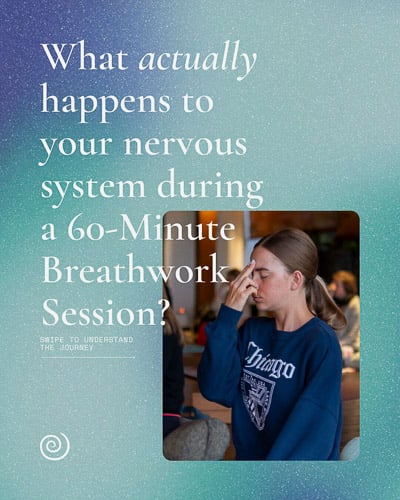
Your breathing pattern is one of the few bodily functions that operates both automatically and under conscious control. This makes it a direct lever on your autonomic nervous system.
Most people in modern life operate with a chronically elevated sympathetic response. Breathwork techniques that extend the exhale or slow the breathing rate activate the parasympathetic nervous system and stimulate the vagus nerve. The reversal happens within minutes.
The Key Benefits of a Regular Breathwork Practice
- Stress and cortisol reduction. Research in Frontiers in Psychology confirms that slow, conscious breathing lowers cortisol and adrenaline. The effect is both immediate and cumulative.
- Improved sleep. Slow-paced breathing before sleep reduces physiological arousal. The 4-7-8 breath is particularly effective.
- Immune support. By consistently reducing the stress response, breathwork supports the immune system. Kapalabhati also improves respiratory efficiency and lymphatic circulation.
- Increased energy. Certain pranayama techniques increase oxygenation and clear physical sluggishness. Kapalabhati is commonly used for this purpose in the morning.
- Sharper focus. Breathwork interrupts the default-mode network, activates the prefrontal cortex, and produces clear, calm alertness.
- Emotional processing. Somatic breathwork modalities can catalyse emotional releases and shifts that years of cognitive therapy have not produced.
- Cardiovascular health. Coherent breathing at around five to six breaths per minute improves heart rate variability and has been studied for managing hypertension.
What the Evidence Actually Supports
Slow, paced breathing is the best supported part of the field. Zaccaro and colleagues’ systematic review of slow breathing reports consistent increases in heart rate variability and measurable shifts in central nervous system activity, and Russo and colleagues’ review in healthy adults finds improved baroreflex sensitivity alongside it.
Short daily practice appears to be enough. Yilmaz Balban and colleagues’ randomised trial of brief structured respiration found that five minutes a day improved mood and lowered respiratory rate over a month, with cyclic sighing, an exhale-weighted pattern, outperforming the other arms.
High-ventilation practices, the fast and intense end that most facilitator trainings sell, are studied far less. Fincham and colleagues’ review of high ventilation breathwork lays out the proposed mechanisms and is candid about how limited the trial evidence is.
If you intend to teach this, that asymmetry is the single most useful thing to carry with you. The gentle end has the evidence. The dramatic end has the marketing.
What the Evidence Does Not Support
The strongest test of intense breathwork so far produced a null result. Fincham and colleagues’ randomised placebo-controlled trial of brief remote high ventilation breathwork with retention found no benefit over an active placebo designed to create similar expectations.
That does not prove the practice is inert. It does mean that a large share of what people attribute to the technique may come from context, attention, and expectation, and an honest facilitator says so rather than promising outcomes the literature cannot back.
Be careful with cortisol claims in particular. Reductions are reported in some studies and not others, the measurement methods vary, and the effect is nowhere near reliable enough to advertise as a feature.
Claims to avoid entirely: that breathwork detoxifies the body, that it releases trauma stored in tissue, that it replaces treatment for a diagnosed condition, or that any specific emotional experience will occur. None of these survive contact with the evidence, and all of them create liability.
The Physiology a Facilitator Has to Understand
If you are going to hold a room through fast breathing, you need to know what you are changing in people, not just what it looks like from the front of the room.
Deliberate overbreathing clears carbon dioxide faster than the body makes it. Blood carbon dioxide falls, which is hypocapnia, and blood pH rises, which is respiratory alkalosis. Kox and colleagues’ study in PNAS measured this directly in trained practitioners and recorded pH as high as 7.75 during cyclical hyperventilation, against a normal range of roughly 7.35 to 7.45.
Two effects follow. Alkalosis alters the excitability of nerve membranes, which is why tingling around the mouth and in the hands and feet is so common. It also constricts cerebral blood vessels and reduces blood flow to the brain, which accounts for light-headedness and much of the altered perception people describe.
Knowing this changes how you teach. You stop treating intensity as a measure of success, you build in a return to normal breathing rather than a push for more, and you can explain to a frightened participant exactly what is happening in their body.
Screening, Contraindications, and Duty of Care
Screening happens before the session, in writing, and it is the clearest signal of whether a training took its responsibilities seriously.
Intense breathwork is contraindicated or requires medical clearance in pregnancy, cardiovascular disease and uncontrolled hypertension, a history of seizures, aneurysm, recent surgery, retinal detachment or glaucoma, and in psychosis or bipolar disorder. Fincham and colleagues’ review sets out the clinical considerations in more detail.
Never practise or teach fast breathing in or near water, standing, or while driving. Loss of consciousness is uncommon but it is a documented possibility, and the setting decides whether that is a non-event or a catastrophe.
Trauma history is not an automatic exclusion, but it changes the plan. Shorter sessions, a slower onset, eyes open if preferred, an explicit agreement that stopping is allowed at any point, and a named route to further support afterwards.
A training that does not cover this material, and does not make you practise saying no to a prospective client, has not prepared you to work with the public.
When to Refer, and How to Say It
Screening tells you who should not be in the room. Referral is the harder skill: knowing what to do when someone is already in front of you, is not in any danger, and plainly needs something you are not qualified to give.
The line is not drawn by severity. It is drawn by scope. A facilitator works with breathing and with whatever arises around it. Diagnosing, treating, advising on medication, and working through trauma history all sit outside that, regardless of how confident you feel or how much the person in front of you wants you to be the one who helps.
The usual signals are unglamorous. Someone mentions a psychiatric diagnosis or a recent medication change and asks whether they should carry on. Sessions reliably produce distress that has not settled by the time everyone leaves. A client starts describing your sessions as the only support they have. The same material keeps surfacing and does not shift.
Say it early and say it plainly, because a vague referral lands as rejection. Name what you do, name what they need, and keep the door open: this sits outside what I am trained for, and I would be doing you a disservice pretending otherwise, so let us keep working on the breathing once you have someone alongside you for the rest.
Build those relationships before you need them. A GP, one or two psychologists, and a trauma-informed therapist whose approach you have actually asked about are worth more than a printed directory you have never used. Ask each of them what they want to know when a client is referred, and give them exactly that.
Get written consent before you speak to anyone’s clinician, keep your notes factual rather than interpretive, and check where your insurance and liability actually stand before you assume a referral protects you. It usually helps. It is not a substitute for a policy that names what you do.
Why Become a Breathwork Facilitator?
The demand for skilled breathwork facilitators is growing alongside public interest in evidence-based wellness. If you are a yoga teacher, therapist, coach, or wellness professional, certification adds a powerful and increasingly sought-after dimension to your practice.
Facilitator training is also a profound personal journey. You cannot guide others through their own edges without first navigating your own. The depth of personal practice that training demands is itself part of the value. If you are still deciding, our free three-day breathwork facilitation intro lets you experience the work before committing to a certification.

What to Look For in a Breathwork Training
A strong facilitator training covers anatomy and physiology, not just technique. You need to understand what is happening in the nervous system during different breath patterns. This knowledge is what allows you to adapt the practice safely for different people.
Look for accreditation through Yoga Alliance or the Global Professional Breathwork Alliance. Trauma-informed facilitation should be a core module. The curriculum should cover at least 20 distinct techniques across classical pranayama, modern somatic approaches, and therapeutic applications.
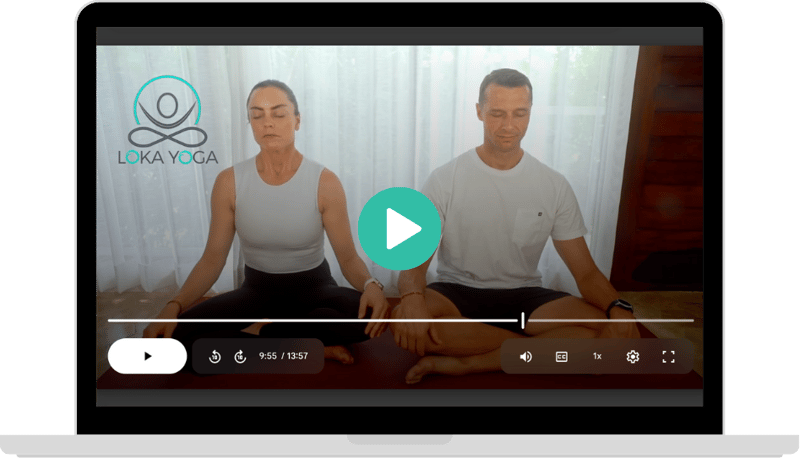
Loka Yoga School’s Online Breathwork Training includes 25+ techniques, a medical-professional-led anatomy module, trauma-informed facilitation, and business development guidance. It is accredited and self-paced.
Explore the Breathwork Facilitator Training: https://lokayogaschool.com/online-breathwork-training/ |
What a Serious Breathwork Facilitator Training Includes
Respiratory physiology taught properly, not as a slide of metaphors. You should finish able to explain hypocapnia, alkalosis, and the vagal effect of a lengthened exhalation to a sceptical GP.
Written screening protocols, and practice using them. Contraindications memorised rather than looked up.
Supervised facilitation hours where someone experienced watches you run a session and tells you what you missed. This is the component most often absent, and it is the one that separates a certificate from a competence.
A defined scope of practice. You are not a therapist, and a good training makes the boundary explicit and gives you referral language for the moment someone brings you something outside it.
Insurance, consent, and record-keeping. Unglamorous, and the difference between a hobby and a professional practice.
Finally, honesty about evidence. A programme that teaches you to claim more than the literature supports has handed you a liability and called it a marketing advantage.
The Career Reality, Stated Plainly
Facilitation rarely becomes a full income quickly. Most people who make it work combine sessions with adjacent skills: teaching yoga, corporate workshops, one-to-one work, or an online offering that does not depend on filling a room in a single city.
The economics of group sessions are simple and unforgiving. Venue hire, insurance, and marketing come out before you do, and a class of four does not cover a room that seats twenty.
Our article on making a living as a yoga teacher covers the same arithmetic in more detail, and it applies almost unchanged to breath-based work.
None of this is a reason not to train. It is a reason to train somewhere that teaches the physiology and the professional practice rather than selling a transformation, and to plan your first two years honestly.
Our online breathwork training covers the mechanisms, the screening, and the scope of practice. If you would rather build the foundation in person, the pranayama modules inside our Yoga Alliance certified 200-hour YTT in Bali teach the same material face to face, with eyes on your practice.
Your First Six Months After Qualifying
The gap between finishing a training and running a practice is wider than most programmes admit, and it is mostly filled with unglamorous repetition.
Run free sessions first, deliberately and with a time limit. Twenty sessions with friends, colleagues, and volunteers will teach you more about pacing, cueing, and managing a distressed participant than any additional certificate. Ask for blunt feedback and write it down.
Keep your scripts short at the start. New facilitators overtalk, usually to manage their own discomfort with silence, and the talking crowds out the practice the person came for.
Build a referral list before you need it. Know two therapists and one GP you can name when someone brings you something outside your scope. Doing this in advance is what makes the boundary easy to hold in the moment.
Keep practising yourself, at a level that has nothing to do with teaching. Facilitators who stop practising drift towards performance, and participants can tell.
Finally, expect the first paid sessions to feel disproportionately hard. You are managing your own nerves, the room, and the clock at once. That eases, and it eases fastest with supervision rather than volume.
Turn Your Breath Practice Into a Career
Once you feel what breathwork does, guiding others is a natural next step. If the difference between styles is still fuzzy, read pranayama vs breathwork first.
Our Online Breathwork Training certifies you to facilitate safely, with the anatomy and trauma-informed skills employers and clients trust.
What the facilitator training costs, alone or with meditation, is on the online training prices page.
FAQ
What are the main benefits of breathwork for health?
Breathwork shifts autonomic balance, activates the parasympathetic nervous system, improves sleep, supports immune function, sharpens focus, and improves heart rate variability. All confirmed by peer-reviewed research.
How is breathwork different from pranayama?
Pranayama is a specific category of breathwork rooted in the yogic tradition. Modern breathwork is broader, including pranayama alongside contemporary somatic techniques like Conscious Connected Breathwork and Holotropic breathing.
What qualifications do I need to become a breathwork facilitator?
No prior qualifications are required to begin. Completing an accredited certification, such as Loka’s Online Breathwork Training, provides the credentials, knowledge, and practical framework to work professionally and safely.
Can breathwork be combined with yoga teaching?
Yes. Breathwork is a natural extension of yoga teaching, particularly in traditions that emphasise pranayama. Many yoga teachers find that adding breathwork certification deepens both their personal practice and their professional offering.
Is breathwork facilitator training available online?
Yes. Loka Yoga School’s breathwork facilitator certification is fully online and self-paced, accessible anywhere in the world.

The Loka Newsletter
Enliven your routine with exclusive spiritual content. There’s so much to learn.

Find us on Instagram
@lokayogaschool