Last updated on September 9th, 2026 at 11:55 am
20 Books About Breathwork and Breathing You Should Read
The best breathwork books split by what you need. For the science, read James Nestor’s “Breath” or Patrick McKeown’s “The Oxygen Advantage”. For a gentle start, Jean Hall’s “Breathe”. For clinical use, Brown and Gerbarg’s “The Healing Power of the Breath”. For the classical yogic view, “The Science of Breath”. The list below reviews each in full.
My own journey with breathwork has been transformative, revealing the profound truth that how we breathe fundamentally shapes how we experience life. It is a simple tool, accessible to everyone, yet its impact on physical vitality, mental focus, and emotional balance can be extraordinary. The practice is old; what is new is that the physiology is finally being measured. This list of breathwork books draws on years of practice and teaching, and it includes the essential science texts, the classical yogic references, the therapeutic guides, and a few lesser-known titles that deserve wider attention.
Breathwork Books: The Full List
This selection gives you three things: an understanding of the “why” (books that clearly explain the science connecting breath to your nervous system, health, and mind), the “how” (accessible guides filled with techniques you can start practising today), and the deeper context (resources on specific methods, therapeutic applications, and the history of breath practices). Consider this your starting point for a deeper relationship with your breath, one you can return to as your own practice evolves and your questions change.
Every title and image below is linked to the respective book. As a participant in the Amazon Services LLC Associates Program, we may earn a small commission on qualifying purchases made through these links, at no additional cost to you.
How This List Was Chosen
These twenty titles were selected from years of personal reading and teaching, not from publisher submissions or paid placement. Each book was weighed on four things: whether the science holds up against current research, whether the techniques are safe to attempt from a book alone or genuinely require supervised training, how the book’s approach compares to what we teach at Loka, and whether it earns a place next to the others here rather than repeating what a different title already covers better. Where a book leans into intense or altered-state territory, we say so plainly rather than downplaying the risk. High-ventilation methods such as the Wim Hof technique, rebirthing, and holotropic breathwork share a mechanism and a list of contraindications (Fincham 2023), so those reviews carry safety notes the gentler books do not need. If you find yourself wanting to guide other people through these techniques rather than only read about them, that is the point at which a book stops being enough and a breathwork facilitator training starts to make sense.
Quick Picks, By What You Are Looking For
| You are… | Read this first | Then this | Why |
|---|---|---|---|
| New, and want the science | “Breath”, James Nestor | “The Oxygen Advantage”, Patrick McKeown | Narrative journalism first, then physiology and the BOLT score |
| New, and want to practise tonight | “Breathe”, Jean Hall | “The Power of Breathwork”, Jennie Lee | Plain instructions for belly breathing and long exhales |
| A yoga teacher wanting the classical framework | “The Science of Breath”, Swami Rama, Ballentine and Hymes | “The Breathing Book”, Donna Farhi | Pranayama as the tradition teaches it, then everyday breathing anatomy |
| A therapist or clinician | “The Healing Power of the Breath”, Brown and Gerbarg | “Holotropic Breathwork”, Stanislav and Christina Grof | Coherent breathing with clinical backing, then the intense end with its supervision needs |
| Managing anxiety, asthma, or hypertension | “Breathe Well, Be Well”, Robert Fried | “The Art of Breathing”, Danny Penman | Condition-specific techniques alongside medical care, then mindful breath awareness |
| An athlete or performer | “Breathing for Warriors”, Belisa Vranich | “The Oxygen Advantage”, Patrick McKeown | Tactical breathing for performance, then nasal breathing and CO2 tolerance |
| Drawn to intensity and cold | “The Wim Hof Method”, Wim Hof | “The Healing Power of the Breath”, Brown and Gerbarg | Read the safety notes in our review first; pair with a calmer daily method |
| Wanting emotional release work | “The Rebirthing Book”, Leonard and Laut | “The Breathwork Experience”, Kylea Taylor | Connected breathing and its history; both need a trained facilitator |
| Wanting breath in every part of life | “Just Breathe”, Dan Brulé | “Breathing Love”, Jennie Lee | Breath at work and in relationships, then the heart-centred meditation side |
| Wanting a structured programme | “Breathwork: A 3-Week Breathing Program”, Valerie Moselle | “Breathe”, Jean Hall | A week-by-week plan, then a gentler text to keep the habit |
| Interested in culture and history | “Breathing Spaces”, Nancy N. Chen | “The Way of the Shaman”, Michael Harner | Qigong in modern China, then shamanic practice with the appropriation caveat in our review |
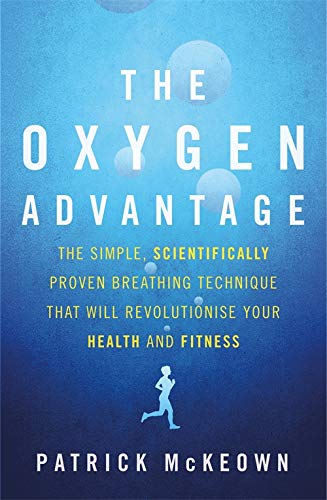
1. “The Oxygen Advantage” by Patrick McKeown
As someone deeply immersed in the world of breathing and yoga for many years, I have used many techniques, but Patrick McKeown’s “The Oxygen Advantage” offered new perspectives and practical tools. It was a watershed in how I approached optimising respiratory efficiency specifically. McKeown reveals the profound impact of nasal breathing, drawing heavily on the foundations established by the Buteyko method and traditional yogic breathing techniques (pranayama), packaged in a modern way, supported by science, and highly affordable.
What I found inside: McKeown’s explanation of how breathing directly affects the body and athletic ability helped solidify the key concepts already familiar from teaching, and his breakdown of why nasal breathing is crucial to optimising the use of oxygen was a useful reminder even with my own background in the field.
Actionable techniques that work: I particularly appreciated the emphasis on the BOLT score (Body Oxygen Level Test), a simple, direct self-assessment method I found incredibly useful for myself and my students. The specific exercises for nasal breathing during exercise reinforced its importance, and I personally experienced improved resistance. The sleep and stress strategies are also highly practical.
Breath retention, revisited: while breath retention (kumbhaka) is already central to yoga, McKeown’s application of it toward recycling the body’s sensitivity to CO2 offered a different lens on how we can consciously influence our automatic breathing patterns.
Based on science: McKeown consistently binds these practices to scientific studies, making the benefits clear and understandable.
My main takeaways, from the view of a specialist: nasal breathing is critical, and this book offers excellent scientific support for what many of us in the yoga and breathing community already teach. CO2 tolerance is critical, and McKeown’s focus on it, drawing from Buteyko’s principles, offers a clear path to better functional breathing. The practical application stands out: clear guidelines, specific exercises, and real-world case studies make these concepts accessible even for beginners.
A potential consideration: purists of either the Buteyko or pranayama traditions may find McKeown’s interpretations or simplifications different from classic approaches, and readers seeking large-scale clinical trials for every specific claim may want complementary resources, although the underlying principles are well established.
Who it is for: I recommend this book with confidence, whether you are an experienced practitioner, an athlete, or completely new to breathwork. It fills traditional wisdom with modern science effectively, and it is a book I often suggest to students who want to understand the “why” and “how” of better breathing, particularly anyone who has tried breathwork before and wants a more rigorous, physiology-first explanation of what they were already doing.
Order “The Oxygen Advantage”
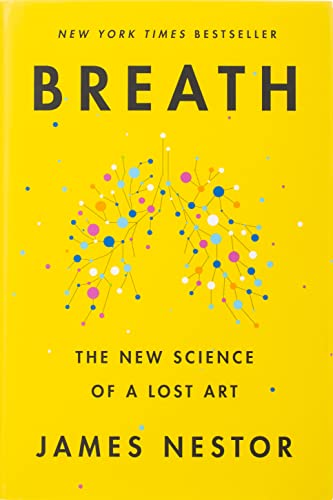
2. “Breath: The New Science of a Lost Art” by James Nestor
James Nestor’s “Breath” created a stir when it launched, and for good reason. As someone who has practised and taught breathwork for a long time, I found his exploration incredibly engaging and validating. He combines historical insight, deep scientific research, and his own fascinating personal journey to highlight how crucial, and often forgotten, breathing is for our health.
What Nestor does brilliantly is make complex respiratory science surprisingly clear without ever talking down to the reader. I particularly appreciated his research on how modern life, with its chronic stress and even seemingly innocuous habits, has led many of us away from ideal breathing patterns. He connects the dots between how we breathe and its influence on everything from cardiovascular health to immune response, confirming a great deal of what we already explore in traditional practices such as yoga, but through a contemporary, investigative lens that will feel fresh even to a long-time practitioner.
What really hit home: we are often doing it wrong. Nestor builds a compelling case that resonated deeply with my own observations: many people in the modern world simply are not breathing correctly. His description of “email apnea,” the tendency to hold our breath or breathe shallowly while staring at screens, was startlingly familiar. He illustrates how these seemingly small habits, encouraged by modern life, can contribute to issues ranging from anxiety to chronic disease. This book genuinely serves as a wake-up call.
Exploring techniques through an investigative eye: Nestor does not just point out the problems, he explores solutions. His journey through techniques from the intensity of the Wim Hof Method to the ancient wisdom of pranayama is approached with genuine curiosity and journalistic rigour, detailing the science-backed benefits without over-hyping them. For those new to these methods, his balanced perspective is an excellent introduction.
An expert’s appreciation for Nestor’s journey: what lifts “Breath” above a typical science book is Nestor’s commitment to personal experimentation. His willingness to undergo procedures like blocking his nasal passages for his Stanford experiment, or trying mouth taping, lends real authenticity to the writing. From the perspective of a breathwork professional, this investigative, experiential approach is invaluable for bringing wider attention and credibility to conscious breathing.
A comprehensive and inspiring exploration: “Breath” is an eye-opening read that everyone should experience. Nestor skilfully weaves together science, history, and personal discovery, making complex ideas accessible and actionable. Even with an existing background in the field, this book offers new nuggets of information and a renewed appreciation for the simple act of breathing correctly.
Who it is for: anyone curious about why breath matters, presented through engaging narrative journalism rather than a dry textbook. I often recommend it as a first book to students who want a compelling overview of why conscious breathing is so fundamental to well-being before committing time or money to formal training.
Order “Breath”
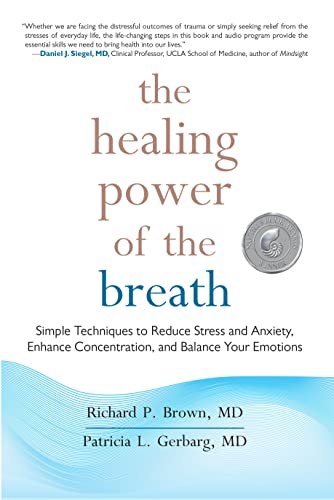
3. “The Healing Power of the Breath” by Richard Brown and Patricia Gerbarg
In my years working as a breathwork facilitator, few books bridge ancient practice, modern neuroscience, and clinical application as effectively as Brown and Gerbarg’s “The Healing Power of the Breath,” particularly for understanding how breathwork can offer profound support for conditions like anxiety, depression, and PTSD.
Science that empowers, not intimidates: what stands out immediately is how the authors break down the mechanics of breathing and its direct link to the nervous system without making it overly complex. Their explanation of how specific breathing patterns influence the parasympathetic (“rest and digest”) response is one of the clearest available, giving a solid “why” behind the techniques and illustrating how the breath is a readily available tool for intentionally calming the body and mind.
Clear techniques, responsibly presented: the step-by-step guidance for techniques like Coherent Breathing is invaluable. Coherent Breathing in particular is a technique I frequently teach for its simplicity and immediate calming effect, which Brown and Gerbarg explain perfectly. They also cover practices like Sudarshan Kriya Yoga, and their emphasis on seeking qualified instruction for certain techniques resonates deeply with professional ethics in this field.
A nuanced, realistic perspective: the book’s honesty and balanced view are genuinely admirable. Brown and Gerbarg position breathwork as powerful yet emphasise that it often works best alongside, not as a replacement for, conventional medical and psychological care. When working with clients with complex conditions, this realistic, integrative perspective is essential, underscoring breathwork’s role as part of a holistic approach and building crucial trust.
Possible enhancements: there were moments where a slightly clearer organisational flow within some chapters, progressing more linearly from basic to advanced applications, would ease navigation. The scientific grounding is a major strength, though simplifying certain medical terms could make the material even more accessible for readers completely new to physiology, without sacrificing the core message.
Who it is for: “The Healing Power of the Breath” shows that therapeutic breathwork is far more than a passing trend. Its blend of research, clinical experience, and practical instruction makes it an indispensable resource, one to recommend consistently to fellow practitioners, clients seeking self-regulation tools, and anyone wanting to understand the science behind breathwork’s healing potential, especially readers managing anxiety or trauma symptoms who want a technique with real clinical backing rather than anecdote.
Order “The Healing Power of the Breath”

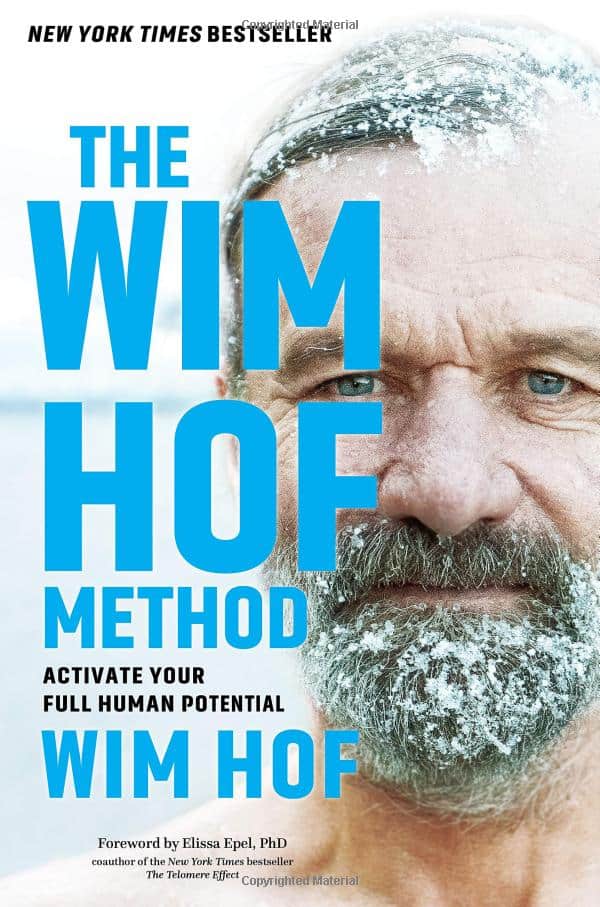
4. “The Wim Hof Method” by Wim Hof
Wim Hof, “The Iceman,” has undeniably brought breathwork and cold exposure into the mainstream spotlight with his incredible feats. His book offers a path for others to tap into similar potential. Having experience across various breathwork modalities, including more intense techniques, I approached this book with both curiosity and a critical eye toward its structure, claims, and suitability.
Part One, The Legend: Hof’s personal story, his journey through grief and discovery, is genuinely moving and powerfully sets the stage for why he developed his method, and it is easy to see why it resonates with so many readers. Interweaving more scientific context alongside the anecdotes from the start could have provided a stronger foundation for readers less familiar with physiology.
Part Two, The Practice: this is the core of the book, the specific breathing technique of cycles of deep, rapid breaths followed by extended breath holds, and the introduction to cold exposure. The instructions are clear, but Hof’s infectious enthusiasm sometimes leads to what could be considered oversimplification. The intensity is significant, which is why learning from a certified instructor is strongly recommended for both safety and effectiveness, especially with the cold element.
Part Three, The Science: Hof cites research on immune response modulation, inflammation, and metabolism. The 2014 study of Hof-trained volunteers, which measured a voluntary influence on the immune response (and blood pH as high as 7.75 during the breathing, the physiological basis of the drowning warning), is genuinely intriguing, but as with any developing field, scientific validation specifically for the entire method and all its claimed benefits is still evolving. More extensive, independent research is needed to fully understand the mechanisms and long-term effects, and readers should treat the more sweeping claims with the same care as any early-stage science.
Potential benefits, viewed through this lens: the core breathing technique, distinct from gentler methods, provides a powerful stimulus. Controlled, intense breathwork can help some individuals build resilience and manage stress, likely through nervous system modulation, though it requires careful application. The method also taps into mental fortitude, and the combination of breath and cold can be empowering for those seeking to challenge themselves.
Cautions that deserve real respect, since this intensity requires it: hyperventilation risk is real, since the specific breathing technique involves deliberate hyperventilation followed by breath holds, which can cause dizziness, fainting, or other issues if done improperly or by individuals with contraindications. Never practise near water: this cannot be emphasised enough. Never practise the intense breathing or breath holds before or during immersion in water; the risk of blacking out and drowning is real. Listen to your body and consult professionals: start gradually, and always consult a doctor first if you have cardiovascular issues, respiratory problems, epilepsy, or are pregnant. This method is not suitable for everyone.
Where it shines: Hof’s story is proof of human potential, and the way he inspires people to believe they are stronger than they think is genuinely valuable. For individuals drawn to intensity and challenge, the method can be an engaging entry point into exploring breath and body awareness, provided they approach it safely.
Where caution is warranted: while warnings are present in the book, the enthusiastic tone can sometimes overshadow the critical safety precautions, which need to be front and centre. A clearer distinction between established science, promising preliminary findings, and anecdotal evidence would help manage reader expectations.
Who it is for: if you are healthy, adventurous, understand the risks, and commit to learning safely, ideally with guidance from a certified WHM instructor, exploring elements of the Wim Hof Method can be a powerful experience. Approach it with respect for its intensity, prioritise safety above all else, and recognise it as one specific tool among many in the wider world of breathwork and well-being practices.
Order “The Wim Hof Method”
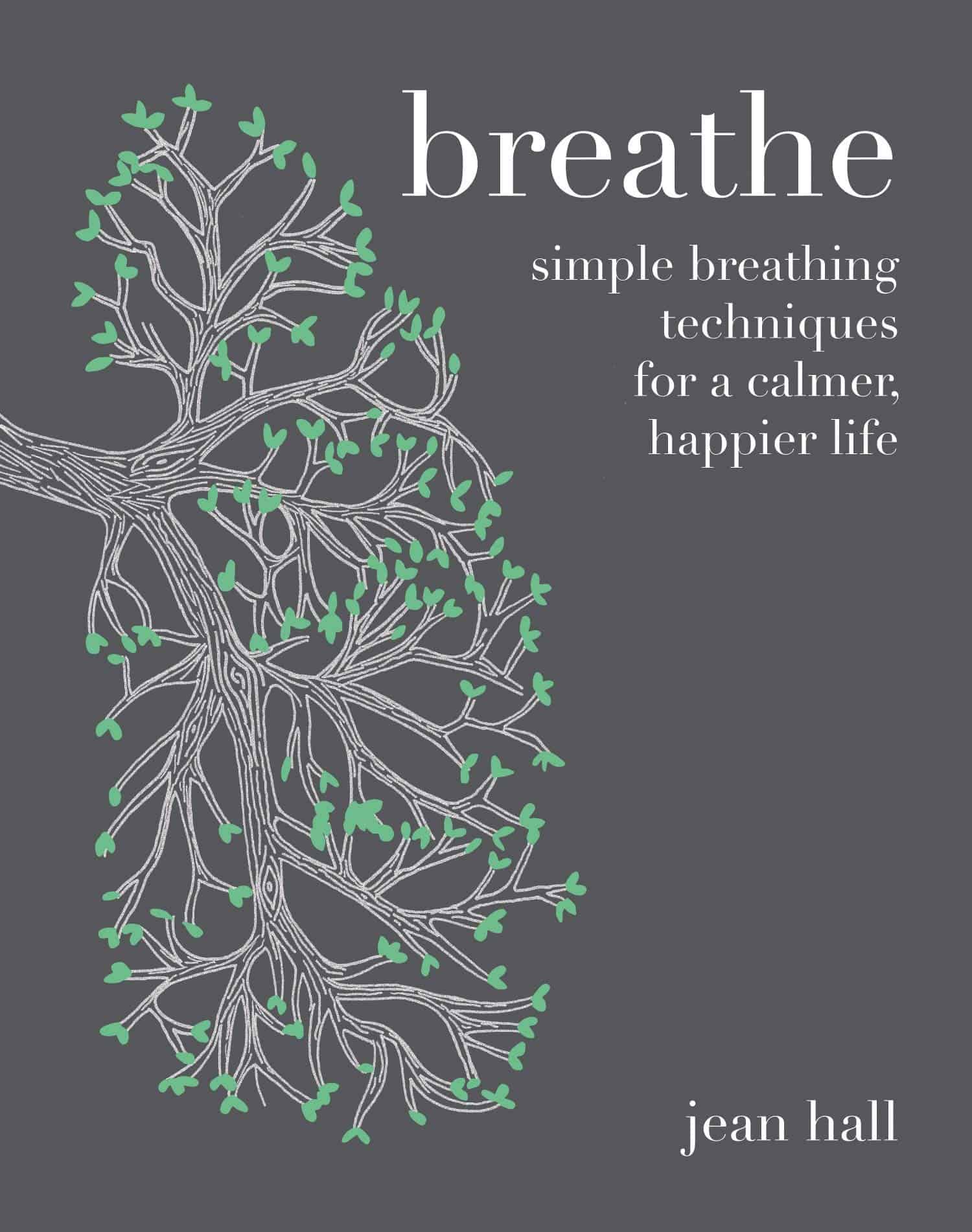
5. “Breathe: Simple Breathing Techniques for a Calmer, Happier Life” by Jean Hall
In the diverse landscape of breathwork, ranging from intense practices to subtle meditative techniques, Jean Hall’s “Breathe” holds a special place. As a professional who values meeting people where they are, this is a book worth recommending precisely for its gentle, accessible approach, a solid, encouraging introduction for anyone curious about harnessing their breath for calm and well-being.
Part One, The Why: Hall excels here. She clearly and kindly connects everyday breathing habits, often unconscious ones, to feelings, stress levels, and energy. For newcomers, this section is incredibly motivating; it lays the groundwork for understanding why paying attention to the breath matters so much.
Part Two, The How-To: Hall offers a well-chosen selection of foundational breathing exercises, like basic diaphragmatic (belly) breathing and extending the exhale. The clarity of her instructions makes these essential techniques feel unintimidating. A qualified teacher offering personalised feedback can still refine technique, but Hall provides an excellent starting point for self-exploration.
Part Three, Beyond the Mat: this focus on integration is genuinely valuable. Hall encourages readers to weave breath awareness into daily life, work, fitness, relationships, which aligns with the understanding that breathwork is not a separate practice but a tool to move through life with greater presence and ease.
Hall’s strengths: her clear writing style avoids jargon and makes the concepts welcoming for absolute beginners; she correctly conveys that the real magic happens when breath awareness permeates the entire day, not just the few minutes set aside for practice; and in a world sometimes focused on extreme challenges, she provides a much-needed, nurturing entry point for those who might be intimidated by more intense methods or who are primarily seeking stress reduction and calm.
Where there is potential for deeper exploration: a little more depth on why a specific technique might be chosen for a particular situation, calming anxiety versus boosting focus, for example, and brief context on the broader history or traditions of breathwork, such as links to yoga or mindfulness, would help readers know where to journey next once they have outgrown the basics here.
Who it is for: “Breathe” is a fantastic resource for anyone new to breathwork or seeking simple, practical tools to enhance daily life. For those ready to explore deeper after mastering these basics, supplement Hall’s book with guidance from a certified instructor or texts focused on more specific traditions or advanced techniques.
Order “Breathe”
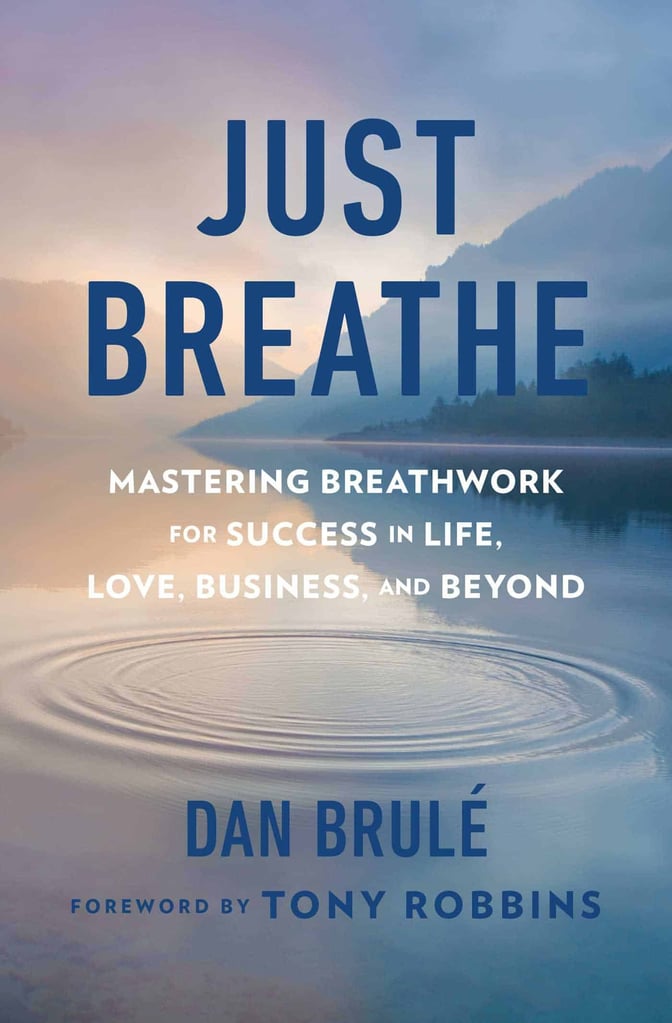
6. “Just Breathe: Mastering Breathwork for Success in Life, Love, Business, and Beyond” by Dan Brulé
Dan Brulé is undeniably one of the modern pioneers in the breathwork field, and his book “Just Breathe” reflects his ambitious vision: applying conscious breathing to virtually every facet of life. Drawing from his deep experience in breathwork, including foundational training like Rebirthing, Zen, and martial arts, Brulé offers a unique and passionate perspective.
Part One, The Science and Techniques: Brulé lays a solid foundation, explaining breathing mechanics and their connection to physiology and emotional states. His strong, clear emphasis on mastering diaphragmatic breathing is valuable; it is a fundamental skill that many people bypass, yet it is crucial for reaching deeper benefits. He introduces various breathing patterns, providing a toolkit for different situations.
Part Two, Breathwork in Action: this is where Brulé’s passion truly shines. He explores applications for health, stress relief, enhancing creativity, improving athletic performance, and more, covering more ground than most single books in this list attempt. His integration of breathwork into relationships, an often-neglected area, is particularly commendable, skilfully blending practical exercises with spiritual insight drawn from his diverse background, generally accessible even for those seeking purely secular benefits.
Part Three, Success and Beyond: this section directly links breathwork to achieving success in business and life. Some might find the tone leaning toward “self-help,” but focused, conscious breathing absolutely supports clearer thinking, emotional regulation, and better performance under pressure, all vital components of success.
Where Brulé excels: he masterfully conveys that breathwork is not confined to a mat or cushion but a dynamic tool woven into the fabric of an entire life; his exploration of breath’s role in empathy, connection, and communication is a unique and valuable contribution to the literature; and the sheer range of applications, paired with his palpable passion, means almost anyone can find something relevant.
Potential shortcomings: given the book’s ambitious scope, the structure could be slightly more linear or thematic to help readers work through the wealth of information more easily, since it can read as several books stitched into one. The strong emphasis on “success” might not resonate with readers primarily focused on the therapeutic or purely spiritual aspects of breathwork; it is a matter of alignment between what the book is optimised for and what you are personally looking for.
Who it is for: “Just Breathe” is a significant contribution from a major figure in the breathwork world, recommended to anyone seeking a comprehensive overview of how conscious breathing can touch every area of life. Translating this vast toolkit into a safe, effective, personalised practice benefits immensely from the guidance of a qualified teacher or facilitator.
Order “Just Breathe”
7. “The Art of Breathing: The Secret to Living Mindfully” by Dr. Danny Penman
Dr. Danny Penman, known for his work making Mindfulness-Based Cognitive Therapy accessible, brings that same clarity and gentle approach to “The Art of Breathing.” Blending foundational breath techniques with the core principles of mindful awareness, this book serves as an excellent, well-structured introduction, particularly appealing to those drawn to understanding both the “why” (the science) and the “how” (the mindful practice) of conscious breathing.
Part One, The Science and Mindfulness: Penman does not just ask you to breathe, he explains why it matters. His explanations of how breathing patterns impact the nervous system are clear and motivating, effectively linking breath awareness directly to cultivating mindfulness and laying a solid foundation for beginners.
Part Two, Breathwork for Health: this section covers applications like anxiety relief, asthma support, and pain management, each tied back to a specific breathing pattern rather than a vague promise. Penman’s grounded approach, presenting established benefits without hype and drawing on scientific understanding, builds trust and aligns with responsible practice.
Part Three, Life Applications: this is where the integration truly shines. Penman shows how mindful breathing is not just for quiet meditation but translates into improved focus, better stress management during busy days, and enhanced performance at work, with relatable case studies that make the benefits feel tangible rather than aspirational.
Where the book shines: Penman’s writing is remarkably clear and concise, even when discussing the science, making it understandable without sacrificing accuracy, a skill worth admiring. The strong mindfulness emphasis illustrates naturally how the breath serves as a constant, reliable anchor to the present moment, and the balanced, trustworthy perspective is crucial for building reader trust and encouraging sustainable practice.
Where experienced practitioners might look next: individuals with a significant existing breathwork or mindfulness practice may find the techniques covered are primarily a solid review of foundational skills rather than many advanced practices. Penman offers a good menu of exercises, though beginners often benefit from more specific guidance on choosing the right technique for an immediate goal, calming down versus energising, for example, and further personalisation often requires tailored instruction from someone who can watch you practise.
Who it is for: “The Art of Breathing” is a resource worth recommending with confidence, especially for beginners or those specifically interested in the intersection of breathwork and mindfulness. Its clarity, scientific grounding, and practical exercises make it an ideal starting point. Working with a qualified teacher can help deepen understanding and tailor the practice effectively as you progress.
Order “The Art of Breathing”
8. “The Breathing Book: Good Health and Vitality Through Essential Breath Work” by Donna Farhi
Donna Farhi’s “The Breathing Book” stands out for its warmth and depth. If you want not just techniques, but a true understanding of breathing on all levels, this is a classic for a reason.
Part One, The Foundations: Farhi does a beautiful job explaining the “why” of breathwork, anatomy, how breathing patterns impact everything, and its place in yogic tradition, without assuming the reader already has a yoga background. This part builds motivation to actually stick with a practice rather than trying it once and forgetting about it.
Part Two, The Practices: this is Farhi’s strong suit. She does not just list techniques; she helps you feel the differences between them, encouraging a slower, more attentive kind of practice than a quick technique list would, and she emphasises safe ways to explore even the more advanced ones.
Part Three, Breathwork for Real Life: this is where the book truly shines. It is not about isolating breathwork as a special exercise, but weaving it into how you move, your work, your entire life.
Where Farhi excels: cultivating a relationship with breath through self-awareness, making the practice deeply personal rather than just an exercise to get through; a holistic view that is clear that better breathing leads to a better you, mind, body, and something deeper that is a bit harder to define; and her guiding “teacher’s voice”, gently directive without being intimidating, which makes the book approachable for beginners yet still rewarding for those with some experience.
Potential considerations: some readers thrive on Farhi’s thoroughness, while others might prefer a more streamlined approach, especially at the beginning, since the level of detail can feel dense if you just want to get started; and while she makes the more advanced techniques safe, a totally new practitioner might be better off mastering the basics first alongside a teacher.
Who it is for: “The Breathing Book” is more than a manual, it is a companion on your breathwork journey. If you are seeking a deeper understanding of how breath shapes your life, and want the tools to make positive changes, this book is invaluable.
Order “The Breathing Book”
9. “The Science of Breath: A Practical Guide” by Swami Rama, Rudolph Ballentine, and Alan Hymes
This book, written by Swami Rama, Rudolph Ballentine, and Alan Hymes, offers a unique blend of the scientific and the spiritual when it comes to breathwork. If you are curious about the deeper “why” behind breathing practices, this is a fascinating read.
Part One, Breath Through History: this is not just a technique manual. The authors explore the role of breath in yoga, Taoism, Sufism, and more, highlighting that breathwork is not a fad but something deeply woven into human experience across cultures that had little contact with one another.
Part Two, The Science: this is where the book gets technical, which is genuinely rewarding for readers who want more than reassurance. Understanding how the nervous system responds to different breath patterns is empowering, and the explanation holds up well against more recent research on the topic.
Part Three, The Techniques: classics like alternate nostril breathing are explained clearly. What stands out is the attention to when a particular technique is most beneficial, not just how to do it.
Part Four, Integrating Breathwork: the authors offer practical ways to make breathwork an everyday habit, which is where most people get stuck.
Where it excels: a genuine science deep-dive for anyone who wants to go beyond “breathe deeper, feel better” and grasp the mechanics of how it all works; spiritual context that does not force any particular belief system but shows how breathwork has long been used for inner exploration, not just stress relief; and clear guidance on choosing the right technique for your needs, since knowing what practice is best is key.
Potential considerations: some Sanskrit and yoga-specific terms can be a hurdle for complete newcomers, and a glossary would have been a helpful addition given how often the terminology recurs. It is best approached with some basic breathwork experience, as the practices are not presented in a purely beginner-focused way, so pairing it with a simpler book first is a reasonable strategy.
Who it is for: “The Science of Breath” is a treasure for anyone seeking a well-rounded understanding of breathwork. If you want to explore the rich history, the science, and the practice itself, this book is a great investment. A teacher’s guidance is ideal for truly mastering the techniques, especially the more advanced ones.
Order “The Science of Breath”
10. “The Power of Breathwork: Simple Practices to Promote Well-Being” by Jennie Lee
Jennie Lee’s book delivers on its promise, showing how simple shifts in breathing can have profound effects on well-being. Whether you are a total beginner or seeking to deepen an existing practice, this book has value to offer.
Part One, The Science, Simplified: Lee avoids overly technical jargon but does not dumb things down. You will understand how simple inhales and exhales impact your stress levels, energy, and more.
Part Two, Practices for Real-World Needs: anxiety, sleep trouble, needing focus; Lee gives targeted techniques, making it easy to find the ones right for you right now rather than working through the whole book in order. The clear instructions and illustrations make this feel like a breathwork teacher’s dream, the kind of book you can hand a nervous beginner without over-explaining it first.
Part Three, Beyond Relaxation: Lee explores the potential for deeper inner work without being pushy, showing how breathwork can be part of a journey of self-discovery.
Where the book shines: truly accessible, a breath of fresh air for anyone who has been intimidated by other breathwork texts; an everyday focus that emphasises breathwork is not just for when you sit on a cushion but for stress-filled moments throughout the day; and a solid breadth of techniques that lets you see how different practices offer different benefits.
What to keep in mind: if you want extensive scientific research citations, this is not that book; it focuses on what you need to know to get started confidently rather than convincing a sceptic. The instructions are excellent, but a teacher can check your form, ensuring safety and maximum benefit, especially with the more advanced practices covered in the third section.
Who it is for: “The Power of Breathwork” is a fantastic entry point that empowers and inspires you to learn more. If you want to reduce stress, feel better, and discover the potential for deeper transformation through breath, this book is a great investment.
Order “The Power of Breathwork”
11. “The Rebirthing Book: The Art of Rebirthing and Breathwork” by Jim Leonard and Phil Laut
Jim Leonard and Phil Laut’s work offers a deep dive into the world of rebirthing-focused breathwork. If you are curious about this powerful, emotionally oriented approach, this book is a key resource.
Rebirthing theory and history: the authors thoroughly explain the philosophy behind rebirthing, with nods to its founders. This context distinguishes rebirthing from other modalities rather than treating it as interchangeable with Holotropic Breathwork or Conscious Connected Breathing more broadly.
Techniques, explained: they clearly outline core techniques, connected breathing among them, especially helpful for those unfamiliar with rebirthing’s specific methods.
Practical guidance: safety is emphasised throughout, which builds trust as a reader, and the step-by-step approach lowers the barrier to entry.
Where the book excels: an emphasis on emotional release that addresses head-on what shifts in breathing can reveal within us, without minimising the potential intensity; comprehensiveness for anyone focused specifically on this form of breathwork, rather than a general survey of various techniques; and a foundation for further study that, while guiding you toward DIY practice, hints at the real value of working with a skilled rebirthing facilitator.
Important considerations: rebirthing’s specific nature means this is not a book for someone seeking a gentle introduction to breathwork; it assumes a willingness to do deep inner work. If you are drawn to yogic pranayama, Holotropic Breathwork, and similar modalities, you will want supplemental resources alongside this one.
Who it is for: “The Rebirthing Book” is a must-read for anyone serious about exploring this profound approach. Its focus on emotional release and the authors’ clear guidance set it apart, though rebirthing is potent work, often best undertaken with support from a qualified practitioner.
Order “The Rebirthing Book”

12. “Holotropic Breathwork: A New Approach to Self-Exploration and Therapy” by Stanislav Grof and Christina Grof
This book offers a substantial overview of Holotropic Breathwork, particularly for those interested in its therapeutic and self-exploration potential.
Part One, The Foundations: a solid exploration of Jungian psychology and how it underpins Holotropic Breathwork, along with Grof’s own story, setting the stage for understanding that Holotropic Breathwork is not simply “breathe faster, see visions.”
Part Two, The Practice: clear instructions for the session structure, what to expect physically, the role of music, and so on. The emphasis on safety and skilled facilitation throughout is essential.
Part Three, Applications and Case Studies: the most compelling part for many, showing how Holotropic Breathwork can help with trauma, addiction, and much more, though it is anecdotal rather than research-heavy.
History and context: for readers used to gentler breathwork, it reveals the deeper lineage of practices designed to induce altered states for insight, rather than treating intense breathwork as a recent invention.
Beyond the “trip”: the emphasis on the integration process after a session shows this is about long-term transformation, not chasing temporary experiences, a distinction worth taking seriously.
Inspiring potential: while the focus is on healing, it hints at the spiritual dimensions Holotropic Breathwork can open up, which is appealing to some readers in particular.
Important considerations: Grof’s own work is foundational to Holotropic Breathwork, so his presence throughout is expected, though newer developments in the field get less attention. Holotropic Breathwork can be intense; while the authors address safety, they do not shy away from its potential to unearth deeply buried emotions. If hard research on efficacy is what you want, you will need to look elsewhere, since the book is more about philosophy and reported outcomes.
Who it is for: a good starting point for understanding Holotropic Breathwork, especially if you lean toward its therapeutic applications. The clinical literature treats it as an adjunct to psychotherapy with limited controlled evidence (Rhinewine 2007), which is why a certified facilitator is not optional. To truly practise it, you will need guidance from a certified facilitator, and there is deeper exploration to be done beyond this single book.
Order “Holotropic Breathwork”
13. “The Way of the Shaman” by Michael Harner
Michael Harner’s book undeniably put shamanism on the map for many, a crucial bridge introducing these powerful practices to a wider Western audience.
Shamanism 101: Harner does a good job explaining core concepts, the shamanic journey, spirit helpers, and so on, building a solid base for those totally new to the subject.
The practices: he gives clear instructions on drumming, journeying, and seeking power animals, enough to get you started, this is where many readers get hooked.
Case studies, inspiration or oversimplification: the case studies he includes are compelling and show what shamanic work can help with, though it is worth remembering that healing is rarely quick and easy.
Where the book excels: accessibility, since Harner avoids overly esoteric language, essential given that most readers lack the cultural context indigenous shamanism is rooted in; an invitation to experiment hands-on, which is crucial since shamanism is about direct experience, not just intellectual understanding; and universality, since his emphasis on common threads across shamanic cultures helps readers see potential relevance to their own lives.
Important considerations: it is vital to be aware of the appropriation debate, since Harner’s “core shamanism” is a distillation that risks losing the richness and nuance of specific traditions. This book can spark a lifelong journey, but it is a starting point, not the end-all, and seeking teaching within living lineages is valuable. While not explicitly stated, shamanic journeying often involves altered breathing patterns, an overlap that many explorers find fascinating.
Who it is for: “The Way of the Shaman” was a landmark text with a major impact. If you seek a taste of these practices, with the understanding that there is far more depth to uncover, this book is a worthwhile read.
Order “The Way of the Shaman”
14. “The Breathwork Experience: Exploration and Healing in Nonordinary States of Consciousness” by Kylea Taylor
Kylea Taylor’s book offers a solid exploration of breathwork, particularly for those curious about its potential for deep personal transformation.
Introduction, Setting the Stage: Taylor does a good job defining breathwork’s scope and emphasises that it complements traditional therapies, rather than replacing them, managing expectations responsibly from the very first page rather than overselling the practice.
Part One, The Foundations: a decent overview of breathwork’s history and different modalities, enough to orient a newcomer without being overwhelming.
Part Two, Breathwork in Action: this is where many get excited. The practices are clearly explained, with guidance on choosing the right one for your goal, trauma release, a creativity boost, and so on.
Personal stories: these offer hope, but it is key to remember that breathwork is not a magic bullet; healing takes ongoing effort.
Accessibility: Taylor’s writing is clear and avoids overly esoteric language, ideal if you are new to concepts like “nonordinary states”.
Practical focus: you will not just learn theory but get instructions to try, which is how breathwork becomes truly experiential rather than an abstract idea.
Breadth of approaches: Taylor covers major forms like Holotropic and Rebirthing, revealing how much breathwork actually encompasses beyond a single technique.
Important considerations: this is science-light, so if you want hard research citations, this is not the book; it leans on anecdotal evidence, which is compelling but not the same as rigorous studies. Finding the right facilitator matters, since while DIY breathwork is possible, the book hints at deeper possibilities that need a skilled facilitator, especially for intense modalities. Think of this as a spark, not the whole fire, since breathwork is a lifelong journey.
Who it is for: “The Breathwork Experience” is a worthy read for anyone curious about the transformative potential of conscious breathing, especially if you lean toward the inner-growth or spiritual side of the practice. Just remember, breathwork is best experienced, not just read about.
Order “The Breathwork Experience”
15. “Breathing Love: Meditation in Action” by Jennie Lee
Jennie Lee’s book offers a refreshingly heart-centred take on meditation. While some approaches focus on pure mindfulness technique, she reminds us that true transformation often comes from cultivating inner kindness alongside focus.
Part One, Setting a Loving Foundation: Lee knows that a rushed, forced approach backfires, something many meditation books gloss over. She guides you on finding your “why” for meditating, creating a gentle space, and choosing practices that truly resonate rather than practices you feel obligated to force.
Part Two, The Power of the Heart: this is where the book shines. Meditation, she shows, is not about shutting off emotions, but turning toward them with compassion, especially toward ourselves.
Part Three, Meditation Beyond the Cushion: maybe the most useful part. It is about how that inner kindness ripples into how you communicate, build relationships, and simply move through your day.
Where the book excels: permission to be gentle, a relief for those who have struggled with “get focused” approaches, making practice sustainable rather than a source of self-judgment; a focus on love, reminding us of the transformative power of simply meeting ourselves with compassion rather than chasing outcomes like calmer sleep alone; and a practical, grounded approach that connects the exercises to research showing how this changes us for the better, without becoming overly mystical.
Important considerations: this is not technique-heavy, so if you want a breakdown of twenty-plus meditation styles, this is not that; it is about the loving attitude you bring, more than specific practices, and works best alongside another book or teacher to go deeper into specific meditation techniques once the underlying attitude has settled in.
Who it is for: “Breathing Love” is a beautiful reminder that meditation is not solely about achieving a blank mental state, but also about the quality of our inner world, a perfect choice if your heart is calling you to explore this path.
Order “Breathing Love”
16. “Breathwork: A 3-Week Breathing Program to Gain Clarity, Calm, and Better Health” by Valerie Moselle
Valerie Moselle’s book offers a structured introduction to breathwork practice. If you are the type who likes organised learning, this is a great place to begin understanding the “why” and “how” of conscious breathing.
Week 1, The Basics: Moselle does an excellent job explaining how breathing impacts your stress response, focus, and so on, key motivation to actually put the techniques into practice.
Week 2, Going Deeper: this is where things get interesting. She introduces techniques that might surface emotions or buried memories; it is responsible of her to emphasise self-compassion here.
Week 3, Making It a Habit: maybe the most valuable part, honestly. It is about finding ways to fit breathwork into your real life, which is where most people fail.
Strong on the science: if you want to know why this works, not just that it does, Moselle delivers, which can be particularly motivating for sceptical types who are wary of anything that sounds too mystical.
Focus on emotional release: Moselle understands that breathwork is not just about feeling calmer in the moment; it can be a tool for deeper healing over time, and she frames the three weeks accordingly.
Structured yet kind: the three-week plan offers guidance without being rigid, a good balance for beginners who want a plan but not a drill sergeant.
Important considerations: three weeks is just the beginning, since breathwork has far more to offer long-term, so think of this book as a solid foundation to build upon. Especially as you get into Week 2’s deeper practices, having a teacher to check form and answer questions is ideal for safety and maximum benefit.
Who it is for: this book is a well-structured jump start into the world of breathwork. Moselle’s emphasis on both the science and the emotional impact makes it compelling, ideal if you are ready to commit to consistent practice.
Order “Breathwork: A 3-Week Breathing Program”
17. “Breathing for Warriors: Master Your Breath to Unlock More Strength, Greater Endurance, Sharper Precision, Faster Recovery, and an Unshakable Inner Game” by Belisa Vranich
Belisa Vranich’s book offers a compelling focus on how breathwork can directly enhance performance, mental and physical. If you are drawn to the practical side, this book delivers.
Part One, The Why: this is where Vranich shines. She explains the science of how breathing impacts stress, focus, even physical output, in a way that is understandable and motivating rather than dense and academic.
Part Two, The Techniques: she gives seven targeted practices, the Tactical Breather for in-the-moment calm, the Endurance Breather, and so on; the names make the purpose clear, which is genuinely helpful when you are choosing a technique under pressure rather than browsing calmly.
Part Three, Beyond the Mat: she knows breathwork is useless if you do not practise consistently. Here she offers realistic ways to make it a habit, along with lifestyle tips that support good breathing outside of any formal practice session.
Accessibility: she does not dumb things down but avoids overly technical jargon, ideal for those new to breathwork who want to go beyond “just breathe deeper” advice.
Specificity: unlike books that give a laundry list of techniques, she helps you choose the right one for what you need right now, rather than leaving you to guess.
Athlete-minded, but not only for athletes: while that is her background, the principles of using breath to manage stress and energy translate to anyone facing high-stakes situations, not just competitive sport.
Important considerations: this is less relevant if you seek breathwork mainly for stress relief or inner exploration, since it is about achieving specific outcomes. The science here is “need to know” for taking action rather than a research deep dive, though it could inspire you to explore other breathwork methods later, once you see what conscious breathing can do for you.
Who it is for: “Breathing for Warriors” is an excellent choice if you want a clear-cut, practical system for using your breath as a performance tool, particularly well suited to those with a competitive streak or anyone who thrives on seeing tangible results from their efforts.
Order “Breathing for Warriors”
18. “Breathing Spaces: Qigong, Psychiatry, and Healing in China” by Nancy N. Chen
Nancy N. Chen’s book offers a fascinating look at the complex world where qigong, psychiatry, and modern Chinese society intersect. If you are curious about the deeper cultural context of mind-body practices, this is a must-read.
Part One, Qigong’s Roots: Chen does a great job tracing qigong’s evolution from its spiritual origins to the diverse forms practised today, across multiple dynasties and political eras. This is not just about techniques, but the philosophy it is rooted in and how that philosophy shifted over time.
Part Two, Qigong in the Clinic: this is where things get really interesting. She shows how qigong is not some “alternative” curiosity but is integrated into mainstream mental healthcare in China, with surprising success.
Part Three, Qigong and Modern China: it is not just about healing individuals; Chen explores how qigong is bound up with national identity and politics, far bigger than simple self-help or a wellness trend.
Beyond “how to”: while Chen explains qigong basics, this is not a technique manual; it is about understanding the forces that shaped how it is viewed and used today, in both clinical and political contexts.
The human stories: woven throughout, these remind us that qigong is not just a concept but something that transforms real lives, grounding the scholarship in lived experience.
Relevance to breathwork in the West: while focused on China, it reveals how mindful movement and breath can be far more than stress-relief tools when embedded in a supportive cultural framework, a useful reference point for Western practitioners.
Important considerations: this is not a light read; it is scholarly, which is great if you are truly interested in the topic, but not casual reading like a pop-culture self-help book. If you are looking for information on qigong practice itself, this will not provide that level of detail, though it gives context for making sense of any practice guides you find elsewhere.
Who it is for: “Breathing Spaces” is valuable for anyone seeking a deeper understanding of qigong’s historical, social, and healing significance, whether you are a breathwork teacher drawn to Eastern roots, someone in healthcare curious about integrative approaches, or simply fascinated by culture’s power to shape well-being.
Order “Breathing Spaces”
19. “Breathe Well, Be Well: A Program to Relieve Stress, Anxiety, Asthma, Hypertension, Migraine, and Other Disorders for Better Health” by Robert L. Fried
Robert L. Fried’s book offers a solid exploration of how conscious breathing patterns can impact a wide range of health issues. If you respond best to a blend of science and practical guidance, this is a good place to start.
Part One, The Why: Fried does not just tell you to “breathe better.” He explains the ripple effects of stressed breathing on everything from anxiety to blood pressure, building real motivation to do the work rather than treating breath as an afterthought in a wider health routine.
Part Two, The Techniques: this is Fried’s strength, clear instructions for various practices presented without unnecessary jargon. If you are new to breathwork, having this “menu” of options is helpful as you find what feels best for you rather than committing to a single method too early.
Part Three, Using Breathwork for Specific Issues: this is where it gets encouraging. Fried shows how these are not just “relaxation” techniques but potential tools for managing real health challenges.
Backed by science: Fried knows sceptics will not change habits without proof, and he cites studies showing how breathwork measurably impacts the body rather than relying on testimonial alone.
East meets West: he references ideas like prana and qi in a way that stays understandable even if those concepts are entirely new to the reader.
The case studies: these offer hope while also illustrating that breathwork plus proper medical care often work best together, not as alternatives to each other.
Important considerations: if you want deep philosophy, this book is primarily focused on the practical, health-related side of breathwork, less on its spiritual dimensions. It works best as a launchpad, a good foundation in various techniques, and seeking additional guidance from a teacher is ideal for maximising the benefits long-term.
Who it is for: “Breathe Well, Be Well” demystifies breathwork and shows its potential for improving overall health. It is a great starting point, especially if you are unsure where to begin or want to feel confident there is solid evidence behind the practices.
Order “Breathe Well, Be Well”
20. “Light on Pranayama: The Yogic Art of Breathing” by B.K.S. Iyengar
If the rest of this list leans modern and Western, Iyengar’s classic is the traditional counterweight. First published in 1981 as a companion to his landmark “Light on Yoga”, it remains one of the most thorough treatments of pranayama in print, written by a teacher who shaped how much of the world practises yoga today.
The foundations: Iyengar does not rush to technique. He grounds the breath in the wider framework of yoga, its place among the eight limbs and the ethics that sit underneath any serious practice, so pranayama is treated as a discipline to respect rather than a quick fix.
The mechanics: this is where the book earns its reputation. Iyengar breaks down the anatomy of breathing, the seated postures that support it, and the bandhas, the internal locks, in fine detail with staged photographs. It is technical, and it rewards slow reading rather than skimming.
The graded course: rather than a loose menu of techniques, Iyengar lays out a clear progression, from establishing a steady seat and even breathing through to the classical practices, each stage building capacity safely over time. The structure is demanding but methodical.
Important considerations: this is not a light introduction. The language is precise and at times austere, and several practices carry genuine cautions that Iyengar is careful to flag. Beginners will get the most from it alongside a teacher, using it as a reference to return to rather than a book to finish in a weekend.
Who it is for: anyone who wants the traditional, thorough grounding in pranayama that sits behind the modern breathwork world, and yoga teachers who want a serious reference on the classical breathing practices. If you have read the accessible titles above and want real depth, this is the one to grow into.
Order “Light on Pranayama”
Ready to Go Beyond Reading?
Books provide a conceptual foundation, but breathwork is fundamentally an experiential practice. Reading about the vagus nerve and the parasympathetic nervous system is useful; actually practising the techniques that engage them, ideally with feedback from someone who can see whether you are genuinely relaxing your jaw and shoulders or just performing the shape of a calm breath, is transformative. Most of the authors reviewed above say some version of the same thing: books build understanding, but the nervous system changes through repetition, not through reading alone.
If you are ready to move from understanding to embodied skill, Loka Yoga School’s Online Breathwork Training offers a structured, accredited pathway from personal practice to professional facilitation. This breathwork practitioner program covers 28 techniques, anatomy and physiology, trauma-informed facilitation, and business development, at a cost that makes professional certification genuinely accessible. For a closer look at how these classical and modern techniques differ, see our guide to the difference between pranayama and breathwork, and if you are weighing certifications rather than reading lists, our review of the 10 best breathwork certifications covers that ground directly.
If your interest runs wider than breathwork alone, our 200-hour yoga teacher training in Bali covers pranayama inside a full yoga curriculum, with anatomy, philosophy and supervised teaching practice alongside it.
FAQ
What is the best book on breathwork for beginners?
James Nestor’s “Breath: The New Science of a Lost Art” is the most widely accessible starting point for beginners; it explains why breathing correctly matters through engaging narrative journalism rather than dense theory. Jean Hall’s “Breathe: Simple Breathing Techniques for a Calmer, Happier Life” is the best choice if you want to start practising immediately with clear, foundational instruction rather than reading about the science first. Both work well as a first purchase before committing to a paid course.
Which breathwork books are most evidence-based?
“The Oxygen Advantage” by Patrick McKeown and “The Healing Power of the Breath” by Richard Brown and Patricia Gerbarg are the most rigorously evidence-based, drawing extensively on peer-reviewed research from authors with clinical and scientific backgrounds. “The Science of Breath” by Swami Rama, Ballentine, and Hymes provides excellent physiological grounding alongside classical yogic context. Neither replaces the primary research; the studies behind slow breathing and behind high-ventilation methods are linked in the reviews above.
Are there breathwork books specifically for therapists?
Yes. “The Healing Power of the Breath” by Brown and Gerbarg is written specifically with clinical practitioners in mind and discusses applications for anxiety, depression, and PTSD. “Holotropic Breathwork” by Stanislav and Christina Grof is essential reading for anyone working in therapeutic settings with somatic approaches.
What books explain the difference between pranayama and modern breathwork?
“Breath” by James Nestor touches on this distinction through his exploration of different traditions, while “The Science of Breath” by Swami Rama provides the classical yogic framework and contextualises it within modern research. For a focused comparison, our guide to the difference between pranayama and breathwork covers this directly.
What are the best books on breathing, rather than breathwork specifically?
If your interest is the mechanics of breathing itself rather than breathwork as a practice, “Breath: The New Science of a Lost Art” by James Nestor and “The Oxygen Advantage” by Patrick McKeown are the strongest choices. Both focus heavily on nasal breathing, CO2 tolerance, and the physiology of respiration, with less emphasis on the therapeutic or spiritual applications covered elsewhere on this list.
Is there a difference between “breathwork books” and “pranayama books”?
In practice, the two overlap heavily. Pranayama is the classical yogic term for breath regulation and appears throughout books like “The Science of Breath” by Swami Rama, Ballentine, and Hymes. Modern “breathwork” books, such as those by Wim Hof, Dan Brulé, or the Grofs, draw on pranayama alongside newer Western modalities like Conscious Connected Breathing, so the reading lists intersect more than they diverge.
Do I need to read books to learn breathwork, or should I take a course?
Both serve different purposes, and the two are complementary rather than competing. Books build conceptual understanding and motivation, and they are an inexpensive way to work out which tradition or style, science-based, classical pranayama, or therapeutic, resonates before spending money on training. A structured course provides practical instruction, feedback, safety guidance, and the lived experience of the techniques under qualified supervision, none of which a book alone can offer. For anyone who intends to practise seriously or guide others professionally, a course such as our own Online Breathwork Training is essential alongside the reading, not instead of it.

The Loka Newsletter
Enliven your routine with exclusive spiritual content. There’s so much to learn.
Find us on Instagram
@lokayogaschool