Last updated on September 4th, 2026 at 03:06 pm
What Are the Benefits of Skull Shining Breath (Kapalabhati)?
Kapalabhati, known in English as skull shining breath, is one of the most powerful pranayama techniques in the classical yogic tradition. It energises the body, clears the respiratory system, stimulates digestion, and produces a state of mental sharpness that makes it an exceptional preparation for meditation or focused work.
The Sanskrit name is instructive. “Kapala” means skull and “bhati” means to shine or illuminate. The practice earns this name through its effect on the mind: after a round of Kapalabhati, mental fog clears and awareness sharpens.
What Is Kapalabhati?
Kapalabhati is a pranayama technique characterised by short, forceful exhales driven by sharp contractions of the lower abdomen, followed by passive, automatic inhales. The exhale is the active phase. The inhale simply happens as the abdominal muscles release.
In traditional yogic texts, Kapalabhati is classified as both a pranayama and a shat karma, one of the six classical cleansing practices. This dual classification reflects the practice’s function: it is both an energy technique and a purification tool.
A standard practice involves rounds of 20 to 30 pumps, with rest periods between rounds to observe the effects. Beginners typically start with one or two rounds and progress gradually over weeks of consistent practice.
The Physiological Mechanisms Behind the Benefits
The rapid, rhythmic abdominal contractions of Kapalabhati produce a range of physiological effects that explain its reputation in both classical texts and modern physiology.
Each forceful exhale expels more carbon dioxide than a passive breath cycle. This temporarily shifts the blood gas balance, increasing the relative proportion of oxygen and altering pH slightly toward alkalinity. The result is a heightened sense of alertness and energy.
The abdominal pumping action also creates rhythmic pressure changes in the thoracic and abdominal cavities. This stimulates the abdominal organs, including the liver, spleen, and digestive tract, through mechanical massage. It also engages the diaphragm actively and strengthens the respiratory muscles over time.
Mental Clarity and Focus
The most immediate benefit most practitioners notice is mental. After two or three rounds of Kapalabhati, the mind becomes noticeably quieter and more alert simultaneously. The cognitive fog that accumulates through screen time, stress, or poor sleep disperses quickly.
This effect is partly explained by the increased cerebral oxygenation that accompanies the technique, and partly by the pattern-interrupting quality of focused, rhythmic movement. Kapalabhati is one of the most effective pre-meditation practices in the pranayama repertoire precisely because it settles the nervous system while sharpening awareness.
Respiratory Efficiency and Lung Capacity
Regular Kapalabhati practice strengthens the diaphragm and intercostal muscles, improving respiratory efficiency. The forceful exhale trains muscles that are rarely recruited in habitual, shallow chest breathing.
Over time, practitioners develop a greater tidal volume, the amount of air moved per breath, and improved clearance of stale air from the lower lobes of the lungs. This is particularly relevant for anyone who spends long hours seated and breathing shallowly.
The technique also clears the nasal passages and sinuses, making it especially useful during the cooler months or when respiratory congestion is present.
Digestive Health and Metabolic Support
The abdominal contractions central to Kapalabhati directly stimulate the digestive organs. Regular practice supports healthy peristalsis, the rhythmic muscular contractions that move food through the digestive tract, and can improve bowel regularity and metabolic function.
The technique also generates internal heat, which the yogic tradition describes as agni, or digestive fire. This heat supports the efficiency of digestive enzymes and contributes to the sense of internal vitality that regular practitioners report.
Natural Energy Without Stimulants
Kapalabhati is one of the most effective natural energy techniques available. The combination of increased oxygenation, sympathetic nervous system activation, and the clearing of stale air from the lungs produces a clean, sustained energy boost without the crash associated with caffeine.
Many practitioners use Kapalabhati in the mornings to replace or reduce their dependence on stimulants, or during afternoon energy dips as a three-to-five-minute reset. The effects are immediate and require no equipment or preparation.
Mood Elevation and Anxiety Relief
While Kapalabhati activates the sympathetic nervous system during the practice itself, the post-practice state is often characterised by calm, elevated mood, and a sense of emotional lightness. This paradoxical effect is well-documented among practitioners and is thought to result from the release of neurochemicals including endorphins during vigorous breathing.
The technique also requires focused attention on the breath and abdominal movement, which interrupts anxious thought loops and grounds awareness in the present moment.
How to Incorporate Kapalabhati Into Your Sadhana
Begin with one round of 20 pumps. Sit in a comfortable upright position, either cross-legged on the floor or on a chair with the spine tall. Place one hand on the lower abdomen to feel the contractions.
Inhale naturally to begin, then begin the sequence: sharp, short exhales through the nose, each driven by a quick inward pull of the lower abdomen. Allow the inhale to happen passively between each exhale. Start slowly, establishing the rhythm before increasing pace.
Rest for 30 to 60 seconds between rounds, observing the breath returning to normal and noting any internal sensations. Over weeks, gradually build to three rounds of 30 to 50 pumps.
Morning practice on an empty stomach is traditional and most effective. Avoid Kapalabhati in the evening as it may interfere with sleep.
What the Research Shows About Skull Shining Breath
The evidence base here is thin, and the most relevant study cuts against the usual marketing. Telles and colleagues’ study of heart rate variability during high frequency yoga breathing found that the practice reduced markers of parasympathetic activity and increased sympathetic activity, compared with simple breath awareness.
That is the opposite of the relaxation claim often attached to it, and it is worth stating plainly. This is a stimulating practice. Treating it as a calming one is a category error that leads people to use it at the wrong time of day and for the wrong problem.
Positive findings exist but they are small and published in lower-tier venues. Budhi and colleagues’ study of working memory and phasic heart rate variability reported improvements, and should be read as preliminary rather than settled.
Broader reviews of yogic breath regulation, including Saoji and colleagues’ narrative review and Jayawardena and colleagues’ systematic review of pranayama, describe a similar picture across the field: plausible mechanisms, frequent methodological weaknesses, and few large trials.
The Case Report Every Teacher Should Know
In 2004 the journal Chest published a case report titled Kapalabhati pranayama: breath of fire or cause of pneumothorax?, describing a collapsed lung following the practice.
One case report proves very little about population risk. It does establish that the mechanism is possible, and that matters when you are teaching a forceful practice to a room of people whose lung health you do not know.
The practical response is not to abandon the technique. It is to screen properly, to teach volume before speed, and to stop immediately if a student reports sharp chest pain or sudden breathlessness rather than treating it as intensity to breathe through.
This sits alongside the standard contraindications covered further down, and it is the reason those contraindications are not a formality.
How It Differs From Other Fast Breathing
Kapalabhati is not the same thing as the sustained overbreathing used in conscious connected breathwork, and conflating them causes bad teaching decisions.
The classical technique is a series of short, sharp exhalations driven by the abdominal wall, with the inhalation left passive. It is normally practised in rounds of limited duration rather than continuously for tens of minutes.
Both practices lower carbon dioxide, so both can produce tingling and light-headedness. The difference is dose. Sustained high-ventilation sessions push blood chemistry much further, which is why they carry a heavier screening burden and why they are held in a supervised setting.
If you want the full comparison across the categories, our article on pranayama vs breathwork sets out where each practice sits and what the evidence supports for each.
Kapalabhati, bhastrika, and breath of fire are three techniques, not three names
Studios use the three names interchangeably, and they describe different mechanics. In kapalabhati the exhalation is the only active stroke: a short contraction of the lower abdominal wall pushes the air out, and the inhalation is the passive recoil that follows. The Hatha Yoga Pradipika lists it among the shatkarmas, the cleansing practices, rather than among the kumbhakas.
Bhastrika, the bellows breath, drives both directions. Inhalation and exhalation are equally forceful and roughly equal in length, the chest and diaphragm do more of the work, and the classical form closes each round with a retention. Because every stroke moves a larger volume in both directions, blood carbon dioxide falls faster than in kapalabhati, which is why its contraindication list is longer and why it is taught after kapalabhati, not before.
Breath of fire is the Kundalini yoga term, and mechanically it sits closer to a light, sustained bhastrika than to kapalabhati: inhale and exhale are equal, both are powered from the navel, there is no pause and no retention, and it is commonly held for minutes at a time inside a posture. The confusion is not helped by the medical literature, where the 2004 pneumothorax case report uses breath of fire as a translation of kapalabhati. If a student tells you they have been doing breath of fire, ask what their inhale does before you assume anything about their exhale.
For teaching purposes the rule is simple. Kapalabhati is the entry point, bhastrika is the progression, and breath of fire belongs inside the tradition that shaped it. All three lower carbon dioxide, so the stopping signals covered below apply to every one of them, and all three should be learnt with a qualified teacher before they go into a home practice.
The Technique Errors That Cause Most Problems
Leading with speed. Beginners chase the rate they have seen on video and lose the mechanics entirely. Rate is the last variable to increase, not the first.
Pulling the inhalation. The inhale should be a passive recoil. If you are actively sucking air in between each stroke, you are hyperventilating rather than practising kapalabhati, and the carbon dioxide drop will be steeper than intended.
Recruiting the chest and shoulders. The stroke comes from a short contraction of the lower abdominal wall. Shoulders rising towards the ears is the reliable sign that the pattern has been lost.
Practising on a full stomach, or straight into a seated meditation without a pause. Leave a gap after the final round and let the breath return to its own rhythm before you judge the effect.
Ignoring the signal to stop. Tingling and light-headedness are expected at moderate intensity. Sharp chest pain, visual disturbance, or a racing heart that does not settle are not, and they mean the session ends.
Teaching It in a Mixed-Level Room
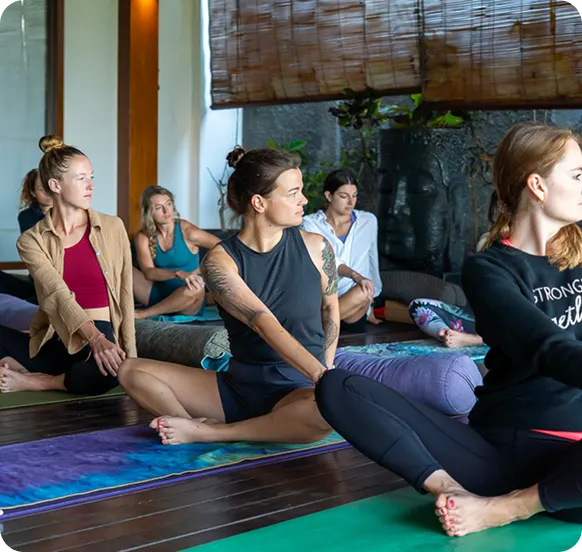
Leading this practice one to one is straightforward. Leading it for 20 people whose experience runs from a decade of daily sadhana to a first Tuesday class is a different problem, and most of the trouble comes from cueing everyone as though they are in the same place.
Set the entry conditions out loud before anyone starts, and name them rather than gesturing at them. Pregnancy, uncontrolled high blood pressure, recent abdominal or chest surgery, glaucoma, epilepsy, and any active respiratory infection all belong in that sentence. Give the alternative in the same breath, so that opting out is not a public admission of anything. A student who has been told to sit this one out and handed something else to do will comply; one who has only been told it is “not for everyone” usually joins in anyway.
Then cue the exhale and leave the inhale alone. The common fault in a group is forcing both directions, which is where the strain and the light-headedness come from. One short sharp abdominal contraction on the out breath, and the in breath arrives on its own as the belly releases.
Keep the first round short. Twenty strokes is plenty for a mixed room, followed by a full stop and several ordinary breaths before anyone considers a second. Watch faces during the rest rather than during the strokes, because the rest is when you can see who has overdone it.
Give an explicit instruction for stopping mid-round. Something as plain as “if your head swims, stop and breathe normally, you have not failed anything” removes the social cost of stopping, and it is the single cue most likely to prevent an incident. Say it before the first round, not after someone goes pale.
If your students are asking where this sits alongside the other fast practices they have met online, the difference between pranayama and modern breathwork is worth setting out for them once, properly, rather than correcting piecemeal.
Where to Learn It Properly
This is a technique that benefits disproportionately from being watched. Most of the errors above are invisible from the inside and obvious from two metres away.
If you want the surrounding framework first, our explanation of pranayama covers what the classical category actually contains, and our overview of meditation covers the practice this one is usually placed before.
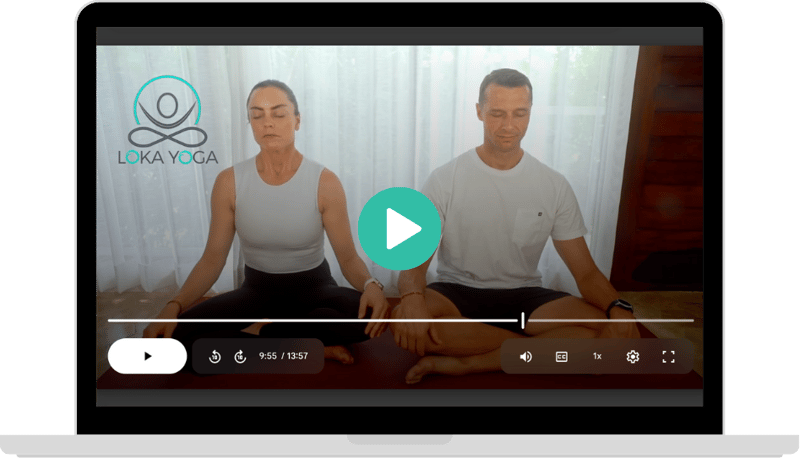
Our online breathwork training teaches the mechanics alongside the physiology and the screening. If you would rather learn it in person and inside a full yogic curriculum, the pranayama modules of our Yoga Alliance certified 200-hour YTT in Bali cover the same ground with eyes on you.
Contraindications and Precautions
Kapalabhati is a powerful technique and is not appropriate for everyone. Avoid this practice if you are pregnant, have recently undergone abdominal surgery, or have a hiatal hernia. It is also contraindicated for those with uncontrolled high blood pressure, cardiovascular conditions, epilepsy, or acute respiratory illness.
If you are new to pranayama, learn Kapalabhati, and any progression to bhastrika or to breath retention, from a qualified instructor before establishing a home practice. The technique is safe and highly beneficial when learned correctly; the risk lies in incorrect form or practising without understanding the contraindications.
If you want to go deeper into pranayama and breathwork, Loka Yoga School’s Online Breathwork Training provides comprehensive instruction in Kapalabhati alongside 24-plus other techniques, with full anatomy and safety guidance.
Learn Kapalabhati the Right Way
Kapalabhati is powerful, and like any powerful technique it rewards correct form and respects real contraindications. Learning it properly is the difference between a clean energy lift and a dizzy, forced practice.
Loka Yoga School’s Online Breathwork Training teaches Kapalabhati alongside more than 24 other techniques, with full anatomy, pacing, and safety guidance so you can practise and teach with confidence.
FAQ
What is Kapalabhati and what does skull shining breath mean?
Kapalabhati is a classical pranayama technique involving short, forceful exhales driven by sharp lower-abdominal contractions, with passive inhales between each exhale. The Sanskrit name translates as skull shining, reflecting the mental clarity and brightness the practice produces. It is both a breathing exercise and a traditional cleansing practice in the yogic system.
What are the main benefits of Kapalabhati practice?
Kapalabhati improves respiratory muscle strength and lung capacity, stimulates the digestive organs, generates internal heat, sharpens mental focus, boosts energy levels naturally, and clears the nasal passages and sinuses. Regular practice over weeks produces cumulative benefits in digestion, energy, and cognitive clarity.
How often should I practise Kapalabhati?
Daily morning practice on an empty stomach is the traditional recommendation. Beginners should start with one round of 20 pumps and progress gradually. Three rounds of 30 to 50 pumps each is a sustainable goal for most practitioners after several weeks of consistent practice.
Who should avoid Kapalabhati?
Kapalabhati is contraindicated during pregnancy and for those with uncontrolled hypertension, cardiovascular disease, epilepsy, active respiratory illness, or recent abdominal surgery. Anyone with these conditions should consult a healthcare provider before beginning this practice.
Can Kapalabhati help with weight management?
Kapalabhati supports metabolic function through its stimulation of digestive organs and generation of internal heat. While it is not a replacement for physical exercise or dietary change, regular practice contributes to healthy digestion and metabolic efficiency, which are relevant factors in overall health and weight management.
The Loka Newsletter
Enliven your routine with exclusive spiritual content. There’s so much to learn.

Find us on Instagram
@lokayogaschool