Last updated on October 22nd, 2026 at 08:46 am
Balancing Opposing Qualities in Yoga
Every quality you consider a strength also has a shadow. Being calm can slide into passivity. Being disciplined can harden into rigidity. Being compassionate can leave you perpetually depleted. Yoga philosophy has a specific teaching for this, and it is one of the most practically useful ideas in the tradition.
The Problem with Virtues
We tend to think of personal qualities as unambiguously positive or negative. Patience is good. Impatience is bad. Discipline is good. Laziness is bad.
But in practice, any quality taken to its extreme becomes a liability.
The person who is too calm rarely takes necessary action. The person who is too disciplined builds a prison of their own routines. The person who is too active never recovers. The person who is too patient accepts situations that genuinely need to change. The person who is too compassionate gives until there is nothing left. The person who is too spontaneous cannot be relied upon.
Yoga philosophy, particularly through the lens of the Gunas (Sattva, Rajas, and Tamas), teaches that balance is not a fixed state but a dynamic, responsive process. You do not achieve balance and then stay there. You attend to it, continually.
The Yogic Understanding of Opposites
The Samkhya philosophy that underpins yoga describes all of manifest reality as a play of the three Gunas: Sattva (clarity, harmony, purity), Rajas (activity, passion, movement), and Tamas (inertia, rest, stability). These three qualities are present in every person, every action, every moment.
The ideal is not to eliminate Rajas and Tamas in favour of pure Sattva. Rest (Tamas) is necessary after effort. Effort (Rajas) is necessary to move through inertia. Clarity (Sattva) emerges when the other two are in appropriate proportion.
The Yin-Yang principle from Taoist philosophy, which underpins Yin yoga, expresses the same truth: opposing forces are not enemies. They are complementary and mutually generating. You cannot understand warmth without cold, activity without rest, courage without vulnerability.
The Practical Teaching: Develop Your Opposite
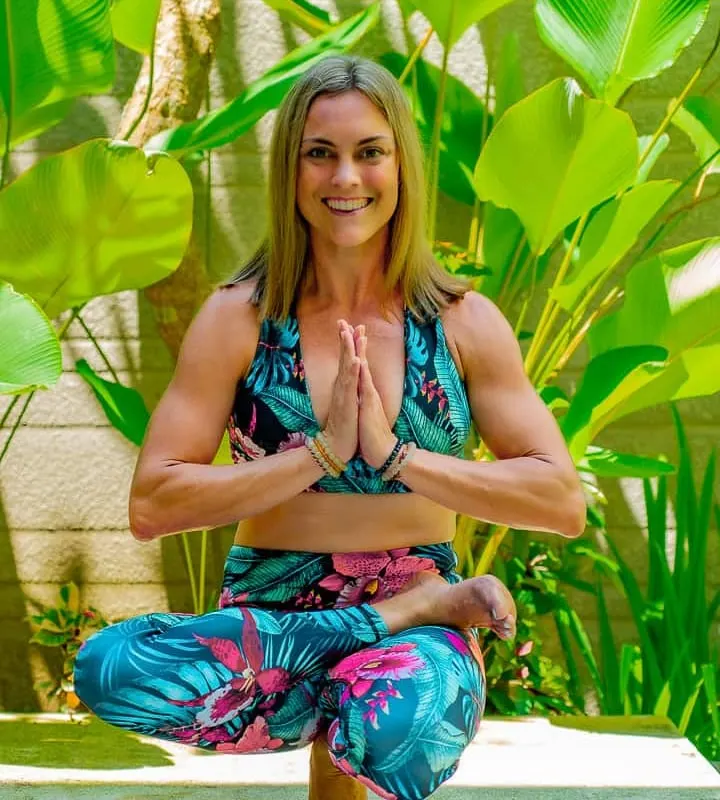
Taryn Weggelaar, co-director of Loka Yoga School, has taught this principle for years: the most important qualities to cultivate are often the ones that oppose your natural strengths.
If you are naturally strong, cultivate softness. If you are naturally flexible, cultivate boundaries. If you are naturally a giver, practise receiving. If you are naturally driven, practise surrender. If you are naturally still, practise momentum.
This is not about abandoning what you do well. It is about developing the complementary capacity that makes your strength genuinely useful rather than occasionally problematic.
Applying This in Yoga Practice
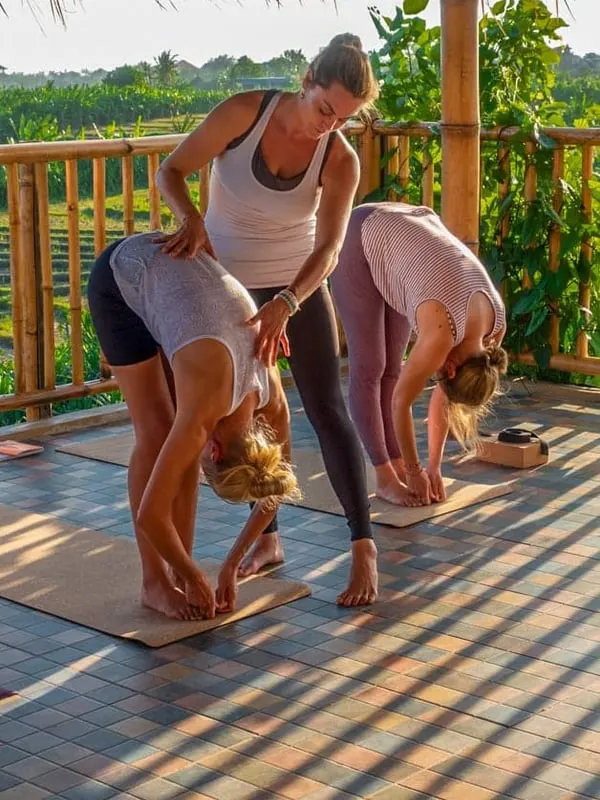
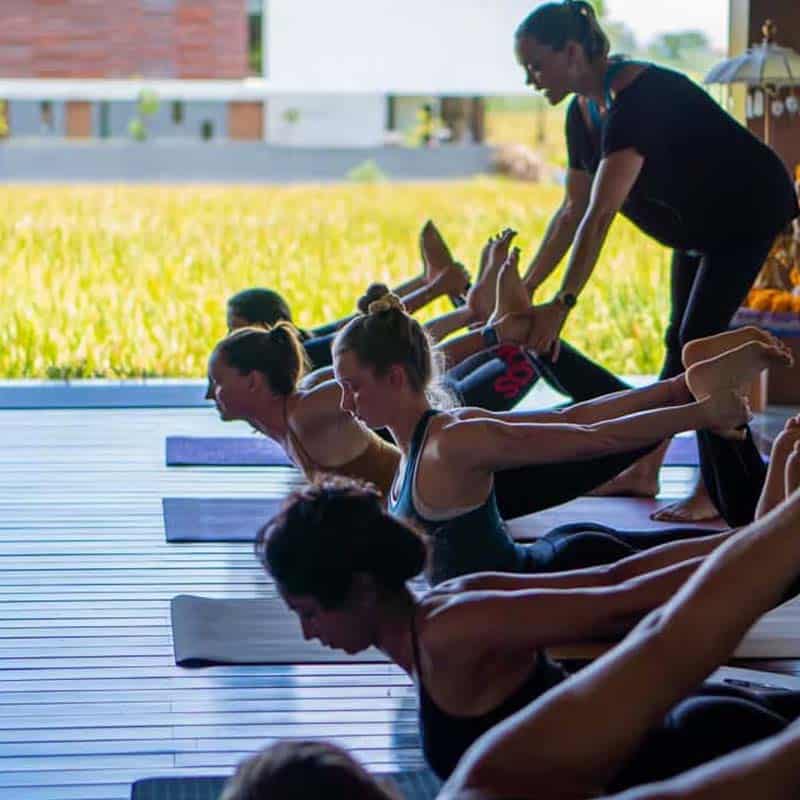
This principle is embodied in the structure of a well-designed yoga practice. Backbends are balanced by forward folds. External rotation is balanced by internal rotation. Heat and effort (Yang) are balanced by cooling restoration (Yin). Strength work is balanced by surrender.
A practice that only ever does what you find easy is not a full practice. It is a confirmation of existing patterns. Real practice goes toward the edge, and the most valuable edge is often the one you habitually avoid.
In asana, this means noticing your tendencies. If you always rush through poses, practise staying longer. If you always hold back from intensity, practise bringing more energy. If you always breathe shallowly when challenged, practise expanding the breath exactly when your instinct is to contract it.
Applying This Off the Mat
The same inquiry applies to how you show up in relationships, work, and life. Consider your three most prominent personal qualities right now. For each one, ask what the corresponding blind spot might be. Then ask what would need to be cultivated to bring that quality into fuller, more intelligent expression.
This is not a one-time exercise. It is an ongoing practice of honest self-observation, what the yoga tradition calls svadhyaya (self-study). The more consistently you practise it, the more clearly you see the patterns that have been running your life unexamined.
Our Online Yoga Philosophy Course explores the Gunas, the Yamas and Niyamas, and the broader philosophical framework that makes these principles coherent and applicable to modern life.
A Simple Practice to Try
Identify your three strongest personal qualities. Write them down.
For each quality, ask: where has this quality created a problem for me? Where has it limited rather than expanded my experience? What would the person with the opposite quality do in this situation?
Then identify one small, concrete action you can take this week that exercises the opposing capacity. Not a wholesale personality overhaul. One small action. Consistency over time is how new capacities develop.
The Rumi line that opens this reflection is worth sitting with: “Life is a balance of holding on and letting go.” Both are necessary. Both require practice. Neither happens automatically.
Sthira and Sukha: The Original Pair
The oldest version of this idea in the yoga texts is a single line in the Yoga Sutras defining posture as sthira and sukha: steady and comfortable. Two words, and most of what is worth knowing about practising well.
Sthira is steadiness, structure, the quality that holds a shape. Sukha is ease, space, the quality that lets you stay in it. On their own each one fails: all steadiness and you are rigid and breathless, all ease and there is nothing holding you up.
What makes the pair useful is that it is diagnostic. In any posture you can ask which one is missing, and the answer is usually obvious within a breath. A shaking, jaw-clenched warrior needs sukha. A collapsed, sagging plank needs sthira.
Notice that the instruction is not to find the midpoint. The two are not ends of one slider, they are separate qualities that can both be present at once, and the practice is to increase whichever is short rather than to trade one for the other.
Effort and Ease Inside a Single Posture
Take a standing forward fold. The unhelpful version of this teaching says relax. The more accurate version says work out what is actually holding you up and stop working everything that is not.
Your feet, your legs, and a modest amount of your abdomen have a job. Your jaw, your tongue, your shoulders, and your forehead do not, and most people bring all of them anyway. Nothing about the shape changes when you release them, and everything about how long you can stay changes.
The breath is the readout. If you cannot breathe smoothly in a posture, sthira has overrun sukha, and the position is producing a stress response rather than an adaptation. That is true whether you have been practising for a month or 20 years.
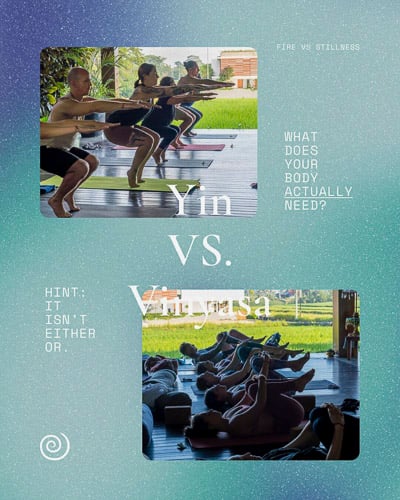
Time in the shape is the other dial. The same posture held for three breaths and for three minutes is asking for a different mix, which is roughly the distinction between a vinyasa class and a yin class, and it is why people who find one unbearable often find the other obvious.
The test is what you notice afterwards. A practice that was all effort leaves you wired. A practice that was all ease leaves you vaguely unchanged. The mix leaves you settled and awake at the same time, which is the state the whole system is aiming at.
Ida, Pingala, and What the Texts Actually Claim
The classical model puts two channels either side of the central one: ida, associated with the left, the moon, and cooling, and pingala with the right, the sun, and heating. Balancing them is given as a precondition for the deeper practices.
It is worth being clear about what kind of claim this is. Ida and pingala are not anatomical structures. Nobody has dissected them, nobody expects to, and the traditional literature is not making an anatomical argument. It is a map of experience, and it is a good one: most people can recognise being over-heated and driven, or over-cooled and inert.
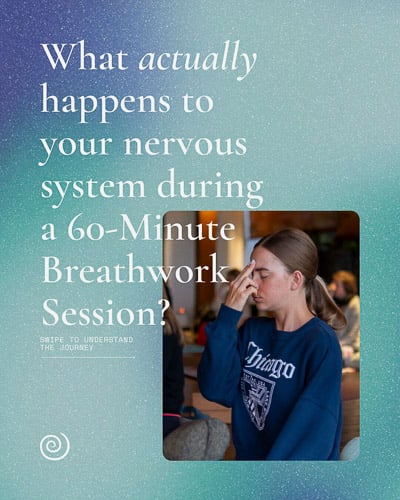
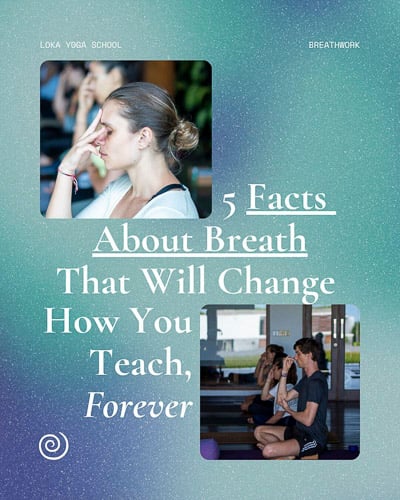
Where it gets tested is nadi shodhana, alternate nostril breathing, which is the technique prescribed for balancing the two. A 2005 study found effects on cardiorespiratory and autonomic function in regular practitioners (Srivastava et al.). A 2016 study in non-practitioners found the opposite direction, with increased sympathetic activity at some rates (Subramanian et al.).
Read together, those two say the effect depends on who is doing it and how fast, which is exactly what an experienced teacher would tell you and not what the technique is usually sold on. Slow breathing in general is much better evidenced than any particular nostril pattern (Russo et al., Breathe, 2017).
None of this makes the model useless. It means you should use it as a description of state rather than a claim about tubes, and our guide to what pranayama actually is keeps that distinction throughout.
A Week of Deliberate Imbalance
Balance is a poor daily target because it is not measurable and you will simply declare yourself balanced. Deliberate imbalance is measurable, and it is the faster teacher.
Pick the quality you are short of and overdo it for one week. If you are all drive, practise slowly enough that it is genuinely irritating: long holds, no music, nothing achieved. If you are all softness, do the strong practice at 6am on a day you do not want to.
One week, not one session. Anything shorter and you only meet your resistance to it, which is the least interesting part.
Write one line at the end of each day about your energy, not about the practice. The practice will tell you what you already believe. Your energy at 4pm will tell you something you did not know.
At the end of the week, stop, and notice what you go back to on your own. That default is the honest picture of where you sit, and it is more useful than any amount of theory about the gunas. If you want the classical framework behind that, our article on the three gunas is the place to start, and the philosophy module of our Yoga Alliance certified 200-hour YTT in Bali works through it properly.
Reading the Pair in Your Own Practice History
The quickest way to see which quality you default to is not to examine a single practice. It is to look back over the last two years and notice the pattern.
Ask what you do when practice gets difficult. Some people add: more sessions, longer holds, a harder class, an earlier alarm. Some people subtract: gentler, shorter, later, until the practice quietly stops. Both are the same reflex, and neither is a decision.
Ask what you did after your last injury or illness. Returning too fast is an excess of sthira. Not returning at all is an excess of sukha wearing the costume of being sensible. What you actually did is more informative than what you believe about yourself.
Ask which teachers you avoid. Most people have a style they describe as not for them, and it is very often the one supplying what they are short of. That is not always wrong, and it is worth checking whether the reason is genuine unsuitability or straightforward reluctance.
The point of all three questions is that the pair is not something you achieve and then hold. It moves with your circumstances, your age, and what else is demanding of you that season. Practising well means checking which way it has drifted a few times a year and correcting deliberately, rather than discovering it two years late.
Where the Idea Stops Being Useful
Any framework this tidy can be turned against you, and this one has a particular failure mode. Told to develop the opposite, a person who is already exhausted will hear that they should push harder, and a person who avoids rest will find a way to make rest into another project.
The test is what the instruction costs you. Moving towards the other pole should feel unfamiliar and slightly awkward. If it feels like more of the same effort under a different name, you have not found the opposite, you have found a variation on the thing you already do.
There is also a version of this that becomes avoidance. Someone who does not want to have a difficult conversation can spend a long month cultivating stillness and call it practice. The quality is real, the timing is not. It is worth asking whether you are developing something or postponing something.
The pairs are not always symmetrical either. Effort and ease trade off cleanly inside a posture. Discipline and spontaneity do not, and neither do honesty and kindness, which pull against each other in situations where one of them simply has to win. Treating every pair as a dial to be set halfway produces a bland middle rather than a balanced one.
The texts are less prescriptive here than modern summaries suggest. They describe the pairs, and the three gunas they set out, alongside the goal of not being pushed around by either pole. They do not offer a formula for which one to lean into on a given day. That judgement is yours, and it improves with practice rather than with reading.
If you are unsure, the safer default is the quality you resist rather than the one you fear. Resistance is usually habit. Fear is usually information.

Study the Philosophy With Loka
This idea sits close to the two most important steps in yoga: practice and non-attachment.
Our Online Yoga Philosophy Course shows how the classical texts turn ideas like this into daily practice.
Frequently Asked Questions
ABOUT THE COURSE STRUCTURE
Yoga philosophy, particularly the Samkhya system and the teachings on the Gunas, is fundamentally concerned with balance: between effort and ease (sthira sukha), between activity and rest (Rajas and Tamas), between individual will and surrender (the Niyama of Ishvara Pranidhana). Balancing opposites is not a side teaching. It is central to the entire project.
ABOUT TARYN & YANN
Yes, and this is the core insight. Any quality, however positive, becomes a problem when it becomes rigid or compulsive. Discipline is valuable until it becomes self-punishment. Compassion is valuable until it becomes self-erasure. The Gunas framework helps you see when a quality has tipped from helpful to harmful.
ABOUT ANATOMY
Start with what is hardest for you. Where do you habitually contract, avoid, or dismiss? That is typically the area where development is most needed and most rewarding.
The Loka Newsletter
Enliven your routine with exclusive spiritual content. There’s so much to learn.

Find us on Instagram
@lokayogaschool