Last updated on July 29th, 2026 at 07:12 am

2 Morning Habits That Will Change Your Life
The first hour of your day is the most neurologically vulnerable time for reactive consumption. Your prefrontal cortex is not yet fully online, dopamine systems are primed by the novelty-seeking that waking triggers, and the temptation to check your phone is strongest before any competing commitment has taken root. Two simple habits change this pattern entirely.
Why Your Morning Matters More Than You Think
The brain does not begin each day as a blank slate. It picks up where it left off, with the mood, the cortisol level, and the attentional pattern established in the hours prior to sleep and the first moments of waking. What you introduce to that system in the first 30–60 minutes shapes the neurological tone for the hours that follow.
Scrolling social media first thing activates the dopaminergic reward circuit in a way that primes your brain for distraction, comparison, and reactivity for the rest of the morning. You are training the nervous system to respond to external stimuli rather than to operate from internal clarity.
The inverse is also true. A morning in which you direct your attention before surrendering it trains the brain toward agency, focus, and a greater sense of efficacy throughout the day.

Habit One: The Offline Morning
Put your phone in aeroplane mode the night before and leave it there until your morning routine is complete. This is the single most effective structural change you can make to your morning, because it removes the primary mechanism of distraction before willpower is required to resist it.
This is not about moral discipline. It is about environmental design. Willpower is a limited resource and it depletes quickly. When the distraction is not present, the question of whether to check it does not arise.
Prepare for this the night before: download any audio content you need for morning practice, review your schedule so you are not waiting for anything urgent, and let the people who need to reach you know that you are unreachable before a certain hour. Most so-called urgencies are not urgent.
If you genuinely need to be reachable, for family emergencies or essential work, use the “always allow” list in your phone’s Do Not Disturb settings to permit calls from specific contacts only. This preserves access without opening the floodgates.
What the Evidence Actually Supports
Morning routines attract a lot of confident claims, and it is worth separating the ones with research behind them from the ones that simply sound right.
The cortisol argument you will have read, that checking your phone on waking floods you with stress hormone, is not something the literature establishes. Cortisol rises sharply in the first half hour after waking in everyone, phone or no phone. That rise is a normal part of waking up.
What is better supported is narrower and more useful. A JAMA Internal Medicine review of meditation programmes found moderate evidence of improvement in anxiety, depression and pain, and, importantly, little evidence that meditation outperformed active alternatives such as exercise for most other outcomes. A separate review of mindfulness meditation and sleep quality found meaningful improvement compared with non-specific active controls.
Read honestly, that supports a modest claim: a quiet, attentive start to the day plausibly helps how you feel and how you sleep. It does not support the idea that your phone is chemically damaging you before breakfast. The habits below are worth keeping because of how they change your attention, not because of a hormone story.
What to Do with the Time Instead
The offline morning creates space. What you fill it with is where the real benefit lies.
A physical practice, asana, walking, or any form of movement, elevates BDNF (brain-derived neurotrophic factor), which improves learning, mood, and cognitive function for the hours that follow. Even 20 minutes is sufficient to produce this effect.
A seated meditation practice of 10–20 minutes stabilises the prefrontal cortex and reduces the cortisol that accumulates overnight. You are not just feeling calmer, you are altering the hormonal starting point for your day.
A journal practice externalises the internal: plans, intentions, concerns, or simply the stream of morning consciousness. Getting thoughts onto paper reduces their neurological noise and frees cognitive resources for deliberate thinking.
You do not need all three. Choose what serves you and practise it consistently.

Habit Two: No MESS Before 10am
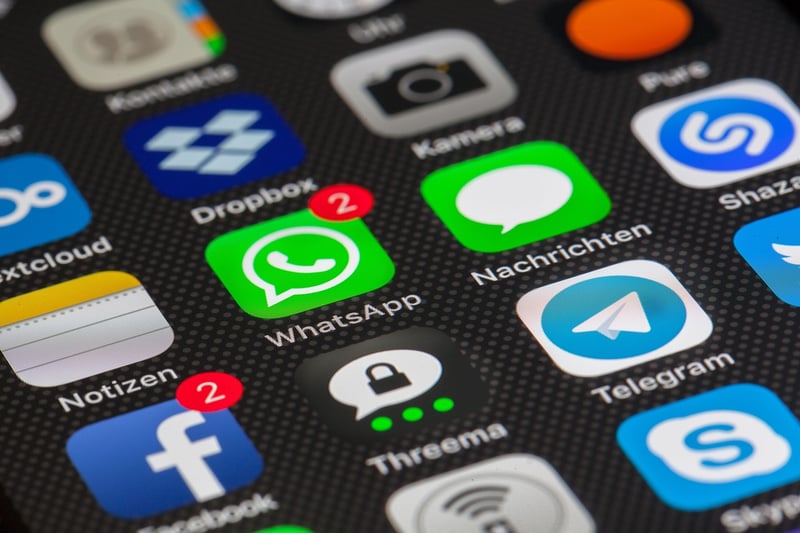
MESS stands for Messaging, Email, Search, and Social media. These four categories have in common that they are reactive, they demand your attention on someone else’s terms, and they interrupt deep focus before it has had time to establish.
Delaying engagement with MESS until 10am, or as late as your schedule allows, means you direct your most cognitively capable hours of the day toward work that matters to you, rather than to the backlog of other people’s priorities.
Research on knowledge workers consistently shows that the morning hours produce the best quality deep work, creative output, and complex problem-solving. Every notification you respond to before 10am is borrowing against that cognitive capital.
This is not permanent disconnection. You will respond to everything. You are simply choosing when, rather than ceding that choice to the notification system of your phone.
Building the Practice Gradually
If the idea of a full offline morning feels inaccessible, begin with the first 30 minutes. Aeroplane mode on, phone in another room, one simple practice before you check anything. Build from there.
The initial restlessness you feel, the pull toward the phone, the vague anxiety of being offline, is the dopaminergic reward system adjusting to a lower baseline of stimulation. It passes within a few days. What replaces it is a quality of morning that most people have not experienced since before smartphones: spacious, self-directed, and genuinely restorative.
Build a Morning Practice That Lasts
A strong morning starts with the breath. Our guide to skull shining breath is a clean, caffeine-free way to wake up the system.
Our Online Meditation Training helps you turn these two habits into a routine you actually keep.
When These Rules Do Not Fit Your Life
Both habits assume a morning that belongs to you. Plenty of mornings do not, and the advice is worse than useless if it just adds guilt to an already difficult start.
If you work shifts, the fixed clock time matters less than the sequence. Apply the same rule to your first two waking hours, whenever they fall, rather than to the number on the clock.
If you care for small children or anyone else who needs you immediately, the offline window may be ten minutes rather than two hours, and it may happen after drop-off rather than on waking. That still counts. The point is a protected gap between waking and the inbound demands of other people, not a particular duration.
If you are on call, or a family member overseas may need you, exempt those channels explicitly rather than abandoning the practice. A rule with one deliberate exception survives. A rule you break every second day quietly teaches you that your own commitments are negotiable.
Adapt the shape, keep the principle: decide what enters your attention first, rather than letting it be decided for you.
Your Morning Is Decided the Night Before
Most failed morning routines are not morning problems. They are the previous evening arriving to collect what it is owed.
If you go to bed at one in the morning, no amount of intention makes six o’clock feel like an opportunity. The offline morning is far easier to keep when you are not exhausted, and exhaustion makes the phone more attractive, not less, because it asks nothing of you.
Two evening decisions do most of the work. Charge the phone somewhere other than beside your bed, so that the first choice of the day requires you to stand up rather than to reach. And set a fixed time to stop working, not a fixed time to sleep, since the wind-down is what actually determines when you fall asleep.
There is reasonable evidence that mindfulness practice improves sleep quality against active comparison, which is one of the few claims in this area that survives scrutiny. If you already meditate, moving a short sit to the evening often does more for your mornings than adding anything else to them.
Treat the two ends of the day as one system. Fixing the evening is usually the cheaper intervention, and it makes both habits above stop feeling like discipline.
Making It Survive a Bad Week
Every routine works in a good week. The useful question is what happens in a bad one, because that is when these things quietly disappear.
Decide now what the smallest honest version is. Not the ideal ninety minutes: the two-minute version you would still do on the worst morning of the month. For most people that is standing up, breathing deliberately for a minute, and not touching the phone until after that. If the minimum is genuinely small, the streak survives, and the streak is what carries you back to the longer version.
Watch for the trap of all-or-nothing thinking. Missing two days is not a failed habit, it is two days. The people who sustain a morning practice for years are not more disciplined than everyone else. They are simply less dramatic about interruptions.
If you want structure rather than willpower, a period of formal practice helps more than another article does. Our writing on what meditation actually does is a good next step, and a month of immersion, as on our Yoga Alliance certified 200-hour YTT in Bali, rebuilds a morning rhythm faster than incremental change at home usually can.
What the First Fortnight Feels Like
Worth knowing in advance, because the early days are not pleasant and people usually read that as evidence the practice is not for them.
The first few mornings feel long. Without the phone there is a stretch of time with nothing obviously in it, and the discomfort is real: you will notice an urge to check something roughly every few minutes, and you will notice how automatic reaching for the phone had become.
Around the end of the first week the quality changes. The urge does not disappear, but it stops being the loudest thing in the room, and the empty time starts to feel like space rather than absence.
By the second week most people report the opposite problem: the morning becomes something they protect, and they resent giving it up on the days they have to. That is the point at which it stops requiring effort.
If you are still white-knuckling it after three weeks, the routine is probably too ambitious rather than wrong. Shorten it until it is easy, then leave it alone.
Keeping it through travel and time zones
Travel breaks morning habits more reliably than a busy week does, because the cue you built the habit on is the one thing you left at home.
Carry the sequence rather than the clock. If your offline morning normally runs from waking to 8am, run it from waking to whatever the equivalent stretch is wherever you have landed, even if that is the middle of your usual afternoon. The habit is anchored to waking, not to a number, and treating it that way survives a change of time zone almost intact.
Keep the practice small on travel days. One habit held badly is worth more than two abandoned, and the offline morning is the one to protect, because the phone is where jet lag does its worst work.
Resume the full version on the second morning in a new place rather than the first. The first morning is for arriving.
The same logic covers the other things that break a routine: a new baby, a night shift, a fortnight of early starts. None of them require you to rebuild the habit from scratch. They require you to find the new waking point and hang the sequence off that instead.
Where people lose the habit is not during the disruption, it is in the fortnight afterwards, when the old cue is available again and the practice has quietly stopped being automatic. Put it back deliberately on the first ordinary morning you get, and read how to build a practice that survives a bad week if it has slipped more than once.
Frequently Asked Questions
Why is checking your phone first thing in the morning harmful?
Checking your phone immediately on waking places your attention on other people’s demands before you have established your own priorities. It activates the stress response (cortisol rises in response to notifications) and primes the dopaminergic system for distraction. Research links morning smartphone use with reduced focus, increased anxiety, and lower productivity across the day.
What is the best thing to do in an offline morning?
There is no single answer, and the “best” practice is the one you will actually sustain. Movement, meditation, journalling, and reading (physical books) are all strong choices. The important quality they share is that they are internally directed rather than responsive to external input. Even sitting quietly with a hot drink before engaging with screens counts.
How long should my morning routine be?
As long as is realistic for your life. Thirty minutes of intentional, offline time each morning will produce significant results. An hour produces more. The aim is consistency, a reliable daily practice outperforms an occasional long one every time.
What if I have young children or other responsibilities that prevent an offline morning?
Adapt rather than abandon. Even 15 minutes before anyone else wakes is sufficient to establish a different neurological tone for the day. Be honest about what is genuinely impossible and what is simply uncomfortable. Many people find that waking 20–30 minutes earlier than they currently do resolves the problem.
Is the No MESS rule realistic in a demanding job?
For most people, yes, though the window may be shorter than 10am. Even a 45-minute protected period at the start of your working day, before email and messaging, produces measurable improvements in focus and output. Frame it to yourself and colleagues as “deep work time” rather than unavailability, and most workplaces accommodate it.

The Loka Newsletter
Enliven your routine with exclusive spiritual content. There’s so much to learn.

Find us on Instagram
@lokayogaschool