Last updated on September 3rd, 2026 at 06:52 pm
Yoga and Nutrition: What to Eat Before and After Practice
What you eat, and when, shapes how your practice feels. Yoga asks the body to twist, fold, and breathe deeply, none of which is comfortable on a full stomach. A little thought about food around practice makes a real difference.
Meal timing is just one piece of a bigger rhythm, so it pairs well with an Ayurvedic daily routine, and with these morning habits that change your life. For the bigger picture behind these food principles, see how yoga and Ayurveda fit together.

Before Practice
Practise on a light stomach. Leave two to three hours after a full meal, or 30 to 60 minutes after a small snack. If you need something beforehand, choose light, easily digested food: a piece of fruit, a few nuts, or a small smoothie. Avoid heavy, greasy, or very large meals.
After Practice
Practice leaves the body open and receptive, which makes it a good time to nourish it well. Within an hour or two, eat a balanced meal with some protein, complex carbohydrates, and vegetables to support recovery. Rehydrate too, especially after a warm or vigorous class.
Hydration
Drink water through the day rather than gulping large amounts right before practice. In a warm climate or a strong class, replacing fluids and electrolytes afterwards helps you feel steady rather than depleted.
A Yogic View of Food
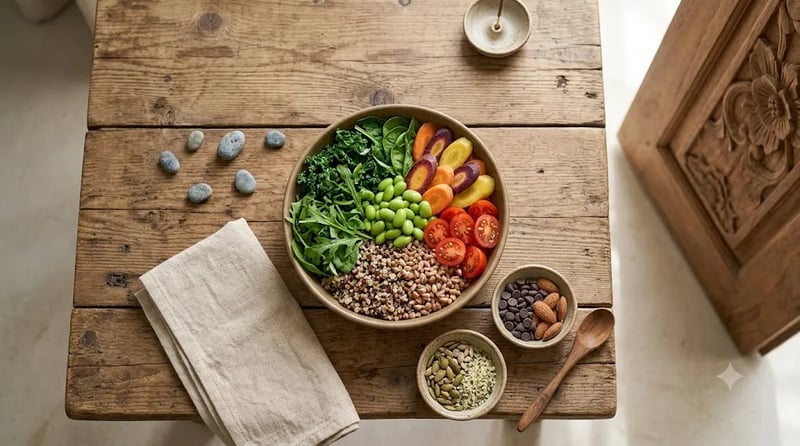
Beyond timing, the yogic tradition encourages eating with awareness: fresh, simple, mostly plant-based food, eaten mindfully and in reasonable amounts. Ayurveda adds the idea of eating in a way that suits your constitution. The through-line is simple: food that leaves you light, clear, and energised supports your practice and your life.
Timing your meals around practice
The most common nutrition question in a yoga room is not what to eat but when, and the honest answer is that it depends on the size of the meal and the person. As a general principle, practising on a very full stomach is uncomfortable, because twists, folds, and inversions all compress the abdomen, and your body would rather be digesting than being folded in half.
A useful rule of thumb is to leave roughly two to three hours after a full meal before a strong practice, and around one to two hours after a light snack. These are not medical prescriptions, just practical margins that most people find comfortable, and you should treat them as a starting point to adjust rather than a rule to obey.
If you practise early in the morning, many people prefer to do so lightly fed or on a nearly empty stomach, which is a personal comfort choice rather than a requirement. A little fruit or something small and easy to digest is enough for most, and there is no need to force a full breakfast in before dawn if it sits heavily.
The one situation worth taking seriously is if you have a medical condition affected by fasting or blood sugar, such as diabetes. In that case general yoga advice does not apply to you, and the timing of food around exercise is a conversation for your doctor, not a blog.
What a "yogic diet" really is
You will hear a lot about the sattvic diet, and it is worth being clear about what it is and is not. In yogic philosophy, foods are traditionally described as sattvic (light, clean, calming), rajasic (stimulating), or tamasic (heavy, dulling), and a sattvic diet favours fresh, simple, mostly plant-based foods thought to support a clear and steady mind for practice.
This is a philosophical and cultural framework, not a clinical nutrition plan, and it is most useful when you hold it that way. The categories reflect centuries of contemplative tradition about how food affects the mind and the practice; they are not claims that have been tested as medical interventions, and it would be dishonest to present them as such.
That does not make the framework worthless, far from it. Much of what it recommends, more fresh vegetables and fruit, less heavily processed and very heavy food, eating with attention rather than distraction, lines up comfortably with mainstream ideas about eating well. The overlap is real even though the reasoning comes from a completely different place.
Where it helps most is as an invitation to pay attention rather than a set of rigid rules. Noticing that a heavy, greasy meal leaves you dull and a fresh, simple one leaves you clear is genuinely useful information, and it is entirely yours. The tradition sits alongside a broader rhythm of daily habits, which we cover in our guide to building an ayurvedic daily routine, or dinacharya.
Hydration in a hot climate
If you practise in a hot, humid place, and a great deal of yoga is now taught in exactly those conditions, hydration stops being an afterthought. You lose more fluid and more electrolytes through sweat than you would in a temperate climate, and you lose it faster, so the casual approach that works at home may not be enough here in Bali.
The practical approach is to hydrate steadily across the whole day rather than gulping a large amount right before practice, which mostly just makes your stomach slosh. Drinking regularly from the morning onwards keeps you topped up without discomfort, and it means you arrive on the mat already hydrated rather than trying to catch up.
In heavy heat, water alone may not fully replace what you lose, because sweat carries electrolytes as well as fluid. Including some salt and minerals through normal food, or an electrolyte drink on very sweaty days, helps you feel steadier, though there is no need to overthink it or reach for anything elaborate.
Let your body guide the amount. Persistent thirst, dark urine, headaches, or feeling lightheaded and flat in practice are all signs to drink more, especially in your first days in a tropical climate before you have acclimatised. Feeling weak in a hot room is far more often dehydration than a spiritual experience.
Learning to listen to your body
Underneath all the specific advice sits one skill that outlasts every rule: paying honest attention to how food and drink actually affect your own practice. No article can tell you the exact meal timing or the exact foods that will make you feel light and clear, because that varies from person to person, and the only reliable way to find it is to notice.
Yoga is unusually good training for this. A regular practice sharpens your sense of what is going on inside your body, and once that sensitivity is switched on, you start to feel the connection between what you ate three hours ago and how you feel in a twist now. That feedback loop is more valuable than any prescribed diet, because it is specific to you and it updates in real time.
So treat the guidance in this article as a set of starting points to test, not commandments to follow. Try a lighter meal before practice and see how it feels; adjust your hydration and notice the difference; experiment with fresher, simpler food and observe your energy. Keep what genuinely helps you and quietly drop what does not.
That experimental, self-aware relationship with food is exactly the kind of thing that deepens when you immerse yourself in a sustained period of daily practice and study. It is one of the quieter benefits students take home from our 200-hour yoga teacher training in Bali, long after the postures have been learned.

Early mornings, late evenings, and your own rhythm
Most of the practical difficulty here is not what you eat but when, relative to when you are on the mat. Getting the timing roughly right removes the two problems people most often run into, which are feeling heavy and nauseous during practice, or running out of energy partway through.
The general shape is simple. A substantial meal wants somewhere around two to three hours before a physical practice. Something light wants around an hour. Inversions, twists and deep forward folds are the shapes that make a full stomach obvious, which is why traditional guidance on practising before eating exists at all. It is a comfort observation rather than a rule handed down from anywhere.
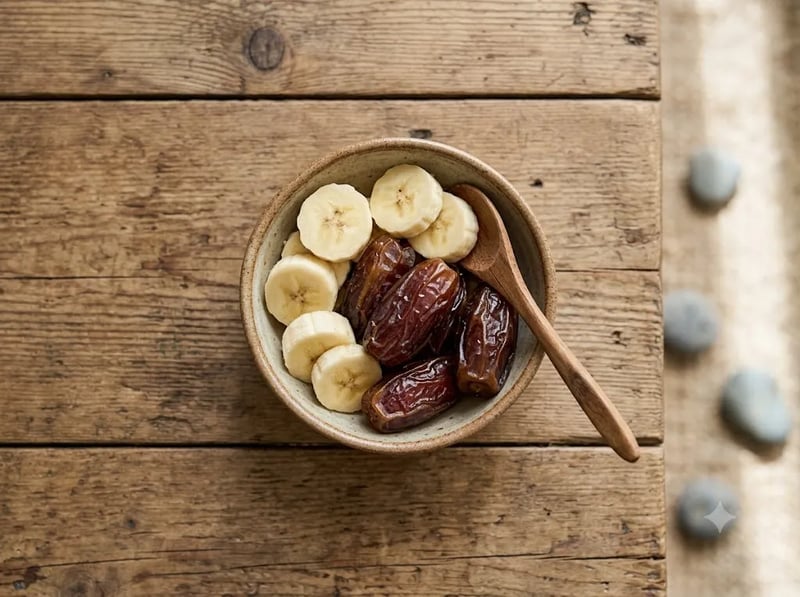
Early morning practice is where people struggle most, because the recommended gap does not fit inside the hour between waking and starting. Practising on an empty stomach suits plenty of people and leaves others light-headed and shaky by halfway. If you are in the second group, something small and easily digested about twenty to thirty minutes beforehand usually solves it. A banana, a few dates, or half a piece of toast. This is not a failure of discipline, it is simply how your body runs.
Evening practice has the opposite problem, which is a long gap since lunch. A modest snack in the late afternoon prevents the flat, irritable practice that otherwise arrives around the second half of the class. Keep it small enough that you have forgotten about it by the time you start.
Afterwards, eat reasonably soon if the session was long or demanding, and do not overthink the composition. The elaborate advice about precise post-practice windows is largely borrowed from competitive sport and does not transfer usefully to a yoga practice. A normal meal within a couple of hours covers it.
Work it out by experiment rather than by rule, because individual variation here is genuinely wide. Try one arrangement for a fortnight and note how the middle of your sessions feel, which is where energy problems show up first. Two lines after each practice is enough of a record. And if you have diabetes, are pregnant, are managing an eating disorder, or have any condition where meal timing is part of your care, take the guidance of your doctor or dietitian over anything on this page. General advice about practice timing is not a substitute for a plan built around you.
Hydration is the piece most people get subtly wrong, usually by drinking a lot immediately beforehand and then feeling sloshy for twenty minutes. Spread it across the day instead, and take small sips rather than large amounts during practice. In a hot room or a humid climate you will lose noticeably more, and replacing it over the following hours matters more than replacing it during the session. Dark urine and a headache afterwards are the practical signs you are running short. Persistent thirst that drinking does not settle is worth mentioning to a doctor rather than managing with more water.
Yoga and nutrition across a full training day
A single class is easy to plan around. A full day of practice is a different problem, and it catches most people out in their first week of an immersion or a teacher training.
The pattern that works is small and frequent rather than large and occasional. A light breakfast after the morning practice, something substantial at midday when digestion is strongest, and a modest evening meal will carry you through six or seven hours of movement without the heaviness that comes from trying to eat one large meal around it.
Watch the gap between the afternoon session and dinner. That is where energy tends to drop, and where people reach for whatever is nearest. A piece of fruit, a handful of nuts, or a small serving of rice an hour beforehand keeps you steady enough to practise well, and stops you arriving at dinner ravenous.
Caffeine deserves its own thought on a long day. One coffee in the morning is unlikely to trouble anyone. A second in the afternoon, on top of a nervous system already stimulated by hours of breathwork and backbends, tends to show up as a restless evening and a poor night of sleep, which then costs you the next morning.
Protein matters more than most yoga writing admits. Long days of asana are load-bearing work, and tissue repair needs raw material. If you eat plant-based, spread your protein across all three meals rather than relying on one, and treat legumes, tempeh, and eggs if you eat them as part of the daily plan rather than an afterthought.
None of this needs to be precise. Notice how each choice lands in the practice that follows, keep what helps, and let the rest go. Our 200-hour yoga teacher training in Bali runs on exactly this rhythm, and most students find their appetite settles into it within a week.
Train With Loka
Food and practice are two halves of the same wellbeing. For a constitutional view of eating, read our guide to your dosha type and diet. To bring this holistic outlook into a full practice, explore our online courses. Food is one way of tending to what the body carries; our Cleanse Yoga teacher training works with the emotional side of the same question.
Frequently Asked Questions
What should I eat before yoga?
Something light and easy to digest, such as fruit or a few nuts, 30 to 60 minutes before. Avoid heavy meals close to practice.
How long should I wait after eating to practise?
Around two to three hours after a full meal, or 30 to 60 minutes after a small snack.
What should I eat after yoga?
A balanced meal with protein, complex carbohydrates, and vegetables within an hour or two, plus water to rehydrate.
Should I practise yoga on an empty stomach?
A light stomach is ideal. Fully empty is fine for gentle practice; a small snack helps if you feel weak.
Is it okay to drink coffee before yoga?
For most people a small coffee an hour before practice is fine, and many enjoy the alertness it brings. Larger doses close to class can amplify jitteriness in balance poses and push you to rush the breath. As with meal timing, treat it as an experiment: try both and notice which practice feels better.
What is a sattvic diet in yoga?
A sattvic diet favours fresh, simple, mostly plant-based foods that yogic tradition regards as light and calming for the mind. It is a philosophical and cultural framework rather than a clinical nutrition plan, so it is best treated as a guide to eating with attention, not a medical prescription. Much of it happens to overlap with mainstream healthy-eating advice.

The Loka Newsletter
Enliven your routine with exclusive spiritual content. There’s so much to learn.

Find us on Instagram
@lokayogaschool