Last updated on October 22nd, 2026 at 08:43 am
Chair Yoga: A Gentle Practice for Limited Mobility
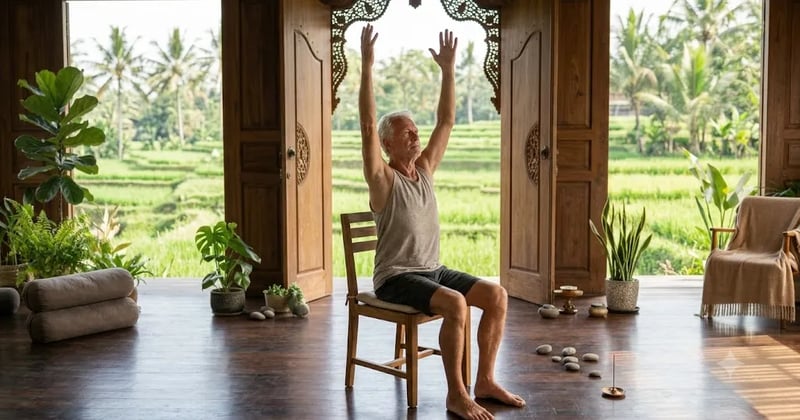
Chair yoga brings the benefits of yoga to anyone who cannot easily get down to a mat. Using a sturdy chair for support, you practise gentle movement, stretching, and breath while seated or standing with support. It is accessible, safe, and genuinely effective.
It shares the same gentle, supported spirit as restorative yoga, and even a seated practice contributes to how yoga helps strengthen athletes by building steady, functional strength.
Who Chair Yoga Is For
Chair yoga suits older adults, people with limited mobility or injuries, those recovering from illness, and anyone who spends long hours sitting. It is also a welcoming entry point for complete beginners who feel unsure about a traditional class.
Simple Seated Practices
Seated Cat and Cow: arch and round the spine with the breath.
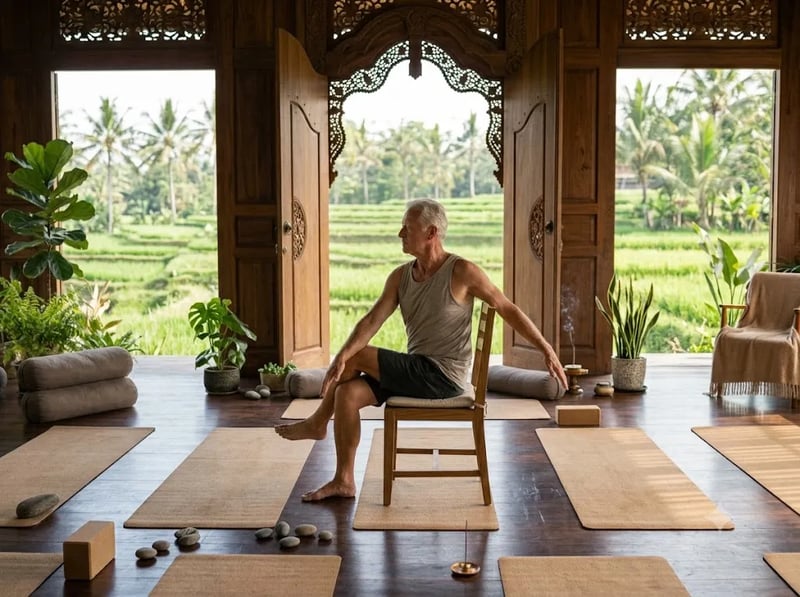
Seated twists: turn gently to each side, using the chair back for leverage.
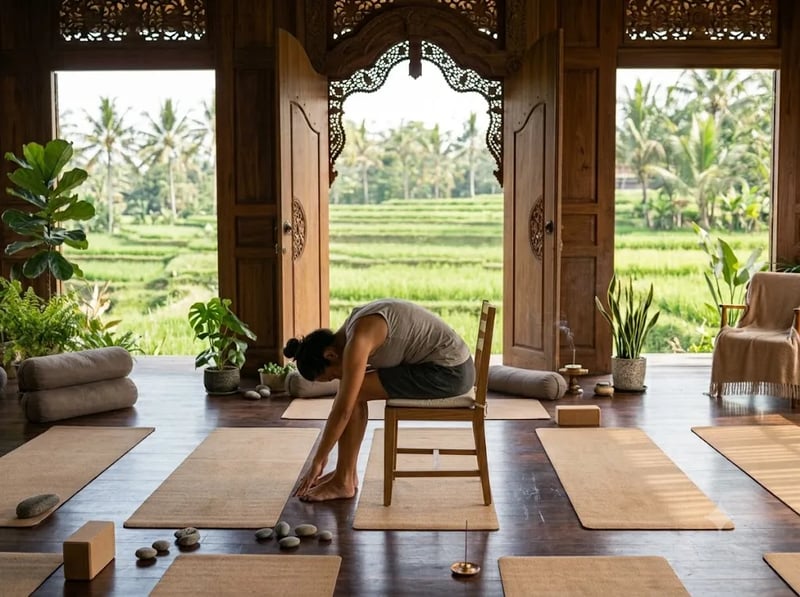
Seated forward fold: hinge forward over the legs to release the back.
Neck and shoulder rolls: ease the tension that builds from sitting.
Ankle and wrist circles: keep the smaller joints mobile.
The Benefits
Chair yoga improves flexibility and joint mobility, eases stiffness and tension, supports balance and circulation, and calms the mind through breath. Because it removes the barrier of getting up and down from the floor, it makes a regular practice realistic for many more people.
How to Practise Safely
Use a stable chair without wheels, sit tall with both feet grounded, and move within a comfortable range. Never force a stretch, and stop if anything sharp or painful arises. Gentle and consistent beats deep and occasional.
Who tends to benefit most
Chair yoga earns its place because it removes the two hardest parts of a normal class for many people: getting down to the floor and back up again. That single change opens the practice to a much wider group, and four kinds of people tend to benefit most from it. Seniors come first, because a stable seat takes the fear out of balancing and lets them move without worrying about a fall.
People living with limited mobility are the second group. If arthritis, an injury, or a chronic condition makes standing poses painful or unsafe, a chair provides support that keeps the practice accessible rather than off-limits. The movements are gentler, but they still work the joints and muscles that matter.
Office workers are the third, and often the most surprised to benefit. A body that sits at a desk for eight hours stiffens in predictable places: hips, spine, shoulders, and neck. A few minutes of seated movement during the day counteracts some of that without anyone needing to change clothes or leave their desk.
The fourth group is anyone in recovery, whether from surgery, illness, or a period of being sedentary. Chair yoga offers a way back into movement that meets a deconditioned body where it is, then grows with it. As always, if you are recovering from anything specific, clear it with your doctor before you begin.
A simple seated sequence to follow
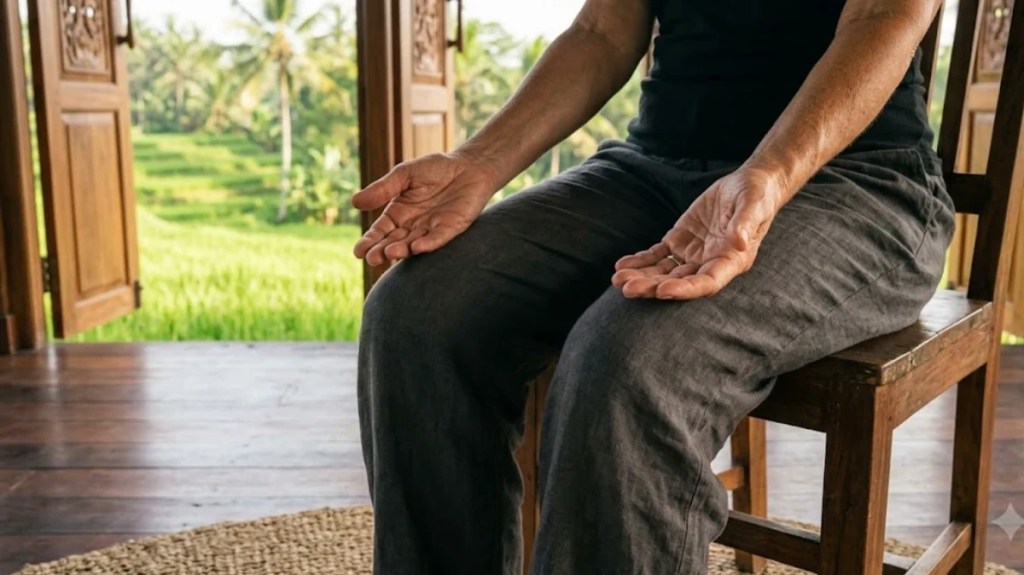
Start by sitting well. Choose a sturdy chair without wheels, plant both feet flat on the floor, and sit forward enough that your spine is tall rather than slumped against the back. Rest your hands on your thighs and take a few slow breaths to settle before you move. Everything that follows works better from a grounded seat.
Begin with the spine. Inhale and lengthen upwards, exhale and gently round forwards, then flow between the two for several breaths as a seated cat and cow. Follow with a slow seated twist to each side, holding the side or back of the chair and turning from the belly rather than yanking with the arms, keeping your gaze soft over one shoulder.
Move to the limbs. Circle the shoulders backwards several times, then reach both arms overhead for a tall stretch, lowering them if there is any pinching. Extend one leg straight, flex the foot to feel the back of the leg, and lower it slowly, then repeat on the other side to wake up the hips and knees.
Finish by settling. Fold gently forwards over your thighs for a soft stretch through the back, resting there for a few breaths, then roll up slowly. Sit tall again, close your eyes if you like, and take a minute of quiet breathing to close. The whole sequence takes around 10 minutes and can be repeated as often as it feels good.
Using it at your desk during the workday
The great advantage of a seated practice is that your office already has the only equipment it needs. You can run a short version at your desk without a mat, without changing, and without anyone really noticing, which is exactly what makes it a habit you can actually keep. Two or three minutes between tasks is enough to matter.
Keep a small routine ready so you do not have to think. Roll the shoulders, reach the arms overhead, twist gently each way, and drop the chin slowly towards the chest and back to release the neck. Each of these targets a place that desk posture tends to lock up, and none of them require you to stand.
Pair the movement with your breath and it doubles as a reset for a busy head, not just a stiff body. A slow twist with a long exhale settles the nervous system a little, which is useful in the middle of a demanding afternoon. The point is not a workout; it is a pause that leaves you looser than it found you.
If you want a wider set of desk-friendly options, our guide to yoga poses you can do at the office desk gives you more to choose from, so you can vary what you do across the week rather than repeating the same three movements until they lose their appeal.
Honest benefits, and when to check with a doctor
It is worth being clear about what a seated practice does and does not do. Regular gentle movement supports mobility, encourages circulation, eases some stiffness, and offers a calm few minutes that many people find genuinely steadying. For someone who has been largely still, that is a meaningful step, and it is often the difference between moving daily and not at all.
What it is not is a cure. A gentle seated practice will not resolve a medical condition, replace prescribed treatment, or reverse a serious problem on its own, and anyone promising that is overreaching. Hold it as a supportive, accessible form of movement that fits alongside the rest of your care, rather than as a treatment in its own right.
Check with your doctor before you begin if you have a heart condition, uncontrolled blood pressure, a recent injury or surgery, severe osteoporosis, dizziness, or balance problems, or if you are pregnant. Most people can practise safely with sensible modifications, but a quick conversation makes sure the movements suit your particular situation. Stop and seek advice if anything causes sharp pain, dizziness, or breathlessness.
Chair yoga also shows why accessible teaching is a skill worth learning properly. Adapting a practice for a body that cannot get to the floor takes real understanding of anatomy and modification, not just a simplified class. If teaching this kind of yoga well appeals to you, a 200-hour yoga teacher training gives you the grounding to make any practice safe and welcoming, whatever body walks in.
Building a short daily routine that lasts
The movements above work well individually. Turning them into something you actually do most days is a separate skill, and it is the one that determines whether any of it makes a difference.
Choose four movements, no more, and use the same four every day. The temptation is to rotate through everything so it stays interesting, and it is the wrong instinct here. A fixed short routine becomes automatic within a fortnight and stops requiring a decision, and requiring a decision is what kills daily practices. Interest can come later, once the habit is holding itself up.
Attach it to something you already do without fail. The kettle boiling, the end of a particular programme, sitting down at your desk in the morning, or the advertisements in the middle of the evening news. An existing anchor carries the new habit far more reliably than a time of day does, because times of day move and anchors do not.
Keep it genuinely short at the start. Five minutes is enough, and it is short enough that you cannot reasonably tell yourself you have no time. Most people who try to begin with twenty minutes are doing nothing within three weeks. You can lengthen it later, and by then it will be lengthening something that already exists rather than building from nothing.
Pick your chair once and leave it where it is. Something stable, without wheels, with a firm seat and preferably no arms in the way. A chair that has to be fetched or cleared each time adds a step, and every additional step lowers the odds. If a firm seat is uncomfortable, a folded towel underneath solves it.
Notice the right things, because the changes here are usually functional rather than dramatic. Standing up from the chair with less effort, reaching a high shelf without thinking about it, turning further when reversing the car, feeling less stiff after a long sit. These are the improvements that matter in daily life and they are easy to overlook if you are waiting for something more impressive. A one-line note once a week is enough to catch them.
Work within your own limits and ask if you are unsure. Sharp pain, dizziness, chest discomfort or breathlessness mean stop for the day. If you have had recent surgery, a fall, a joint replacement, uncontrolled blood pressure or any condition affecting your balance, check with your doctor or physiotherapist about which of these movements suit you. A short routine adapted to your circumstances and done daily is worth considerably more than a fuller one you are not confident about.
Practising with someone else changes it for the better, particularly if you are doing this alongside a carer or a partner. Two people doing four movements together are far more likely to keep going than one person doing them alone, and it removes the sense of it being a medical exercise rather than something you do. It also means somebody else notices if a movement is becoming difficult, which is useful information that is easy to miss in yourself. If you are supporting someone else with this, do it beside them rather than in front of them, and let them set the pace.
Choosing the right chair and setting it up
Most advice about chair yoga skips the chair itself, which is odd, because the chair does half the work. A dining chair with a flat seat and four solid legs is the safest default. Office chairs on castors roll away the moment you shift your weight, and armchairs sit too low and too soft for your hips to stay above your knees.
Sit far enough forward that your sitting bones take the load rather than your tailbone. You should feel two firm points of contact through the flesh of your seat. If your feet do not rest flat on the floor with your ankles under your knees, put a book or a folded towel underneath them rather than letting them dangle. Dangling feet drag the pelvis backwards and round the lower back, which undoes most of what a seated practice is trying to teach.
Height matters more than comfort here. Hips slightly higher than knees lets the pelvis tip forward so the spine stacks without effort. If the seat is too low, sit on a folded blanket. If you plan to use the backrest for twists, keep a hand’s width between your spine and the back of the chair so you rotate rather than lever against it.
Put the chair against a wall for anything involving balance or a standing transition. A wall behind you removes any chance of the chair sliding, and it gives you somewhere to place a hand. Non-slip pads under the legs are worth having on tile or polished timber, which covers most floors in a tropical climate.
Practise in the same spot each time if you can. Once the chair, the floor and the light are familiar, you stop making small decisions about the setup and start noticing what the practice is actually doing. That is the point at which a seated routine tends to stick.
Train With Loka
Yoga really is for every body, and understanding how the body moves makes any practice safer. Our Online Yoga Mechanics Course teaches functional anatomy you can apply at any level. For more seated ideas, see yoga poses at the office desk.
Frequently Asked Questions
Is chair yoga real yoga?
Yes. It applies the same principles of breath, movement, and awareness, simply adapted for a seated or supported practice.
Who benefits most from chair yoga?
Older adults, people with limited mobility or injuries, those recovering from illness, and anyone who sits for long hours.
Can chair yoga improve flexibility?
Yes. Regular gentle practice improves mobility, eases stiffness, and supports circulation and balance.
What kind of chair should I use?
A stable chair without wheels, so you can sit tall with both feet flat on the floor.
Is chair yoga effective for seniors and people with limited mobility?
Yes, within realistic limits. A stable seat removes the fear of falling and the difficulty of getting to the floor, so it opens gentle movement to people who find standing classes unsafe. Practised regularly it supports mobility, circulation, and a sense of calm. It is genuinely helpful, but it complements medical care rather than replacing it, so check with your doctor first if you have any condition.
Can I do chair yoga at my desk at work?
Easily, and your office chair is the only equipment you need. Shoulder rolls, overhead reaches, gentle seated twists, and slow neck releases all target the places desk posture stiffens, and none require standing or changing clothes. Two or three minutes between tasks, paired with slow breathing, is enough to leave your body looser and your head a little clearer.
The Loka Newsletter
Enliven your routine with exclusive spiritual content. There’s so much to learn.

Find us on Instagram
@lokayogaschool